Specification and Compatibility Table
| Product | Type / Stages | Port Size | Notable Rating | Price |
|---|---|---|---|---|
| PRO+AQUA PRO-E-S80E Elite Combo | Filtration + 80,000-grain softener combo | Not stated | Not stated | $1,445.56 |
| Kenmore Elite 520 Hybrid | 2-in-1 softener + filtration, NSF-certified | Not stated | Not stated | $978.34 |
| iSpring WGB32B-KS | 3-stage filtration (heavy metals, hydrogen sulfide, chlorine, chloramine, sediment) | Not stated | 4.7 stars, 166 ratings | $407.09 |
| PRO+AQUA GEN2 PRO-100-E | 3-stage filtration with pressure gauges | 1" | Not stated | $371.67 |
| 3-Stage Home Filtration (2 spare filter sets) | 3-stage, 1.5-2 year filter life, 2 valves | 3/4" | Not stated | $185.99 |
| iSpring WGB21B | 2-stage, 10"x4.5" sediment + CTO | 1" | Not stated | $155.99 |
Last Updated: July 28, 2026
The products referenced on this page carry a combined 166+ verified Amazon customer ratings.

- Perfect for Families: Designed for households of any size dealing with hard water and chlorine taste or odor. The Kenmore Elite 520 softens and reduces clear water iron, while
- Drinking Water Filtration: Combines a water softener with a built-in carbon media filter to reduce chlorine taste and odor—no need for a separate pre filter. Enjoy better-tasting
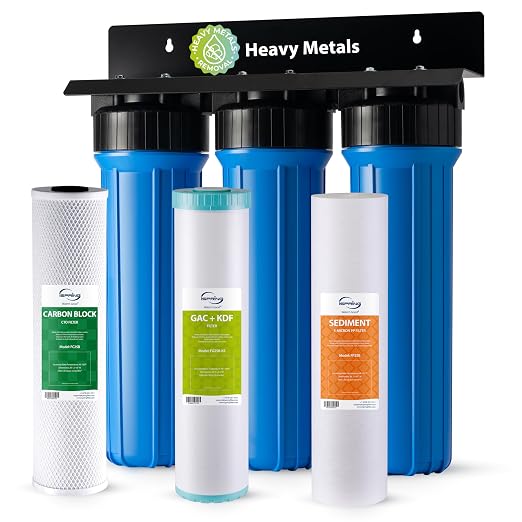
- PROTECT YOUR FAMILY AND APPLIANCES - The 2nd-stage FG25B-KS 20” x 4.5” compound filter removes chlorine, lead, mercury, hydrogen sulfide, heavy metals, pesticides, herbicides
- DIY INSTALLATION AND MAINTENANCE - This whole house water filtration system comes with easy-to-follow manual and YouTube videos for hassle-free DIY installation. 1” NPT
The Short Answer
A whole house water filtration system typically costs $150 to $450 for a standard 2- or 3-stage cartridge unit, and $950 to $1,450 if you add a water softener into the same setup. On top of the hardware, budget $150 to $600 for installation if you hire a plumber, or roughly $40 to $120 in fittings and a shut-off valve if you do it yourself. Filter replacements then run $30 to $120 every 6 to 24 months, which is the number most buyers forget to plan for.
Where the Money Actually Goes
The sticker price on the box is only one line item. The real "buy and install" cost is four separate buckets, and treating them as one is why people feel blindsided later.
1. The hardware itself
A 2-stage sediment-and-carbon unit sits at the low end. A 3-stage unit adds a dedicated stage for chlorine, chloramine, or heavy metals. A softener-plus-filter combo is a different category of purchase entirely because it includes a resin tank and a metered control valve, which is why those units land near four figures.
2. Installation labor
Most plumbers quote by the job, not the hour, for a main-line filter. A clean install where there is already a horizontal run of pipe after the meter is the cheap end. Cutting into finished walls, adding a bypass loop, or plumbing a softener drain line pushes it toward the high end.
3. Fittings and the shut-off you will wish you had
Even a self-install needs a main shut-off you can reach, two isolation valves or a bypass, and adapters to match your pipe size to the unit's ports. Port size matters here: some units use 3/4" ports and others use 1" ports, and mismatching them means extra reducers and extra flow restriction.
4. Ongoing filter replacement
This is the cost that never appears in the buy price. Cartridge life ranges from a few months to two years depending on the unit and your water. Budget it up front or the system quietly stops working when the cartridges clog.
Step-by-Step: Buying and Installing It in the Right Order
Do these in sequence. Skipping the first two steps is the single biggest cause of a system that technically installs but does not fix the water.
- Test your water first. Buy a cheap test kit or get your utility's report. If you have city water, you are usually treating chlorine, chloramine, taste, and sediment. If you have well water, you may be dealing with hydrogen sulfide, iron, or hardness, which changes the unit you need. Gotcha: buying a chlorine-focused filter for well water that has a rotten-egg sulfur smell will not fix the smell.
- Match the stage count to the problem. Sediment plus taste and odor is a 2-stage job. Add heavy metals, chloramine, or hydrogen sulfide and you want a 3-stage unit. Hard water that leaves scale is a softener job, not a filter job. Gotcha: a filter does not soften water, and a softener does not remove chlorine taste. If you have both problems you need a combo unit.
- Measure your main line and check the port size. Note whether your main is 3/4" or 1", and confirm the unit's port size matches. Gotcha: putting a 3/4"-port unit on a 1" main can throttle your whole-house flow and drop shower pressure.
- Pick the install location. It should be on the main line after the meter and pressure regulator but before it branches to the house, with room to unscrew the housings straight down. Gotcha: mount it too close to a wall or ceiling and you will not be able to remove the sump to change cartridges.
- Add a bypass and shut-off valves. Two isolation valves plus a bypass let you change filters or service the unit without killing water to the whole house. Gotcha: units that ship with valves already in the head save you this parts run.
- Shut off the main, drain the line, and cut in. Open a low faucet to relieve pressure before you cut. Gotcha: forgetting to depressurize sprays the whole run when you make the first cut.
- Dry-fit, then seal and tighten. Use thread tape on threaded connections and respect the flow-direction arrow on the head. Gotcha: installing the head backwards is common and quietly kills filtration performance.
- Slowly reopen and flush. Open the main a quarter turn, check every joint for weeping, then run the units for several minutes to flush carbon fines. Gotcha: new carbon runs gray or cloudy at first; that is normal and clears with flushing, so do not panic and rip it out.
- Check pressure and log the date. If your unit has pressure gauges, note the clean-cartridge reading. Write the install date on the housing so you know when replacement is due.
What Goes Wrong
These are the failure modes that turn a good buy into a callback. Each has a symptom you will actually notice.
Pressure drop across the house
Symptom: weak showers and slow faucets after install. Cause: undersized ports for your main, or clogged cartridges. Fix: confirm the port size matches your line, and if you have pressure gauges, a big gap between inlet and outlet readings means the cartridges are spent. Replace them.
Water still smells or tastes off
Symptom: chlorine taste, or a rotten-egg sulfur smell, survives the filter. Cause: wrong media for the contaminant, or exhausted carbon. Fix: match the unit to the contaminant. Hydrogen sulfide and chloramine need media rated for them, not a plain sediment cartridge.
Leaks at the housing
Symptom: dripping where the sump meets the head. Cause: a pinched or dry O-ring, or over-tightening. Fix: reseat the O-ring, lubricate it with silicone grease, and hand-tighten with the wrench, not with full force.
Scale keeps building despite the filter
Symptom: white crust on faucets and glassware. Cause: you bought a filter for a hardness problem. Fix: a filter does not remove hardness minerals. You need a softener or a combo unit.
Cartridges clog fast
Symptom: pressure drops again within weeks. Cause: heavy sediment load overwhelming a fine filter. Fix: add or upsize the sediment pre-stage so the finer stages last longer.
Where a spec is not printed in a product's listing it is marked "Not stated" rather than guessed. Confirm port size against your own main line before ordering, and go read the current owner reviews yourself on each product page rather than trusting a summary.
When the Fix Is a New One
Sometimes the honest move is not another cartridge or another fitting. Replace the unit when: your pressure gauges show a large, permanent drop even with fresh cartridges; the housing cracks or leaks after reseating the O-ring; or the water problem is simply the wrong kind for the unit you own. Here are three units described by what they change for this task.
If your problem is hard water plus filtration in one line
A combo unit puts softening and filtration on the same connection so you are not plumbing and maintaining two separate boxes. The PRO+AQUA PRO-E-S80E Elite Combo pairs whole house filtration with an 80,000-grain softener, aimed at large homes and well water. Check Price on Amazon
For a smaller footprint, the Kenmore Elite 520 Hybrid is an NSF-certified 2-in-1 softener and filter that handles both jobs in a single hybrid tank. Check Price on Amazon
If your problem is chloramine, heavy metals, or a sulfur smell
When a plain sediment-and-carbon setup cannot clear the contaminant, a 3-stage unit built for those specific problems is the swap. The iSpring WGB32B-KS is a 3-stage system that targets heavy metals, hydrogen sulfide, chlorine, chloramine, and sediment. Check Price on Amazon
If you want to see the pressure drop before it becomes a problem
A unit with built-in gauges tells you when cartridges are spent instead of leaving you guessing. The PRO+AQUA GEN2 PRO-100-E is a 3-stage system with pressure gauges and 1" ports, which makes diagnosing a clog straightforward. Check Price on Amazon
FAQ
How much does it cost to install a whole house water filter yourself?
Expect roughly $40 to $120 in shut-off valves, a bypass, thread tape, and any adapters to match your pipe size. A unit that ships with valves in the head, like the 3-stage system with 2 valves, trims that parts list.
Do I need a plumber, or can I do this myself?
If there is an accessible horizontal run on the main after the meter and you are comfortable cutting and sweating or push-fitting pipe, it is a doable DIY job. Hire a plumber if the main is inside a finished wall, if you need a softener drain line, or if your local code requires a licensed install.
What is the difference between a filter and a softener, cost-wise?
Filters are the cheaper category, from about $150 to $450, because they are cartridges in a housing. Softeners and combo units cost more, from roughly $950 to $1,450, because they add a resin tank and a metered control valve.
How often will I pay for replacement filters?
It depends on the unit and your water. Some are rated for 1.5 to 2 years of filter life, while heavier sediment or higher usage shortens that. Log your install date and watch your pressure gauges if the unit has them.
What size ports should my whole house filter have?
Match the unit to your main line. Some units use 1" ports and others use 3/4" ports. Putting a smaller port on a larger main can restrict flow and drop pressure across the whole house, so measure before you buy.
Will a whole house filter fix hard water spots?
No. A filter removes sediment, chlorine, and similar contaminants but does not remove the hardness minerals that cause scale and spotting. For that you need a softener or a combo softener-plus-filter unit.
For recall and safety information on water treatment equipment, you can check the U.S. Consumer Product Safety Commission recall list before you buy.