If you're researching Springwell CF1 vs iSpring WGB32B homebrewing IPAs at home in 2026, the short answer is this: the Springwell CF1 is the better all-around pick for serious IPA brewers thanks to its higher service flow, longer catalytic-carbon media life, and stronger chloramine performance, while the iSpring WGB32B wins on upfront cost, easier DIY cartridge changes, and a smaller footprint. Both will strip the chlorine that destroys hop aroma and prevents the band-aid phenolic off-flavors that haunt municipal-water homebrewers. But hop-forward beers like West Coast IPAs and hazy NEIPAs demand more from your water than just dechlorination.
Below we break down how each system actually performs in a 5-gallon all-grain IPA workflow, what to watch out for, and which supporting filters matter if you're on well water or a chloraminated city supply.
Why brewing water is the silent variable in every IPA
Hoppy ales are unforgiving. Unlike a roasty stout that can mask flaws, an IPA puts every off-flavor under a microscope. Chlorine and chloramines from municipal supplies react with phenols from hop polyphenols and malt husks to form chlorophenols, which give your beer a TCP or band-aid taste detectable down to 5 parts per billion. Even a trace amount torpedoes an otherwise great Citra or Mosaic dry hop.
That's the floor. The ceiling is where the Springwell CF1 vs iSpring WGB32B homebrewing IPAs question gets interesting, because beyond removing chlorine, the right whole-house system gives you consistent baseline water you can build on with brewing salts (gypsum, calcium chloride) to dial in your sulfate-to-chloride ratio. For a crisp West Coast IPA you want sulfate-dominant (around 2:1 or 3:1 SO4:Cl); for a juicy NEIPA you want chloride-dominant. Inconsistent source water makes that math impossible from batch to batch.
The Springwell CF1 in a brewing context
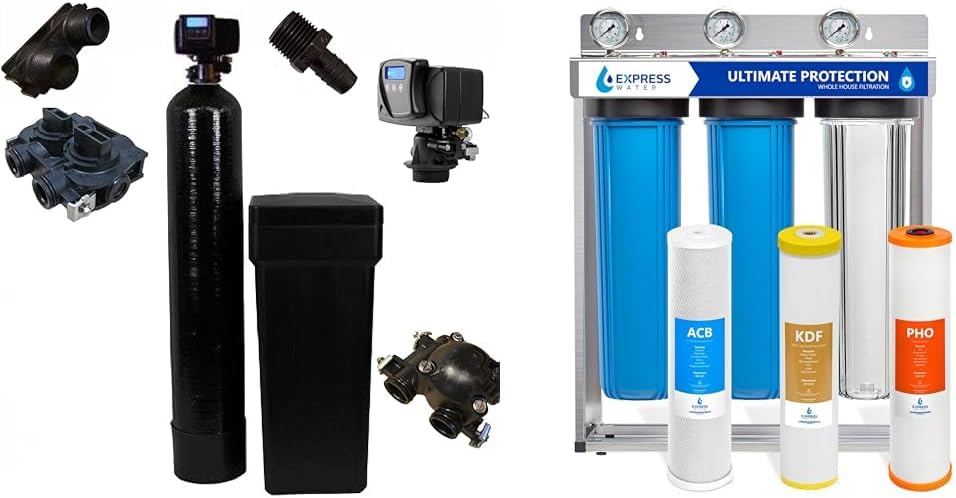
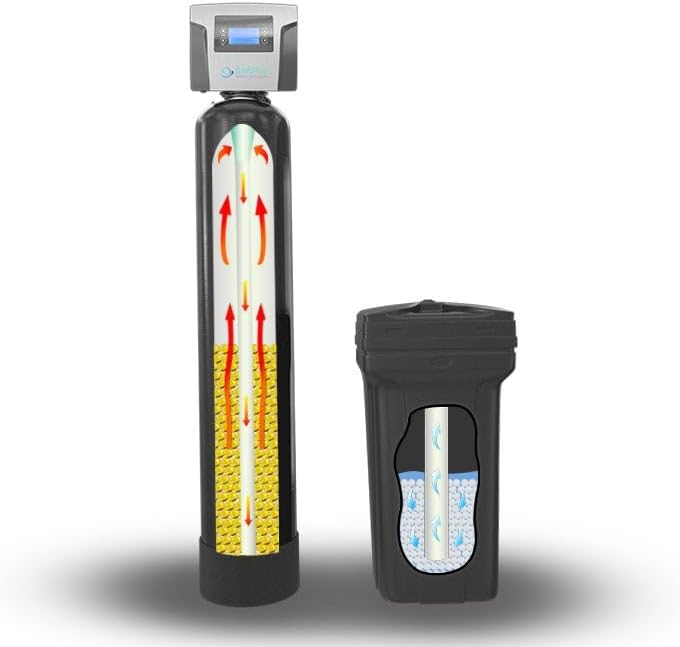
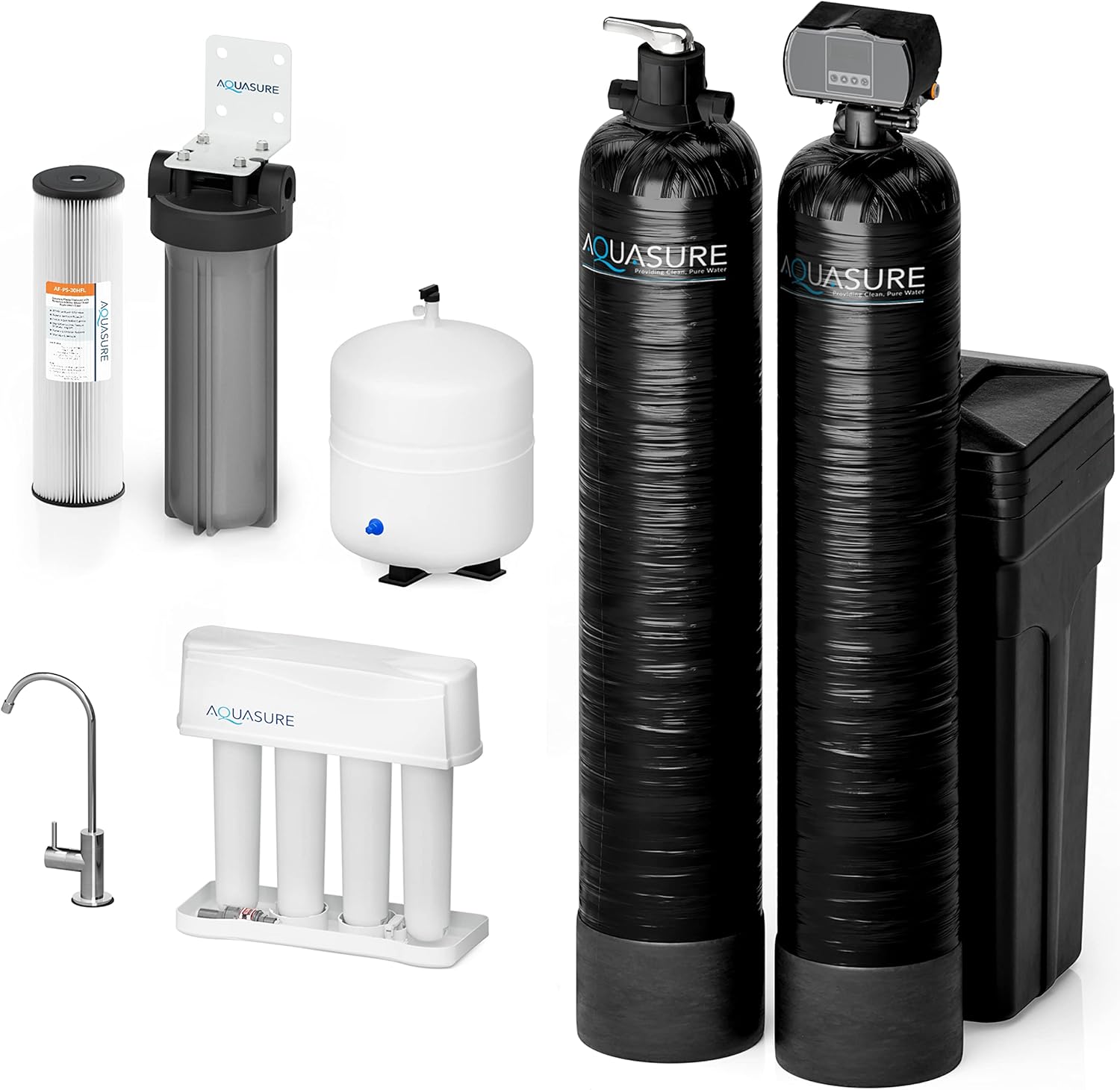
The Springwell CF1 is a tank-based whole-house carbon system using a coconut-shell catalytic carbon bed. The CF1 designation is sized for 1 to 3 bathroom homes with a 9 GPM service flow, which is overkill for brewing but means zero pressure drop while you're sparging or filling your hot liquor tank.
Key advantages for the IPA brewer:
- Catalytic carbon actively breaks chloramine bonds, not just adsorbs free chlorine. Critical if your city uses chloramines, which most large US utilities did as of 2026.
- Long media life: Springwell rates the CF1 media at around 1,000,000 gallons or roughly 6 years for a typical household. A homebrewer running 15-20 gallons per batch will never stress the bed.
- No cartridge changes: the tank media is replaced once, far down the road. No quarterly cartridge ritual eating into brew-day time.
- Minimal mineral stripping: unlike RO, the CF1 leaves calcium, magnesium, and bicarbonate alkalinity intact, giving you a meaningful starting profile to adjust from.
Drawbacks: the CF1 is a real plumbing install (bypass valve, 1-inch connections, roughly 50-inch tall tank), the upfront cost is notably higher than a cartridge system, and it does nothing for iron, manganese, or hardness on its own. Springwell sells optional UV and sediment pre-filter add-ons that pair with it.
The iSpring WGB32B in a brewing context
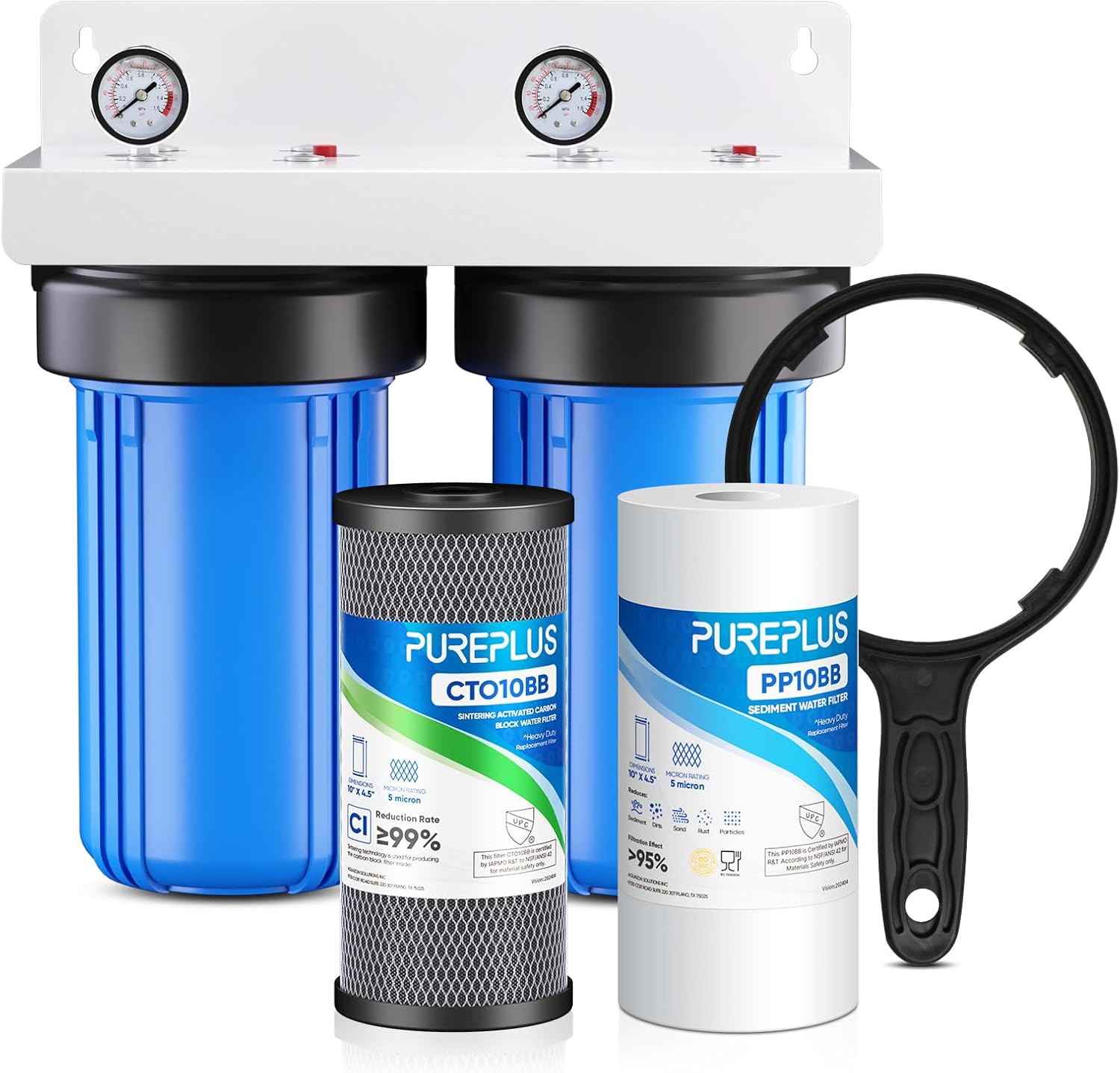
The iSpring WGB32B is a 3-stage Big Blue cartridge system: sediment pre-filter, granular activated carbon (GAC), and a coconut-shell carbon block (CTO). It is rated for 100,000 gallons with roughly 15 GPM peak flow.
Brewing advantages:
- Lower upfront cost, often a third to a half the price of the CF1.
- Visible pre-filtration: the clear first housing lets you see when the sediment cartridge needs changing, helpful for private-well homebrewers.
- Cartridge granularity: you can swap any one stage independently. Want a tighter 1-micron sediment? Drop it in. Want to add a KDF stage for trace metals? Swap a housing.
- Easier DIY install, fewer ceiling-height concerns and simpler bracket mounting.
Drawbacks: the standard WGB32B cartridges are GAC plus CTO, which adsorb free chlorine well but are weak on chloramines without an upgrade to a dedicated catalytic-carbon cartridge. For chloraminated city water, this is the most important asterisk in the comparison. Also, cartridges need replacement every 6 to 12 months ($60 to $120/year recurring), and at full whole-house flow you will see pressure drop sooner than with a tank-based system.
Springwell CF1 vs iSpring WGB32B at a glance
| Feature | Springwell CF1 | iSpring WGB32B |
|---|---|---|
| System type | Tank-based catalytic carbon | 3-stage cartridge (sediment + GAC + CTO) |
| Service flow | ~9 GPM | ~15 GPM peak (~7-8 GPM sustained) |
| Chlorine removal | Excellent | Excellent |
| Chloramine removal | Excellent (catalytic carbon) | Fair (GAC only, upgrade cartridge needed) |
| Media life | ~1,000,000 gal / ~6 years | ~100,000 gal / 6-12 months per cartridge |
| Sediment pre-filtration | Optional add-on | Built into stage 1 |
| Iron / manganese | Not included | Not included |
| Annual upkeep | $0 for years 1-5 | $60-120/year cartridges |
| Footprint | ~50-inch tank + bypass | ~26-inch 3-stage manifold |
| Best fit for IPAs | Chloraminated city water, set-and-forget | Free-chlorine city or pre-filtered well |
The decision framework for IPA brewers
Pick the Springwell CF1 if: you're on chloraminated municipal water (call your utility or check your annual Consumer Confidence Report if unsure), you brew at least twice a month, and you want zero maintenance for years. The catalytic-carbon advantage is real: GAC alone leaves enough residual chloramine to throw a perceptible band-aid note in a hop-forward beer.
Pick the iSpring WGB32B if: your supply uses free chlorine (smaller municipalities, well water with shock chlorination), you're brewing as a hobby rather than running a nano, or you want the flexibility to mix and match cartridges as your water-chemistry needs evolve.
Supporting picks: real systems for adjacent brewing-water problems
Neither flagship system solves every problem, especially if you're on well water or have a budget below $400. Here are the supporting filters that actually move the needle for IPA brewers in 2026.
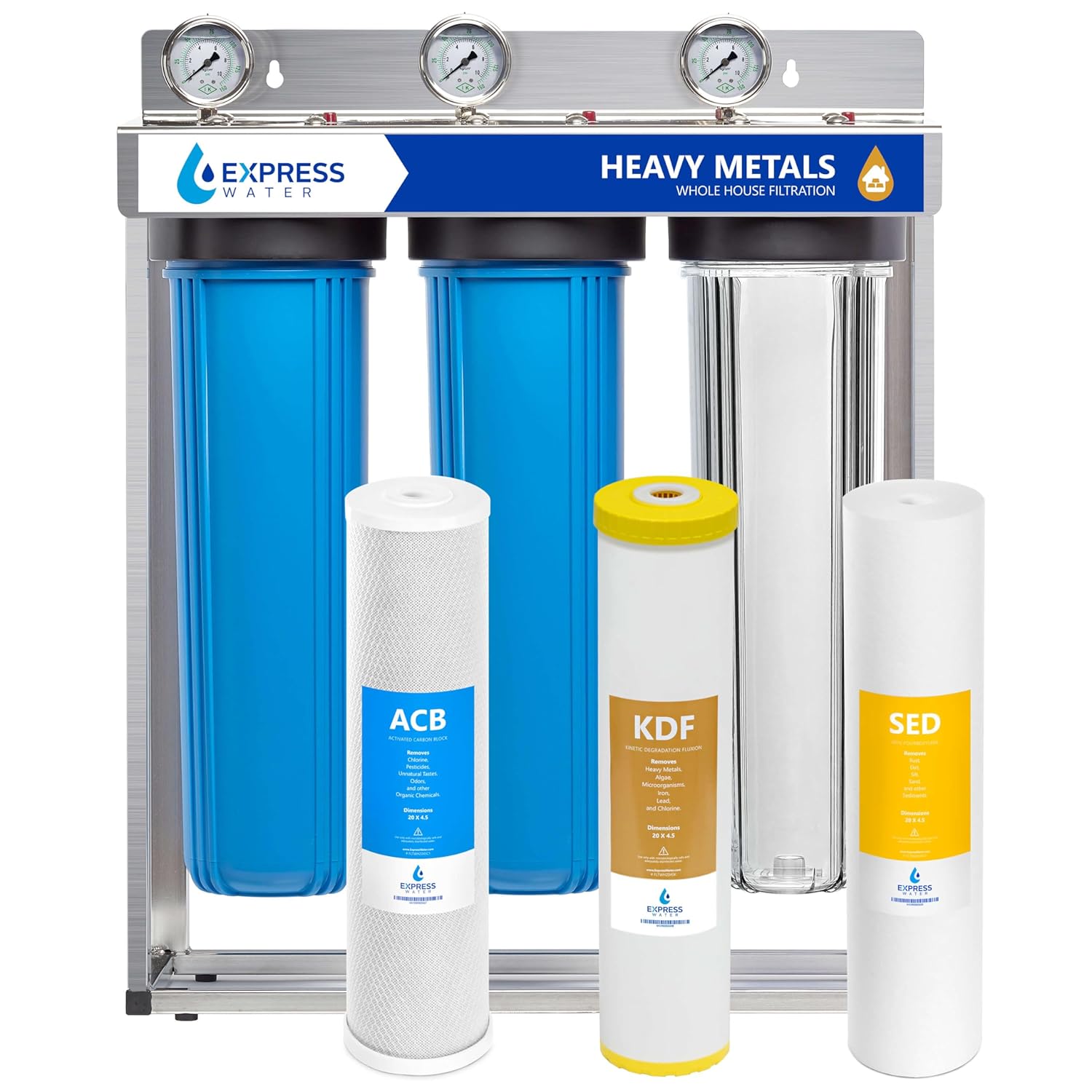
Best budget alternative: Express Water 3-Stage Whole House Water Filter
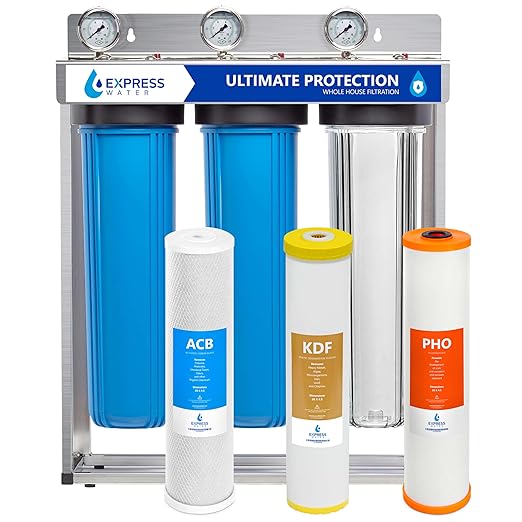
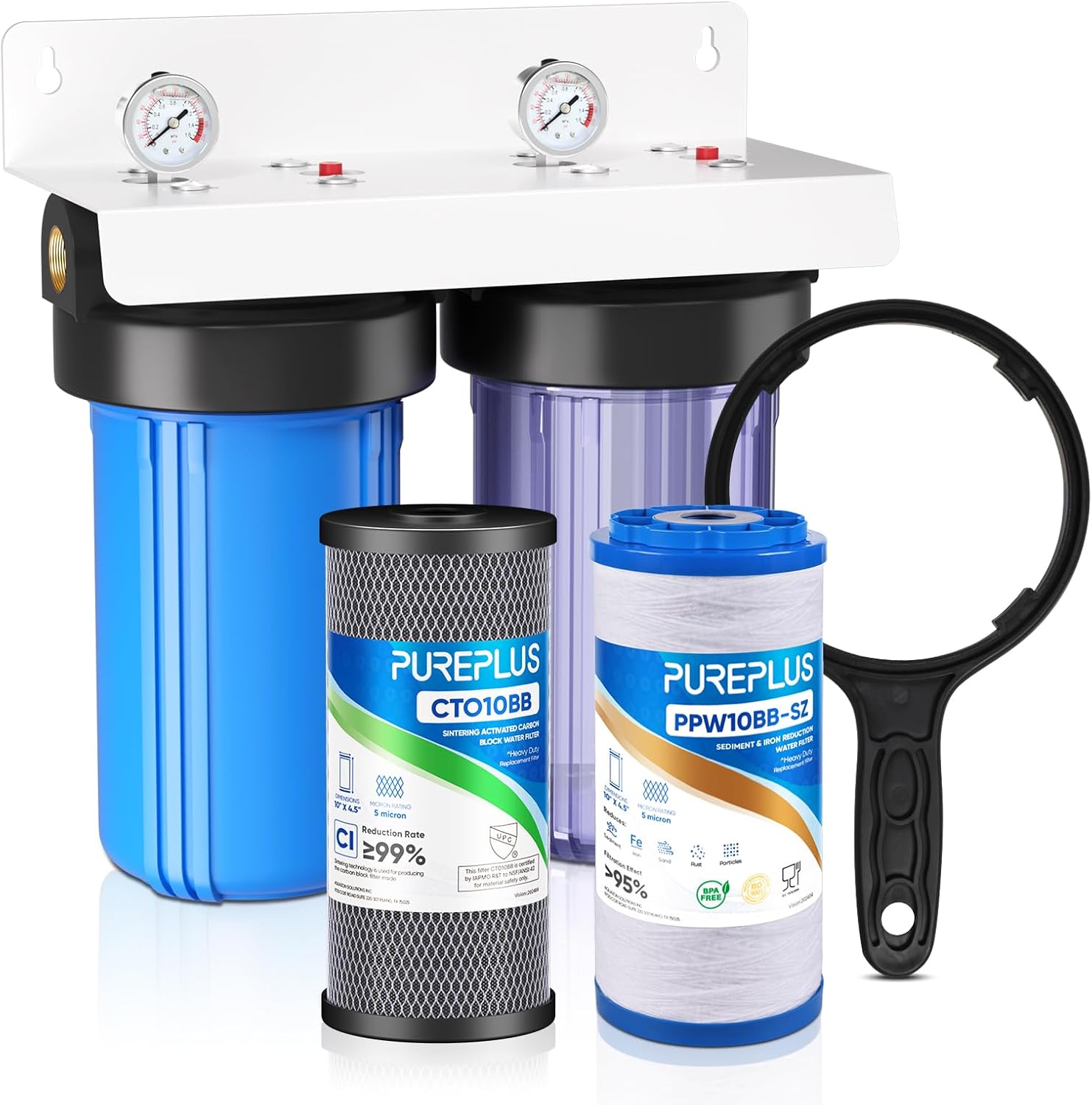
If the WGB32B is out of budget, the Express Water 3-Stage delivers a similar Big Blue cartridge layout (sediment, KDF/GAC, and carbon block) at a lower entry price. It accepts standard 10x4.5 cartridges, which means you can drop in upgraded media (catalytic carbon, KDF85 for iron, or finer sediment) as your brewing demands grow. For a homebrewer planning to adjust water chemistry with salts anyway, the Express Water is a competent dechlorination and sediment platform.
Check the Express Water 3-Stage Whole House Filter on Amazon
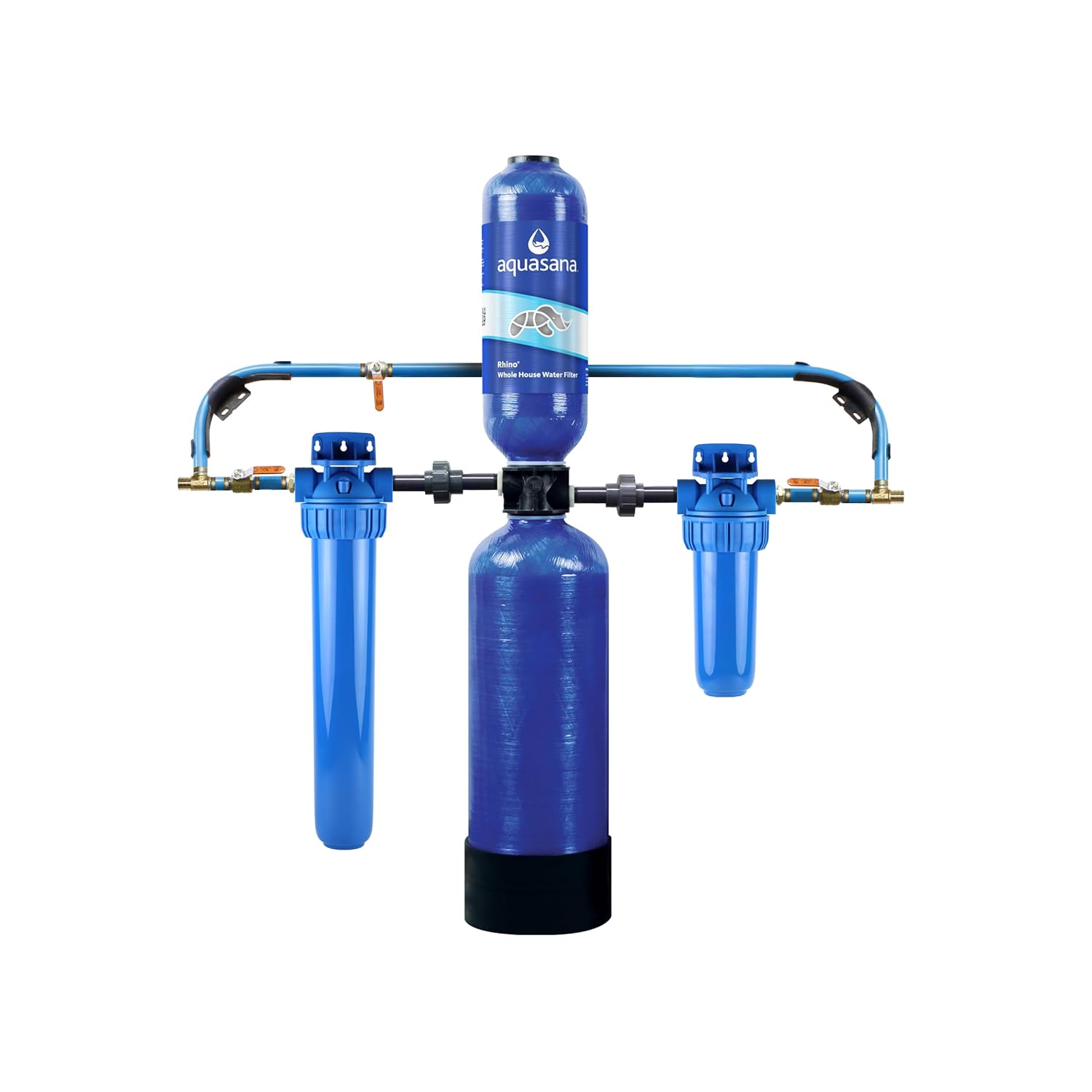
Best well-water complement: Aquasana Whole House Well Water Filter
If you're a country homebrewer pulling from a well, the Springwell CF1 and iSpring WGB32B both assume your raw water is already free of iron, sulfur, and pathogens. Wells rarely cooperate. The Aquasana 500K-gallon well system bundles UV sterilization with carbon and KDF stages, which kills biological contamination (a fermentation killer) and pulls trace iron that would otherwise oxidize during the boil and lend a metallic, blood-coin flavor to your finished IPA.
Check the Aquasana Whole House Well Water Filter on Amazon
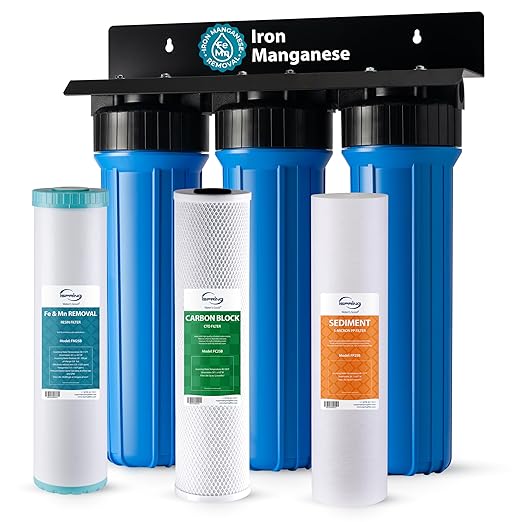
Best iron problem-solver: iSpring Iron & Manganese Whole House System
Iron above 0.3 ppm is a death sentence for hoppy ales: it catalyzes the oxidation of hop oils and turns a juicy NEIPA into cardboard within a week. If your well water tests positive for iron or manganese (orange staining on fixtures is the tell), no carbon filter alone will fix it. The iSpring Iron & Manganese system uses an air-injection oxidation tank that drops iron out of solution before it ever reaches your CF1 or WGB32B, protecting your investment downstream.
Check the iSpring Iron & Manganese System on Amazon
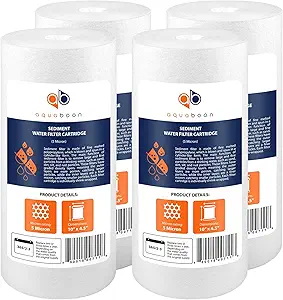
Best pre-filter for either flagship: Aquaboon 5 Micron Sediment Filter 4-Pack
A sediment pre-filter ahead of your main carbon system extends the life of the catalytic carbon in the CF1 (or the GAC in the WGB32B) by years, especially if you're on a well or older municipal pipes. The Aquaboon 5-micron 10x4.5 cartridges are spun polypropylene and drop straight into any Big Blue housing. The 4-pack covers most of a year's pre-filtration for the cost of a single hop bill.
Check the Aquaboon 5 Micron Sediment Filter 4-Pack on Amazon
Honorable mention: HQUA WF3-01 3-Stage System
The HQUA WF3-01 is another 3-stage Big Blue platform comparable to the WGB32B, often available at a tighter price point. It's a credible alternative for homebrewers who want the cartridge flexibility of the iSpring at a lower entry cost. As with the Express Water, the value is in the housing, since you can upgrade media as your IPA recipes get more ambitious.
Check the HQUA WF3-01 3-Stage System on Amazon
Should you soften your water for IPAs?
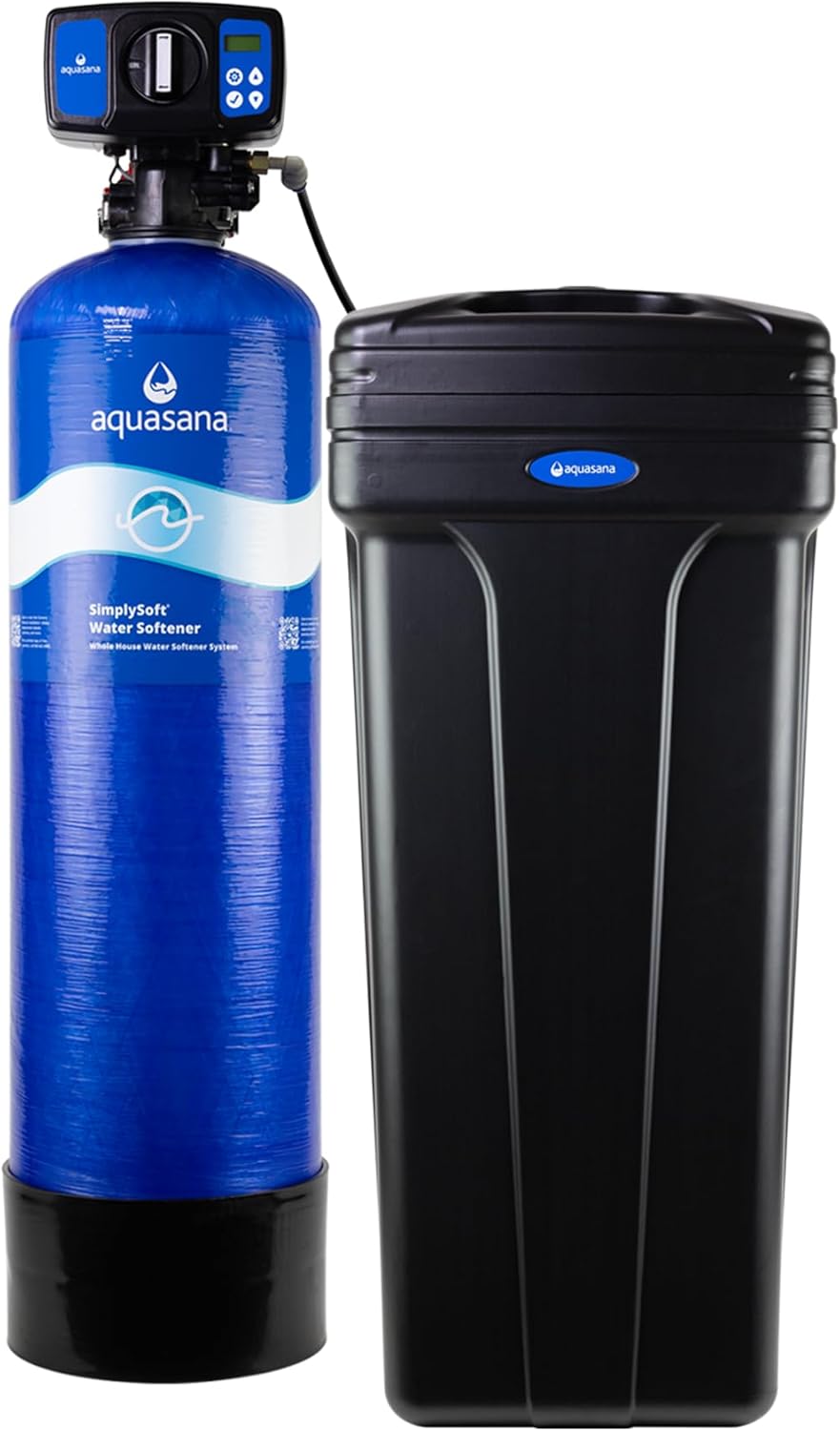
This is the second question every homebrewer asks after Springwell CF1 vs iSpring WGB32B homebrewing IPAs comes up. The answer: do not soften the water you brew with. Conventional ion-exchange softeners replace calcium and magnesium with sodium, and high sodium in brewing water (above ~150 ppm) gives a salty, harsh finish that ruins hop expression. If you must soften for the rest of your house, install the softener after a bypass tee that splits off a dedicated unsoftened line to your kitchen and brew area. Many homebrewers run the CF1 on the unsoftened branch and live happily.
For more on this tradeoff see our guide on water softener vs water filter and our deep dive on the best whole-house filters for well water in 2026.
Testing your water before you choose
You can't decide between the Springwell CF1 and the iSpring WGB32B without a water test. At a minimum, you need to know:
- Whether your municipality uses chlorine or chloramine (chloramine points to the CF1)
- Total hardness in ppm CaCO3
- Sulfate and chloride levels (so you know how much to adjust)
- Iron and manganese (above 0.3 ppm means adding the iSpring iron system upstream)
- Total dissolved solids (TDS)
Most US municipal customers can find these in their utility's annual Consumer Confidence Report. Well users should send a sample to a state-certified lab; see our guide to brewing water testing for the cheapest reliable options.
Frequently Asked Questions
Does the Springwell CF1 remove enough chloramine for hazy IPAs?
Yes. The CF1's catalytic coconut-shell carbon is designed specifically for chloramine reduction, not just adsorption like standard GAC. Independent third-party tests show over 97% chloramine reduction at rated flow, well below the threshold where chlorophenols become detectable in a hop-forward beer. For NEIPAs in particular, where soft fruit-forward hop character is the entire point, the CF1's chloramine performance is the single biggest reason to choose it over the iSpring WGB32B.
Will the iSpring WGB32B handle a 10-gallon brew day without pressure drop?
Yes, with caveats. The WGB32B's 15 GPM peak flow is well above what a single garden-hose sparge demands (typically 1-2 GPM). Where you'll notice pressure drop is on cartridges nearing the end of life, particularly the sediment stage if you're on a well. Swap the pre-filter every 6 months and you'll never see a flow problem during brewing.
Do I need a sediment pre-filter ahead of the Springwell CF1?
If you're on chloraminated municipal water with low turbidity, no, the CF1 handles it directly. If you're on a well, hard yes. Adding a 5-micron spun polypropylene pre-filter (Aquaboon or equivalent) ahead of the CF1 extends catalytic carbon life dramatically and prevents the tank's bed from channeling around sediment buildup. Most well-water homebrewers stack a 20-micron sediment, then a 5-micron, then the carbon system.
Can I use RO water for IPAs instead of a whole-house filter?
You can, but it's overkill for most homebrewers and you'll need to rebuild minerals from scratch with brewing salts. A whole-house carbon system like the Springwell CF1 leaves the calcium and bicarbonate alkalinity that gives you a usable baseline. Use RO if you brew Pilsners or Czech lagers where you want a near-zero starting profile. For IPAs, dechlorinated tap water beats RO plus salts on cost and convenience.
How often do iSpring WGB32B cartridges actually need changing for a homebrewer?
The sediment cartridge: every 6 months on well water, 9-12 months on municipal. The GAC: every 12 months regardless. The CTO carbon block: every 12 months or sooner if you start tasting chlorine again. A homebrewing household using 30,000-50,000 gallons of treated water annually fits comfortably inside the rated 100,000-gallon system life, but cartridges fail by channeling and bacterial fouling, not gallon count alone, so don't skip the calendar.
Does either system affect the sulfate-to-chloride ratio I need for hop expression?
Neither carbon system meaningfully changes sulfate or chloride levels, which is good. Carbon adsorbs organics and dechlorinates; it doesn't pull dissolved inorganic ions. Your starting sulfate and chloride from the tap pass through largely unchanged, which means you can build your brewing water profile predictably with calcium sulfate (gypsum) and calcium chloride additions to hit your target SO4:Cl ratio for the style you're brewing.
Is the price difference between the CF1 and WGB32B worth it for a homebrewer?
For 1-2 batches a month, the WGB32B's lower entry cost is hard to argue with, but factor in cartridges over 5 years and the gap closes. If you're on chloraminated water and care about hop aroma, the catalytic-carbon advantage of the CF1 is worth the premium. If you're on free-chlorine municipal water or a clean well, the WGB32B does 95% of what the CF1 does at a fraction of the upfront cost. The honest math depends almost entirely on whether your utility uses chloramines.
Key Takeaways
- Choosing the right Springwell CF1 vs iSpring WGB32B homebrewing IPAs means matching capacity and output ports to your actual devices
- Always check actual watt-hours (Wh), not just watts — runtime depends on Wh, not peak output
- Also covers: best water filter for homebrew IPA
- Also covers: chlorine removal for brewing beer
- Also covers: Springwell CF1 craft beer brewing
- Compare price-per-Wh across models to find the best value for your budget