If your Springwell CF1 lives in an unheated Vermont basement, the honest answer is: you have two choices each fall. Either keep water moving through the system with insulation and heat cable, or fully drain, bypass, and shut the unit down for the season. This 2026 guide on how to winterize Springwell CF1 unheated basement installs walks through both paths, the temperature thresholds where carbon tanks crack, and the small parts (sediment cartridges, heat cable, pipe insulation) that prevent an $1,800 mineral tank replacement. Vermont winters routinely drop unheated basement temperatures below 32°F near foundation walls, and the CF1's fiberglass mineral tank, plastic bypass, and pre-filter housing cannot survive a hard freeze.
Why the Springwell CF1 is vulnerable in unheated Vermont basements
The CF1 is a four-stage whole-house carbon filter built around a fiberglass-wound mineral tank containing roughly 1.0 to 1.5 cubic feet of catalytic coconut-shell carbon and KDF media. The tank itself is mostly water by volume during operation, and water expands about 9% when it freezes. Even a partial freeze inside the tank head or the bypass body cracks the threaded plastic, and Springwell's warranty explicitly excludes freeze damage from coverage.
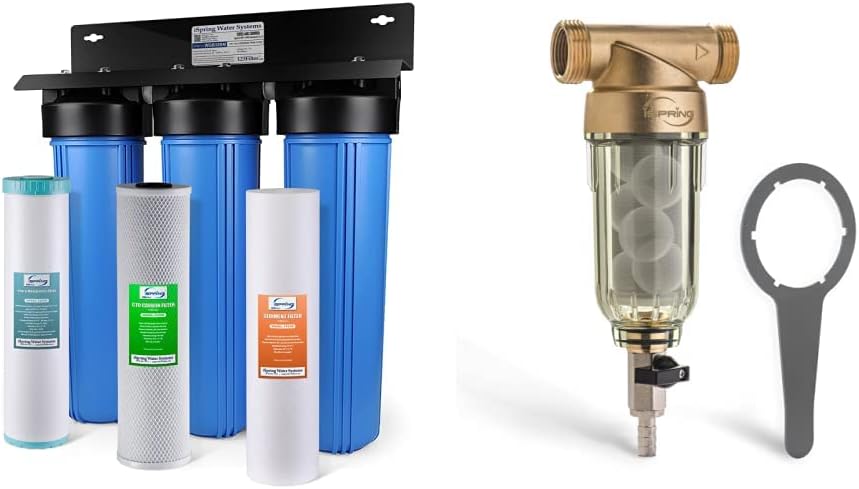
Vermont basements in unheated outbuildings, hunting camps, ski-week rentals, and seasonal homes near Stowe, Killington, and the Northeast Kingdom routinely see sustained sub-freezing air for 8 to 14 weeks straight. Even year-round homes with unheated mechanical rooms can drop to 28-34°F at the foundation slab, especially if the CF1 sits against an exterior wall. A single 0°F night with no air movement around the unit is enough to crack the brine line, the pre-filter sump, or the riser tube inside the tank.
Step-by-step: how to winterize Springwell CF1 unheated basement setups
Option A — Keep the system live through winter (occupied homes)
If you live in the house year-round and water keeps flowing through the CF1 at least daily, freezing is unlikely as long as ambient air stays above about 38°F at the unit. Layer these protections:
- Self-regulating heat cable wrapped around the inlet, outlet, bypass body, and pre-filter housing. Use 5-watt-per-foot UL-listed cable, never constant-wattage cable, on plastic plumbing.
- R-13 fiberglass or closed-cell foam wrap around the mineral tank. Slip a tank jacket over the fiberglass shell and tape seams with foil HVAC tape.
- 3/4-inch wall pipe insulation on every inch of copper or PEX within six feet of the unit. Pay special attention to the drain line that exits to the floor drain or condensate pump.
- A thermostatically-controlled space heater set to 45°F as a backup. A 400-watt oil-filled radiator costs about $40 to run for a full Vermont winter.
- A WiFi temperature sensor next to the bypass. Govee and SensorPush both push phone alerts below a threshold you set; 38°F is the sweet spot.
Option B — Full shutdown and drain (seasonal homes, camps, long trips)
For unoccupied properties, the only safe approach is a full drain. The CF1 was never designed for storage below freezing with water inside. Plan on 45 to 90 minutes:
- Shut off the main water supply upstream of the CF1.
- Open the highest faucet in the house to break vacuum.
- Turn both bypass handles to bypass, then back to service to relieve inlet pressure.
- Connect a garden hose to the tank drain port at the base of the mineral tank head. Route it to a floor drain or out a basement window.
- Open the drain and let gravity empty the tank. This takes 20 to 40 minutes for a CF1 because saturated carbon releases water slowly.
- Once flow stops, use a wet/dry shop vac on the drain port for five minutes to pull residual water out of the carbon bed.
- Unscrew the pre-filter housing, dump the standing water, and store the sediment cartridge dry in a sealed bag. Replace it in spring with a fresh one.
- Move the bypass to the bypass position permanently for the off-season.
- Blow compressed air (under 40 psi) through the inlet for 15 seconds to clear the bypass body.
- Tape a sign to the bypass: "DRAINED — DO NOT TURN ON UNTIL REFILLED."
Carbon media is fine to freeze when dry. It is the wet, ice-expanding carbon that splits tank walls and snaps internal riser tubes.
Parts and products that matter for a Vermont winterization
The single most replaced part during a CF1 winterization is the 5-micron sediment pre-filter, because it sits in the most freeze-vulnerable housing and because the cartridge itself is destroyed by even one freeze cycle. Stock spares before October. Heat cable, a tank jacket, and a compact backup filter for seasonal camps round out the kit.
| Product | Role in CF1 winterization | Why it matters in Vermont |
|---|---|---|
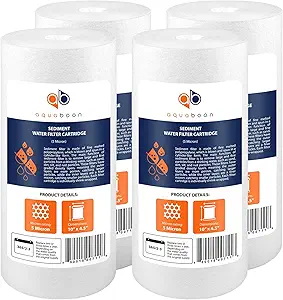
| Aquaboon 5 Micron 10x4.5 Sediment Filter (4-pack) | Direct CF1 pre-filter replacement | Stock four cartridges before winter — frozen housings ruin the one in service |
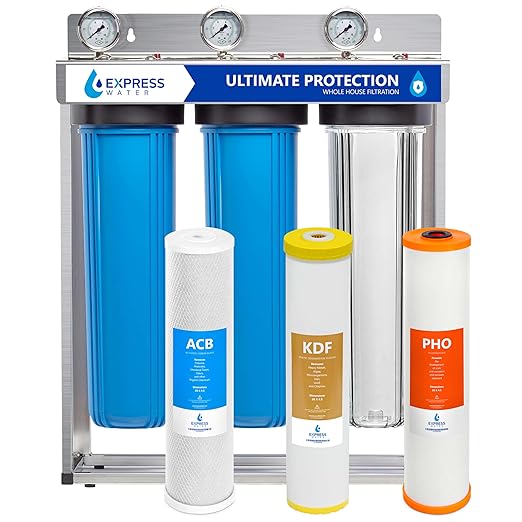
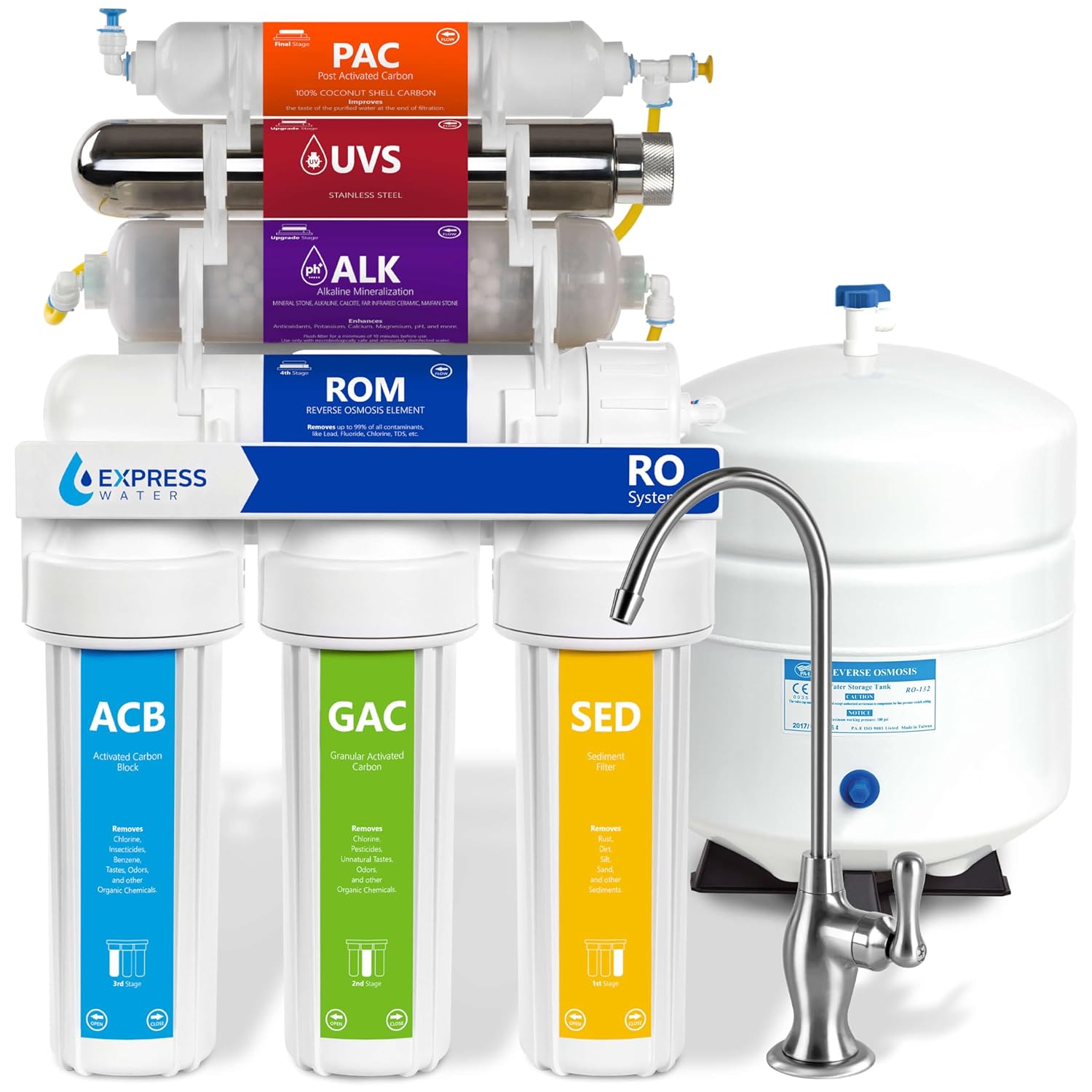
| Express Water 3-Stage Whole House Filter | Compact alternative for seasonal camps | Far easier to drain than a tank-based CF1 in unheated cabins |
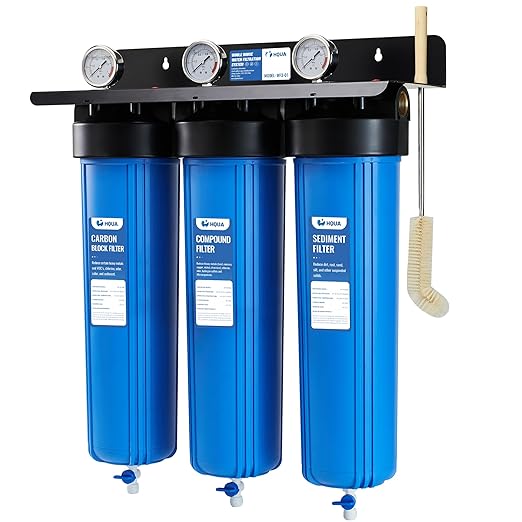
| HQUA WF3-01 3-Stage Whole House Filter | Lightweight October-May swap | Uses the same 10x4.5 cartridges as the CF1 pre-filter |
Aquaboon 5 Micron 10x4.5 Well Water Sediment Filter (4-Pack)
The CF1 ships with a 5-micron, 10x4.5-inch sediment cartridge in the pre-filter housing. The Aquaboon 4-pack is the same dimensions and micron rating, and one pack covers a full year of normal use plus a fresh cartridge for spring re-commissioning after winterization. Buy these in early fall before shipping slows down in northern Vermont. Check current price on Amazon.
Express Water 3-Stage Whole House Water Filter System
For a hunting camp or unheated seasonal home where draining a CF1 every October is more work than the system is worth, the Express Water 3-stage unit makes a reasonable May-through-October swap. Its clear housings let you spot residual water before a freeze, and it drains in under five minutes. See it on Amazon.
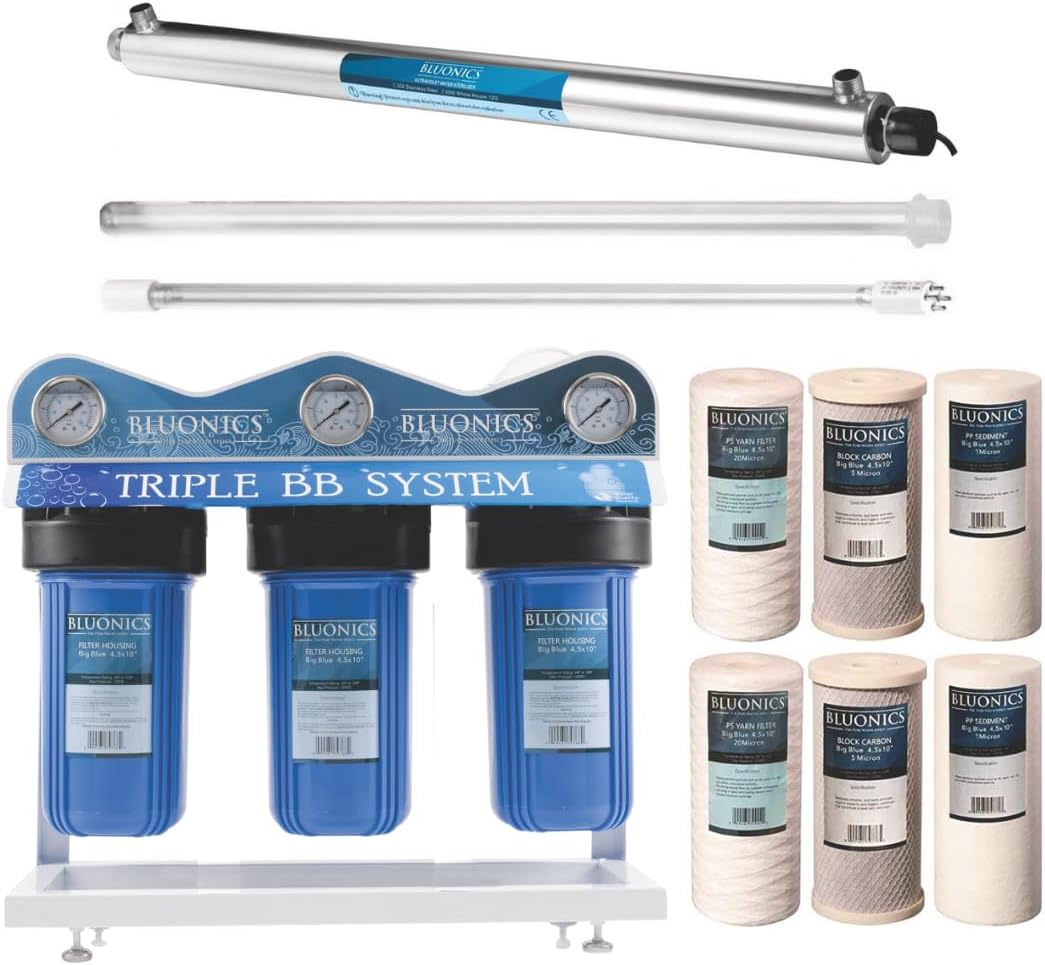
HQUA WF3-01 3-Stage Whole House Water Filtration System
Similar role to the Express Water above — a small, drainable backup for properties where the CF1 stays mothballed all winter. The HQUA is slightly cheaper and uses standard 10x4.5 cartridges, so it shares the Aquaboon sediment filters with your CF1, simplifying spare-parts inventory. View on Amazon.
Common mistakes Vermont CF1 owners make in their first winter
The fundamentals of how to winterize Springwell CF1 unheated basement installs are not complicated, but three repeat mistakes account for most freeze claims we see in 2026.
The biggest is assuming a 60°F first-floor reading means the basement is safe. Air temperature stratifies hard in unheated lower levels — your CF1 in the corner against the foundation can be 25°F colder than the stairs. Always measure at the bypass body itself, never at the breaker panel.

The second mistake is heat-taping only the copper inlet but skipping the plastic bypass. The bypass is the lowest-mass, most freeze-vulnerable component on the entire system. It cracks first, and it cracks in a way that's invisible until you turn the water back on in April and flood the basement.
The third is leaving the pre-filter cartridge installed when draining. Even after the housing drains, the cartridge core retains 10-12 ounces of water that freezes, expands, and splits the sump. Remove and dry-store the cartridge every time.
For a deeper comparison of the CF1 versus the larger CF4 (which has its own freeze considerations for larger Vermont homes), see our CF1 vs CF4 sizing guide. For owners combining winterization with a sediment-filter upgrade, our best sediment pre-filter guide covers micron ratings for Vermont well water specifically.
When to call a Vermont well-water pro instead
If your basement consistently drops below 28°F, if you're three or more hours from the property in winter, or if your CF1 sits on a slab with no insulation underneath, the cost of a single freeze-cracked tank ($800-1,200 for the tank alone, plus carbon media and labor) usually exceeds the cost of a one-visit fall winterization from a licensed Vermont water-treatment installer. Expect $150-275 for a professional drain-down in the Burlington, Rutland, or Brattleboro service areas as of 2026.
If you're rebuilding the plumbing anyway, consider relocating the CF1 to a heated utility closet — even a 4-by-6-foot insulated stud closet around the unit with a $30 ceramic heater and a thermostat solves the problem permanently. See our bypass valve and relocation guide for the plumbing details.
Frequently Asked Questions
At what temperature does a Springwell CF1 freeze and crack?
The carbon-and-water slurry inside the CF1 mineral tank begins forming ice crystals at 32°F (0°C), but cracking damage typically occurs after 8-12 hours of sustained air temperatures below 28°F around the tank. The plastic bypass and pre-filter housing crack faster, often within 4-6 hours below 25°F because they hold less thermal mass than the tank.
Can I just leave the CF1 in bypass mode all winter without draining it?
No. Bypass mode only diverts incoming water around the tank — it does not empty the tank. The CF1 still holds 4 to 6 gallons of water in the carbon bed and riser tube, which will still freeze and crack the tank. You must physically drain the tank through the drain port, even when using bypass for the winter.
Will the carbon media inside the CF1 go bad if it freezes while dry?
No. Coconut-shell catalytic carbon is unaffected by freezing temperatures once dry. The damage from freezing is purely mechanical — the expansion of trapped water inside the carbon bed splits the tank wall. After a proper drain and shop-vac, the carbon can sit at 0°F all winter without losing capacity, and you can return the CF1 to service in spring with the same media.
How long does it take to drain a Springwell CF1 for winterization?
Plan on 45 to 90 minutes for a full drain. Gravity drain takes 20-40 minutes because saturated carbon releases water slowly. Shop-vacuuming the drain port for residual water adds 10-15 minutes. Removing and drying the pre-filter cartridge, blowing out the bypass with compressed air, and labeling the system adds another 15-30 minutes. Don't rush the gravity drain step — that's where most freeze damage originates.
Can heat tape alone protect a Springwell CF1 in a Vermont basement?
Only in occupied homes with daily water use and ambient basement air above roughly 35°F. Self-regulating heat cable can protect exposed plumbing and the bypass body, but it cannot heat the 4-6 gallons of standing water inside the mineral tank if water isn't being drawn through the system regularly. For seasonal homes or extended winter absences, a full drain is the only reliable approach.
Do I need to do anything special to the brine tank if my CF1 is paired with the Springwell salt-based softener?
Yes. The salt brine tank is even more freeze-vulnerable than the CF1 itself because brine is mostly water and the tank is thin polyethylene. For winter shutdown, dissolve and pump out the brine, rinse the tank with clean water, and shop-vac dry. The salt grid plate can stay in place. Disconnect the brine line from the softener head and store it dry.
What does Springwell's warranty cover for freeze damage in 2026?
Springwell's lifetime tank warranty explicitly excludes damage caused by freezing, lightning, or improper installation. As of 2026 their warranty documentation requires the system to be operated above 36°F at all times. Any cracked tank traced to freeze exposure is a customer-paid replacement, which is why proper winterization in unheated Vermont basements is non-negotiable.
Key Takeaways
- Choosing the right how to winterize springwell cf1 unheated basement means matching capacity and output ports to your actual devices
- Always check actual watt-hours (Wh), not just watts — runtime depends on Wh, not peak output
- Also covers: springwell cf1 freezing temperatures
- Also covers: winterize whole house filter vermont
- Also covers: springwell cf1 cold weather protection
- Compare price-per-Wh across models to find the best value for your budget