Sizing Springwell CF1 for 4 bathroom home with teenagers comes down to one number: peak flow rate. The CF1 is rated at 9 GPM service flow with a 12 GPM peak — adequate for most 4-bathroom households unless two teenagers shower simultaneously while the dishwasher and laundry run. For families with 5+ residents and multiple teens, Springwell's CF4 (20 GPM) is the safer call. In this 2026 guide, we'll walk through real demand math, when the CF1 is enough, and which sediment pre-filters protect the carbon bed from clogging out early.
Why teenager households break standard sizing charts
Most whole-house filter sizing charts assume two-person-per-bedroom occupancy with adult shower habits — 8-minute showers, predictable schedules, one bathroom in use at a time. Teenagers shatter every one of those assumptions. A 16-year-old's shower averages 15-20 minutes at 2.0-2.5 GPM, sports kids hit the shower twice a day, and 4-bath homes with multiple teens see overlapping fixture use that bottlenecks any undersized filter.
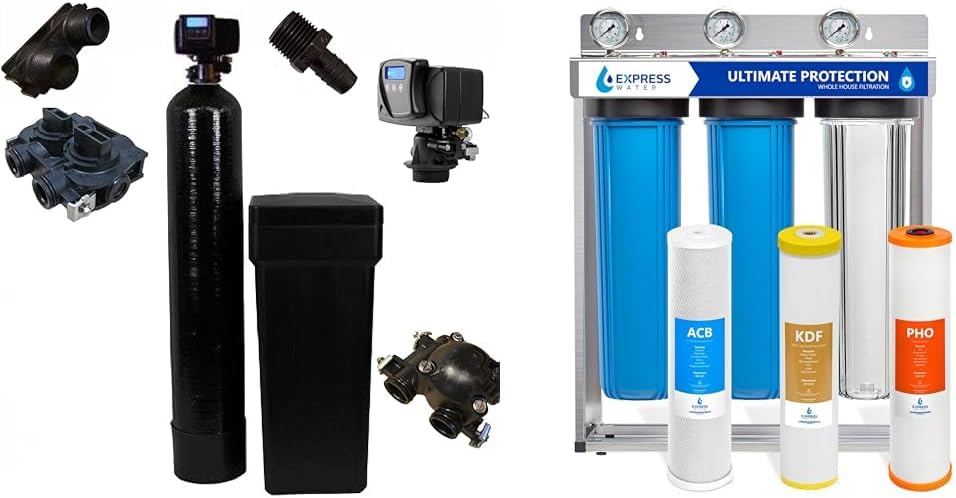
Your filter doesn't fail in obvious ways when undersized. Instead, you get pressure drop at the shower head, slow tub fills, and — worst — channeling inside the carbon bed where water punches through the path of least resistance and skips the contact time needed for chlorine, chloramine, and VOC removal. You'll still have technically filtered water, but the contaminant-contact-time math isn't there.
Springwell CF1 specifications decoded
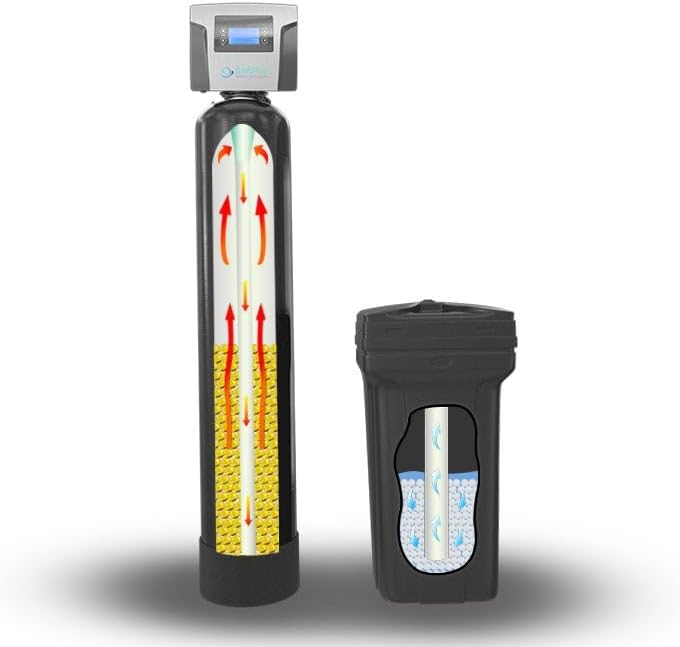
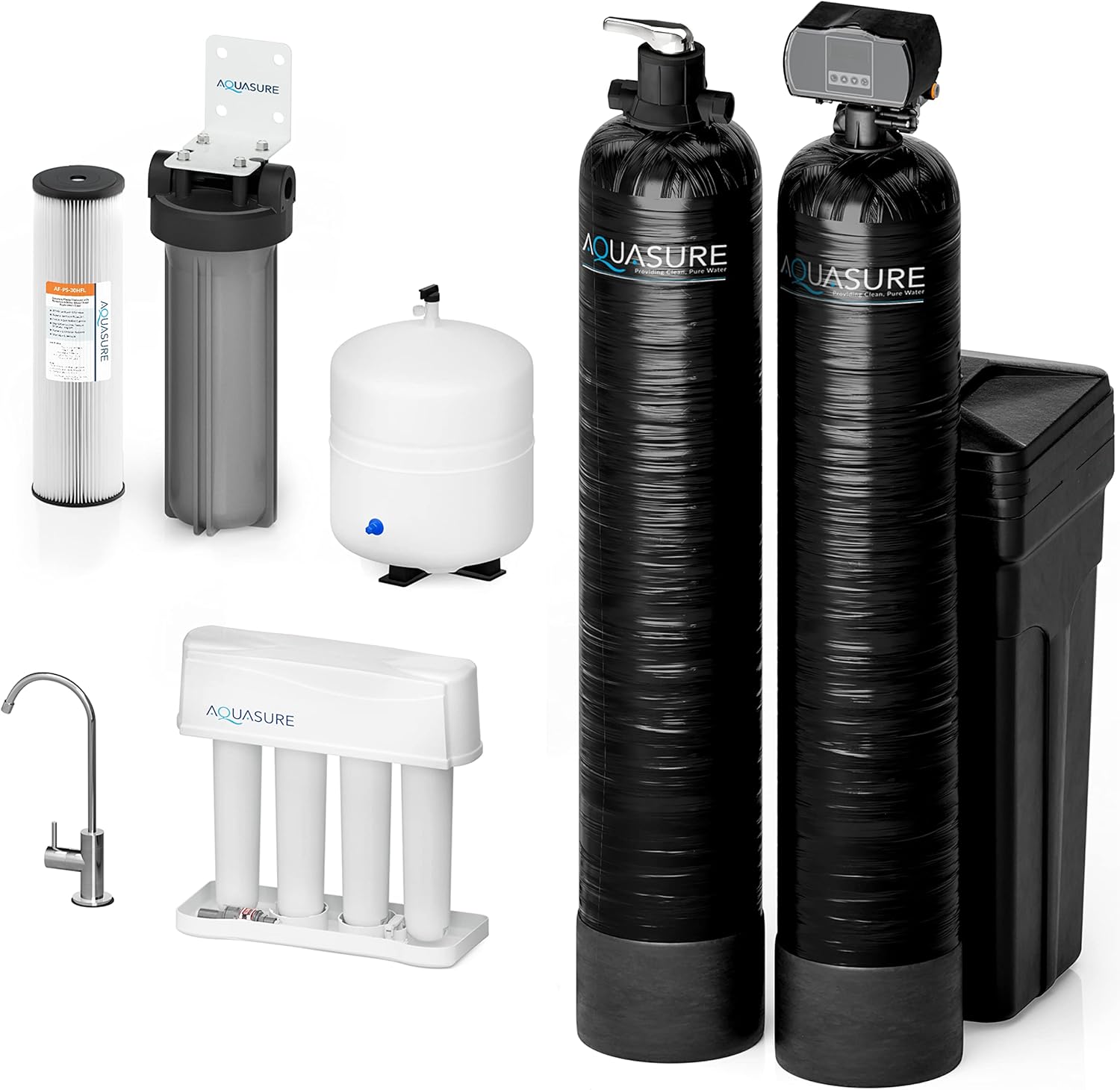
The CF1 (sometimes listed as the WHWFS-CF1) is Springwell's 1.0 cubic foot whole-house carbon filter built for city water. The published numbers:
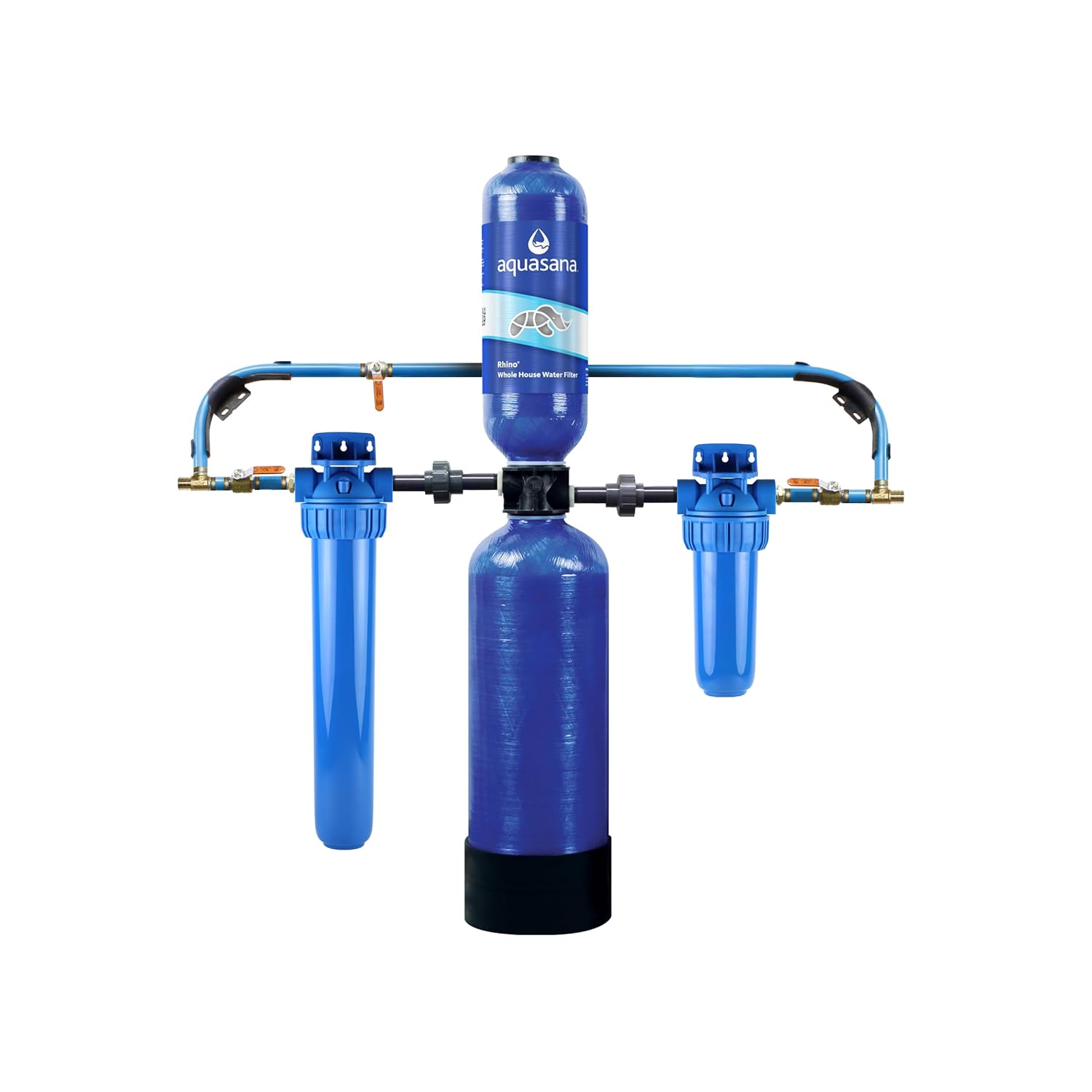
- Service flow rate: 9 GPM continuous
- Peak flow: 12 GPM (short bursts)
- Tank size: 9" × 48"
- Media: Coconut shell catalytic carbon plus KDF-55
- Contaminant capacity: ~1,000,000 gallons over a 10-year lifespan
- Recommended household size: 1-3 bathrooms
Springwell themselves market the CF1 for 1-3 bathroom homes, the CF4 for 4-6 bathrooms, and the CF+ for 7+. The marketing line isn't arbitrary — it's based on fixture-unit math. So why does anyone consider sizing springwell cf1 for 4 bathroom home setups at all? Because actual peak demand depends on family size and habits, not just fixture count. A 4-bath home with two adults and a single college-aged kid often runs lower peak demand than a 3-bath home with four teenagers.
The actual sizing math: peak GPM for 4-bathroom homes
Plumbing codes use Water Supply Fixture Units (WSFU) to estimate demand. For a 4-bath home, total fixture units typically land between 18-26 WSFU, which converts to roughly 8-14 GPM peak demand using the Hunter curve. That puts a 4-bath house squarely at the upper edge of CF1 capacity.
Here's a realistic worst-case demand scenario for a 4-bath teen household at 7:45 AM on a school day:
- Master shower (2.0 GPM low-flow head): 2.0 GPM
- Teen #1 shower (2.5 GPM): 2.5 GPM
- Kitchen faucet for breakfast prep: 1.5 GPM
- Dishwasher fill cycle: 1.0 GPM
- Toilet flush: 2.2 GPM (briefly)
Concurrent peak: 9.2 GPM — right at the edge of the CF1's service rating. Add a second teen shower or a laundry run and you exceed peak rating. The water still flows, but pressure drops to 30-40 PSI at the highest fixtures and contact time for chlorine removal falls below the one-minute target Springwell engineers for.
When the CF1 actually works for 4-bath homes
Sizing springwell cf1 for 4 bathroom home configurations is viable when:
- Household size is 3-4 people, not 5-6
- Showers can be staggered (school and work schedules don't overlap)
- All shower heads are low-flow (1.8-2.0 GPM)
- You don't run laundry during morning peak
- Incoming static pressure is healthy (60-75 PSI)
If three of those five aren't true, jump to the CF4. The $400-500 upcharge over the CF1 is worth more than a decade of premature media exhaustion, and the larger tank doesn't cost meaningfully more to operate over its lifespan.
When to upsize: CF4 vs CF1 decision tree
Pull the trigger on the CF4 when any of these are true:
- 5+ permanent residents — sheer concurrent demand math
- 2+ teenagers — overlapping morning and evening shower windows
- Body sprays or rain heads — these can push 4-5 GPM per fixture
- Jetted tub — fill rates of 8+ GPM tie up the entire CF1 alone
- Irrigation tied into main line — even partial overlap kills service flow
The CF4 uses a 13" × 54" tank with 4 cubic feet of media — over 4× the carbon contact area. That extra media doesn't just handle flow; it extends real-world capacity, especially in chloraminated municipal supplies where catalytic carbon kinetics matter more than rated gallons. For a complete walkthrough of the differences, see our CF1 vs CF4 head-to-head sizing breakdown.
Pre-filtration: the upgrade that doubles CF1 lifespan
The single most important addition to any Springwell CF1 in a busy household is a sediment pre-filter. Without one, fine particulates pack into the carbon bed, channel water around the contact zones, and trigger pressure drop within 12-18 months instead of the rated 10 years.
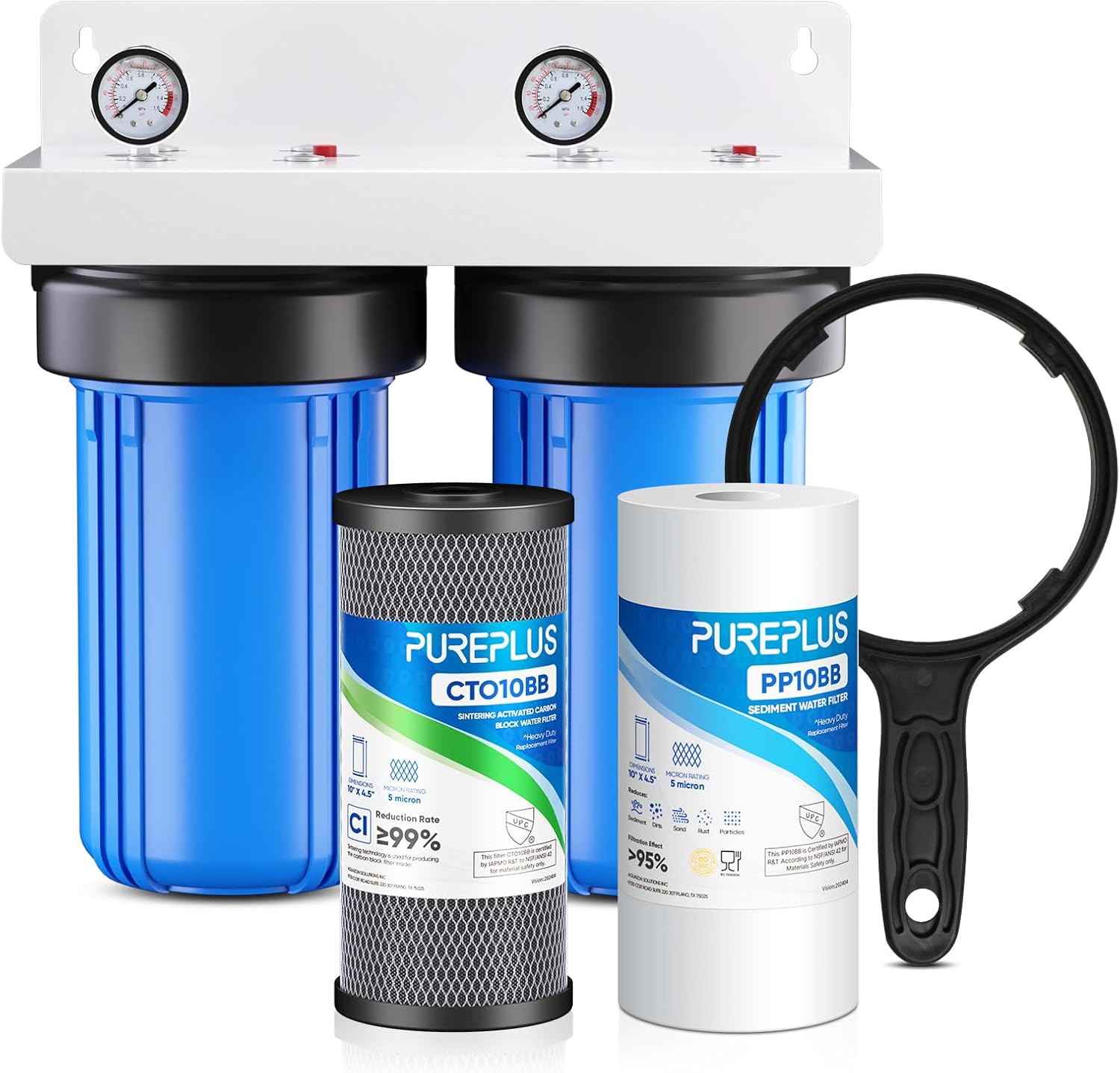
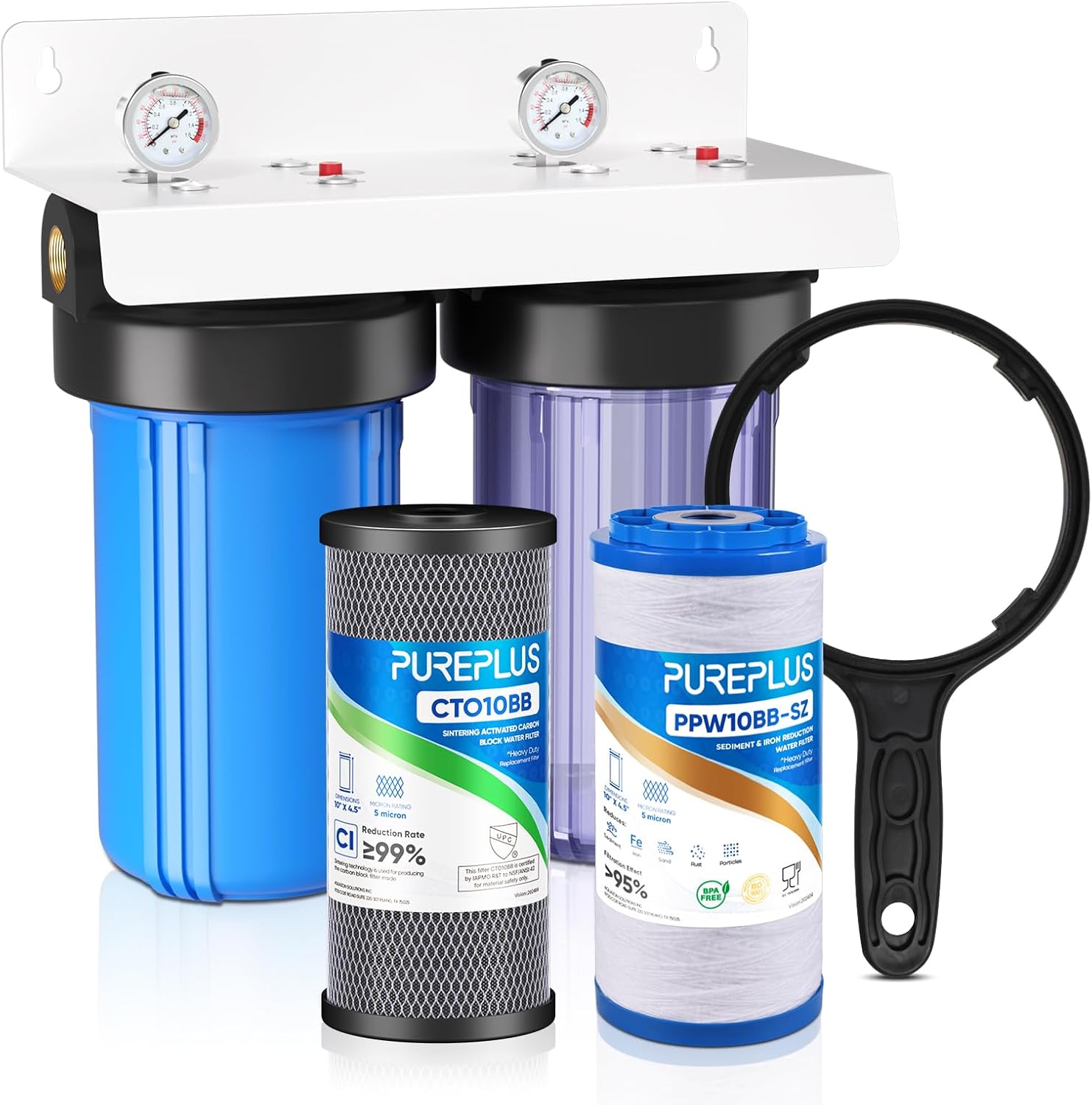
The CF1 ships with a standard 5-micron spin-down pre-filter, but for 4-bathroom homes with high throughput, a dedicated 10" × 4.5" big-blue housing with multiple sediment cartridges in rotation is the gold standard. You'll change cartridges every 3-6 months and your CF1 carbon bed stays clean for the full decade.
Comparison table: supplementary filtration options
| Product | Role with CF1 | Flow Rate | Capacity | Best For |
|---|---|---|---|---|
| Aquaboon 5 Micron Sediment (4-pack) | Pre-filter cartridges | 15+ GPM | 3-6 months each | Protecting CF1 carbon bed |
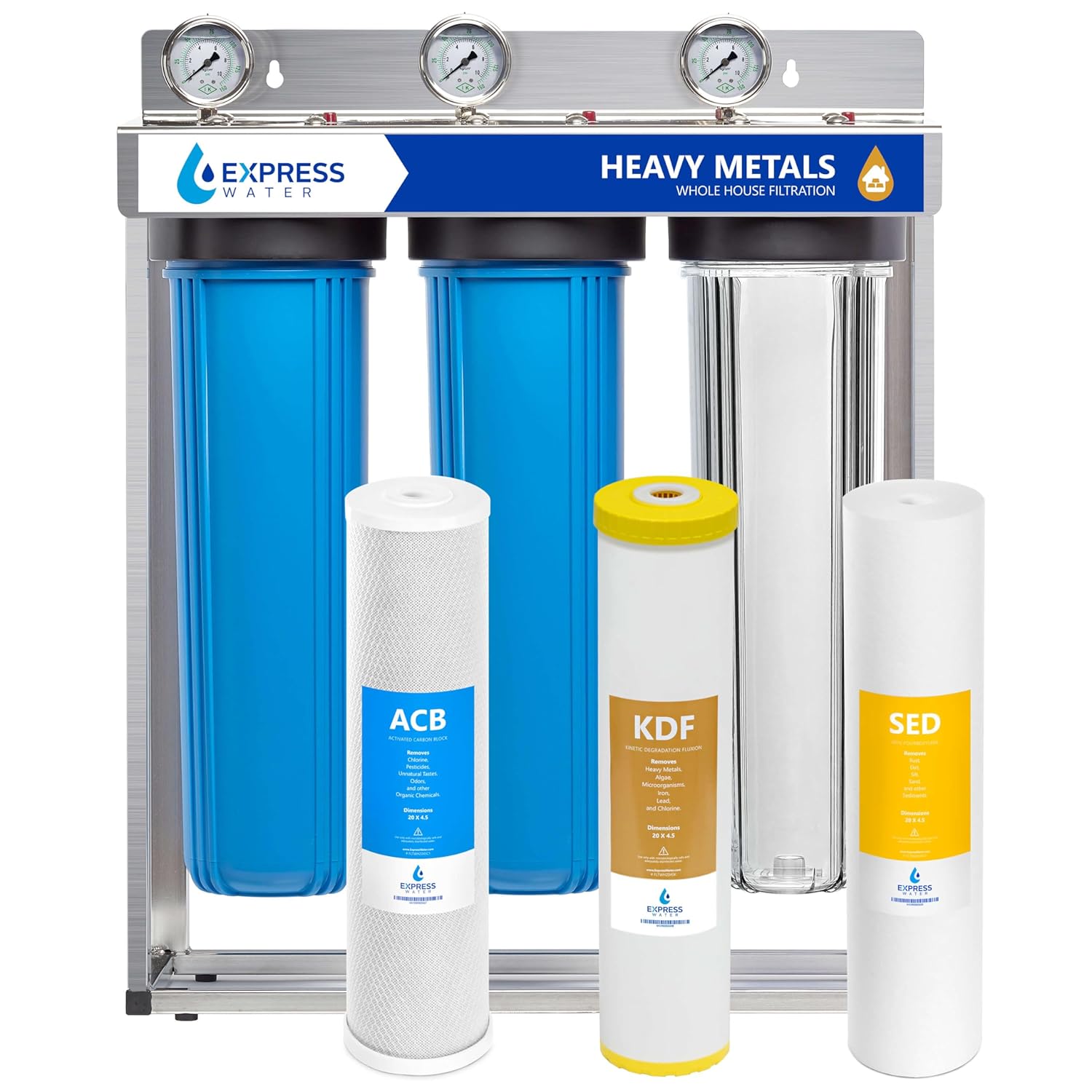
| Express Water 3-Stage | Sediment + KDF + carbon pre-stage | 15 GPM | ~100,000 gal | City water with high sediment |
| HQUA WF3-01 3-Stage | Standalone or pre-stage | 15 GPM | 50,000-100,000 gal | Budget households |
| Aquasana 500K Well Filter | Alternative for well water | 7 GPM | 500,000 gal | Well sources where CF1 isn't rated |
| iSpring Iron & Manganese | Iron pre-treatment | 15 GPM | Backwashing | Iron staining problems |
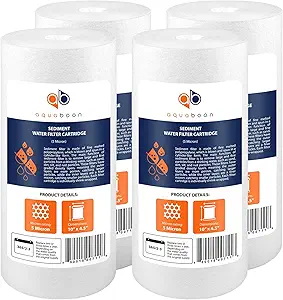
Aquaboon 5 Micron 10x4.5 Sediment Filter (4-Pack)
If you only buy one accessory for your CF1 this year, make it a stack of 5-micron 10x4.5 sediment cartridges. The Aquaboon 4-pack is sized for the standard big-blue housings that most installers pair with the CF1, and the 5-micron rating catches the silt, pipe scale, and rust flakes that would otherwise embed in your catalytic carbon. At roughly 12-18 months of supply per pack for a 4-bathroom home, it's the cheapest insurance you'll buy for the whole system. Check Aquaboon sediment 4-pack on Amazon.
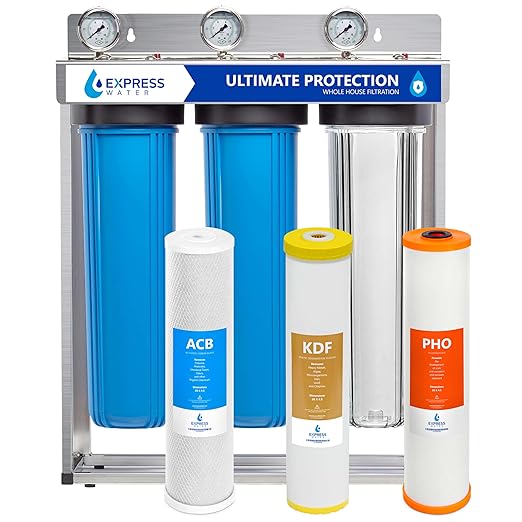
Express Water 3-Stage Whole House System
For households whose municipal water tests show heavy sediment, chlorine spikes, or rust intrusion from old galvanized service lines, adding the Express Water 3-stage in front of the Springwell CF1 acts as a sacrificial buffer. Its 15 GPM rating won't bottleneck a CF1, and the staged sediment, KDF, and carbon cartridges absorb the worst of the load before water hits Springwell's media. Best for renters or new-construction owners who want filtration installed now and plan to add the CF1 next year. Check Express Water 3-stage on Amazon.
HQUA WF3-01 3-Stage Whole House System
The HQUA WF3-01 is the budget alternative to the Express Water unit and works in the same role — pre-staged sediment and carbon to protect the CF1 downstream. It's a reasonable choice if you want to test whole-house filtration on a smaller budget before committing to the full Springwell investment, or if you're filtering a guest house, in-law unit, or finished basement that doesn't justify a full CF1 of its own. Check HQUA WF3-01 on Amazon.
Aquasana 500K Whole House Well Water Filter
If your 4-bathroom home is on well water rather than city water, the Springwell CF1 isn't actually the correct unit — you'd want the Springwell WS1 well water system instead. The Aquasana 500K (UV + carbon + KDF) is a strong competitor in the well-water category and a viable alternative if you can't get a Springwell WS1 in your area. Skip this one entirely if you're on municipal supply. Check Aquasana 500K well filter on Amazon.
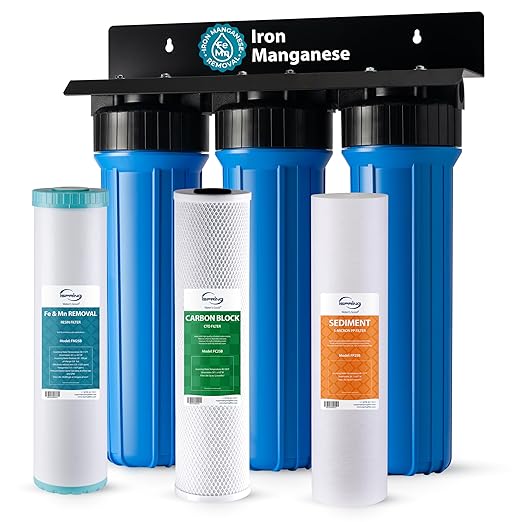
iSpring Iron & Manganese Whole House System
Even on municipal supply, some 4-bathroom homes — especially in the Midwest and Northeast — get iron and manganese intrusion from aging mains. The iSpring iron and manganese unit goes upstream of the CF1 to strip these metals before they oxidize and stain fixtures. If you see orange staining in toilets or rust spots on white laundry, this is the missing piece in your CF1 install. Check iSpring iron filter on Amazon.
For broader pre-filter selection guidance, see our guide to the best sediment pre-filters for Springwell systems.
Frequently Asked Questions
Is the Springwell CF1 enough for a 4-bathroom home with 5 people?
Marginally yes if showers stagger, but we recommend the CF4 for 4-bath homes with 5+ residents. Peak concurrent demand for a 5-person household routinely exceeds the CF1's 9 GPM service flow, which causes pressure drop and reduced contact time. The CF4's 20 GPM service rating leaves comfortable headroom for overlapping use.
What flow rate does the Springwell CF1 actually deliver under load?
The CF1 delivers 9 GPM at standard 60 PSI inlet pressure with new media. Real-world flow drops 10-15% as the carbon bed loads up over 5-7 years and recovers slightly after the recommended media refresh. Below 50 PSI inlet pressure you'll see closer to 7-8 GPM service flow, which is too low for a 4-bath home with teenagers.
Can I install a Springwell CF1 with a separate softener for a 4-bath home?
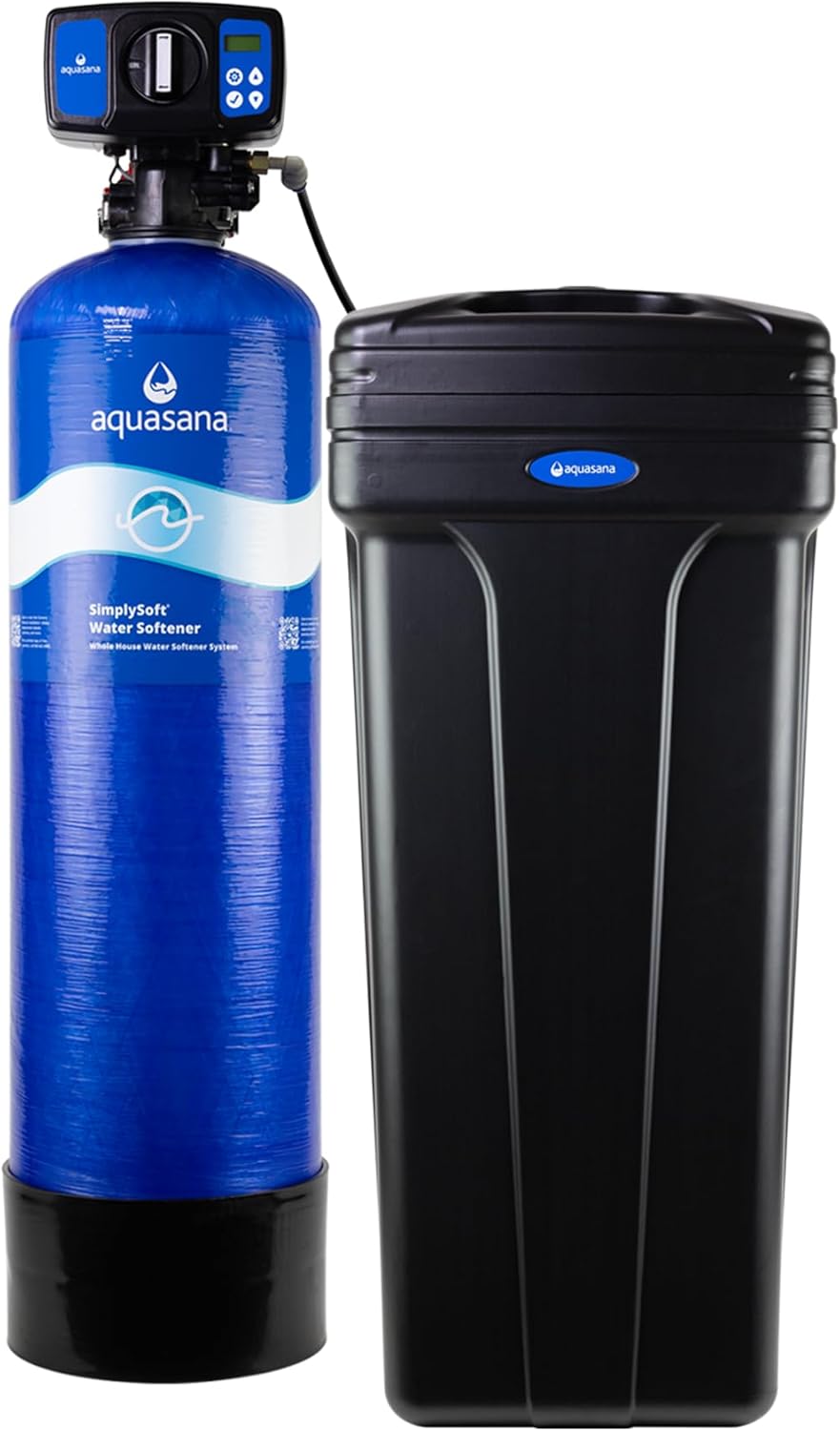
Yes, and you should if hardness exceeds 7 grains per gallon. Install the softener downstream of the CF1 so the carbon protects the resin from chlorine damage. For sizing the softener, see our whole-house softener sizing guide — the math is similar but driven by grain-removal capacity rather than flow rate alone.
Does the Springwell CF1 work for well water in a 4-bathroom home?
No — the CF1 is built for chlorinated municipal water and lacks the iron filtration and UV sterilization that well sources require. For well water, look at the Springwell WS1 or compare to the well versus city water filtration options we cover in our well-water deep dive.
How often do I need to replace media in a CF1 serving a 4-bath home?
Springwell rates the CF1 catalytic carbon for 10 years or 1,000,000 gallons. A 4-bathroom home with 5 occupants averages 75,000-100,000 gallons per year, putting you at the 10-year mark on gallons. Heavy chlorine or chloramine loading can shorten that to 7-8 years, especially without a quality sediment pre-filter in front.
Will the CF1 reduce my home's water pressure noticeably?
A new CF1 causes 5-8 PSI of pressure drop at peak flow — usually unnoticeable in homes with 60+ PSI service. In 4-bath homes already running marginal pressure (45-55 PSI at the meter), the CF1 may push showers below comfortable levels. Test your static pressure first; consider a booster pump if you're under 55 PSI before the install.
Do I need a sediment pre-filter if I have city water?
Yes, even on city water. Municipal mains shed iron oxide, biofilm fragments, and disturbed sediment during pressure changes, hydrant flushes, and main breaks. A 5-micron sediment pre-filter like the Aquaboon stack extends CF1 media life by 30-50% and is the single highest-ROI accessory for sizing springwell cf1 for 4 bathroom home installations.
Key Takeaways
- Choosing the right sizing springwell cf1 for 4 bathroom home means matching capacity and output ports to your actual devices
- Always check actual watt-hours (Wh), not just watts — runtime depends on Wh, not peak output
- Also covers: springwell cf1 large household sizing
- Also covers: springwell cf1 high flow demand family
- Also covers: springwell cf1 teenagers shower usage
- Compare price-per-Wh across models to find the best value for your budget