Setting the fleck 5600sxt salt dose rainwater cistern systems use comes down to one fact: rainwater is naturally soft, usually below 1 grain per gallon (gpg) of hardness. For most cistern setups in 2026, program the SALT parameter on the 5600SXT controller to 3-6 pounds per cubic foot of resin (the minimum efficient dose). If your cistern picks up calcium from concrete walls or roof runoff dissolves dust into measurable hardness (2-5 gpg), stay near 6 lbs/ft³ for efficient regeneration. Skip the factory default 9-15 lb dose — it wastes salt, brine waste-water, and money on water that barely needs softening in the first place.
Why Rainwater Changes the Salt Dose Equation
Municipal and well water typically run 7-25 gpg of hardness, which is why the Fleck 5600SXT ships with aggressive defaults. Harvested rain is the opposite. Pure precipitation has total dissolved solids (TDS) under 20 mg/L and hardness near zero. By the time it leaves your gutters, slides down a first-flush diverter, sits in a poly or ferrocement cistern, and gets pumped into the house, you might measure 0.5-5 gpg. That is barely “slightly hard” on the WQA scale.
A softener resin bed exchanges sodium ions for calcium and magnesium ions. The amount of salt needed during regeneration scales with the hardness load you removed since the last regen. Dosing 15 lbs of salt per cubic foot when you only used 10% of the resin’s capacity is pure waste. Worse, over-salting on a low-hardness feed can leave residual sodium chloride in the bed, briefly spiking the salinity of your first post-regen draw — not what you want on a rainwater system you chose for purity.
The fleck 5600sxt salt dose rainwater cistern question therefore has a different answer than the standard well-water answer: lean low, regenerate on a meter (not a timer), and verify with a test strip every season.
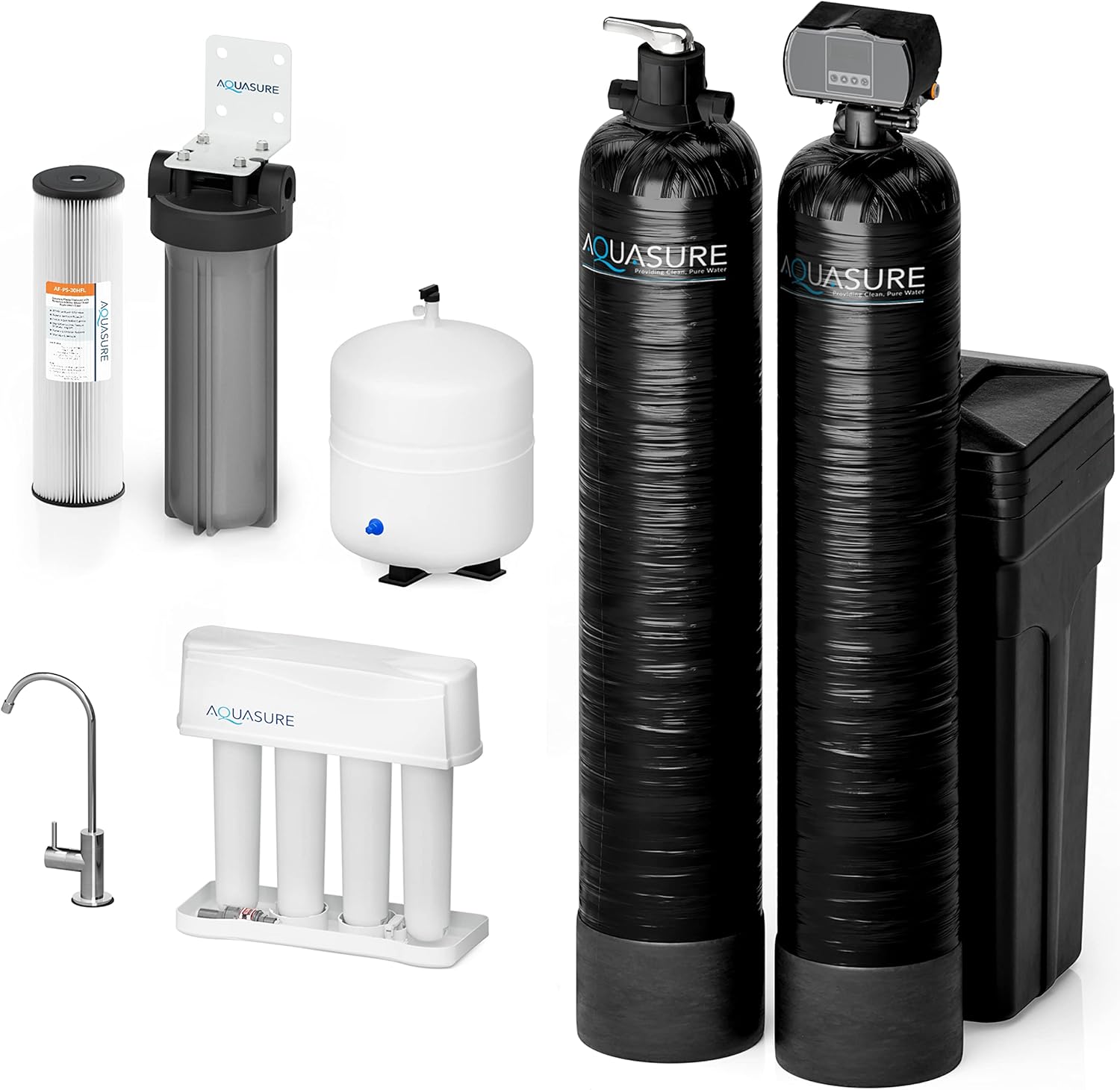
Step-by-Step: Programming the 5600SXT for Cistern Water
Hold the Up and Down arrows for five seconds to enter Master Programming Mode. Work through these settings, pressing Extra Cycle to advance:
- DF (Display Format): GAL for US gallons.
- VT (Valve Type): dF1b (downflow, single backwash) for standard residential resin tanks.
- CT (Control Type): Fd (meter delayed) so regeneration runs at 2 a.m. once capacity is exhausted.
- C (Capacity in grains): Multiply resin volume by the grain capacity at your chosen salt dose. At 6 lbs/ft³, 1 ft³ of standard 8% crosslink resin yields roughly 20,000 grains. A 1.5 ft³ tank = 30,000.
- H (Hardness in gpg): Enter your measured cistern hardness. For most rainwater, 2-3 gpg is realistic. If iron is present, add 5 gpg per 1 ppm of iron.
- RS (Reserve Selection): rc (recommended) and let the valve auto-calculate.
- BW (Backwash): 6-8 minutes — rainwater is low-sediment, so the shorter end is fine.
- BD (Brine Draw / Slow Rinse): 60 minutes.
- RR (Rapid Rinse): 6 minutes.
- BF (Brine Fill): This is your salt dose lever. At a 0.33 gpm BLFC, 1 minute of brine fill = roughly 0.33 gal of water = ~1 lb of salt. So 6 minutes = ~6 lbs, 9 minutes = ~9 lbs.
For a 1.0 ft³ mineral tank on rainwater, set BF = 6 minutes. For 1.5 ft³, set BF = 9 minutes. The valve will draw exactly enough brine to saturate the resin at your chosen efficiency point.
Pre-Treatment Before the Softener
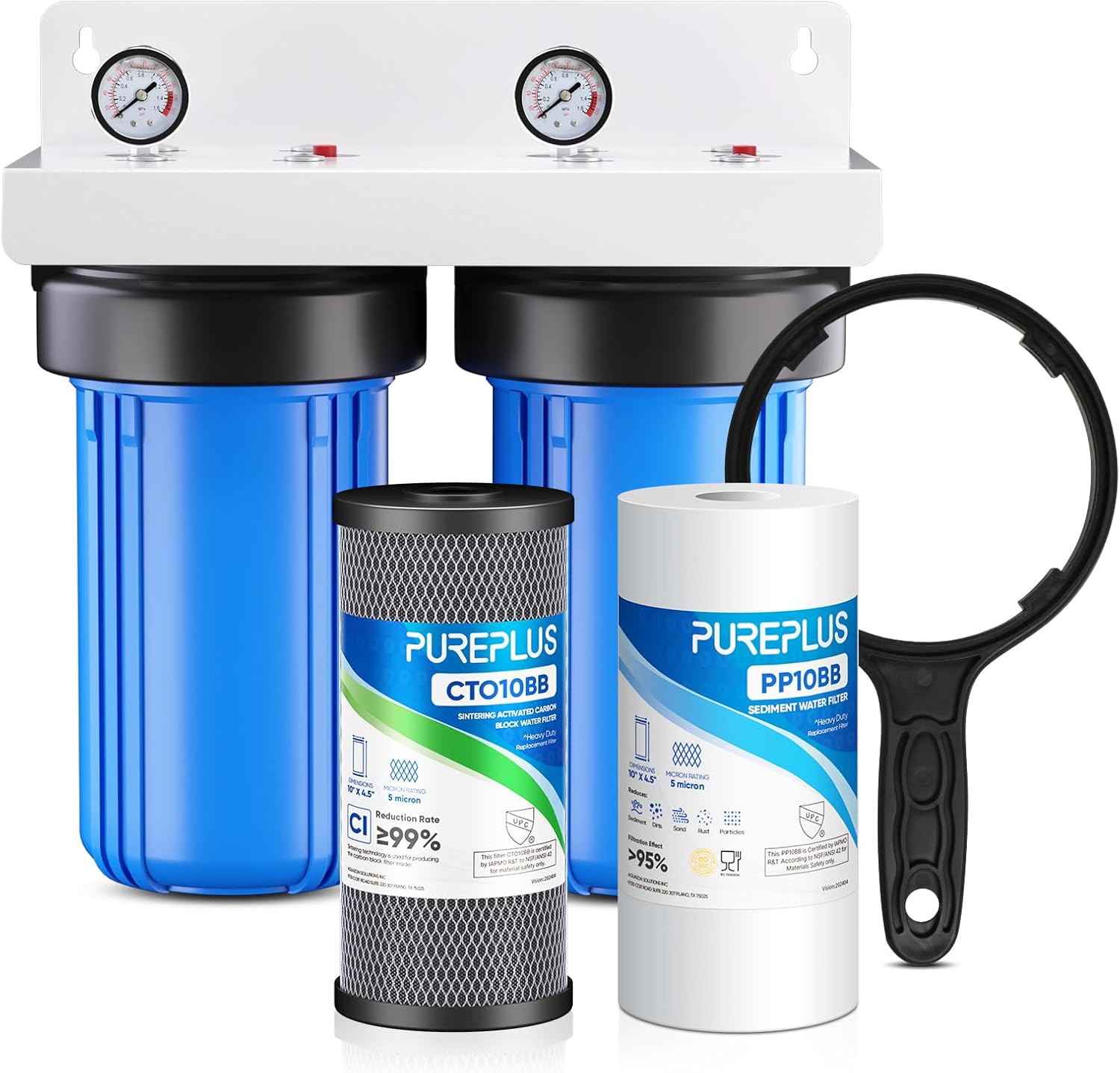
Here is the part most homeowners skip and regret: a Fleck 5600SXT is a softener, not a sediment trap. Cisterns deliver pollen, algae fragments, roof grit, and the occasional dead spider. Pump that into the resin bed and you channel the resin, foul the distributor, and ruin your carefully calculated salt dose. You need at least one stage of 5-micron sediment filtration ahead of the softener — ideally two stages (20 micron then 5 micron) plus a carbon block if you smell anything off the roof.
Comparison: Pre-Treatment Systems for Cistern Feeds
| System | Stages | Best For | Service Interval |
|---|---|---|---|
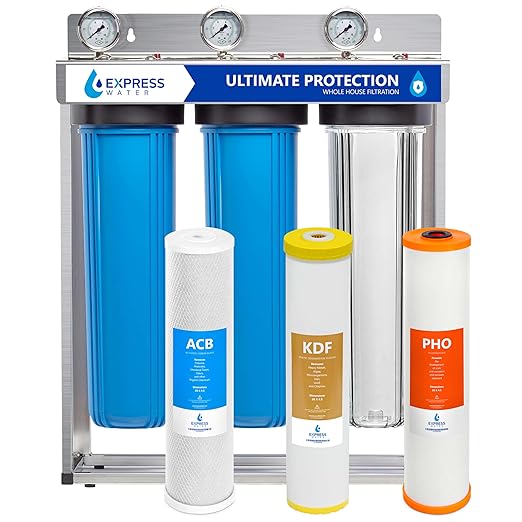
| Express Water 3-Stage | Sediment + Carbon + KDF | General cistern pre-treatment, taste/odor | 6-9 months |
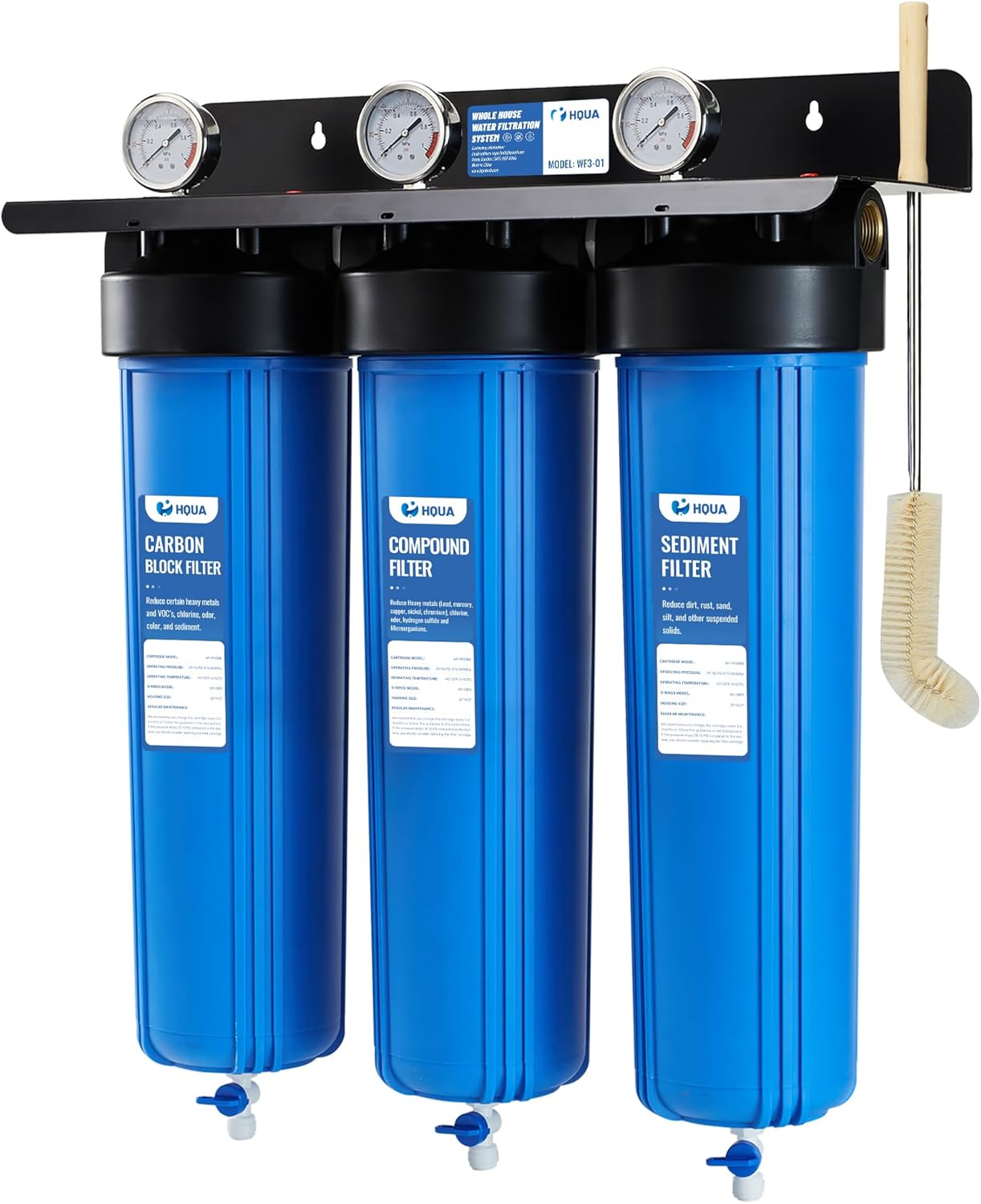
| HQUA WF3-01 3-Stage | Sediment + 2x Carbon | Budget cistern + softener feeds | 6 months |
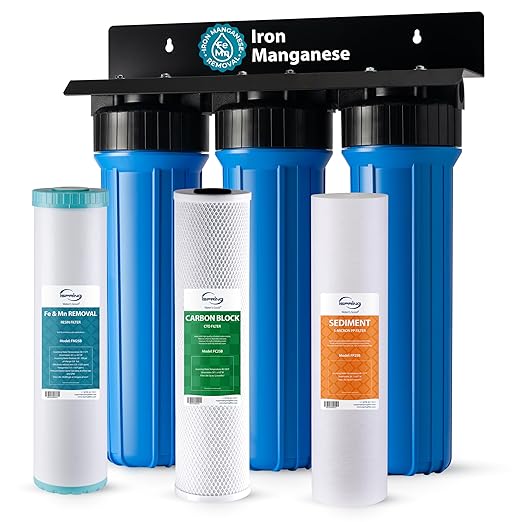
| iSpring Iron & Manganese | Iron/Mn oxidation + filter | Older galvanized roofs, metal cisterns | 3-5 years media |
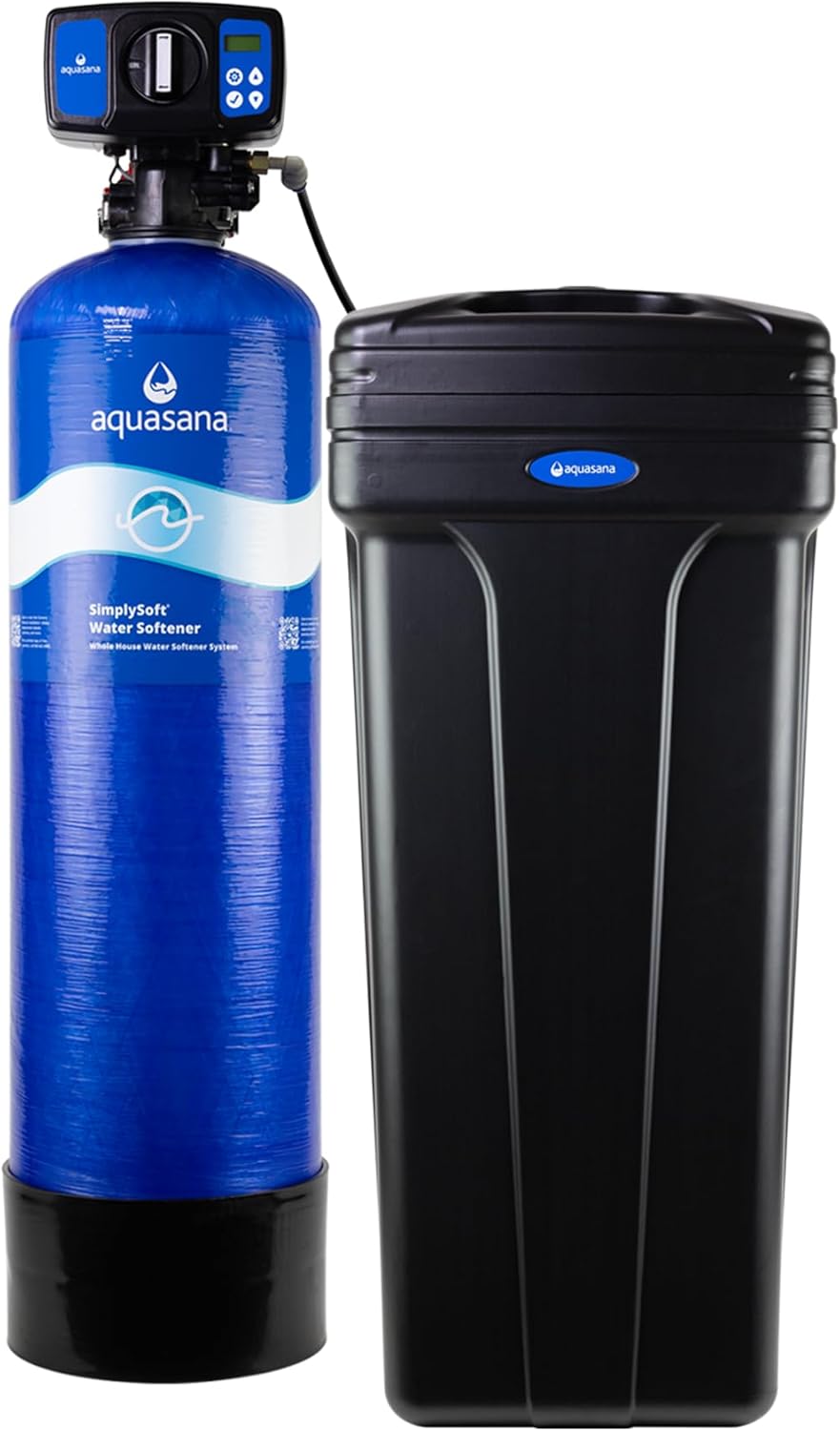
| Aquasana 500K Well | UV + Carbon + KDF + sediment | Biological risk (open or shaded cisterns) | Annual prefilter, 5 yr tank |
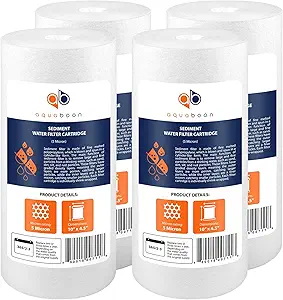
| Aquaboon 4.5x10 5µm | Single replacement cartridge | Drop-in sediment replacement | 2-4 months |
Express Water 3-Stage Whole House Water Filter System
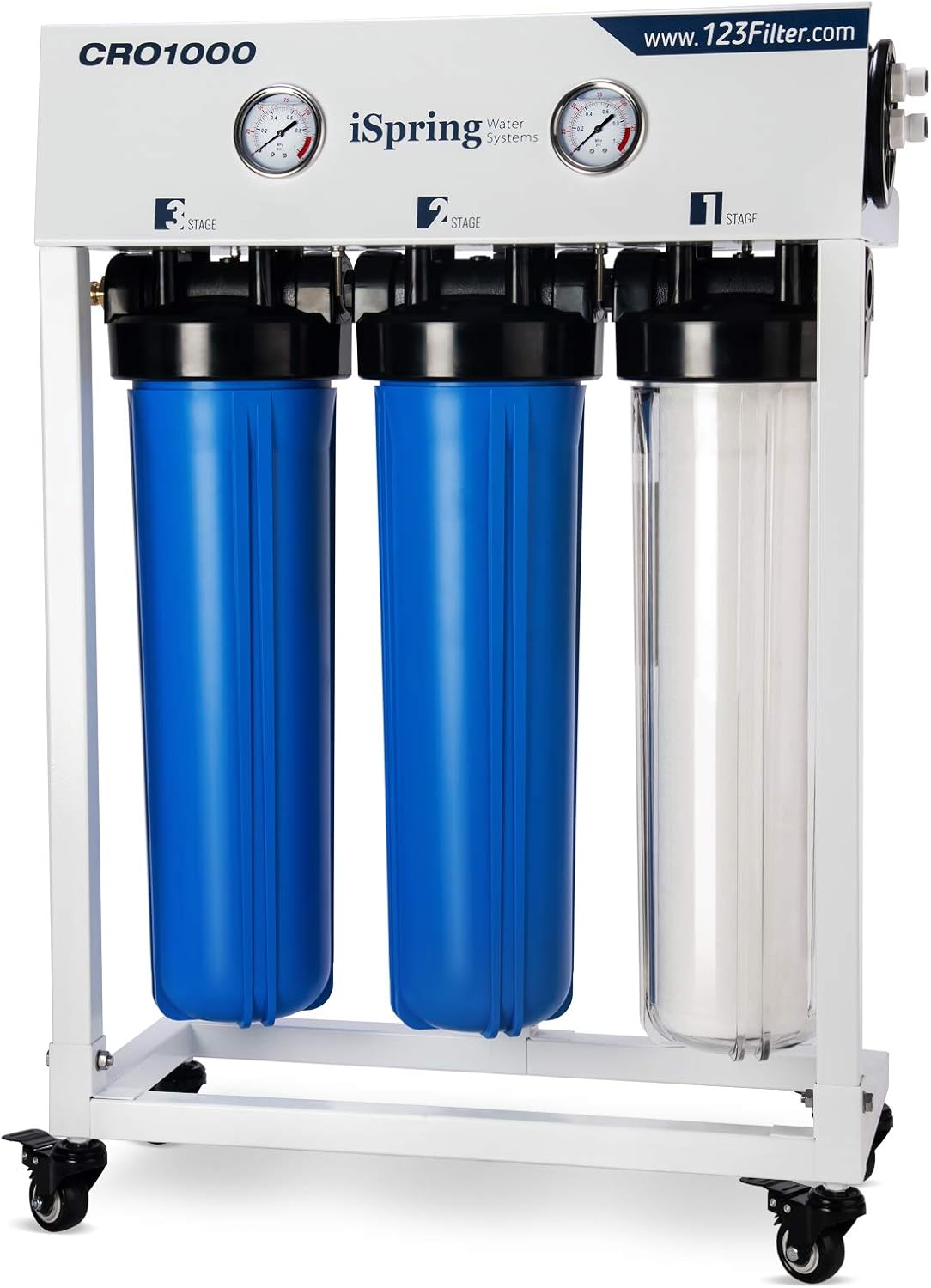
This is the workhorse I recommend for nearly every cistern-fed 5600SXT setup. The sediment + carbon block + KDF stack catches the leaf fines and bird debris your screens miss, and the carbon polishes off any tannin tint you get after a heavy rain. The clear sediment housing is especially useful with a cistern — you can see exactly when it loads up. Pair it directly upstream of the Fleck and your softener bed will outlast the valve. Check current price on Amazon.
HQUA WF3-01 3-Stage Whole House Water Filtration System
If the Express Water unit is out of stock or over budget, the HQUA WF3-01 is the closest functional equivalent: sediment cartridge plus two carbon stages, sized for whole-house flow rates that match a 5600SXT’s 11-15 gpm service capacity. Cartridge availability is excellent and the housings accept generic 10x2.5 elements, which keeps long-term operating cost down. View on Amazon.
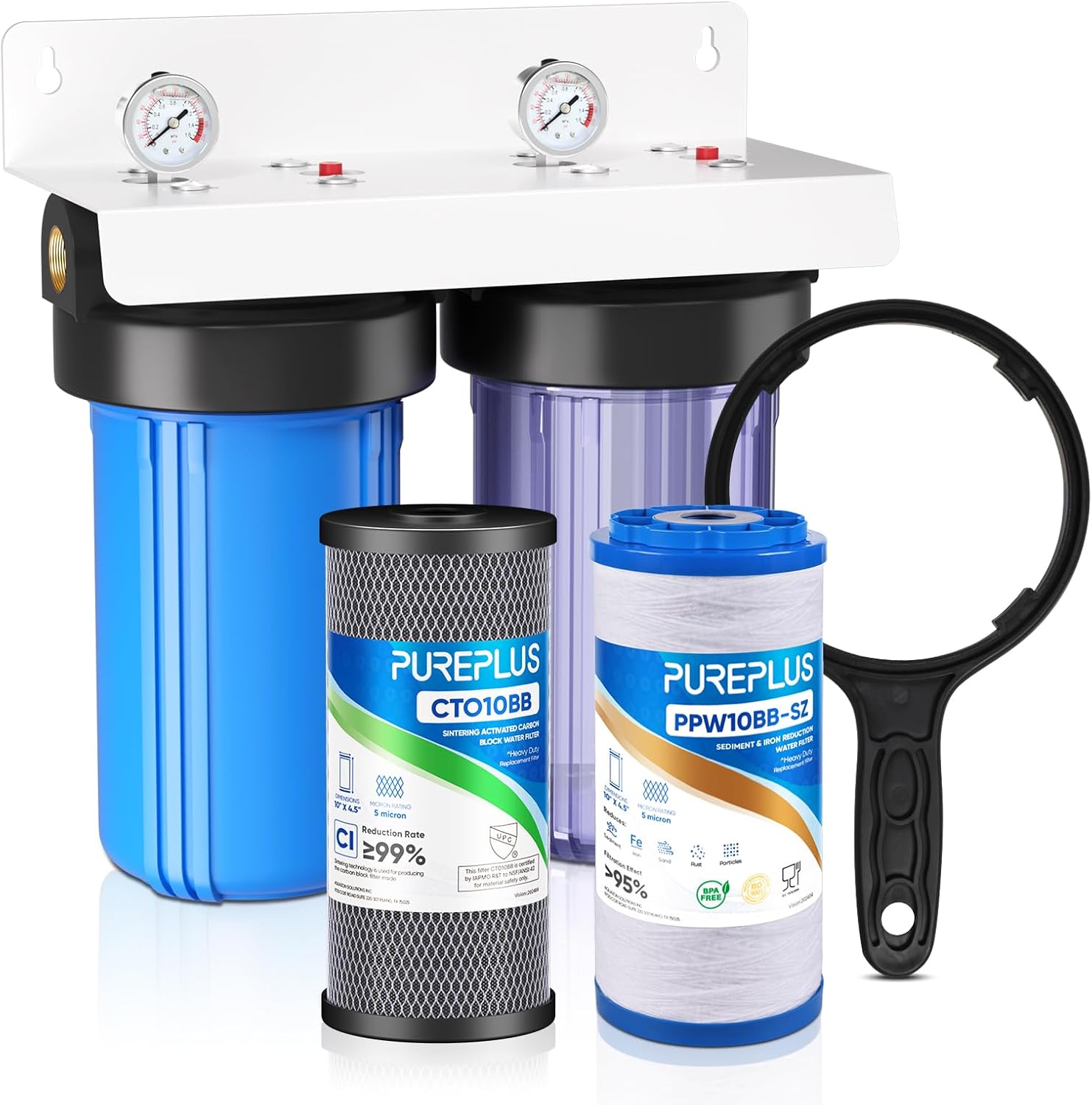
iSpring Iron & Manganese Whole House System
Rainwater itself contains no iron, but cisterns with steel patches, galvanized downspouts, or older metal roofs can leach trace iron and manganese. Even 0.3 ppm of iron will foul softener resin within a season. The iSpring oxidation system handles iron and manganese ahead of the Fleck and is the right call if a quick test strip shows orange staining in the toilet tank. See specs on Amazon.
Aquaboon 5 Micron 10x4.5 Sediment Filter (4-Pack)
If you already own a Big Blue housing, just buy the cartridges. The Aquaboon 4.5x10 5-micron sediment elements are the right pore size for cistern feeds — tight enough to protect the resin, open enough not to choke your pump. A four-pack covers a year of changes on most systems. Stock up on Amazon.
Aquasana Whole House Well Water Filter, 500K Gallons, UV+Carbon+KDF
For cisterns where you have any concern about biological contamination — shaded tanks, infrequent flushes, surface-water top-offs — the Aquasana 500K with integrated UV is the premium option. The UV stage inactivates microbes before the softener resin can grow a biofilm of its own, which protects both your salt-dose calculations and your family. Review pricing on Amazon.
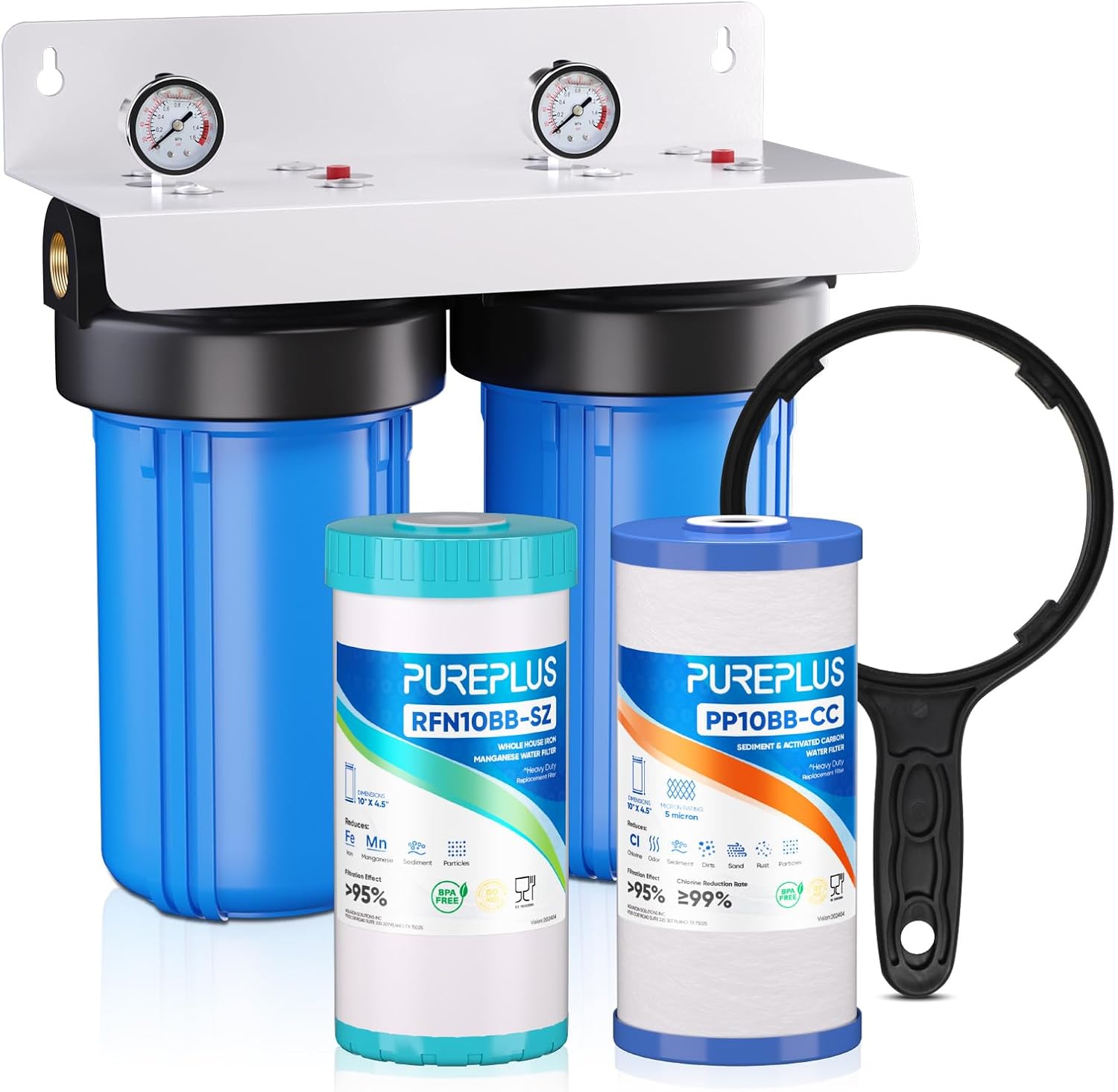
Calculating Your Exact Salt Dose
Use this short formula. It is the same one a water-treatment dealer would use, just adapted for the low-hardness rainwater case.
- Measure cistern hardness with a 0-25 gpg test strip. Call this H.
- Add 5 gpg per 1.0 ppm of iron if any iron is present. Call this Hadj.
- Multiply Hadj by gallons used per day per person (US average ~70, off-grid users often 35-50). Multiply again by household members. That is your daily grain load.
- Divide your resin capacity at 6 lbs/ft³ (e.g., 20,000 grains per ft³) by daily grain load. That is your days between regenerations.
- Set BF (brine fill) on the 5600SXT to 6 minutes per cubic foot of resin to deliver the 6 lb/ft³ dose.
A worked example: two people, 50 gal/person/day, hardness 3 gpg, no iron. Daily load = 300 grains. A 1.0 ft³ tank at 20,000 grains regenerates every 66 days. The salt bin will last most of a year. Your fleck 5600sxt salt dose rainwater cistern setup just dropped from ~120 lbs/year (factory default) to ~33 lbs/year. That is the efficiency win.
Common Mistakes With Rainwater Softener Setups
Mistake 1: Leaving the SALT setting at 15. Resin efficiency falls off a cliff above 9 lbs/ft³. You buy diminishing capacity at full salt cost.
Mistake 2: Skipping pre-filtration. Even a clear-looking cistern delivers enough fines to channel resin within months. See our whole-house sediment filter guide for sizing.
Mistake 3: Using timer regen on a cistern. Rain-fed water use is irregular — vacations, dry-season conservation, full-tank summer showers. Meter-delayed regen (CT = Fd) saves salt by only regenerating when needed.
Mistake 4: Ignoring pH. Rainwater is mildly acidic (pH 5.5-6.5). It will not affect the Fleck valve, but it will leach copper from plumbing. Pair the softener with a calcite neutralizer or consider one of the treatment trains we compare here.
Mistake 5: Forgetting the brine tank float. Low-dose programs draw very little water during brine fill. Verify the safety float still travels freely — sticky floats cause overflowing brine tanks long before you notice.
Frequently Asked Questions
Do I even need a softener on a rainwater cistern?
Not for hardness alone. If your tested hardness is under 1 gpg and you have no iron, skip the softener and run only sediment + carbon. Many off-grid homeowners install a 5600SXT “just in case” and find it never regenerates — in which case bypassing it saves the resin bed from oxidative damage. Test first, plumb second.
What is the minimum salt dose the Fleck 5600SXT will allow?
The hardware limit is roughly 3 lbs per cubic foot of resin, set by how short you can run the brine fill cycle while still pulling enough brine to saturate the bed. Below that, the eductor will not draw consistently. For practical rainwater use, 6 lbs/ft³ is the sweet spot of efficiency and reliability.
Will low salt doses leave my water feeling hard?
No, as long as you also lowered the programmed grain capacity to match. The 5600SXT triggers regeneration based on gallons treated, derated by the C value you entered. A 6 lb/ft³ dose gives you ~20,000 grains per ft³ — set C to that number and the valve regenerates before breakthrough every time.
How often should I refill the brine tank with this setup?
At 6 lbs/ft³ doses and rainwater hardness, expect 25-40 lbs of salt per year for a 1.0 ft³ tank. A single 40 lb bag of solar salt typically lasts an entire year. Keep the level at or above the water line in the brine tank and avoid letting it run dry between regenerations.
Can I use potassium chloride instead of sodium chloride?
Yes, but bump the dose by about 10% because potassium is heavier per equivalent. So if you would set 6 minutes of brine fill on NaCl, set 7 minutes for KCl. Potassium chloride is friendlier to gardens watered with softener discharge — a real consideration for rainwater homesteaders. Compare options in our Fleck head-to-head comparison.
Does first-flush diverter quality affect salt dose?
Indirectly, yes. A quality first-flush dumps the most contaminated runoff before it reaches the cistern, which keeps hardness, iron, and organics lower. Cleaner cistern water means lower hardness readings and therefore a lower required salt dose. Spend on the diverter, save on the salt.
What happens if I regenerate too often on rainwater?
You waste salt and discharge unnecessary brine into your drain field or greywater system. There is no harm to the resin from frequent regeneration, but high-salinity brine can stress septic biology over time. Stick with meter-delayed regen so the valve only fires when capacity is actually consumed.
Key Takeaways
- Choosing the right fleck 5600sxt salt dose rainwater cistern means matching capacity and output ports to your actual devices
- Always check actual watt-hours (Wh), not just watts — runtime depends on Wh, not peak output
- Also covers: fleck 5600sxt rainwater settings
- Also covers: salt dose for cistern water
- Also covers: fleck softener cistern programming
- Compare price-per-Wh across models to find the best value for your budget