To restore Fleck 7000SXT flow rate iron bacteria issues have caused, you need to attack the slime in three places at once: the resin bed, the injector and brine line, and the riser tube. Start by running a manual regeneration cycle with a citric-acid or sodium-bisulfite resin cleaner, then disassemble the injector and venturi to scrub off the rust-colored biofilm, and finally shock the system with unscented household bleach (about 1.5 oz per cubic foot of resin) before flushing. Pair that with a 5-micron sediment pre-filter and an iron-targeted media tank, and your softener will pull full GPM again within a single regen cycle.
Why iron bacteria kills Fleck 7000SXT flow rate
The Fleck 7000SXT is rated for up to 35 GPM service flow because of its 1.25-inch internal porting and high-capacity piston. That headroom disappears fast when iron bacteria (typically Gallionella or Leptothrix species) colonize the head and resin bed. These organisms metabolize dissolved ferrous iron (Fe2+) and excrete a gelatinous sheath of ferric hydroxide that traps sediment, glues resin beads together, and narrows every flow path it touches. Homeowners on well water in 2026 are seeing this more often as warmer groundwater temperatures lengthen the bacteria's active season.
You'll usually notice the problem in this order: pressure drops at upstairs fixtures, the brine tank develops a reddish-orange film at the waterline, the softener stops producing soft water between regens, and finally the control valve starts whining or cavitating during the service cycle. By the time you hear noise, the injector is partially blocked and the upper basket is matted with rust-colored slime.
Diagnose before you disassemble
Don't pull the head apart yet. First, confirm iron bacteria is the cause and not just mechanical iron fouling. Pull a sample from the bottom of the brine tank into a clear jar and let it sit overnight. Iron bacteria produces a stringy, almost cobweb-like sediment that clings to the jar walls; pure iron oxide settles flat as orange silt. If you have a microscope or a county extension lab nearby, sheathed filaments under 400x magnification are diagnostic.
Next, check raw water iron and pH with a test strip kit. The 7000SXT's standard fine-mesh resin can handle up to about 2 ppm of clear-water iron, but bacterial iron at any concentration above 0.3 ppm will eventually foul the bed. If your raw iron exceeds 3 ppm, no amount of cleaning will keep the softener clear without dedicated iron pre-treatment.
Step 1: Manual regeneration with resin cleaner
To restore Fleck 7000SXT flow rate iron bacteria damage causes, the first move is a chemical clean of the resin bed itself. Bypass the softener, dissolve 8-16 oz of citric acid or a commercial resin cleaner like Iron Out or Pro Res Care into the brine well, then return to service and trigger a manual regeneration by holding the REGEN button for five seconds. The cleaner draws into the bed during brine draw and sits during slow rinse, dissolving the iron oxide coating on each bead.
Repeat this regen two or three nights in a row. If the brine tank water still looks rusty after the third cycle, the bed contamination is past chemical recovery and you'll need to replace the resin (about $80-120 per cubic foot for 8% crosslink fine mesh, which is the right spec for iron-prone wells).
Step 2: Pull and clean the injector assembly
This is where 80% of flow-rate complaints actually originate. Power down the valve, depressurize by opening the bypass to drain, and unscrew the injector cap on the side of the 7000SXT head. Inside you'll find a small plastic venturi (color-coded by valve size, usually white or tan on residential units) and a fine mesh screen. Iron bacteria slime will be visible as orange-brown jelly clinging to both.
Soak the parts in white vinegar or a 5% citric acid solution for 30 minutes, then scrub gently with a soft toothbrush. Do not use a metal pick on the venturi throat — even a tiny scratch changes the brine draw rate. Rinse, dry, and reinstall with food-grade silicone grease on the O-rings.
Step 3: Sanitize the tank and brine line
Pour 2-4 oz of unscented chlorine bleach (5-6% sodium hypochlorite) directly into the brine well, then run another manual regen. The bleach travels through the brine line, into the resin tank, and out the drain, killing any remaining bacterial colonies. Follow this with a full salt-only regen to flush residual chlorine off the resin, since extended chlorine contact will oxidize the resin's functional sites.
If your well water tests positive for coliforms or sulfur-reducing bacteria as well, a continuous chlorination or UV step upstream is the only long-term answer. For wells that are borderline, a periodic shock-chlorination of the well casing every 6-12 months keeps reinfection rates low.
Step 4: Add pre-treatment so it doesn't come back
A cleaned 7000SXT will refoul in 3-6 months if you don't treat the iron upstream. The two pieces every iron-bacteria well needs are a 5-micron sediment cartridge to catch oxidized flakes and an iron-specific media tank to handle dissolved iron before the softener sees it.
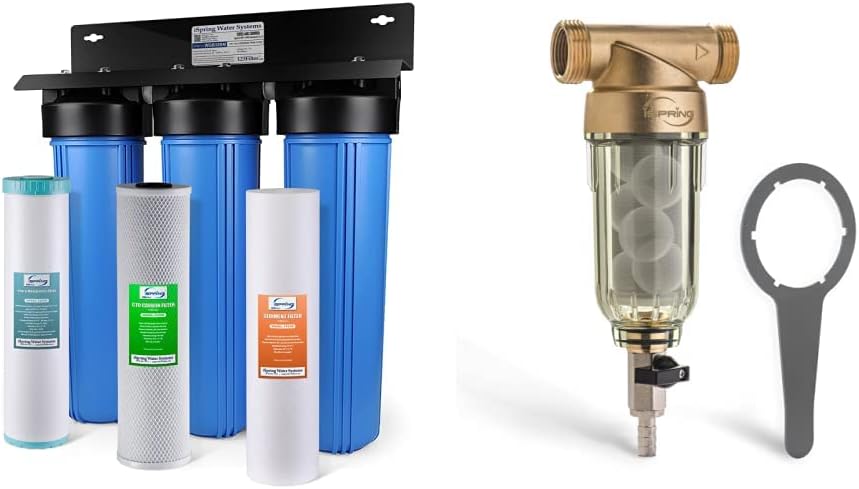
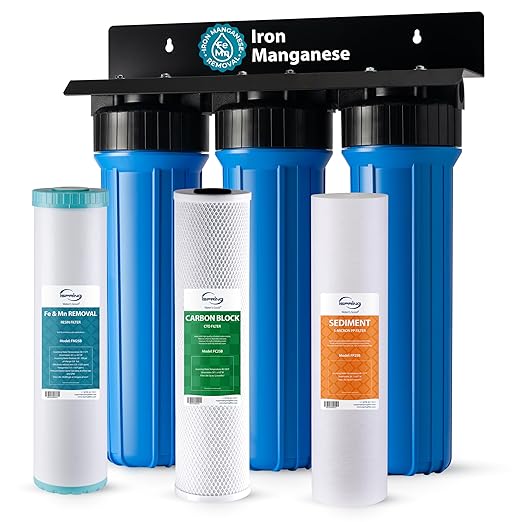
Best dedicated iron pre-filter: iSpring Iron & Manganese Whole House Water Filtration System
The iSpring uses a manganese-greensand-style media that catalytically oxidizes ferrous iron and traps it for backwash. Placed ahead of the Fleck 7000SXT, it pulls iron loading off the softener resin entirely and shifts the bacterial food supply outside the softener loop. This is the single best add-on for households seeing recurring iron bacteria, and it handles up to about 3 ppm iron and 1 ppm manganese reliably. View the iSpring Iron & Manganese system on Amazon.
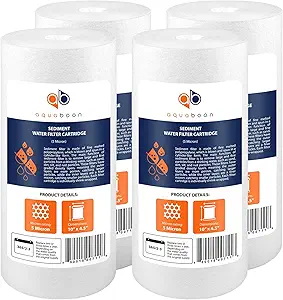
Best sediment pre-filter: Aquaboon 5 Micron 10x4.5 Well Water Sediment Filter (4-Pack)
A 4.5x10 big-blue housing loaded with these 5-micron cartridges sits between the iron filter and the softener and catches any oxidized particles that slip through. The 4-pack lasts a typical well household a full year, and the 5-micron rating is tight enough to stop visible rust without choking flow on a 1" or 1.25" line. Check the Aquaboon 4-pack price on Amazon.
Best all-in-one alternative: Aquasana Whole House Well Water Filter, 500K Gallons
If you'd rather replace the failing softener-plus-filter stack with a single integrated system, the Aquasana 500K bundles UV, KDF, and catalytic carbon stages that together neutralize iron bacteria, kill live organisms, and polish for taste. It's the right call when your 7000SXT is past 8-10 years old and the resin is already shot. See the Aquasana 500K well system on Amazon.
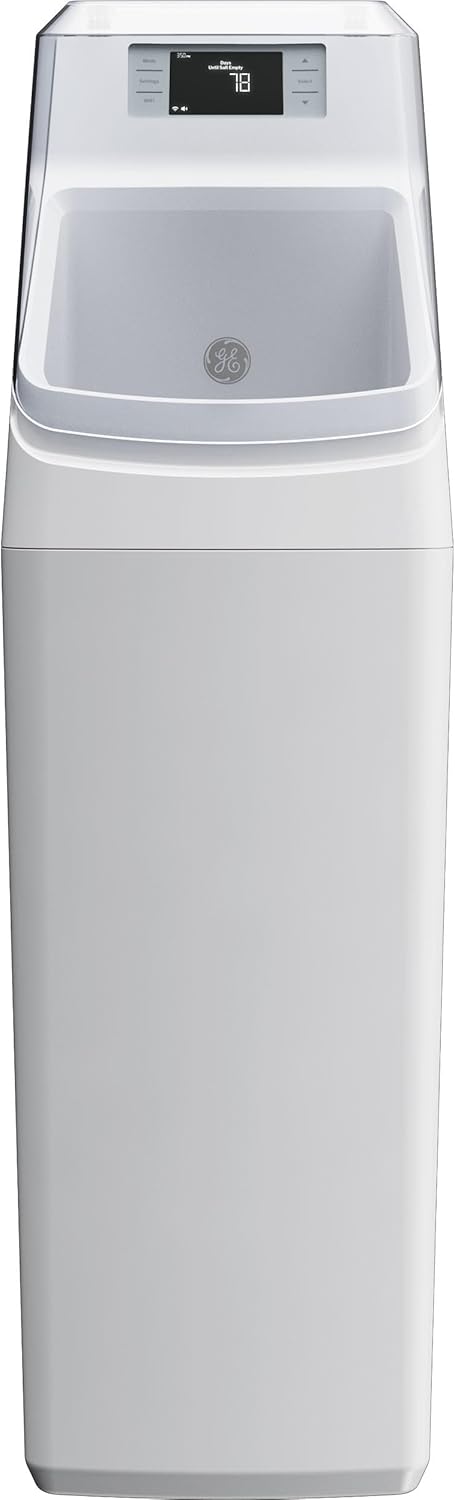
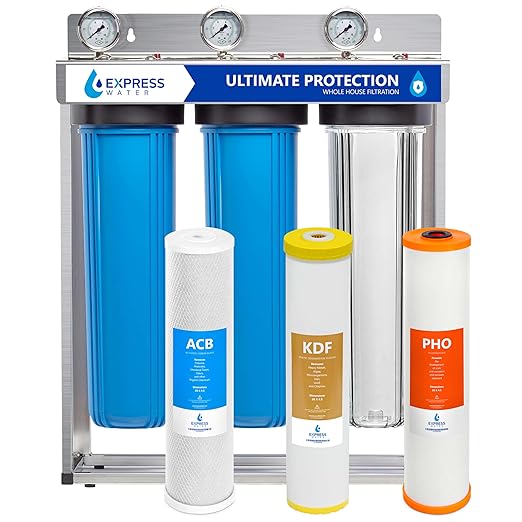
Budget polishing stage: Express Water 3-Stage Whole House Water Filter System
For homes that already run a softener and just need cheap, modular polishing after iron removal, the Express Water 3-stage gives you sediment, KDF, and carbon in one frame at a price well below the Aquasana. View the Express Water 3-stage on Amazon.
Compact 3-stage option: HQUA WF3-01 3-Stage Whole House Water Filtration System
The HQUA WF3-01 is a tighter footprint than the Express Water and ships with sediment, GAC, and CTO cartridges — a good fit when wall space next to the 7000SXT is limited. See the HQUA WF3-01 on Amazon.
Comparison: pre-treatment options for iron bacteria wells
| Product | Best For | Iron Capacity | Footprint |
|---|---|---|---|
| iSpring Iron & Manganese | Dedicated iron removal ahead of softener | Up to 3 ppm Fe, 1 ppm Mn | Tall tank, ~10x54 |
| Aquasana 500K UV+Carbon+KDF | Full softener replacement on bacterial wells | Moderate, plus UV kill | Large, multi-tank |
| Aquaboon 5 Micron 4-Pack | Sediment polish after iron filter | Particulate only | Big Blue 4.5x10 |
| Express Water 3-Stage | Budget polishing post-softener | Low (catches residuals) | Medium, wall-mount |
| HQUA WF3-01 | Compact 3-stage polish | Low (catches residuals) | Compact, wall-mount |
How long should the cleanup take?
Plan on a single Saturday for the chemical cleanout and injector service, plus one overnight regen for the bleach sanitize. You should feel pressure improve immediately after the injector is back together; full bed recovery usually takes two or three regens as the cleaner works through bridged beads. If pressure is still down after a full week of normal use, suspect a partially clogged riser tube or a degraded upper basket — both are easy to inspect after pulling the head off the resin tank.
Maintenance schedule going forward
To restore Fleck 7000SXT flow rate iron bacteria problems caused once is a project; keeping it restored is a routine. Dose the brine well with 4 oz of resin cleaner monthly, change the 5-micron sediment cartridge quarterly, and shock-chlorinate the brine tank twice a year. Backwash the iron pre-filter on its factory schedule (typically every 3-4 days for greensand-style media). Annual well shock-chlorination is cheap insurance against recolonization.
For deeper background see our guides on Fleck 5600SXT vs 7000SXT, well water iron bacteria treatment options, and when to replace softener resin.
Frequently Asked Questions
How do I know if my Fleck 7000SXT has iron bacteria versus regular iron staining?
Iron bacteria produces stringy, slimy biofilm that you can see floating in the brine tank or stuck to the lid — it looks like rust-colored cobwebs. Plain ferric iron settles as flat orange silt. If you smell a swampy or rotten-vegetation odor when you open the salt lid, that's almost always biological iron.
Can I use Iron Out in a Fleck 7000SXT brine tank?
Yes, Super Iron Out (sodium hydrosulfite) is safe for Fleck control valves when used at label rate — typically 1 cup dissolved in the brine well, followed by a manual regen. Don't mix it with bleach; the reaction releases sulfur gas. Run Iron Out first, then sanitize with bleach in a separate cycle 24 hours later.
Will iron bacteria damage the 7000SXT control valve permanently?
Long-term colonization can score the piston seals and stick the rotor, but cleaning catches it well before that in most cases. The two parts most likely to need replacement are the injector venturi (cheap, under $20) and the upper distributor basket. The piston and seal kit only need service if you let the problem go a couple of years.
How much does it cost to replace fouled resin in a 7000SXT?
For a 1.5-cubic-foot residential tank, expect $120-180 in 8% crosslink fine-mesh resin plus an hour of labor if you DIY. Don't reuse old gravel underbedding if it's coated in slime — fresh gravel is about $25 and worth it.
Does a UV system kill iron bacteria upstream of the softener?
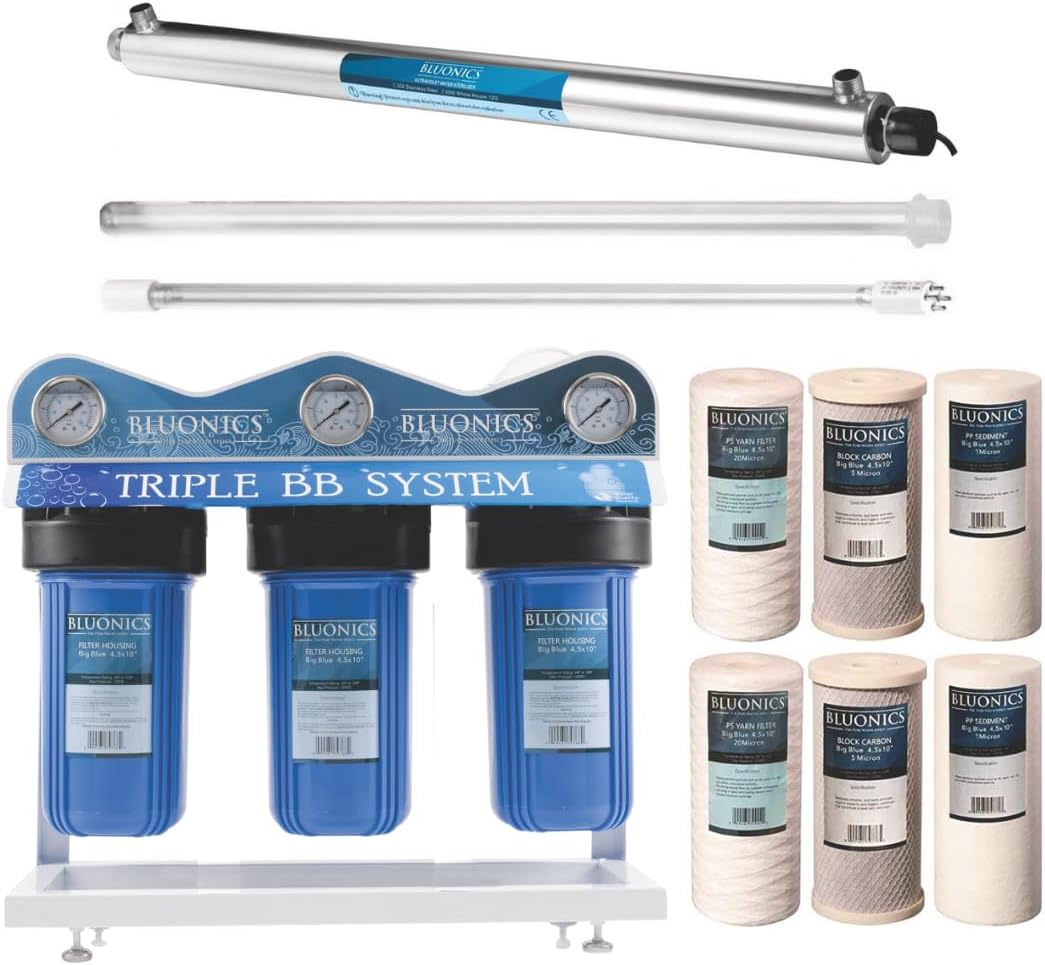
UV kills the live organisms but doesn't remove the iron they feed on, so used alone it slows but doesn't stop refouling. The proven combo for problem wells is iron filter first, sediment filter second, UV third, then softener. The Aquasana 500K bundles UV and KDF in one stack if you don't want to plumb three separate systems.
How often should I sanitize the brine tank on a well with iron bacteria?
Every 3-6 months at minimum. Drain the tank, scrub with a stiff brush, refill with 2-3 inches of water, add 2 oz of unscented bleach, then refill with salt and run a manual regen. Households on shallow wells or seasonal cabins should sanitize every spring before heavy use begins.
Can I run the bleach sanitize and resin cleaner in the same regen cycle?
No. Mixing chlorine bleach with reducing-type resin cleaners like sodium bisulfite or hydrosulfite generates sulfur dioxide gas and damages the resin. Always separate the two treatments by at least one full regen cycle and a 24-hour rest. Citric acid is the safer choice if you want to clean and sanitize in close sequence.
Key Takeaways
- Choosing the right restore Fleck 7000SXT flow rate iron bacteria means matching capacity and output ports to your actual devices
- Always check actual watt-hours (Wh), not just watts — runtime depends on Wh, not peak output
- Also covers: Fleck 7000SXT slow flow iron bacteria
- Also covers: iron bacteria slime water softener
- Also covers: clean Fleck 7000SXT iron fouling
- Compare price-per-Wh across models to find the best value for your budget