If you are searching how to reduce springwell cf1 noise in bedrooms above utility rooms, the fastest wins are isolating the tank base with a rubber anti-vibration pad, rescheduling the air-induction backwash cycle to mid-afternoon, and damping the pipe runs above the system with felt-lined clamps plus mineral-wool batt between the joists. The SpringWell CF1 itself is mechanically quiet — most complaints trace back to the timed backwash and rigid copper or PEX hangers transmitting vibration straight into the subfloor below the bedroom. In 2026, retrofit kits and inexpensive damping materials make this a one-afternoon project for most homeowners.
Why the CF1 sounds louder upstairs than downstairs
The CF1 has no compressor, no booster pump, and no electric motor that runs continuously. What it does have is a Bluetooth-controlled head valve that fires an air-draw and backwash sequence every few days, plus the constant low hiss of household water passing through its catalytic carbon bed. By itself the tank measures around 45–55 dB at one meter during backwash — quieter than a dishwasher. The problem is structural transmission. When the tank is bolted to a concrete pad in a utility room directly under a bedroom, three things happen at once:
- The 64 lb tank flexes microscopically as the bed fluidizes, and that vibration couples into the slab or platform.
- Rigid pipe hangers carry water-hammer pulses and flow noise into the floor joists above.
- Drain-line discharge during backwash produces a 30–90 second gurgle that resonates inside the utility room and radiates upward through any uninsulated cavity.
Anyone trying to figure out how to reduce springwell cf1 noise in bedrooms above utility rooms needs to address all three transmission paths, not just the tank itself.
Step 1: Decouple the tank from the floor
Slide a 3/4-inch closed-cell rubber anti-vibration mat under the CF1 tank base. Look for EPDM or recycled-tire mats rated for HVAC compressor isolation — they handle the 60+ lb static load without compressing flat. Cut the mat 2 inches larger than the tank footprint on each side so the head valve does not overhang. If the tank sits on a wooden platform, add a second pad between the platform and the subfloor, and replace any deck screws with neoprene-bushed isolators.
This single change typically drops perceived bedroom noise by 6–10 dB during backwash. If you also have a brine tank nearby for a SpringWell SS softener, isolate that too — the salt sloshing during regeneration is often louder than the CF1 itself.
Step 2: Reschedule the backwash window
Open the SpringWell Bluetooth app, go to the CF1 head-valve settings, and move the backwash start time to 2:00 p.m. The factory default is 2:00 a.m., which is the worst possible time for anyone sleeping above the utility room. The CF1 only backwashes every 7–14 days depending on usage, so a mid-afternoon schedule is rarely inconvenient. If you cannot use the app, the Vortech head accepts a manual time change through the physical buttons — hold SET for 5 seconds and scroll to the regen-time field.
While you are in the app, lengthen the backwash interval if your incoming water is relatively clean. Going from 7 to 12 days cuts noise events nearly in half without measurably reducing carbon performance.
Step 3: Damp the pipe runs
Inspect every clamp on the inlet and outlet manifolds. Replace bare copper or steel hangers with felt-lined or rubber-cushioned clamps (CADDY or Holdrite both make code-compliant versions). Wrap a 12-inch sleeve of closed-cell foam pipe insulation around any line that passes within 4 inches of a floor joist. Where the supply line tees off to the upstairs bathroom, add a hammer arrestor — the CF1's bypass valve closing at the end of backwash can produce a small water-hammer spike that telegraphs to the bedroom riser.
For the drain line, swap any rigid PVC discharge for braided reinforced hose for the first 6 feet, then tie back into PVC for the long run. The flexible section absorbs the surge at the start of backwash and stops the \"thwack\" sound that often wakes light sleepers.
Step 4: Acoustically treat the ceiling cavity
If steps 1–3 still leave audible flow noise, open the utility-room ceiling and pack 5.5-inch mineral wool batts (Rockwool Safe'n'Sound or Owens Corning Thermafiber) between the joists directly above the CF1 and the drain line. Add a layer of 5/8-inch Type X drywall on resilient channel or hat track. The mass-loaded combination knocks out an additional 8–12 STC points and is especially effective on the low-frequency rumble that pipe insulation alone cannot stop.
This is also the right moment to seal any penetrations — every gap around a copper line is an acoustic shortcut. Use acoustical sealant (the purple stuff), not regular latex caulk.
Step 5: Consider a quieter or supplemental system
If you are renting, cannot open ceilings, or your CF1 is undersized for the household and backwashing more often than expected, a supplemental or replacement system can help. A passive cartridge filter has no backwash cycle and produces zero scheduled noise events. A sediment pre-filter can also extend the CF1's backwash interval, indirectly reducing how many noise events you hear per month.
Comparison: passive alternatives and pre-filters for CF1 owners
| System | Backwash noise? | Best use with CF1 | Typical capacity |
|---|---|---|---|
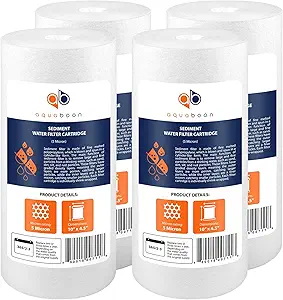
| Aquaboon 5 Micron 10x4.5 Sediment (4-pack) | None (passive) | Pre-filter to extend CF1 intervals | ~6–12 months per cartridge |
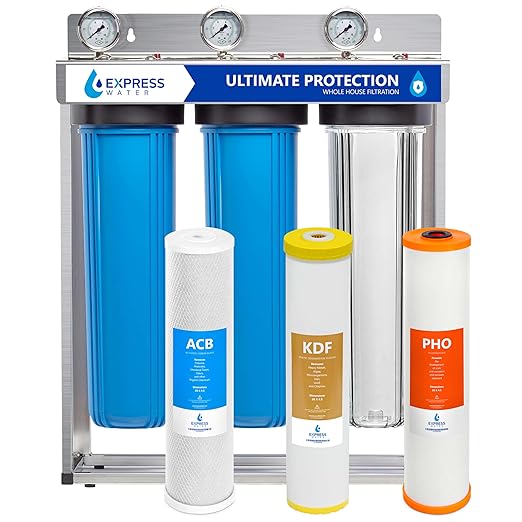
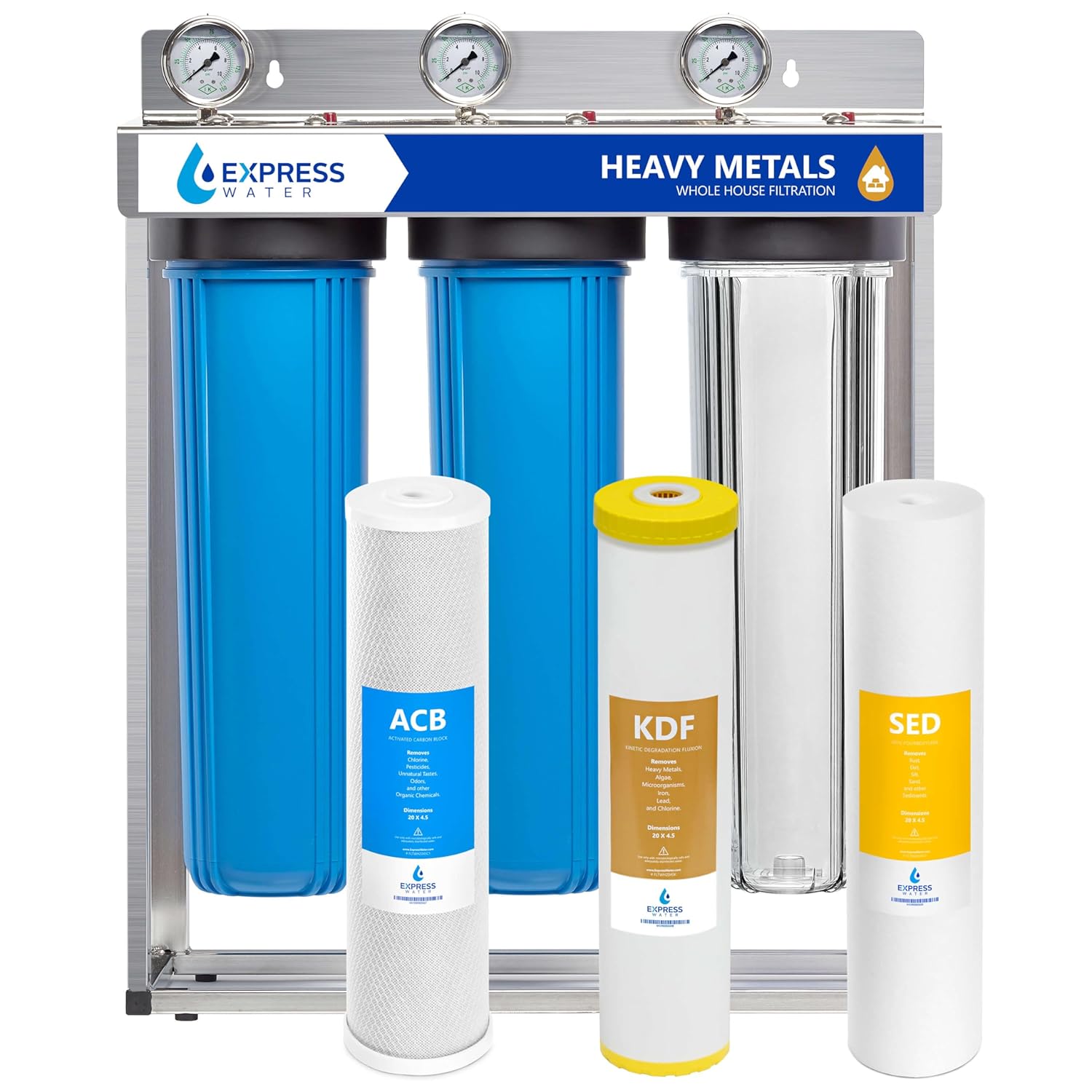
| Express Water 3-Stage Whole House | None (passive) | Quiet drop-in if CF1 fails | ~100,000 gal |
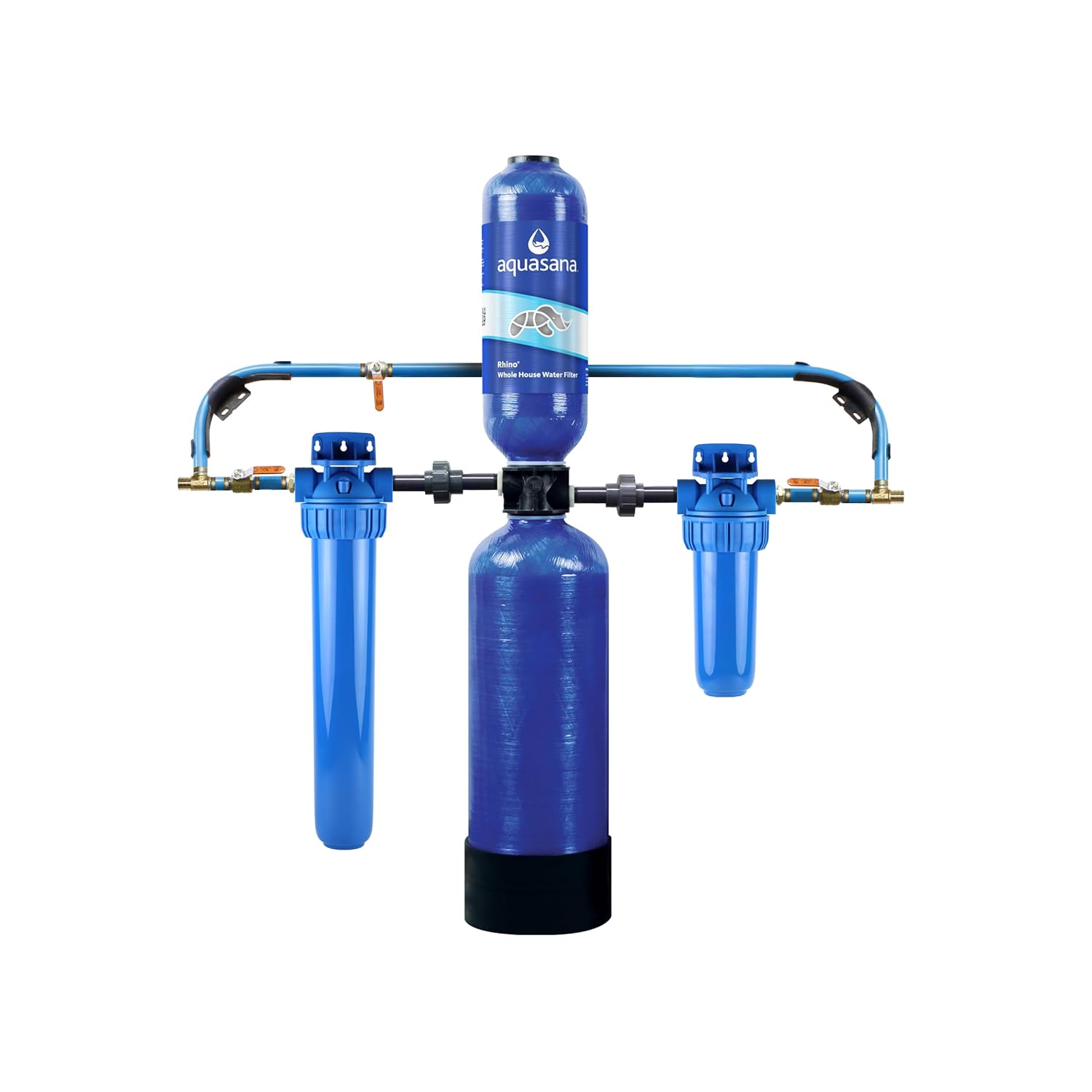
| Aquasana 500K UV+Carbon+KDF | None (passive) | Well-water replacement, no regen cycle | ~500,000 gal / 5 yr |
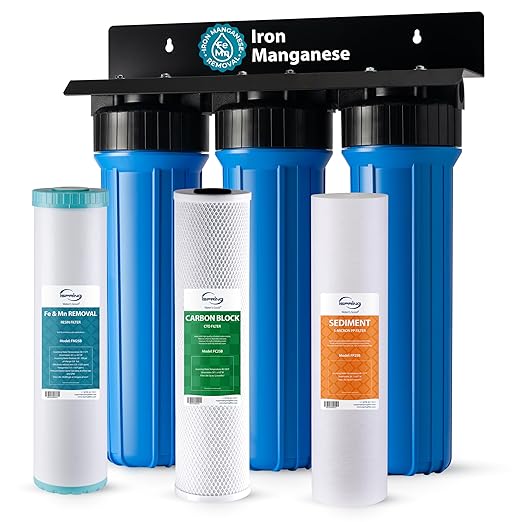
| iSpring Iron & Manganese | Minor (air injection) | Add only if you have iron, not for noise | ~50,000 gal |
| SpringWell CF1 (for reference) | Yes, every 7–14 days | Whole-house catalytic carbon | 1,000,000 gal |
Aquaboon 5 Micron 10x4.5 Well Water Sediment Filter (4-Pack)
The simplest noise-reduction add-on is a 10x4.5 sediment housing installed upstream of the CF1. By catching silt before it loads the carbon bed, the cartridge extends the days between backwashes — sometimes from 7 to 14, which literally halves the number of noise events. The 4-pack lasts roughly two years on average municipal or lightly silted well water. Check the Aquaboon 5 Micron 4-pack on Amazon.
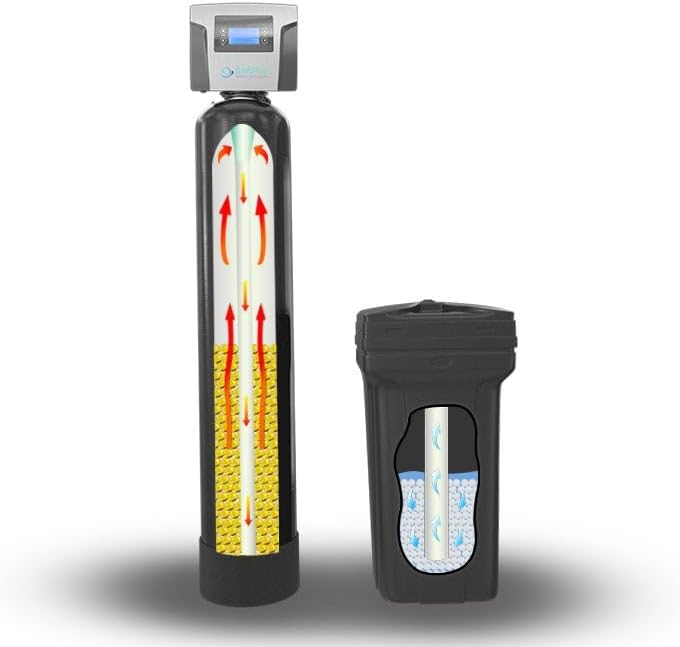
Express Water 3-Stage Whole House Water Filter System
If the CF1 is at end-of-life and the bedroom noise problem has finally tipped you over the edge, a fully passive 3-stage cartridge system is the most effective long-term fix. Express Water's 3-stage has sediment, carbon block, and KDF stages with no backwash, no electronics, and no scheduled regen — it is completely silent except for the water flowing through it. Capacity is lower than the CF1, so plan on annual cartridge changes. View the Express Water 3-Stage on Amazon.
Aquasana Whole House Well Water Filter (500K Gallons, UV+Carbon+KDF)
For well-water homes where the CF1 was always slightly mismatched, the Aquasana 500K is a quieter long-term replacement. It is a tank-style passive system — no backwash, no air induction — and includes UV disinfection that the CF1 lacks. The footprint is similar to the CF1, so it usually slots into the same utility-room corner. See the Aquasana 500K well filter on Amazon.
iSpring Iron & Manganese Whole House System
Only relevant if your noise complaints are compounded by an iron filter sitting next to the CF1. The iSpring iron unit is quieter than older greensand systems, but it still uses air injection and will need its own isolation pad if it sits in the same utility room as your CF1. View the iSpring Iron & Manganese system on Amazon.
For a broader head-to-head, see our 2026 whole-house filter rankings and our SpringWell CF1 installation guide, which covers tank placement options that avoid noise issues entirely.
Frequently Asked Questions
Is the SpringWell CF1 supposed to be this loud at night?
No. A correctly installed CF1 should only produce noticeable sound during the 8–12 minute backwash cycle every 7–14 days. If you hear continuous humming or hissing, you most likely have a partially closed bypass valve creating a venturi effect, or a check valve oscillating. Open the bypass fully, verify the inlet shutoff is 100% open, and the sound should disappear.
Can I move the SpringWell CF1 to the garage to avoid bedroom noise?
Yes, as long as the garage stays above 36°F year-round and the run between the filter and the house is insulated. Many homeowners in mild climates relocate the CF1 to a garage or basement corner that is not directly under any bedroom. Just remember the head valve needs power and Bluetooth signal to your phone, so factor in a nearby outlet and a Wi-Fi extender if needed.
Does adding a sediment pre-filter actually reduce CF1 backwash noise?
Indirectly, yes. A 5-micron pre-filter catches silt that would otherwise load the catalytic carbon bed, which triggers more frequent backwashes. Owners report extending the interval from 7 days to 12–14 days after adding a pre-filter, which roughly halves the number of nightly noise events over a year.
What is the best anti-vibration pad for a 64 lb filter tank?
Look for an HVAC-rated EPDM or recycled-rubber pad in the 3/4-inch to 1-inch thickness range, with a static load rating of at least 50 psi. Generic gym-floor tiles are too soft and will compress flat under the tank within months. Cut the pad 2 inches larger than the tank base on all sides so the head valve and inlet plumbing do not overhang.
Will rescheduling the backwash damage the CF1?
No. SpringWell explicitly designs the backwash schedule to be user-configurable through the Bluetooth app or the head-valve buttons. Moving the cycle from 2:00 a.m. to 2:00 p.m. has no impact on filter performance or lifespan — it simply shifts when the noise occurs.
How much does professional acoustic treatment of the utility-room ceiling cost?
In 2026, expect $600–$1,400 for a contractor to install mineral wool batts, resilient channel, and 5/8-inch Type X drywall in a 10x10 utility-room ceiling. DIY material cost is closer to $250–$400. The labor premium is mostly drywall mudding and finishing, not the acoustic work itself.
Should I replace the CF1 entirely, or is treating the noise enough?
If the CF1 is under 8 years old and otherwise performing well, treat the noise — the system has another decade of life in it. If it is approaching the end of its capacity or the head valve is glitching, a passive 3-stage system is a quieter long-term replacement. See our softener vs. filtration comparison for sizing guidance on the replacement.
Key Takeaways
- Choosing the right how to reduce springwell cf1 noise in bedrooms above utility rooms means matching capacity and output ports to your actual devices
- Always check actual watt-hours (Wh), not just watts — runtime depends on Wh, not peak output
- Also covers: springwell cf1 backwash loud at night
- Also covers: quiet springwell installation tips
- Also covers: springwell cf1 vibration dampening
- Compare price-per-Wh across models to find the best value for your budget