To program Fleck 7000SXT for saltwater reef tank homes in 2026, set the valve to time-clock or metered-delayed regeneration, enter your actual grains-per-gallon hardness, dial in the resin capacity (typically 24,000-32,000 grains per cubic foot at 6 lbs/ft³ salt dose), schedule regen for 2:00 AM when livestock is least active, and — critically — route the cold line that feeds your RO/DI unit to a hard, pre-softener bypass. Softened water still contains sodium that can stress reef inhabitants if it slips past a weak RO membrane, so the goal is precise softening for the house and untouched feedwater for the tank.
Reef keepers who get this wrong usually discover the problem when alkalinity swings, nuisance algae blooms, or coral tissue recession appears days after a top-off. The Fleck 7000SXT is forgiving once configured properly, but the default factory settings assume a generic single-family home, not a household with a 180-gallon mixed reef and a 75-gallon-per-day RO/DI making top-off water around the clock.
Why Fleck 7000SXT Programming Matters for Reef Tank Homes
The Fleck 7000SXT is a high-flow control head rated to roughly 27 GPM service flow, which makes it a popular choice for larger homes where simultaneous showers, laundry, and an auto top-off reservoir filling can spike demand. For reef tank owners, three programming variables matter more than any others: hardness setting, regeneration time, and bypass routing. Get those right and the softener will not interfere with your reef chemistry; get them wrong and you will be chasing phantom ion-exchange artifacts in your tank for weeks.
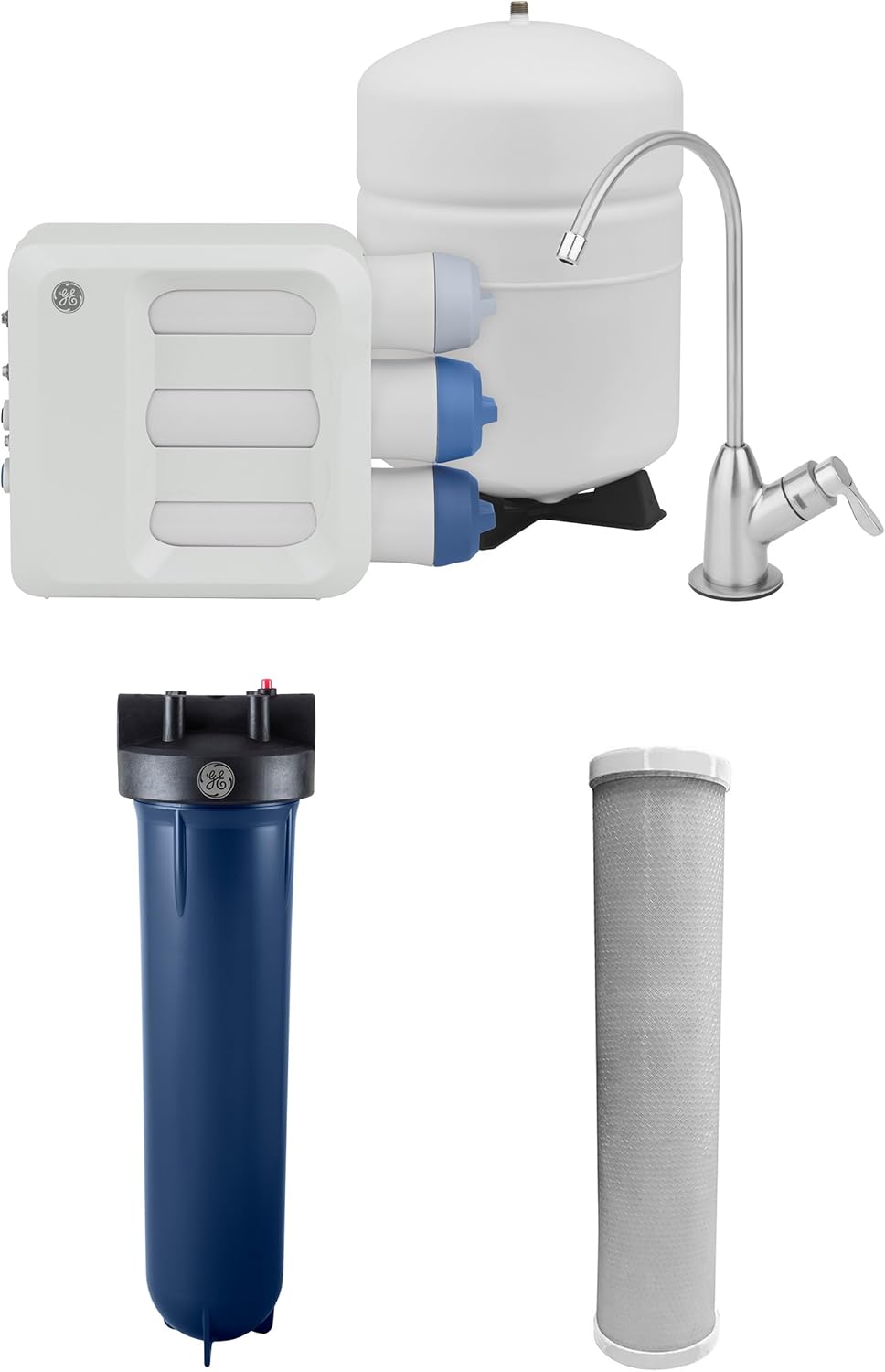
Most reef hobbyists run a four- or five-stage RO/DI system downstream of the house plumbing. A properly working RO membrane rejects 95-98% of sodium, and a fresh DI resin polishes the rest to 0 TDS. The risk is not the softener itself — it is what happens when the membrane ages, when DI resin exhausts faster than expected, or when a household member accidentally swaps the RO feed to the softened line. Programming the 7000SXT correctly minimizes that risk surface.
Step-by-Step: How to Program Fleck 7000SXT for Saltwater Reef Tank Homes
Hold the Up and Down arrows simultaneously for 5 seconds to enter Master Programming Mode. Walk through each parameter in order:
- Display Format (DF): Set to GAL (gallons) so the metered head tracks actual water use rather than calendar days.
- Valve Type (VT): Confirm 7000 (it should auto-populate).
- Regenerant Flow (RF): Set to dF1b for downflow brining, which is standard for softening service.
- Capacity (C): Enter your resin capacity. For a 1.5 ft³ tank dosed at 9 lbs of salt, that’s roughly 36,000 grains.
- Hardness (H): Enter your tested hardness in grains per gallon. If you have iron in well water, add 4 grains for every 1 ppm of iron.
- Reserve (RS): Set to AUTO so the valve calculates a rolling 7-day average.
- Day Override (DO): Set to 7 days. Even on low-use weeks the resin should regenerate weekly to prevent biofilm.
- Regen Time (RT): 2:00 AM is ideal. Reef tank ATO solenoids rarely fire mid-cycle at that hour, and you avoid pressure drops during peak household demand.
To program Fleck 7000SXT for saltwater reef tank homes with auto top-off reservoirs, also consider lengthening the brine-draw cycle (BD) by 5 minutes if you have a deeper bed. A complete brine rinse leaves less residual sodium in the resin bed, which translates to lower sodium spikes in the first few gallons after regeneration — exactly the water your RO/DI unit will see if your ATO reservoir refills at 3:00 AM.
The Bypass Question: Should the Reef Feed See Softened Water at All?
Most reef experts recommend a dedicated hard-water bypass tee installed before the softener, feeding the RO/DI input through its own shutoff. There are two reasons. First, sodium passes more readily through RO membranes than calcium and magnesium do, so feeding softened water actually makes your DI resin work harder. Second, calcium and magnesium are not problems for an RO membrane in the way that iron or chlorine are — they cause scaling only at high concentrations or with anti-scalant deficiency.
If you already have a whole-house sediment and carbon stack upstream of your softener, the RO/DI input can tap into the line after those filters but before the softener. This gives the membrane chlorine-free, sediment-free, but still-hard water — the textbook input for residential RO. For deeper reading on plumbing the tee, see our guide on softener bypass plumbing for aquariums.
Recommended Pre-Filtration Before Your Fleck 7000SXT
The Fleck 7000SXT does not remove chlorine, sediment, iron, or manganese on its own — it only exchanges hardness ions. Reef-keeping households almost always need a pre-filter stack to protect both the resin bed and the downstream RO membrane. Three options stand out in 2026.
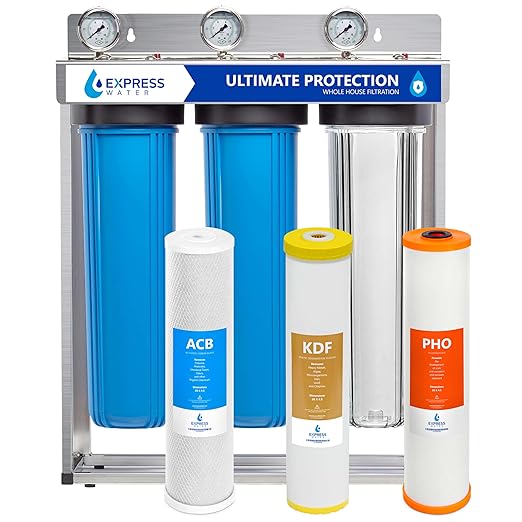
Express Water 3-Stage Whole House Water Filter System
The Express Water 3-stage stack (sediment + KDF + carbon block) is the most common pre-filter upstream of a Fleck softener in reef households. It strips chlorine and chloramine before they hit the resin (chlorine oxidizes softener resin over time) and catches sediment that would otherwise channel the bed. The pressure gauges on each stage make it easy to spot a clogged sediment cartridge before it starves the softener of flow during a regen. View on Amazon.
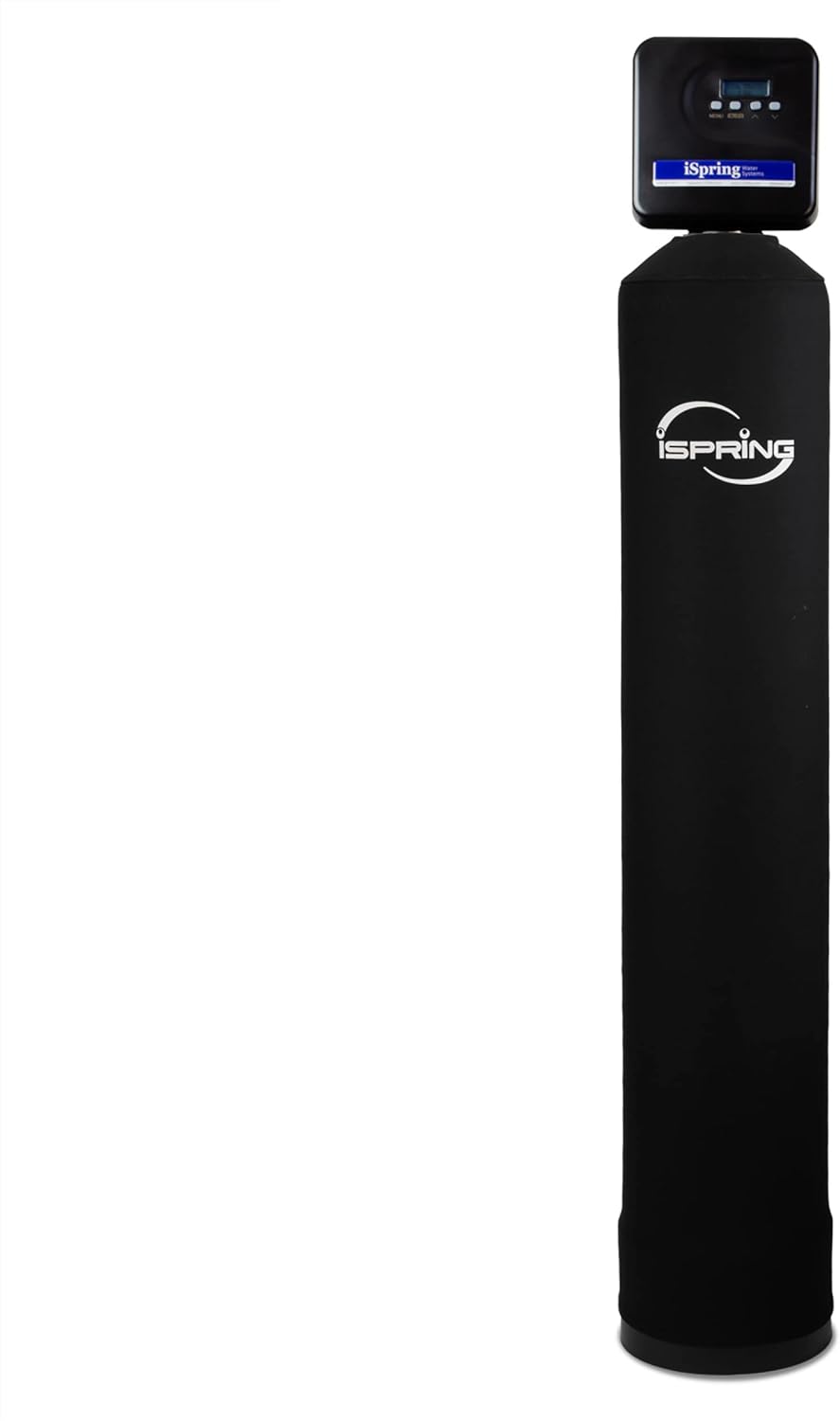
iSpring Iron & Manganese Whole House Water Filtration System
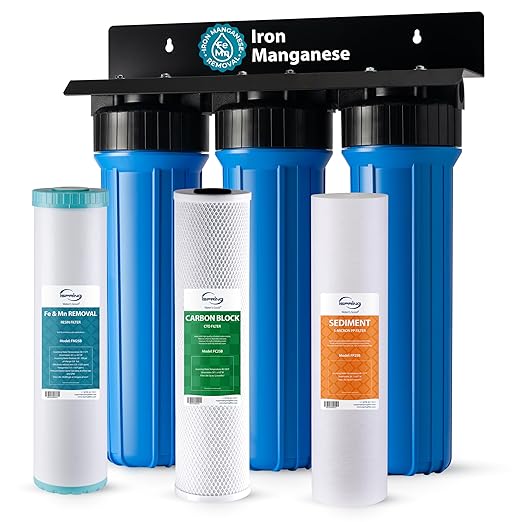
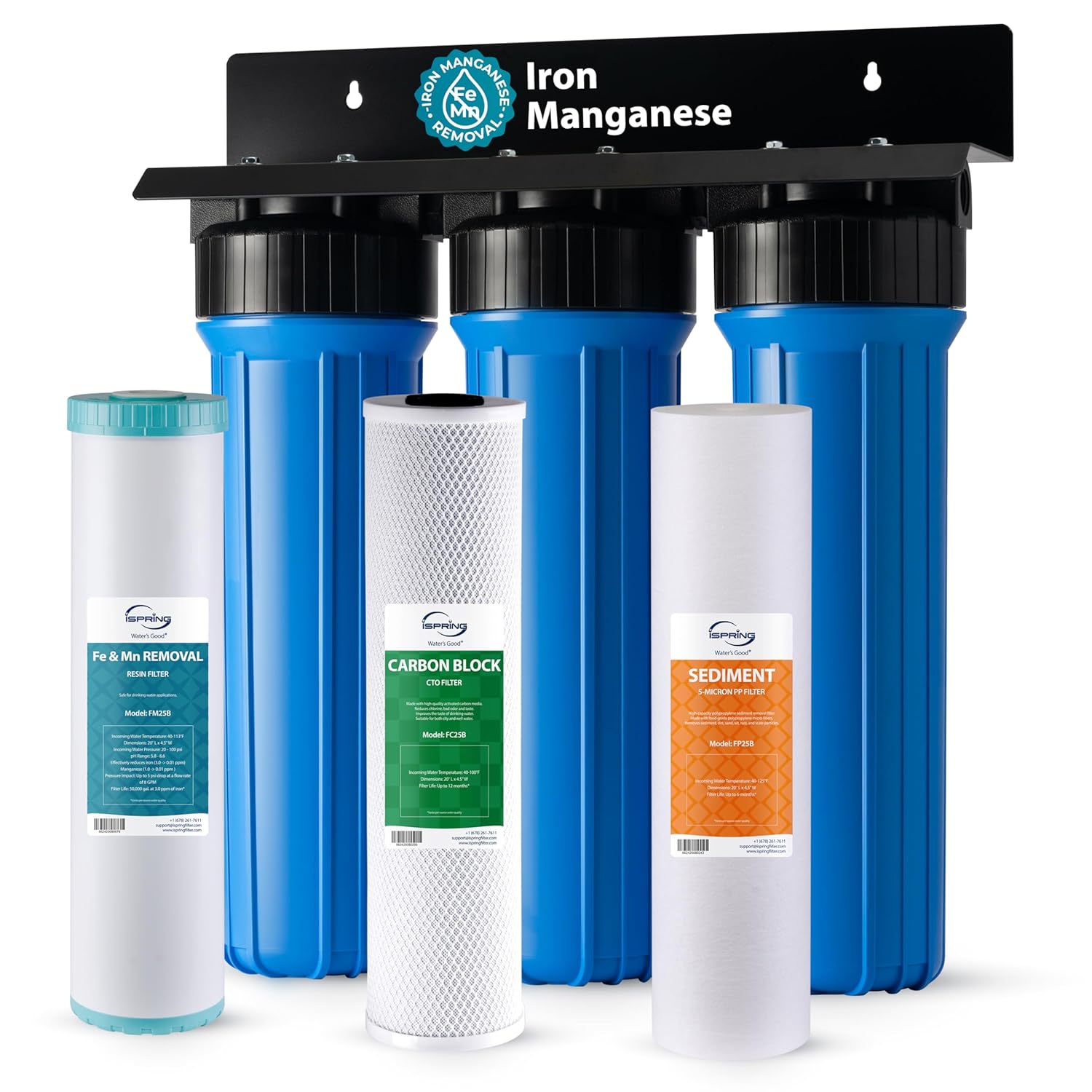
If you are on well water, iron is the silent killer of softener resin and the trigger for rust-colored stains in your sump. The iSpring iron and manganese system is purpose-built to oxidize and trap ferrous iron up to 3 ppm before it ever reaches your Fleck 7000SXT. Reef keepers on well water who skip this step end up replacing resin every 3-4 years instead of 10+. View on Amazon.
Aquasana Whole House Well Water Filter (500K Gallons, UV+Carbon+KDF)
For larger reef homes on private wells, the Aquasana 500K is a comprehensive upstream solution with UV sterilization — useful because bacterial slime in a softener tank is a real problem that no resin replacement can solve permanently. It is a bigger investment, but pairs well with a 7000SXT in homes running large display tanks plus frag systems. View on Amazon.
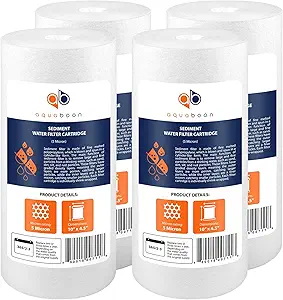
Aquaboon 5 Micron 10x4.5 Well Water Sediment Filter (4-Pack)
Whichever housing you choose, 5-micron sediment cartridges are the workhorse consumable. A 4-pack lasts a typical reef household roughly a year if you change quarterly, which is the schedule we recommend to prevent channeling in the softener resin. View on Amazon.
HQUA WF3-01 3-Stage Whole House Water Filtration System
The HQUA WF3-01 is a budget-friendly alternative to the Express Water stack with similar 3-stage architecture. It is a solid pick for renters or anyone hesitant to commit to a permanent install — the housings unscrew without specialty tools when you move. View on Amazon.
Pre-Filter Comparison for Reef Tank Homes
| System | Best For | Removes Chlorine | Iron Capable | UV Sterilization |
|---|---|---|---|---|
| Express Water 3-Stage | City water reef homes | Yes (carbon + KDF) | Trace only | No |
| iSpring Iron & Manganese | Well water with iron | Partial | Yes (up to 3 ppm) | No |
| Aquasana 500K UV+Carbon+KDF | Large well-water reef homes | Yes | Limited | Yes |
| HQUA WF3-01 | Budget / renter installs | Yes | No | No |
Salt Dose and Brine Tank Considerations
Reef-tank households often share a utility room with their sump and live rock curing tubs. Humidity is high and ambient temperatures can swing. The 7000SXT’s brine tank should be located where it stays between 40°F and 100°F, with a tight-fitting lid to keep salt dust off the floor near electrical reef equipment. A salt-dose of 6 lbs/ft³ (the "high-efficiency" setting) is the sweet spot for most reef homes — it minimizes the chloride going down the drain (which still matters even in a non-coastal home, since softener discharge has been linked to municipal salinity issues), while delivering enough capacity to handle the high-water-use lifestyle of a reef keeper.
Avoid using rock salt, even though it is cheaper. Rock salt leaves insoluble residue that fouls the injector and brine valve. Solar salt pellets are the minimum acceptable grade, and evaporated salt pellets are best. Your livestock will not notice the difference — they should never see softener brine — but your Fleck head will last years longer.
Programming Around Auto Top-Off Schedules
If your reef ATO reservoir holds 5 gallons and refills three times daily from RO/DI, that production has to align with softener regen. The 7000SXT briefly drops downstream pressure during the backwash and brine-draw cycles — typically 20-90 minutes total. RO membranes don't like cycling on and off rapidly, and most modern RO/DI controllers will throw a low-pressure error if the inlet dips below 40 psi mid-fill.
The fix is timing-based: set your RO/DI booster pump (if you have one) to start no earlier than 4:00 AM if the softener regenerates at 2:00 AM. Without a booster pump, simply put the ATO reservoir refill on a smart plug that activates between 6:00 AM and 10:00 PM. For more on integrating reef equipment with whole-house plumbing, see our overview of RO/DI systems sized for reef tanks.
Common Mistakes That Crash Reef Tanks
The single most common mistake is plumbing the RO/DI feed downstream of the softener "because the water tastes better." Taste is irrelevant to a reef tank. What matters is sodium concentration, and softened water raises sodium proportional to incoming hardness. A 20 gpg hardness translates to roughly 150 ppm sodium in softened water — enough to overwhelm a tired RO membrane and contribute to long-term salinity drift.
The second most common mistake is setting the regen day override too long. Some installers default to 14 days to "save salt," but a softener resin bed that sits unregenerated for two weeks grows a biofilm that releases ammonia and dissolved organics into your service water. That is exactly the load your DI resin then has to scrub, exhausting it faster. Seven days is the right override for reef homes.
The third mistake is ignoring the bypass valve. The 7000SXT ships with a bypass that should be set to "service" during normal operation, but many homeowners leave it half-cracked after maintenance. A partially open bypass mixes hard water back into the softened line, which is fine for the house but disastrous if you also forgot to install the dedicated pre-softener tee for the reef.
Frequently Asked Questions
Can I use softened water directly for RO/DI top-off on my reef tank?
Technically yes, but it is not recommended. Sodium passes through RO membranes more readily than calcium, so softened-water RO output drifts higher in TDS as your membrane ages, and your DI resin exhausts faster. Tap a hard-water line before the softener instead.
What hardness value should I enter on the Fleck 7000SXT?
Enter your actual tested hardness in grains per gallon, plus 4 grains for every 1 ppm of iron if you are on well water. A Hach 5B test kit or a strip test will give you a number; do not rely on the utility report alone because hardness varies seasonally.
Will the Fleck 7000SXT remove chlorine for my reef tank?
No. The 7000SXT is an ion-exchange softener — it only swaps calcium and magnesium for sodium. You need a separate carbon block or carbon-KDF stage to remove chlorine and chloramine before they hit your RO/DI or your reef. Install carbon upstream of the softener to protect the resin from chlorine oxidation.
How often should I regenerate the softener in a reef tank household?
Set the day override to 7 days regardless of metered demand. Reef homes with high RO/DI usage may meter into a 4-5 day cycle naturally, which is fine. Going longer than 7 days risks biofilm growth in the resin bed.
Does softener brine harm my reef tank if it backwashes into the drain?
Only if your softener drain line is somehow cross-connected to your reef sump or auto top-off reservoir — which would be a serious plumbing error. A properly installed softener drains to a standpipe or floor drain with an air gap and never contacts reef plumbing.
Can I run my saltwater mixing station from softened water?
No. Saltwater mixing stations should always start from 0 TDS RO/DI water, never from softened or even straight tap water. The salt mix is calibrated assuming pure water as the starting point; sodium from a softener throws off the ionic balance.
What if my well water has iron and I want to feed my reef tank?
Install dedicated iron removal upstream of both the softener and any reef feed tee. Iron in trace amounts feeds nuisance algae and cyanobacteria in reef tanks, and at higher concentrations damages RO membranes. See our notes on iron removal for well-water aquariums for the full plumbing diagram.
How long does Fleck 7000SXT resin last in a reef-tank home?
With proper pre-filtration (carbon for chlorine removal, sediment filter to prevent channeling, iron removal if applicable), expect 10-15 years from standard 8% crosslink resin. Without chlorine removal, that drops to 3-5 years. For more on extending equipment life, see our Fleck 7000SXT error code reference.
Key Takeaways
- Choosing the right program Fleck 7000SXT for saltwater reef tank homes means matching capacity and output ports to your actual devices
- Always check actual watt-hours (Wh), not just watts — runtime depends on Wh, not peak output
- Also covers: Fleck 7000SXT reef aquarium settings
- Also covers: softener settings for reef keepers
- Also covers: Fleck program reef tank household
- Compare price-per-Wh across models to find the best value for your budget