If you keep koi and run city or well water through a Fleck 5600SXT, you cannot ignore the controller when you top off the pond. To program Fleck 5600SXT for koi pond top-offs, you need to route the pond hose bib upstream of the softener (or use a hard bypass), schedule regeneration for off-hours when nobody is filling, and tune day override, capacity, and cycle settings so brine never coincides with a top-off window. Softened water adds sodium and strips minerals koi need, so the programming goal is simple: in 2026, never let conditioned water touch the pond, and never let a regen fire mid-fill.
Why Softened Water Hurts Koi (And Why Programming Matters)
Sodium-form ion exchange resin swaps calcium and magnesium for sodium. Even at moderate salt doses, the result is water with elevated sodium, near-zero general hardness (GH), and depleted carbonate buffering (KH). Koi tolerate a wide pH range, but they need a stable GH of 8–12 dKH and consistent KH to avoid pH crashes. Topping off with softened water erodes both, stresses fish, suppresses nitrifying bacteria in the biofilter, and over a season can wipe out a mature pond.
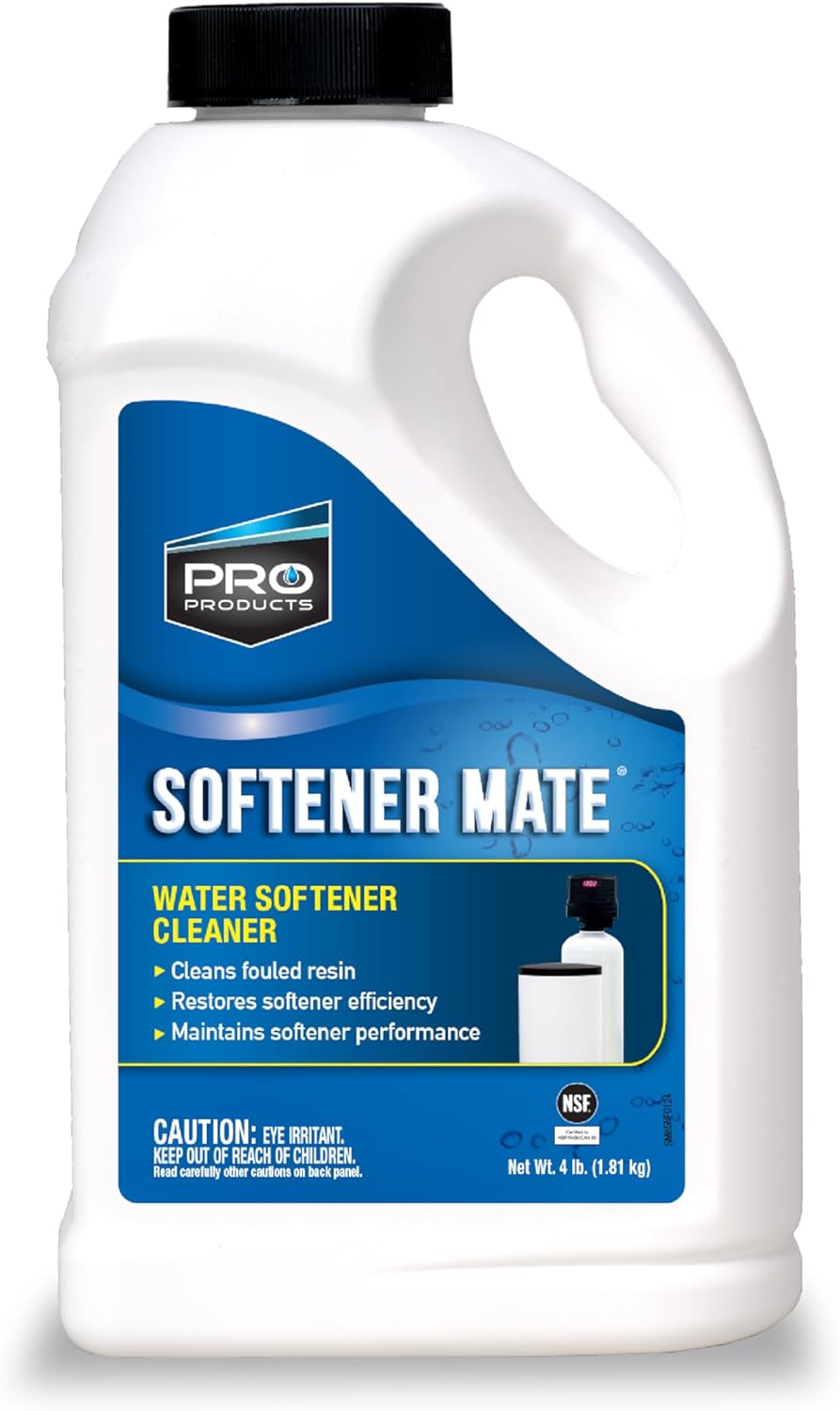
The Fleck 5600SXT controller does not know which faucet is open. It only sees flow through its turbine meter. Every gallon that passes through the softener — including the 300 gallons you dumped into the pond last weekend — is counted against remaining capacity and accelerates the next regen. Worse, if regen triggers mid-fill, a slug of high-salinity brine rinse can hit the pond. Programming around this means both controller settings and plumbing changes; one without the other will not protect the fish.
How to Program Fleck 5600SXT for Koi Pond Top-Offs: Step by Step
Before you touch the controller, confirm the pond fill line is plumbed upstream of the softener inlet, or that you have installed a tee with a dedicated bypass ball valve. If you skip this step, no programming will save you — conditioned water will still reach the pond. Once the bypass exists, the controller settings below keep regen cycles predictable and out of the way.
1. Enter Master Programming Mode
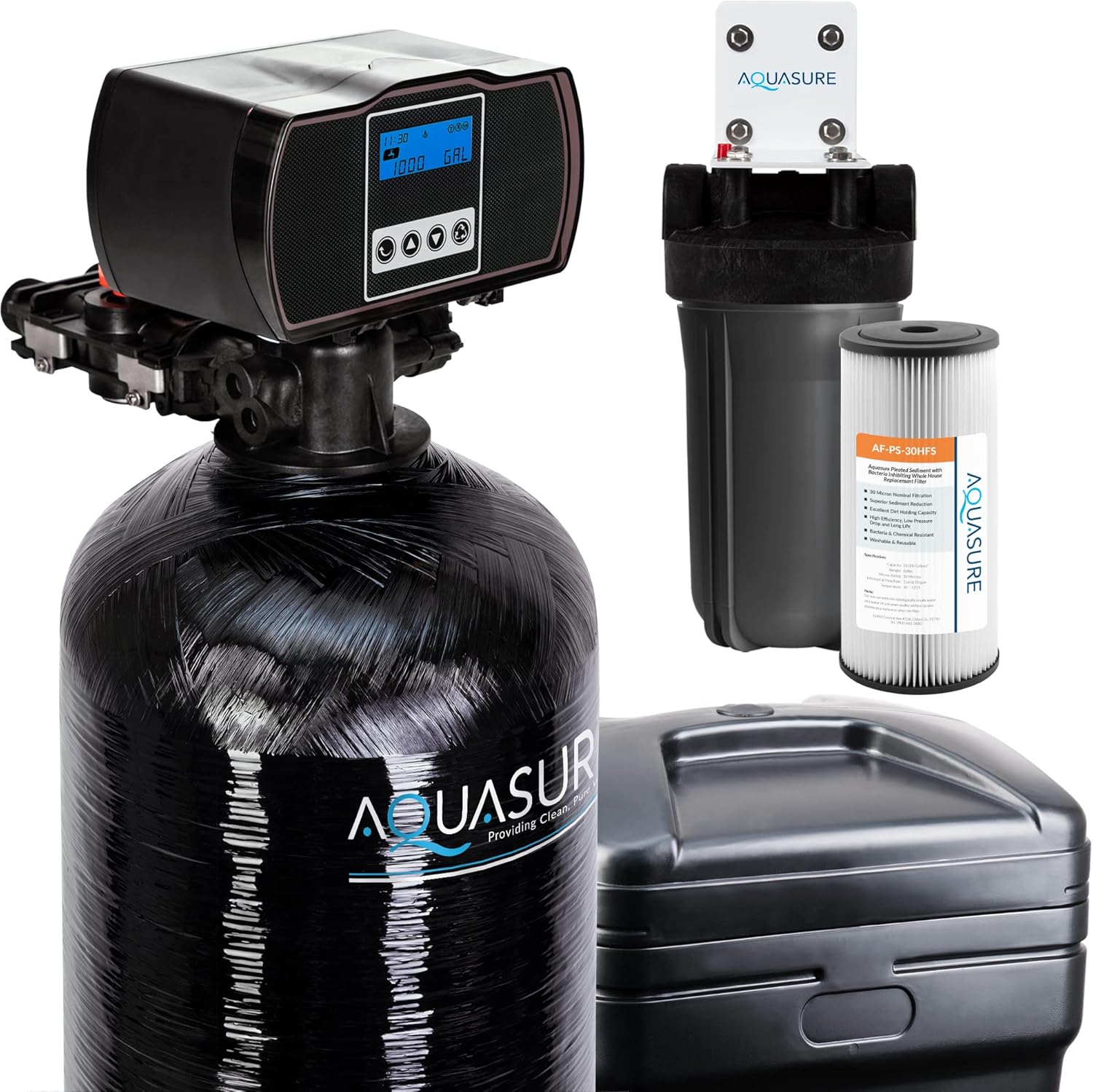
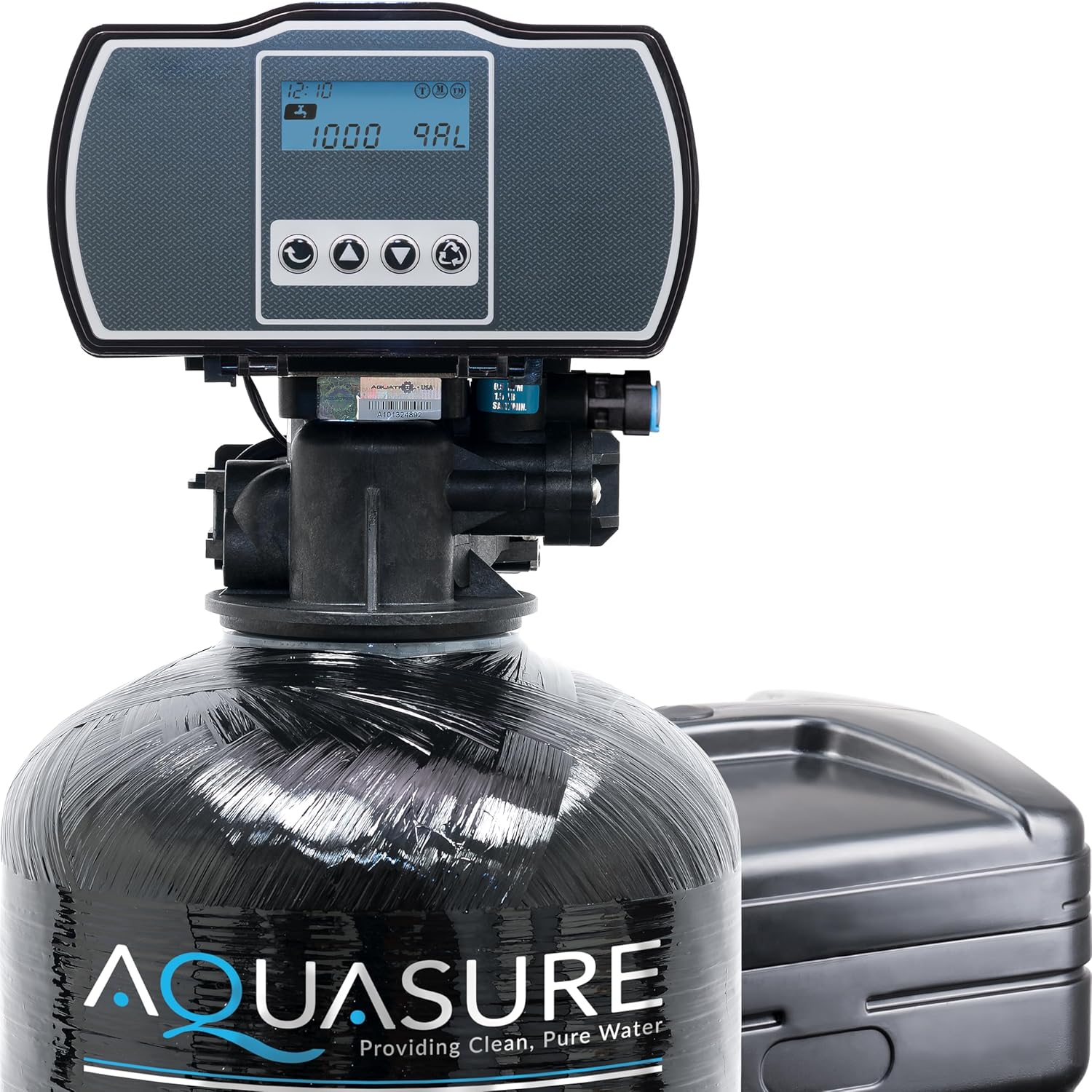
Press and hold the Up and Down arrows for roughly five seconds until the display shifts to DF (display format). Use the Set/Extra-Cycle button to step through DF, VT, CT, NT, C, H, RS, DO, RT, B1–B4, and so on. The settings that matter for koi households are CT, C, DO, RT, and the BW/BD/RR/BF cycle times.
2. Set Control Type and Capacity Honestly
Choose CT = Fd (meter delayed) for koi homes. Meter immediate (Fc) can fire a regen the moment remaining capacity hits zero — potentially mid-fill on a Saturday afternoon. Fd holds the regen until the next RT window. Set C (capacity in kilograins) realistically: roughly 24,000–32,000 grains for a 1.0 cu ft tank dosed at 9 lb of salt. Do not inflate C to stretch regens; you will run hard water past resin breakthrough and waste salt on the recovery cycle.
3. Lock Regen Time to 2:00 AM
RT defaults to 2:00 AM, which is perfect. Nobody tops off a pond at 2 AM. Leave it. If you have ever had a regen fire at noon while filling, the cause is almost always CT set to Fc or a capacity number that was already at zero — fix those, not RT.
4. Set a Day Override You Can Live With
DO forces a regen after N days regardless of metered usage. For koi homes, set DO = 7. This guarantees the resin bed gets a clean weekly cycle and prevents fouling from iron, manganese, or biofilm, all of which are common on well water and quietly ruin softener performance long before metered capacity is reached. A neglected resin bed will eventually channel brine, and channeled brine is what dumps sodium spikes into your plumbing.
5. Tune Cycle Times for a Clean Brine Discharge
For a 1 cu ft system at 9 lb salt: BW (backwash) = 10 min, BD (brine draw / slow rinse) = 60 min, RR (rapid rinse) = 10 min, BF (brine fill) = 12 min. A long, complete rinse matters because residual brine left in the resin bed can leach into the first gallons drawn after a regen. Even with a proper bypass, you do not want a partially rinsed softener feeding the rest of the house while the pond fill is open on the bypass line.
6. Verify With a Manual Regen and a TDS Meter
After programming, hold Set/Extra-Cycle for three seconds to force a manual regen. Once it completes, run a tap downstream of the softener and check TDS and chloride with a cheap meter. Then open the pond bypass and confirm those numbers drop to source-water levels. If the bypass reads softened, your plumbing is wrong — not the controller.

Plumbing the Pond Bypass: Where Filtration Belongs
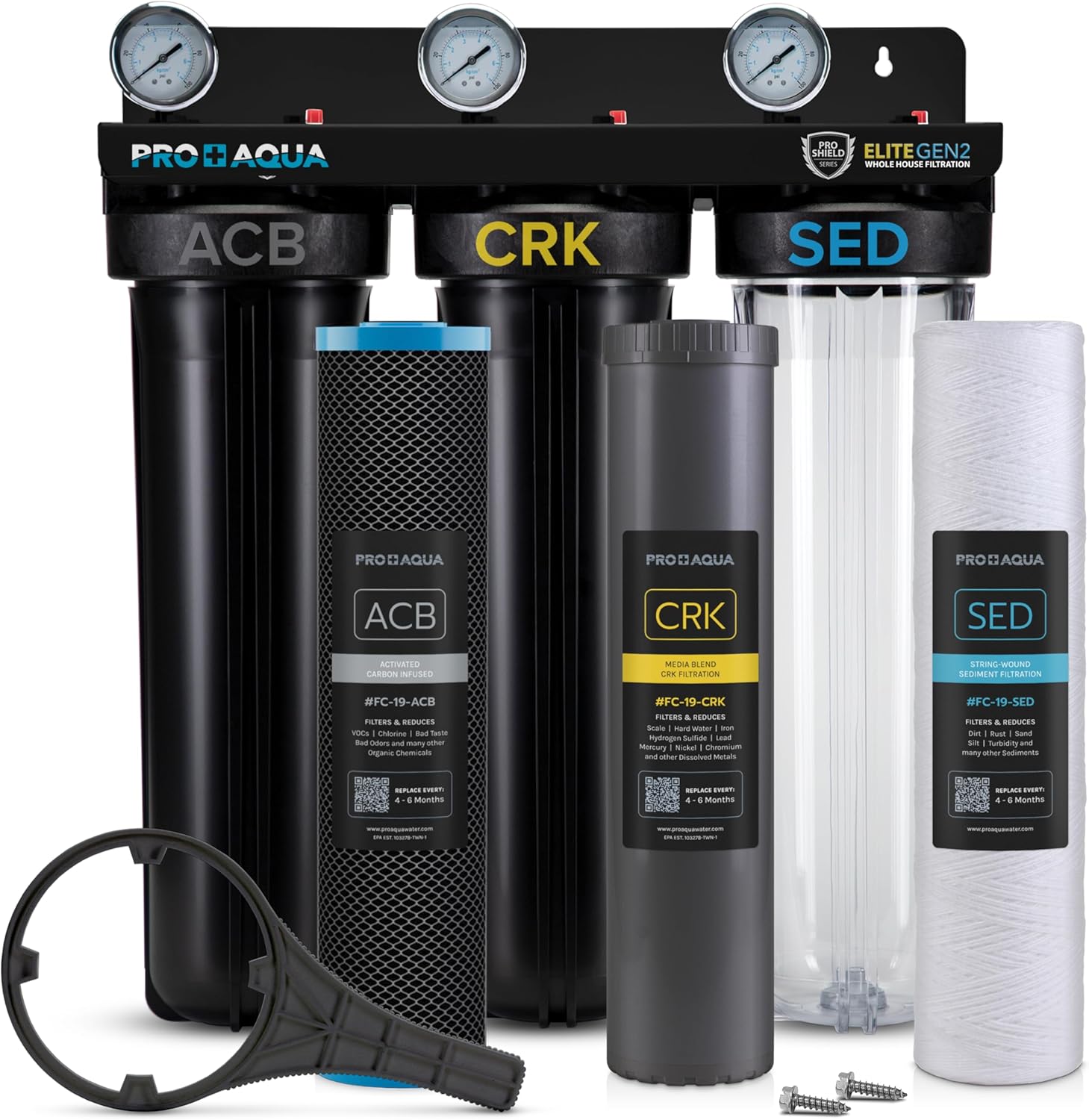
The cleanest layout puts sediment and contaminant filtration before the softener, with the pond fill teed off between the whole-house filter stack and the softener inlet. That way the pond gets filtered water without sodium, the softener gets pre-filtered water so the resin lasts longer, and you do not need a second filter train for the koi line.
If you are on a well, that pre-softener stack should handle sediment, iron, and (if present) hydrogen sulfide. Iron above 0.3 ppm will foul resin and stain pond liner equally. Chlorinated city water needs a carbon stage before either the softener or the pond — chloramine in particular is toxic to koi at any concentration. For internal context, see our guides on whole-house sediment filter sizing and Fleck 5600SXT error codes.
Comparison: Pre-Softener Filters That Also Protect a Koi Pond
| System | Best For | Stages | Chloramine Removal | Iron / Manganese |
|---|---|---|---|---|
| Express Water 3-Stage | City water + light sediment | Sediment + KDF + Carbon | Yes (carbon block) | Light only |
| Aquasana 500K UV+KDF | Well water with bacteria concerns | Sediment + KDF + Carbon + UV | Yes | Light |
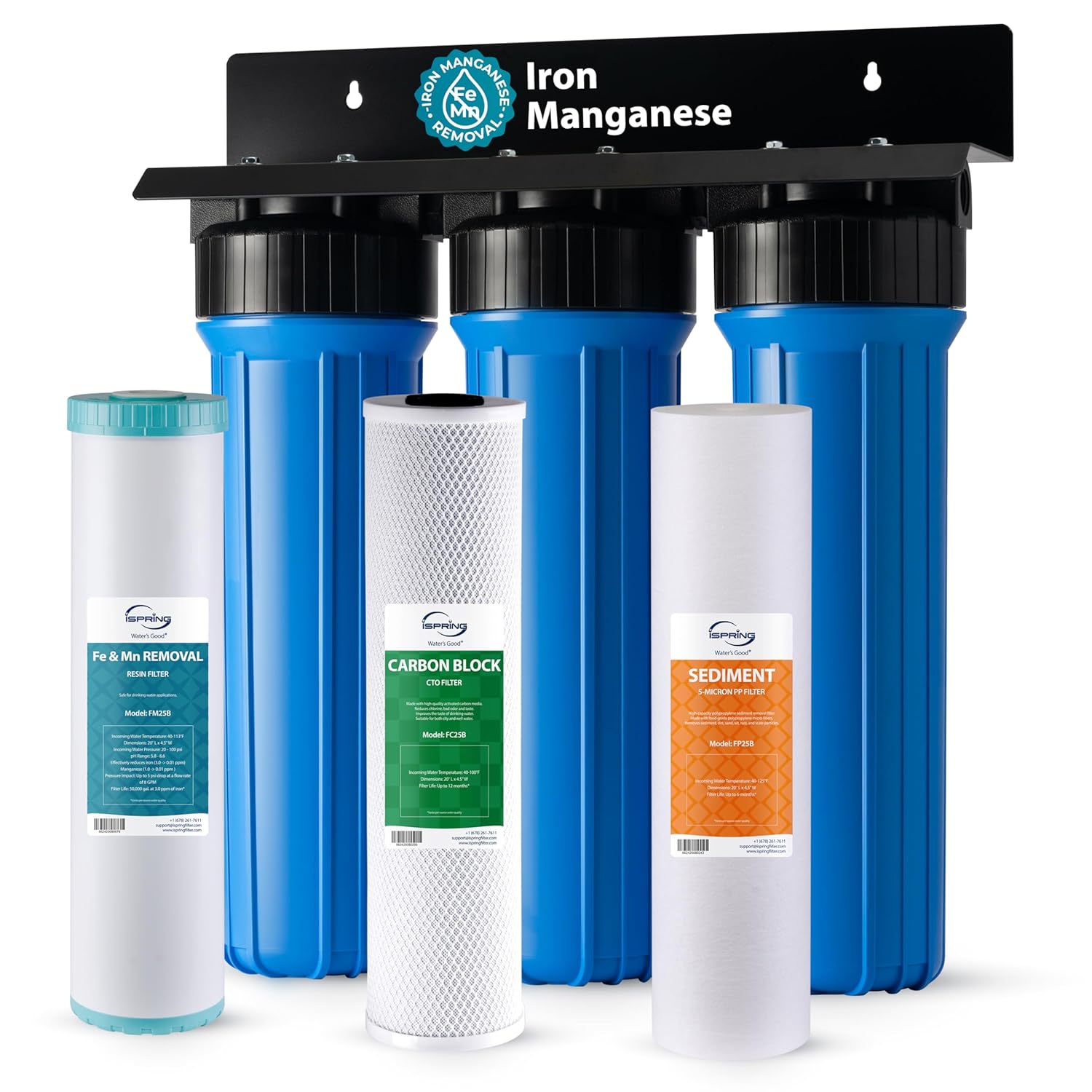
| iSpring WGB32BM | Well water with rusty staining | Sediment + Iron/Mn + Carbon | Partial | Yes, up to 3 ppm Fe |
| HQUA WF3-01 | Budget city-water pre-treat | Sediment + Carbon + Carbon | Yes | Light only |
| Aquaboon 5 Micron 10x4.5 | Replacement sediment cartridges | Single stage | No | No |
Recommended Products for the Pond Bypass Line
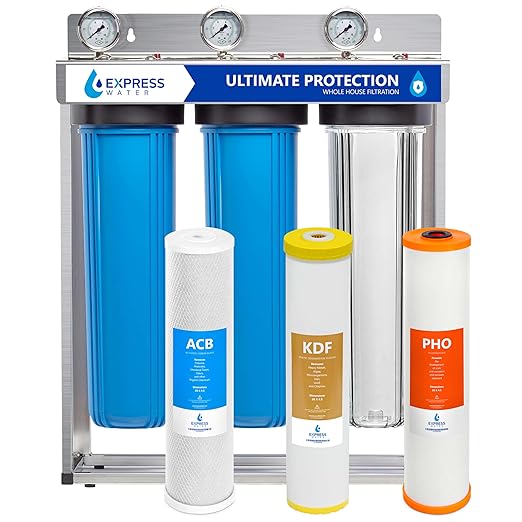
Express Water 3-Stage Whole House Water Filter System
For municipal-water koi keepers, the Express Water three-stage stack is the easiest answer. Sediment, KDF, and carbon block together strip chloramine and chlorine reliably, which means the bypass line feeding your pond can use the same filtered water as the kitchen. Mount it before the softener tee and you have one filter housing protecting both the house and the koi. View on Amazon.
Aquasana Whole House Well Water Filter (500K Gallons, UV + KDF + Carbon)
If you are on a well and your koi have ever shown signs of bacterial infection after a top-off, the Aquasana 500K with integrated UV is the upgrade worth making. UV kills pond-pathogens like Aeromonas at the source, and the carbon/KDF stages catch the dissolved organics that feed pond algae blooms after a fill. Place it upstream of the Fleck 5600SXT inlet and tee the pond line off between this unit and the softener. View on Amazon.
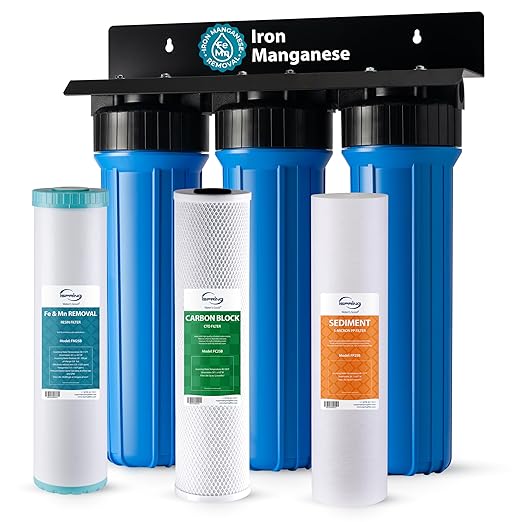
iSpring Iron & Manganese Whole House Water Filtration System
Rusty staining on a pond waterfall or orange tint after a top-off means dissolved iron, and dissolved iron destroys both koi gills and softener resin. The iSpring iron and manganese unit oxidizes and traps Fe and Mn before either reaches the rest of your plumbing. Pair it with a downstream carbon stage and your bypass-fed pond gets clean, mineral-balanced fill water without the sodium load. View on Amazon.
HQUA WF3-01 3-Stage Whole House Water Filtration System
A budget alternative to Express Water for city-water households. Two carbon stages plus sediment handle chlorine and chloramine well enough for koi top-offs at a lower upfront cost. Cartridge cost over time is similar, so pick on housing build quality and warranty terms. View on Amazon.
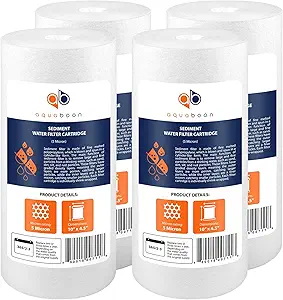
Aquaboon 5 Micron 10x4.5 Sediment Filter (4-Pack)
Whichever housing you choose, the first-stage sediment cartridge is what protects everything downstream — including the resin in your Fleck 5600SXT. The Aquaboon 5-micron 10x4.5 four-pack is the standard size for big-blue housings and gives you a year of replacements at typical use. Swap every 90 days, or sooner if pressure drop climbs. View on Amazon.
Final Programming Checklist
To recap the safe way to program Fleck 5600SXT for koi pond top-offs: install a hard bypass tee so the pond never sees softened water, set CT = Fd, C to match your true resin capacity, DO = 7, RT = 2:00 AM, and tune BW/BD/RR/BF for a complete rinse. Verify with a manual regen and a TDS meter, then top off the pond only through the bypass line. For pond chemistry tracking, see our koi pond water test kit guide and well-water iron removal walkthrough.
Frequently Asked Questions
Can I use softened water for koi pond top-offs if I dilute it?
No. Dilution still adds sodium and reduces GH/KH proportionally to the softened share. The cumulative effect over multiple top-offs crashes buffering and stresses koi. Always bypass the softener for pond fills, even partial ones.
What happens if the Fleck 5600SXT regenerates while I am filling the pond?
If your pond line is downstream of the softener, you will dump brine rinse and high-sodium first-draw water directly into the pond — potentially lethal for koi at volume. If your pond line is upstream on a bypass, nothing bad happens to the fish, but household pressure drops during the cycle. CT = Fd plus RT = 2:00 AM avoids both scenarios.
How many days should I set for day override on a koi household?
Seven days is the sweet spot. Shorter wastes salt; longer risks resin fouling from iron and biofilm, especially on well water. If your hardness is over 25 grains per gallon or iron is above 0.5 ppm, drop DO to 5.
Does a Fleck 5600SXT need a special hose bib for pond filling?
Not special — just dedicated. Install a frost-free hose bib teed off the cold-water main upstream of the softener inlet (downstream of your sediment and carbon stages). Label it clearly so nobody fills a pond from the wrong tap.
Will a sediment pre-filter extend my Fleck 5600SXT resin life?
Yes, significantly. Sediment and oxidized iron are the two biggest causes of resin fouling. A 5-micron pre-filter changed quarterly can double effective resin life, and it protects the pond bypass line at the same time.
What TDS should I see on the pond bypass tap?
It should match your raw source water, not your softened water. Typical city water reads 100–400 ppm TDS; softened water from the same source often reads 50–150 ppm higher with chloride elevated. If your bypass tap reads anywhere near the softened number, your plumbing is wrong — recheck the tee location.
Can I run UV on the pond bypass line only?
Yes, and it is a smart layout. A whole-house UV unit on the bypass between the carbon stage and the pond hose bib kills bacteria heading into the koi pond without committing the whole household to UV-treated water. The Aquasana 500K builds this into a single unit for convenience.
Key Takeaways
- Choosing the right program Fleck 5600SXT for koi pond top-offs means matching capacity and output ports to your actual devices
- Always check actual watt-hours (Wh), not just watts — runtime depends on Wh, not peak output
- Also covers: Fleck 5600SXT koi pond water
- Also covers: bypass softener for koi pond fills
- Also covers: Fleck 5600SXT settings koi keepers
- Compare price-per-Wh across models to find the best value for your budget