Coming home to a soft-water tap running hard is a classic vacation surprise. If you need to prime Fleck 7000SXT after running out of salt, the short version is this: switch the valve to bypass, refill the brine tank with potable water and roughly 40 lb of solar salt, let it dissolve for 2-4 hours, then trigger a manual regeneration from the SXT controller. The brine draw cycle will pull the new solution through the resin bed, re-establishing the brine line prime and restoring softening capacity. No disassembly of the head is required for a simple dry-out, but the order of operations matters.
Below is the full 2026 recovery procedure, why it works, the parts and consumables that help, and the upstream filtration that keeps this from happening again.
When shopping for prime Fleck 7000SXT after running out of salt, it pays to compare specs, capacity, and real-world runtime before committing.
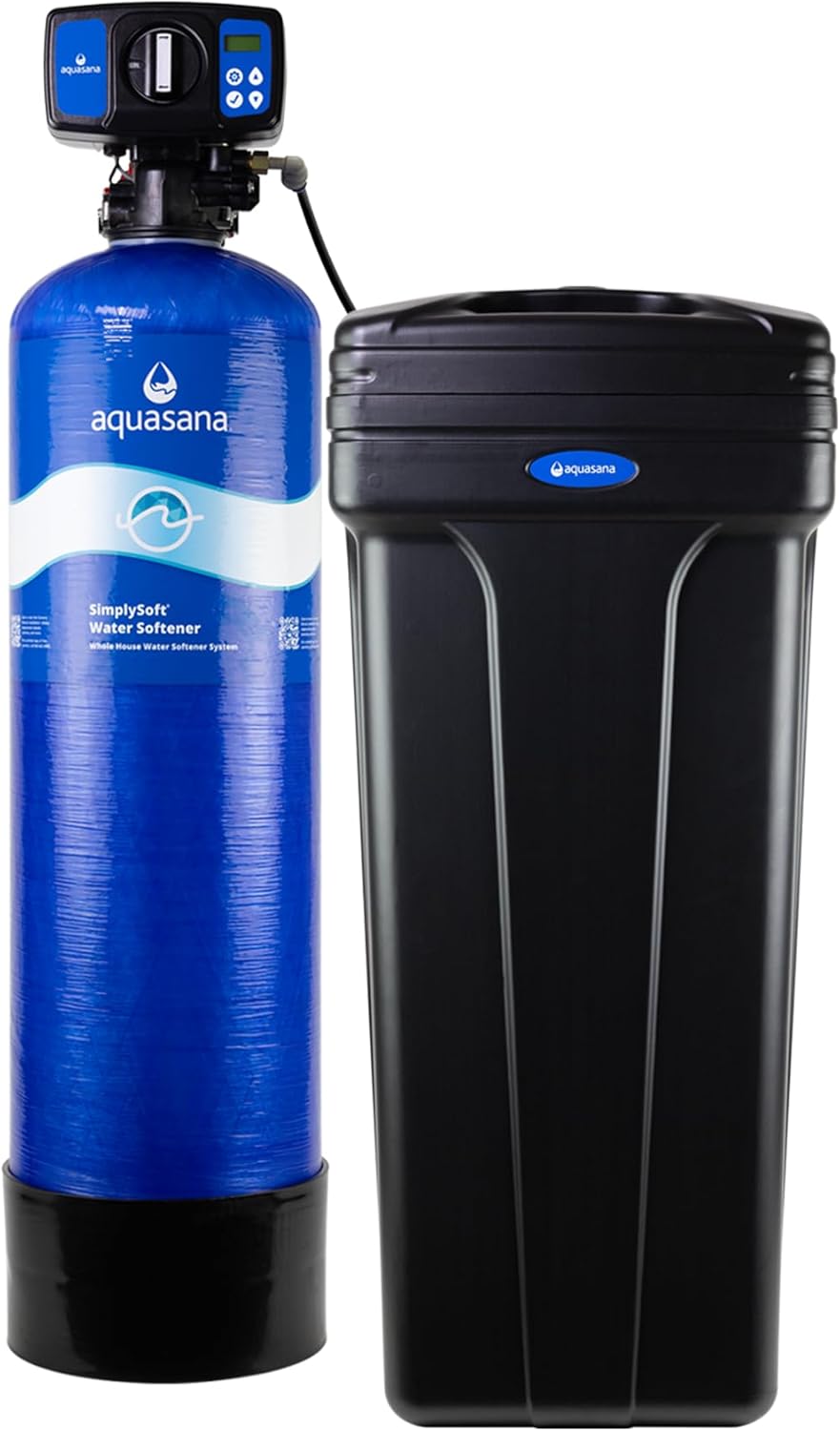
What actually happens when a Fleck 7000SXT runs out of salt
The Fleck 7000SXT is a demand-initiated control valve sitting on top of a resin tank, plumbed to a separate brine tank. During a normal regen, the SXT runs a brine draw cycle: a venturi-style injector inside the valve creates suction that pulls saturated brine up the brine line, through the resin, and out to drain. That suction depends on three things being true at once: water pressure on the inlet, an unobstructed brine line, and actual brine in the salt tank.

When you leave for two weeks and the tank empties, the controller keeps trying to regenerate on schedule. Each attempted regen pulls plain water (no salt) through the resin, which strips capacity instead of restoring it. By the time you notice hard water, the brine well usually has only a few inches of fresh water in it, the air check at the bottom of the brine line may have re-seated, and the resin is fully exhausted with calcium and magnesium. That is the state you are priming out of.
Tools and supplies to gather first
- 40-80 lb of solar salt crystals or evaporated pellets (avoid rock salt for a recovery cycle - the dirt clogs the injector)
- A 5-gallon bucket of clean potable water
- A flashlight
- A small pair of pliers or your hands for the brine well cap
- A shop towel - the salt tank float is sometimes slimy after a dry period
If you have a sediment pre-filter housing in line, plan to change that cartridge after the recovery regen too. The hardness slug that pushed through during your vacation can knock loose iron scale from the inlet plumbing.
Step-by-step: prime Fleck 7000SXT after running out of salt
Step 1 - Put the valve in bypass
Find the bypass valve on the back of the 7000SXT head. Rotate both handles 90 degrees so the arrows point to BYPASS. This isolates the softener from your house plumbing so you can work on it without depressurizing the whole home and without sending raw water through partially-primed resin.
Step 2 - Inspect and clean the brine well
Open the salt tank lid and lift the brine well cap (the tall plastic tube in the corner). Look at the bottom. You should see the brine float assembly and the air check valve. If there is sludge, mush, or a hardened salt bridge clinging to the well, scoop it out with a cup. A clean brine well is the difference between a regen that primes on the first try and one that vapor-locks.
Step 3 - Add water before salt
This is the step most homeowners reverse, and it matters. Pour 3-4 gallons of clean potable water into the salt tank first, directly down the brine well. This pre-charges the brine line with water so the injector has something to draw on. You want roughly 6-8 inches of water around the float.
Step 4 - Add salt
Now add 40 lb of clean solar salt to the main salt tank cavity (not into the brine well). On a 64,000-grain cabinet you can add up to 80 lb, but 40 lb is plenty to drive a single recovery regen. Let it sit 2-4 hours so a saturated brine layer forms at the bottom. Skipping this dwell time is the #1 cause of a regen that runs but does not actually soften.
Step 5 - Return the valve to service and run a manual regen
Put the bypass handles back to SERVICE. On the SXT controller, press and hold the REGEN button for about 3 seconds until the display shows a flashing regen icon - this queues an immediate manual regeneration. Press REGEN again briefly to advance through cycles if you want to watch each step, but on a recovery the easiest path is to let it run its full cycle automatically (typically 90-120 minutes total).
Step 6 - Verify brine draw
About 15-20 minutes into the cycle, the valve will enter the brine draw / slow rinse step. Open the salt tank lid and look at the brine well water level. It should be slowly dropping. If it is not dropping after 10 minutes of brine draw, the injector is air-locked. Press REGEN to advance past brine draw, let the unit complete backwash and refill, then start a second manual regen. The refill cycle will push fresh water down the brine line under pressure and break the air lock.
Step 7 - Test for hardness
After the full regen completes, draw a glass of cold water from a downstream tap and test with a hardness strip. You should see 0-1 gpg. If you still read 5+ gpg, run one more regen - some heavily exhausted resin beds need two consecutive cycles to fully convert back to the sodium form.
Recommended pre-filters and protective products
A Fleck 7000SXT that ran dry on vacation is also a Fleck that pushed a lot of unfiltered, hard, possibly iron-loaded water through your plumbing for several days. After you finish priming, the smart move is to evaluate what is upstream of the softener. The right pre-filter removes the sediment and iron that shortens resin life and prevents the injector from clogging again the next time you travel.
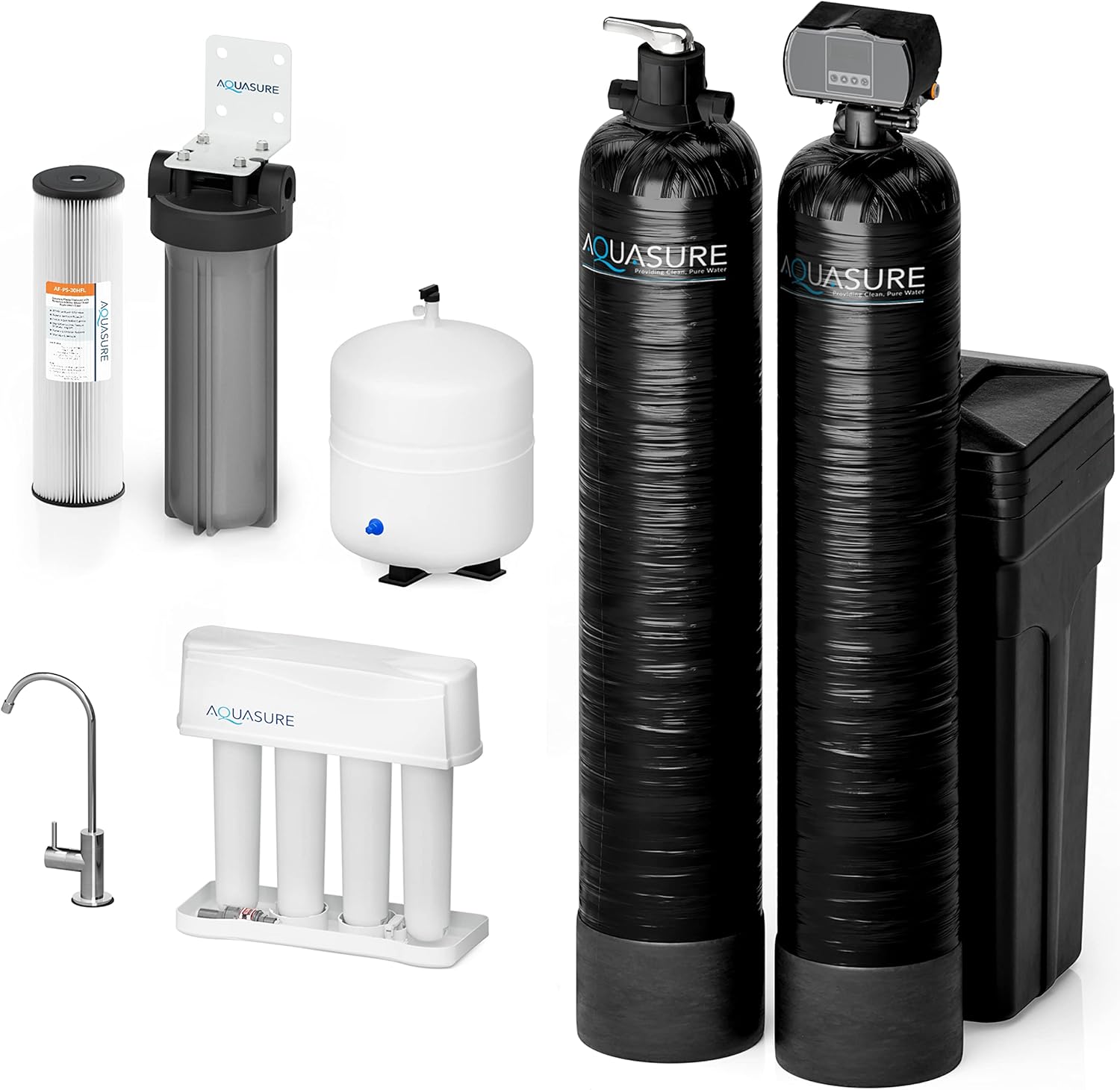
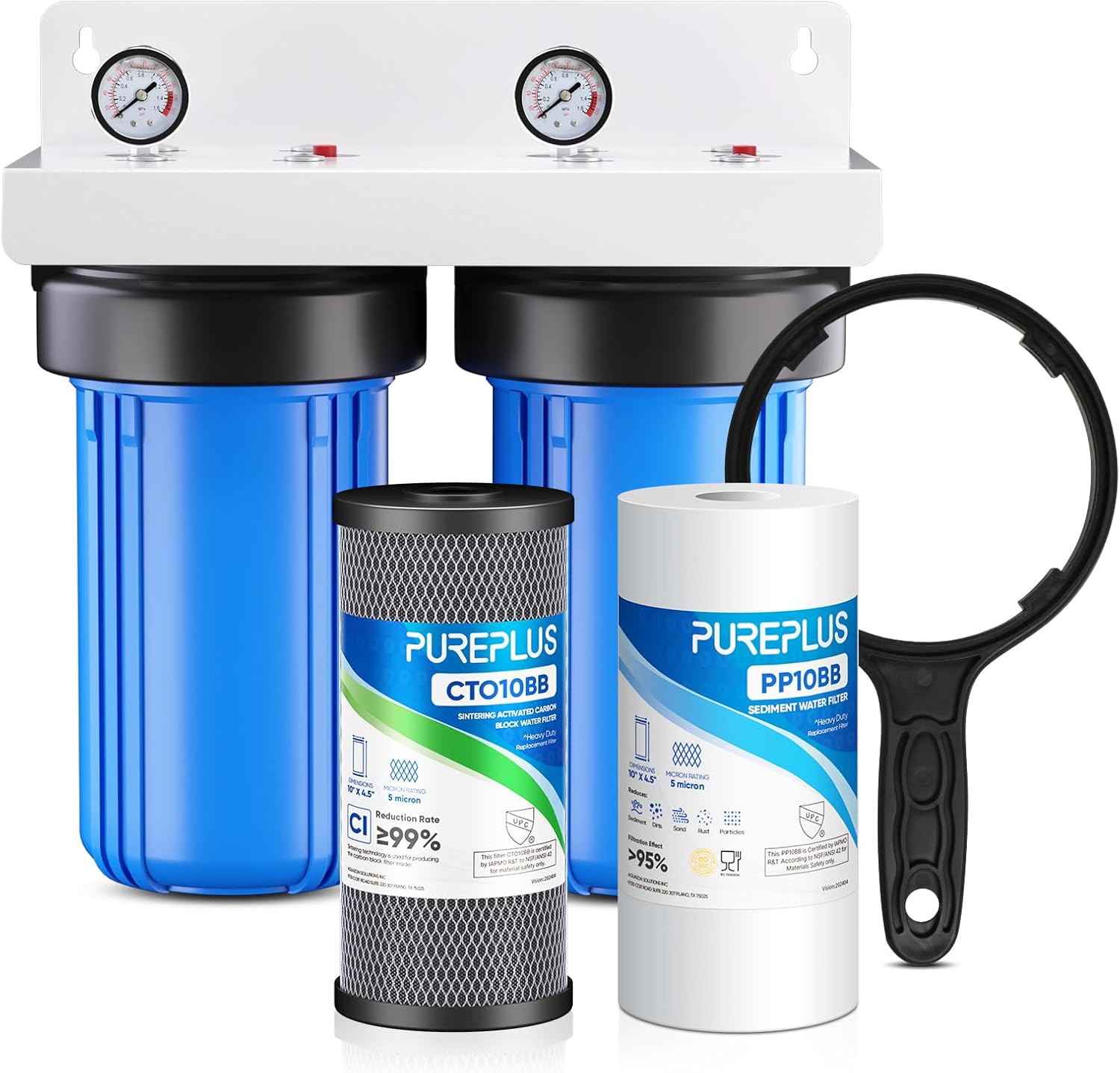
Aquaboon 5 Micron 10x4.5 Sediment Filter (4-Pack)
If you already have a Big Blue housing in front of your softener, swap in a fresh 5-micron cartridge as part of the recovery. A multi-pack lets you set a reminder to change it every 3 months, which is the cadence that protects the 7000SXT injector best. View the Aquaboon 4-pack on Amazon.
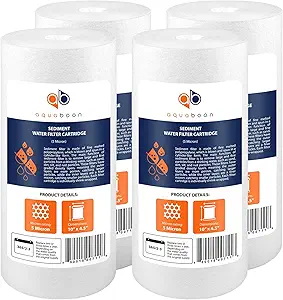
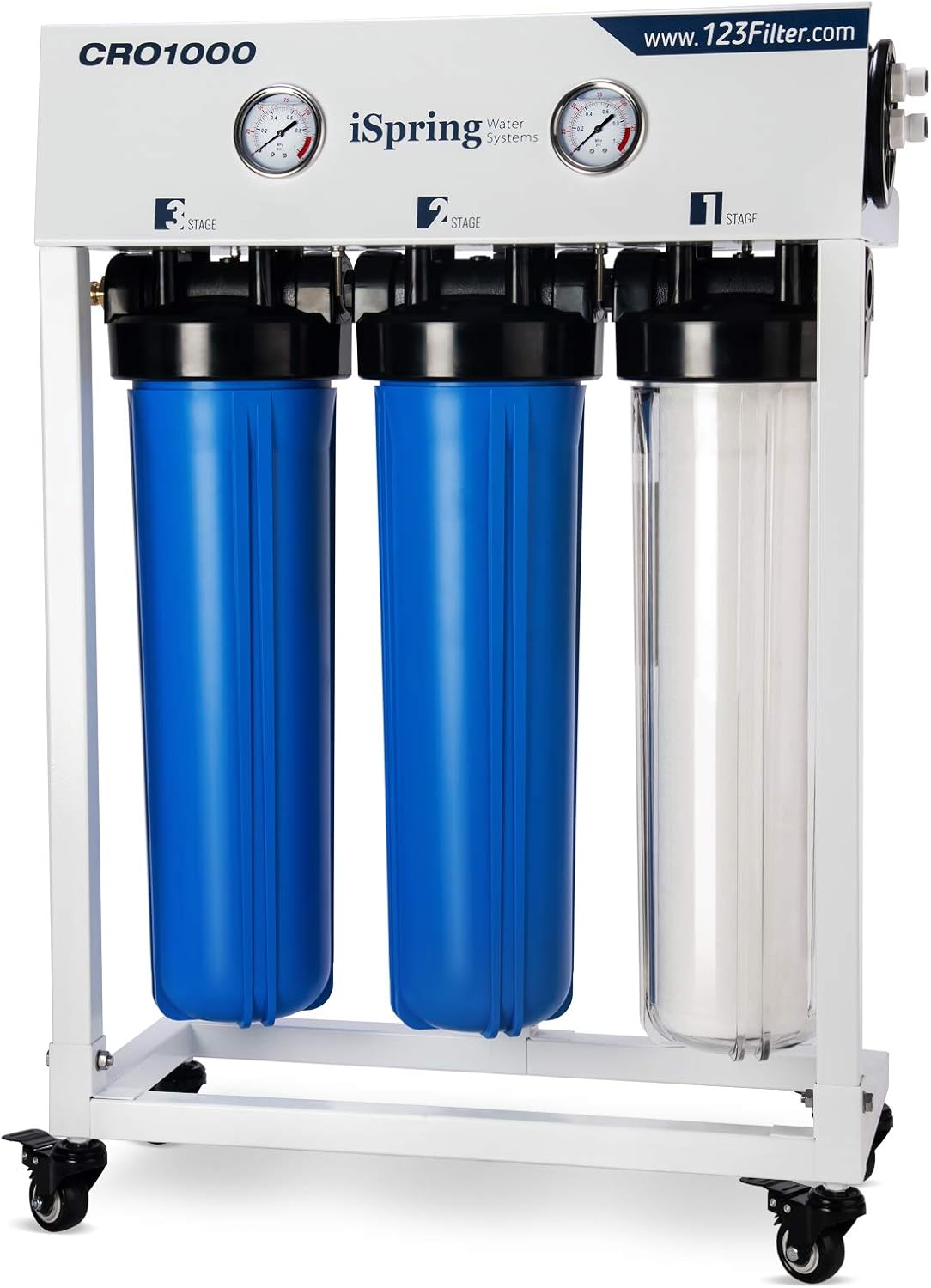
Express Water 3-Stage Whole House Water Filter System
For homes without any pre-filtration, adding a 3-stage sediment + carbon + KDF housing in front of the softener is the single best longevity upgrade you can make. It catches the silt and rust flakes that fouled your brine line in the first place. See the Express Water 3-stage system on Amazon.
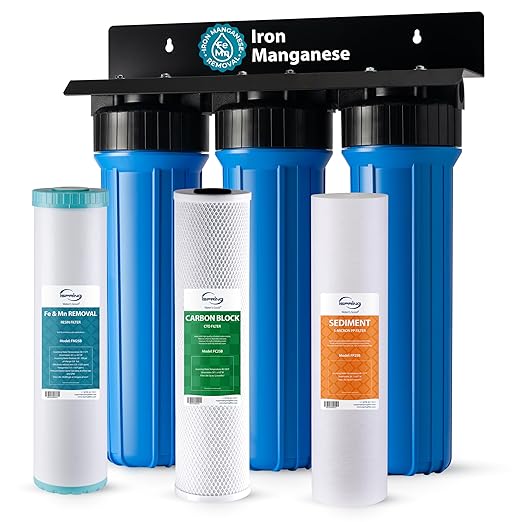
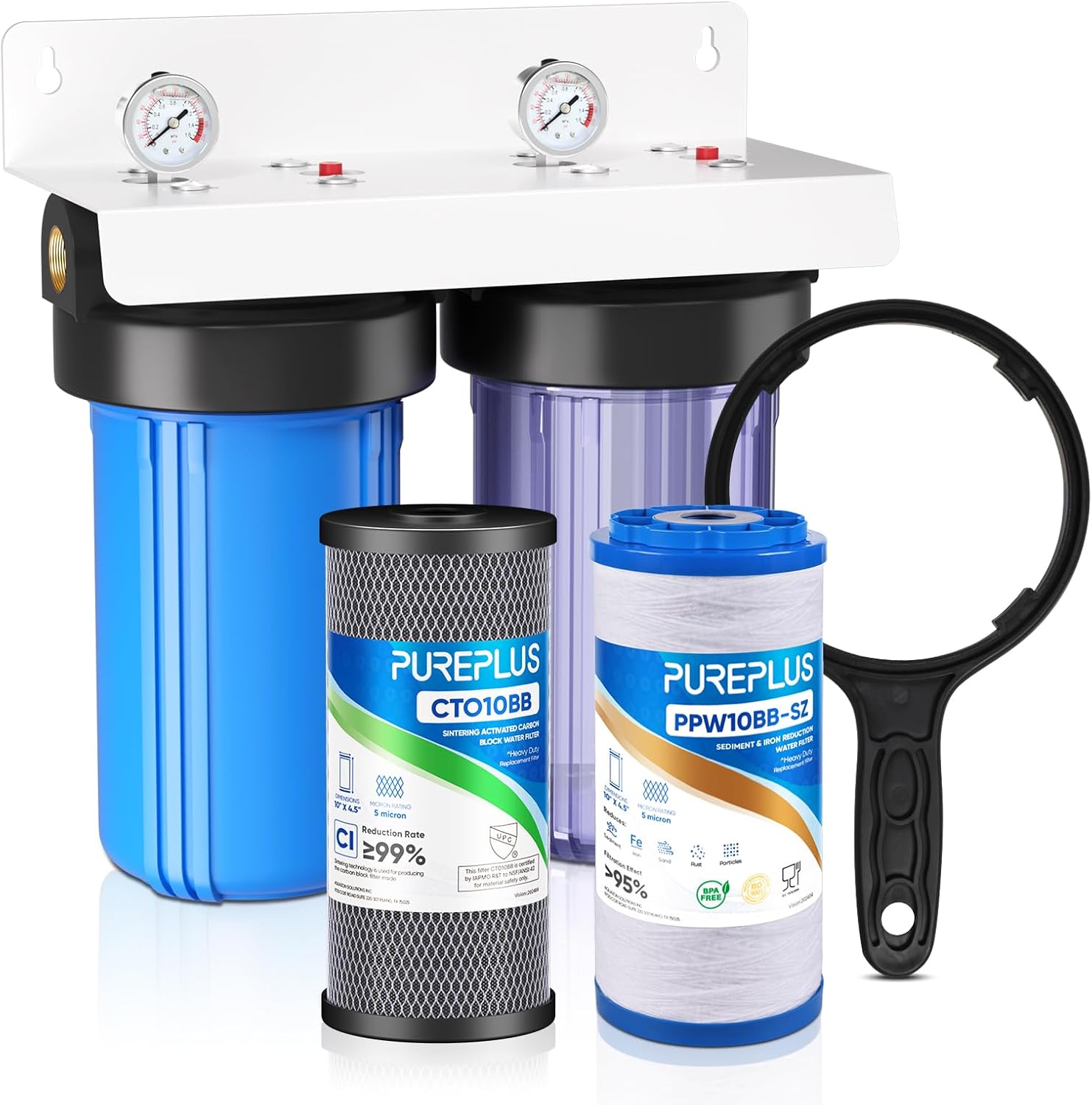
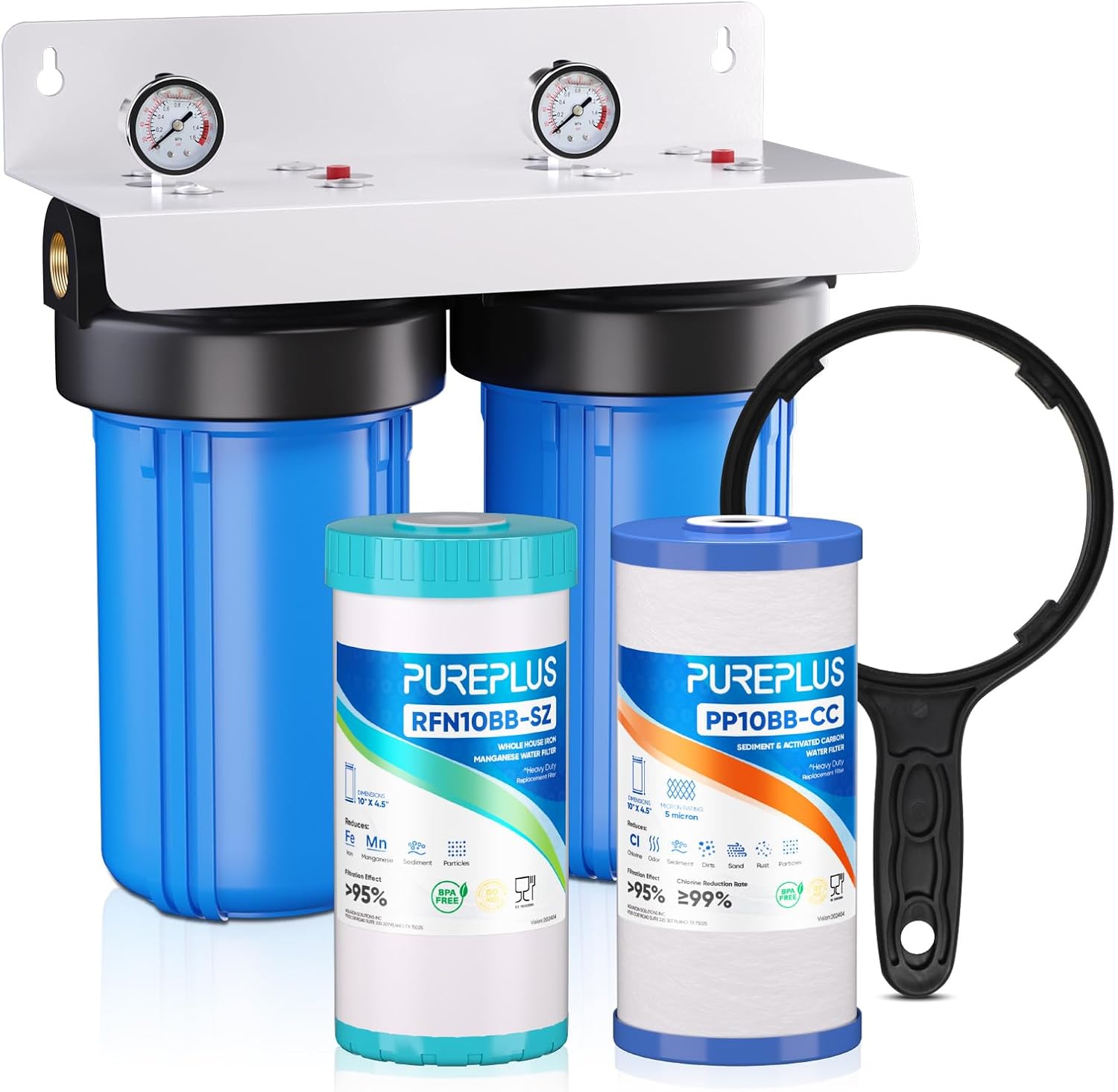
iSpring Iron & Manganese Whole House Filtration System
If your post-vacation water has a metallic taste or the resin bed turned reddish, you have iron fouling on top of the exhaustion. A dedicated iron and manganese filter ahead of the softener prevents that re-occurring and dramatically extends resin life. Check the iSpring iron filter on Amazon.
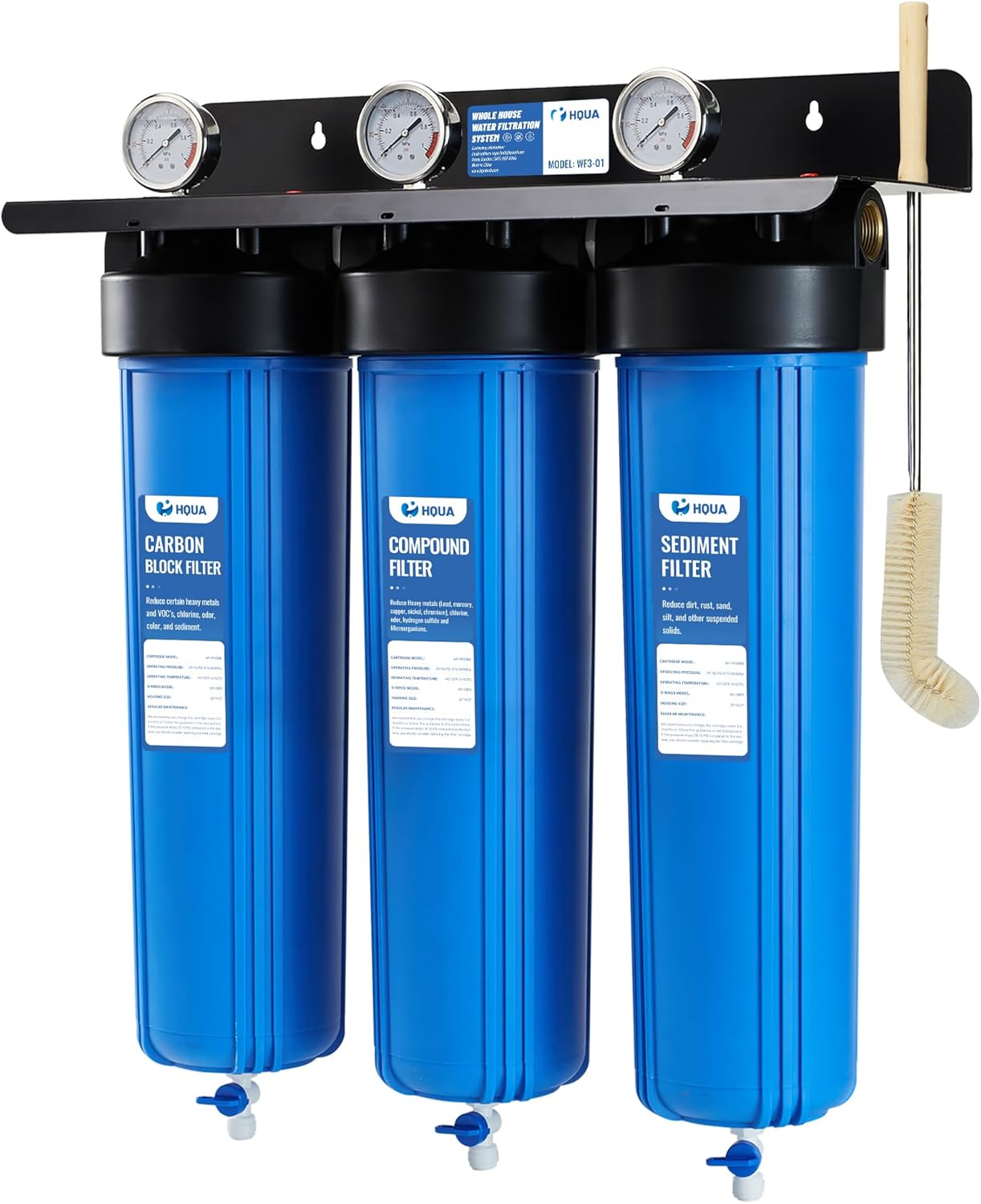
HQUA WF3-01 3-Stage Whole House System
A budget-friendly alternative to the Express Water unit, the HQUA WF3-01 covers sediment, carbon block, and a second sediment polish stage. Good fit for city water homes that just want injector protection. View the HQUA WF3-01 on Amazon.
Pre-filter comparison for Fleck 7000SXT owners
| Product | Best for | Stages | Cartridge size |
|---|---|---|---|
| Aquaboon 5 Micron 4-Pack | Replacement cartridges for existing housing | n/a (cartridges only) | 10 x 4.5 in |
| Express Water 3-Stage | City water + soft sediment | Sediment + Carbon + KDF | 10 x 4.5 in |
| iSpring Iron & Manganese | Well water with visible iron staining | Iron + Manganese oxidation | Tank-based |
| HQUA WF3-01 | Budget whole-home pre-filter | Sediment + Carbon + Sediment | 10 x 4.5 in |
Preventing this on your next vacation
Two habits stop the dry-out from repeating. First, top the salt tank to 2/3 full before any trip longer than 5 days - a 64k cabinet running normally will burn through roughly 8-12 lb per week, so a 2/3 fill gives you a comfortable cushion for a month away. Second, set the SXT controller to a longer regen interval while you are gone. From the main display, hold the SET button, scroll to the day-override parameter, and bump it to 14 or 21 days. That way the controller will not waste a regen on stale water during your trip.
For deeper troubleshooting, see our guides on Fleck 7000SXT error codes and choosing the best salt for a softener in 2026. If you suspect your resin bed is damaged from repeated dry regens, our resin replacement walkthrough covers the rebuild.
Frequently Asked Questions
How long does it take to prime a Fleck 7000SXT brine line?
A single manual regen cycle takes 90-120 minutes from start to finish, but the actual brine draw step where priming occurs is only the first 30-45 minutes. If salt was added with the proper 2-4 hour dwell time, the brine line typically primes on that first cycle. Heavily air-locked units may need a second regen.
Can I run a Fleck 7000SXT with the salt tank empty without damaging it?
The valve itself is not harmed by running dry, but each regen attempted without brine partially exhausts the resin and over many cycles can foul the injector with whatever sediment exists in the brine well. Short-term (a week or two) is recoverable; months of dry operation can require a resin rebed.
Why is my Fleck 7000SXT not pulling brine after I added salt?
The three usual causes are: salt was added before water (no liquid for the injector to pull on), the injector screen is clogged with salt dust, or the air check at the bottom of the brine line is stuck closed. Adding water before salt and running a refill-then-regen sequence resolves the first two. The third requires pulling the brine well to free the float.
How much salt should I add when refilling after a complete dry-out?
For a recovery, 40 lb is enough to drive 1-2 full regens. After the system is back to producing soft water, top off to keep the tank between 1/3 and 2/3 full. Avoid overfilling beyond the brine well height - that promotes salt bridging.
Do I need to bypass the softener while priming, or just before adding salt?
You only strictly need bypass while inspecting the brine well and adding water and salt. Once the salt has dissolved for 2-4 hours, return the valve to service before initiating the manual regen - the regen needs inlet pressure to drive the injector.
What kind of salt is best for re-priming a Fleck 7000SXT?
Use solar salt crystals or high-purity evaporated pellets for the recovery regen. Skip rock salt and any salt with iron-removing additives for this specific cycle - the goal is the cleanest possible brine to flush the injector. You can resume using your normal salt after priming is confirmed.
How do I know priming worked before testing hardness at the tap?
Watch the brine well water level during the brine draw cycle. A successful prime shows a steady drop of 1-2 inches over 15-20 minutes. After regen, the well should refill to its preset level (usually 6-12 inches) during the refill cycle. Those two visual confirmations tell you the injector and brine line are working before you ever taste the water.
Key Takeaways
- Choosing the right prime Fleck 7000SXT after running out of salt means matching capacity and output ports to your actual devices
- Always check actual watt-hours (Wh), not just watts — runtime depends on Wh, not peak output
- Also covers: Fleck 7000SXT empty salt tank restart
- Also covers: restart water softener no salt vacation
- Also covers: Fleck 7000SXT brine line prime
- Compare price-per-Wh across models to find the best value for your budget