To install iSpring WGB32B outdoors Pacific Northwest homes safely, you must build an insulated weatherproof enclosure, heat-trace all exposed plumbing, slope the pad for drainage, and orient the unit so prevailing southwest rain hits a windbreak rather than the sump heads. The WGB32B is rated for indoor use, so outdoor installation in coastal Washington, Oregon, and British Columbia requires a hard freeze plan (sustained sub-30°F snaps do happen west of the Cascades) plus UV protection because PNW summers expose plastic housings to long daylight hours. This 2026 guide walks through siting, enclosure construction, plumbing, pre-filtration, and the specific cold-weather modifications that keep a 3-stage carbon system running year-round in our wet, mild-to-occasionally-freezing climate.
Why outdoor installation is common in the PNW (and why it's risky)
Many Pacific Northwest homes — especially older Craftsmans in Portland, ramblers on the Olympic Peninsula, and rural properties pulling from shallow wells in the Willamette Valley — simply don't have basement or utility-room space for a 27-inch-tall, three-housing whole-house filter. Garages get used as living space, crawl spaces are too tight, and the main line often enters through an exterior wall near the hose bib. So homeowners put the WGB32B outside on the supply line where it physically fits.
The risk: the WGB32B's clear and opaque housings are polypropylene, the O-rings are Buna-N, and the bracket is powder-coated steel. None of those love sustained UV exposure, freeze-thaw cycles, or horizontal wind-driven rain. A burst housing during a December cold snap dumps water into your siding cavity. That's the failure mode you're engineering against when you install iSpring WGB32B outdoors Pacific Northwest properties.
Step 1: Pick the right wall and orientation
Mount the bracket on a north or east-facing exterior wall — never south or west. Direct afternoon sun in July at 47° latitude will hit 130°F on a dark housing and degrade the seals within two summers. North walls also stay shaded and consistent in temperature, which reduces thermal cycling on the O-rings.
Pick a spot:
- Within 6 feet of the main supply line entry
- Above any potential standing water (slope ground away)
- Under a roof overhang of at least 24 inches, ideally a gable end
- Accessible for the annual cartridge change without a ladder
Step 2: Build the insulated enclosure
Skip the prefab "well house" kits — they're sized for pressure tanks. Build a simple 30" wide × 14" deep × 36" tall cabinet from pressure-treated 2×2 framing with ½-inch exterior plywood skinned in fiber-cement siding to match your house. Inside, line all four walls and the lid with 1-inch foil-faced polyiso (R-6.5). Caulk every seam.
Critical details:
- Hinged top lid, not a side door — gravity keeps it sealed and snow sheds off
- Bottom vent with a screened ½-inch gap so any leak drains rather than pools
- Removable front panel with thumb-screws for cartridge service
- Thermostatic outlet inside, wired to a GFCI on a dedicated 15A circuit
Step 3: Heat tracing and freeze protection
Self-regulating heat-trace cable (the kind sold for water lines and gutter de-icing) wrapped around each housing and along 12 inches of inlet/outlet pipe is your insurance policy. Pair it with a thermostatically controlled outlet that energizes the cable below 38°F. A 6-foot run at 5 W/ft draws ~30W — pennies per cold week.
For redundancy, install a frost-proof bleeder valve on the outlet side. If power fails during an ice storm (common in the Columbia Gorge), you can drain the housings manually before they crack.
Step 4: Pre-filter for PNW water
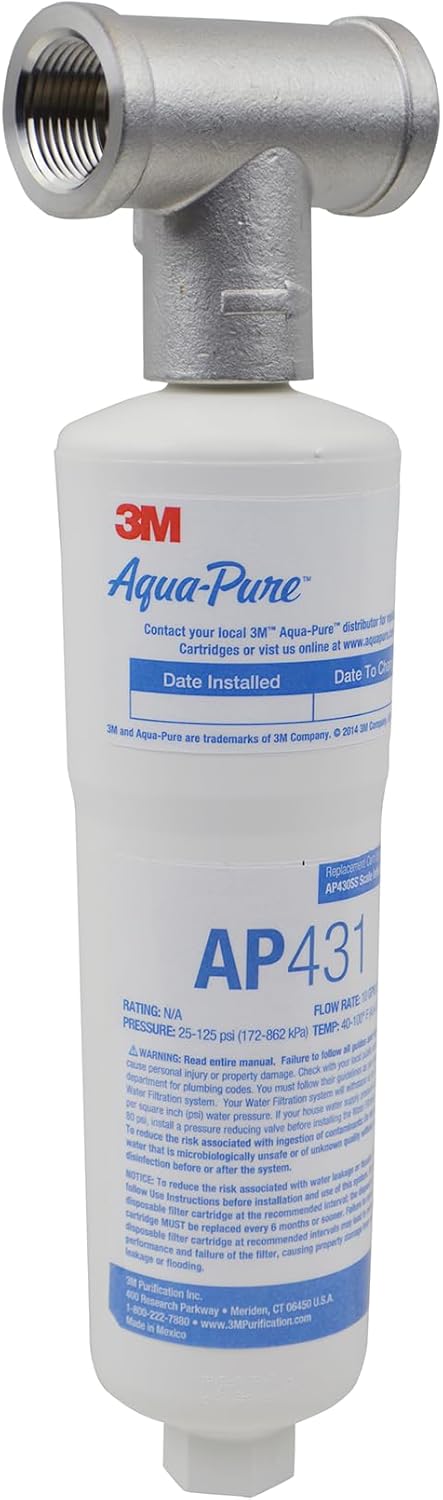
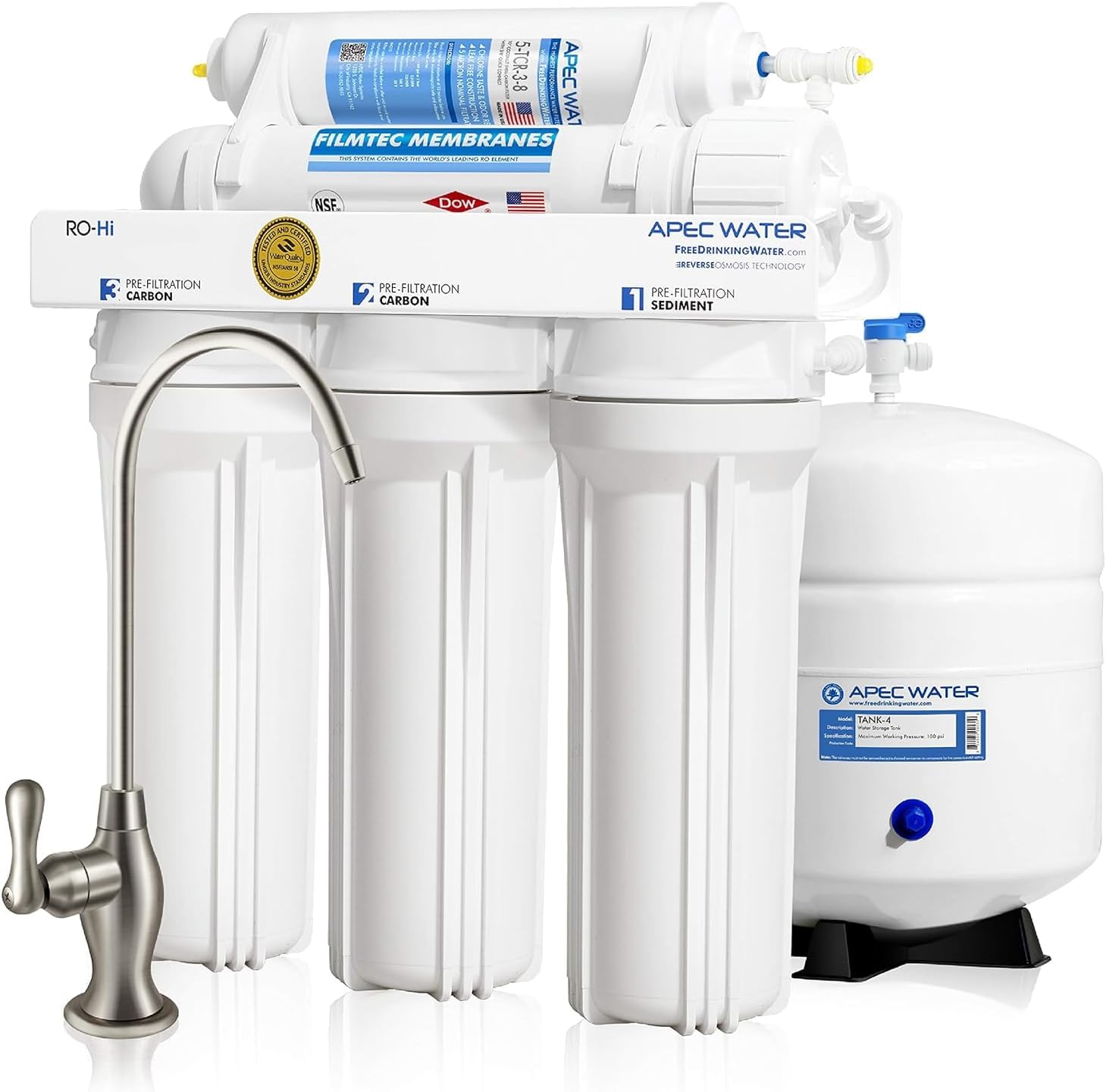
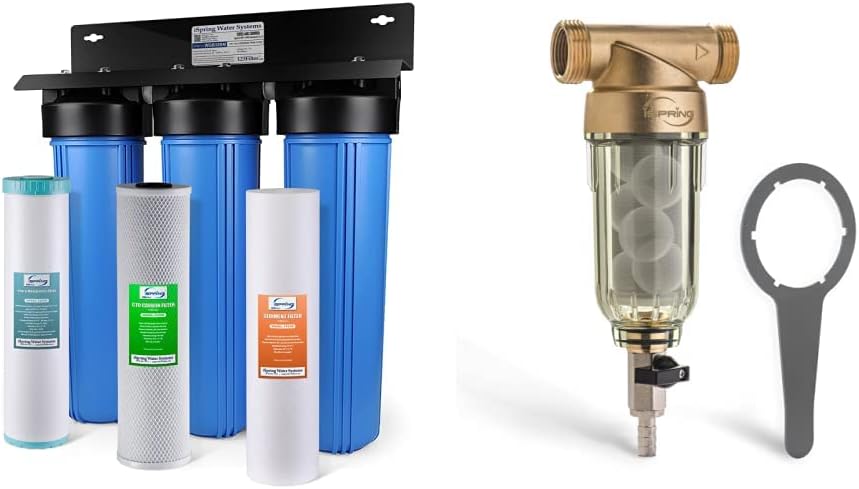
The single biggest failure mode for the WGB32B in our region isn't freeze — it's sediment overload. Surface water and shallow wells in the PNW carry seasonal turbidity from atmospheric rivers and snowmelt, plus tannins from cedar and fir duff. Pair the WGB32B with a 5-micron pleated sediment cartridge in the first stage and consider an additional pre-filter upstream.
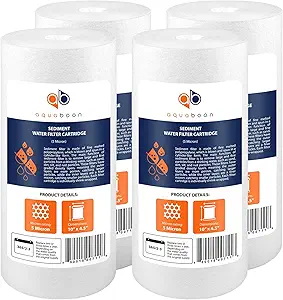
Aquaboon 5 Micron 10×4.5 Well Water Sediment Filter (4-Pack)
This is the direct drop-in replacement for the WGB32B's first stage and the cheapest insurance against premature carbon-block clogging. The 4-pack gives you a full year of quarterly changes — which is what most PNW well-water installs need given our spring runoff. Pleated polyester construction handles back-pressure cycles better than spun polypropylene when ambient temps swing 40°F overnight. Check current price on Amazon.
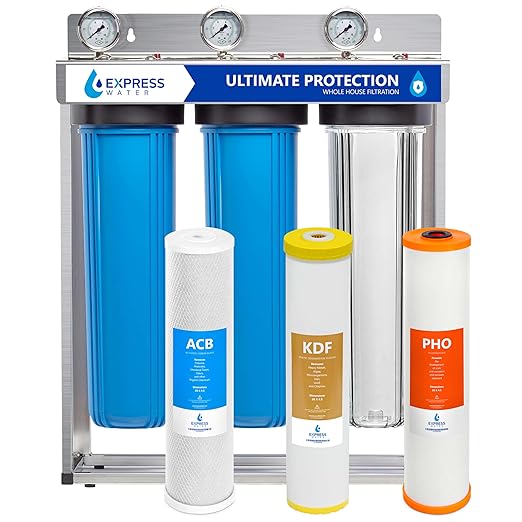
Express Water 3-Stage Whole House Water Filter System
If you're still in the planning phase and discovered the WGB32B is back-ordered or doesn't fit your enclosure footprint, the Express Water 3-stage is the closest like-for-like alternative at a similar price point, with the same 1" NPT inlet/outlet and a 15 GPM flow rating. Its housings are slightly more freeze-tolerant per the manufacturer spec, though I'd still insulate. View on Amazon.
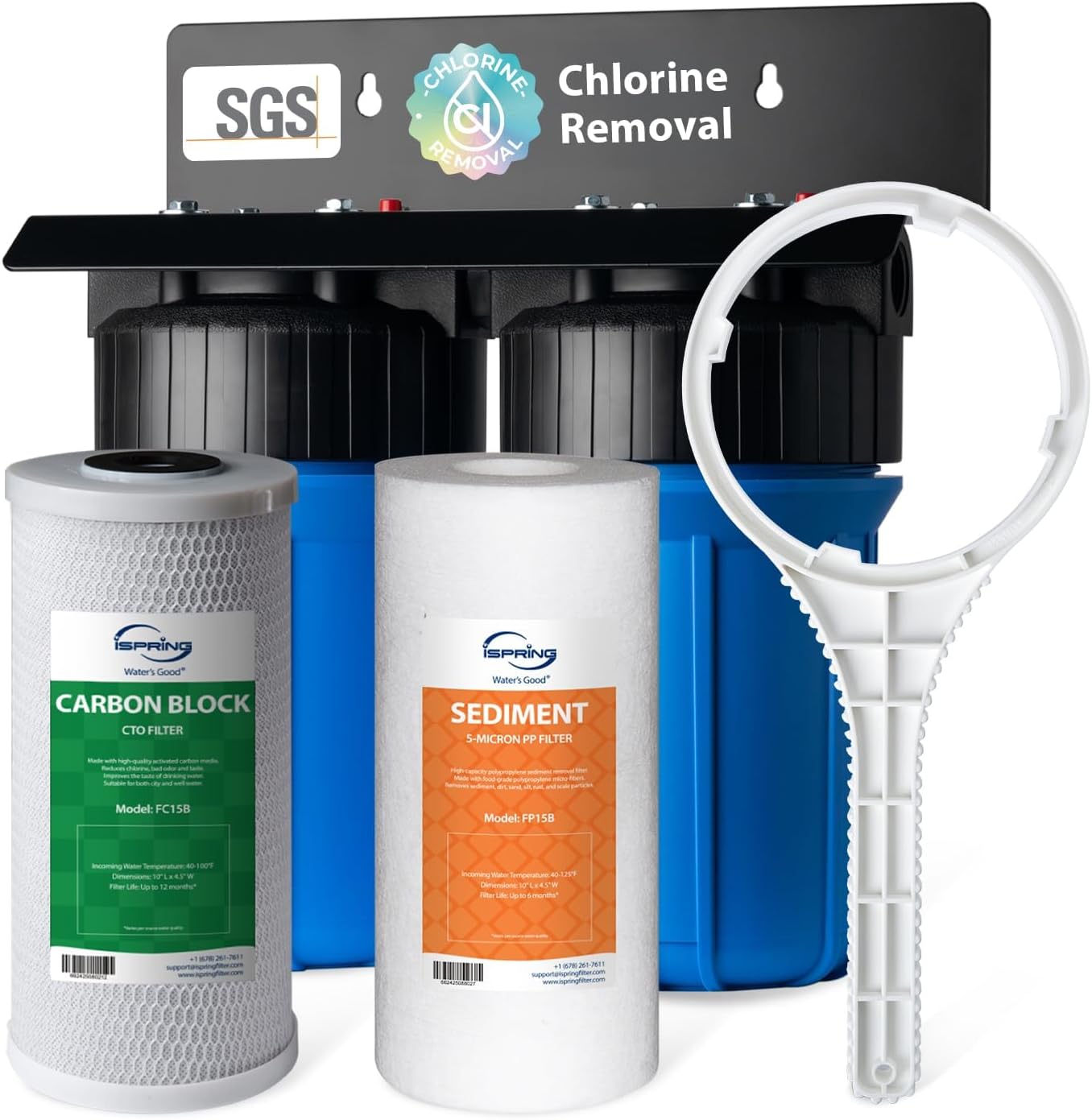
HQUA WF3-01 3-Stage Whole House Water Filtration System
A budget-tier alternative that I've seen perform well on Lopez Island and Whidbey on shallow wells. Stainless-steel mounting bracket (vs. the WGB32B's powder-coated steel) is a meaningful upgrade for outdoor salt-air installs near Puget Sound. View on Amazon.
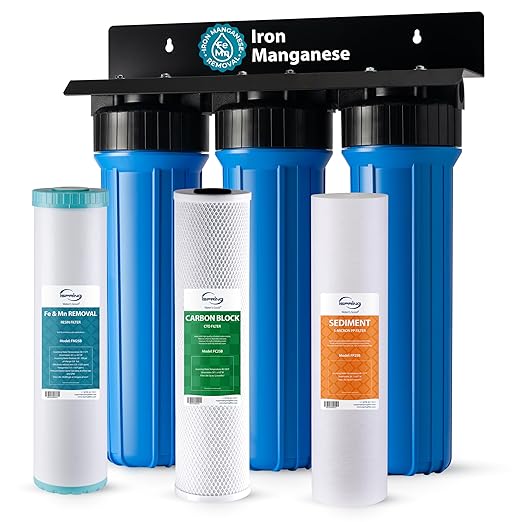
iSpring Iron & Manganese Whole House Water Filtration System
If your well test shows iron above 0.3 ppm or manganese above 0.05 ppm — common in glacial-till aquifers across the Puget Sound lowlands — add this iron/manganese unit upstream of the WGB32B. Without it, you'll plug carbon blocks in 6 weeks. View on Amazon.
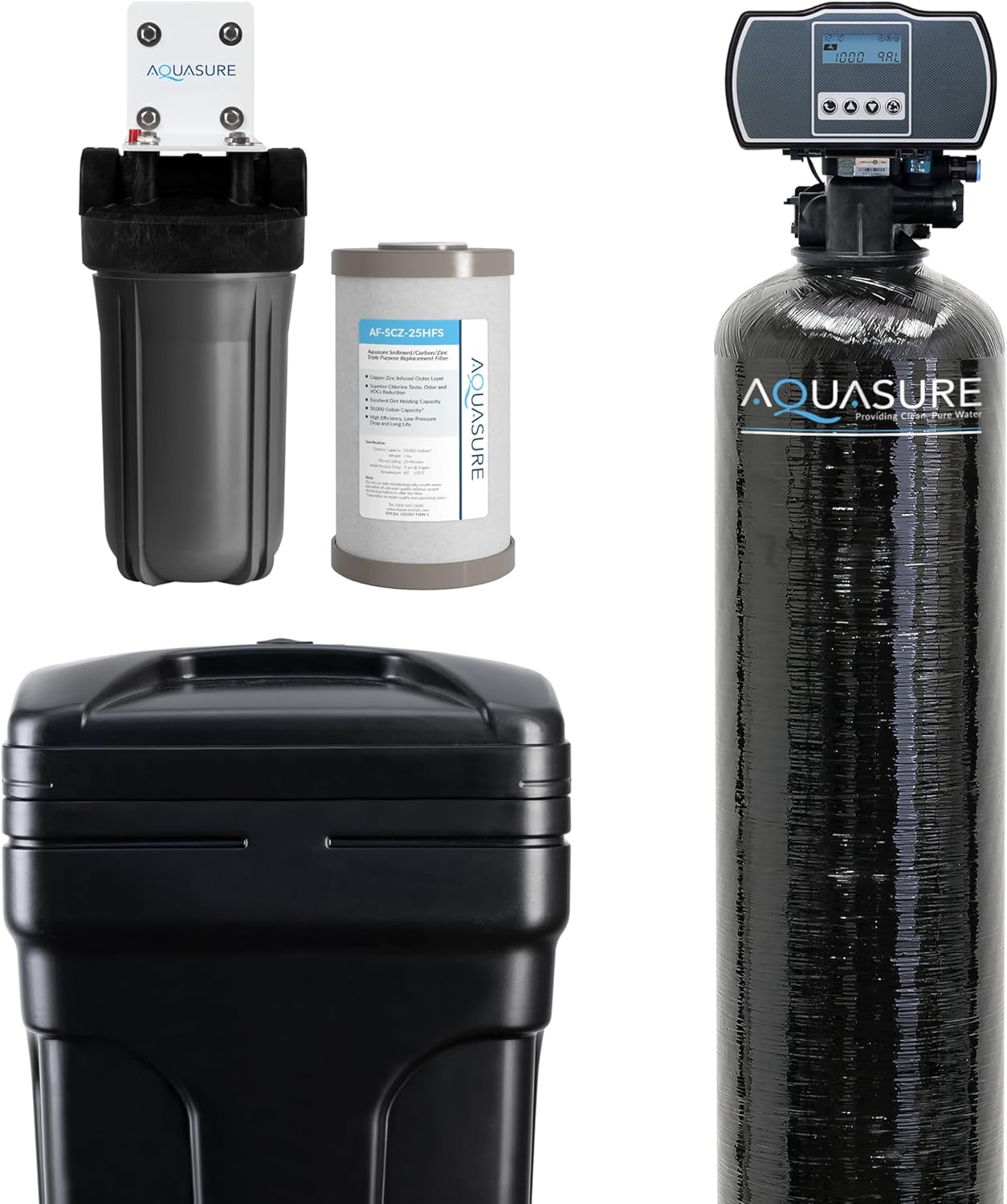
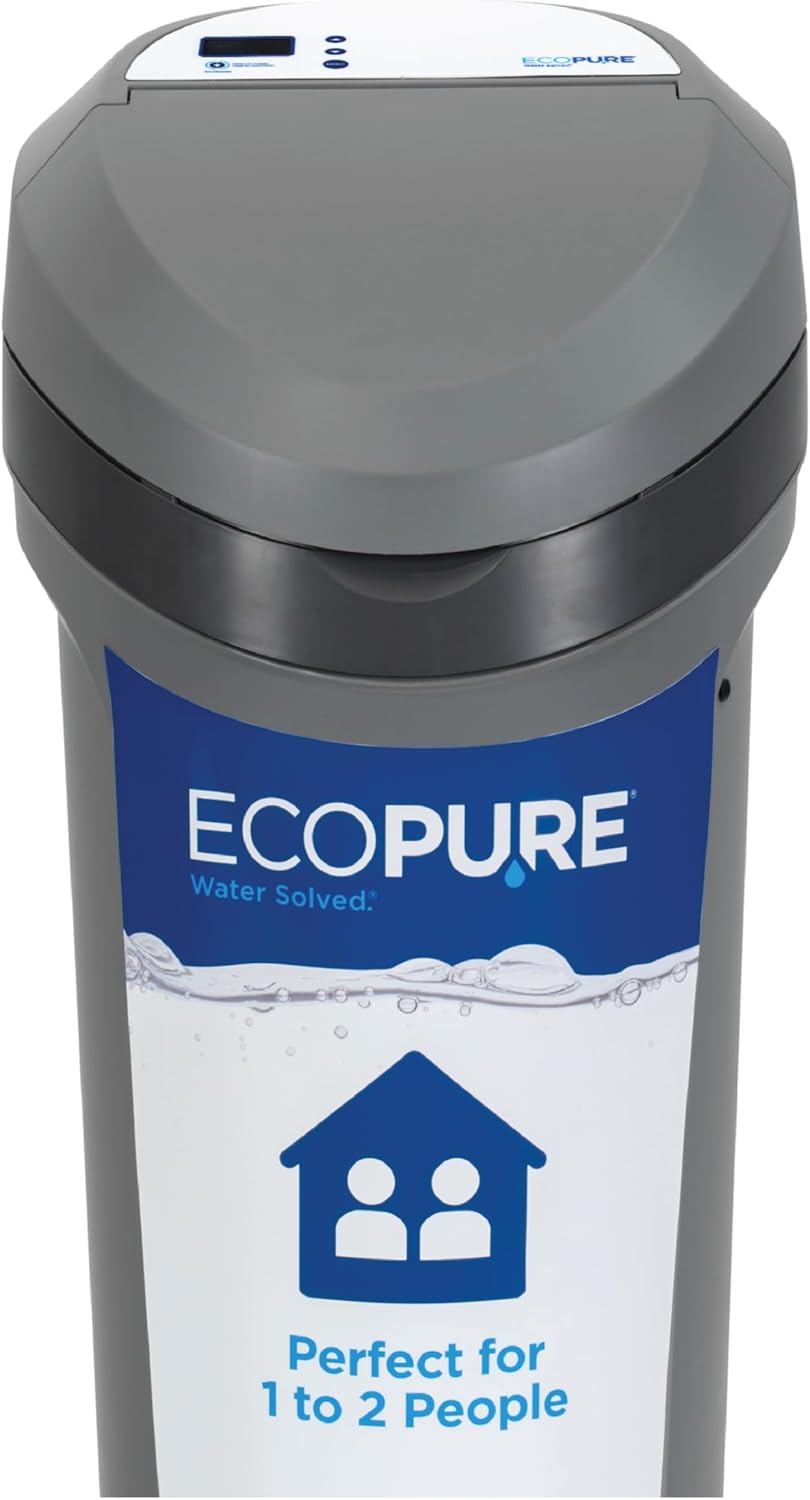
Aquasana Whole House Well Water Filter, 500K Gallons, UV+Carbon+KDF
For homes on raw well water where you want UV disinfection bundled in, the Aquasana 500K replaces a WGB32B-plus-UV stack with a single integrated unit. Worth pricing out if your enclosure footprint is tight and you'd rather build one bigger box than three smaller ones. View on Amazon.
Comparison: outdoor-suitability of 3-stage systems for PNW installs
| System | Flow (GPM) | Capacity | Bracket material | Best PNW use case |
|---|---|---|---|---|
| iSpring WGB32B (reference) | 15 | 100,000 gal | Powder-coated steel | City water, insulated enclosure required |
| Express Water 3-Stage | 15 | 100,000 gal | Powder-coated steel | Drop-in alternative, similar footprint |
| HQUA WF3-01 | 15 | 100,000 gal | Stainless | Coastal/salt-air installs (Whidbey, Hood Canal) |
| iSpring Iron & Manganese | 15 | 50,000 gal | Powder-coated steel | Upstream of WGB32B on iron-heavy wells |
| Aquasana 500K UV | 7 | 500,000 gal | Integrated frame | Single-unit replacement when you also need UV |
Step 5: Plumbing the loop
Use PEX-A (Uponor or equivalent) for the inlet and outlet runs from the house wall into the enclosure. PEX-A tolerates one freeze cycle without bursting — copper does not. Install full-port ball valves on both sides plus a bypass loop with a third valve so you can isolate the unit for cartridge changes without losing house water. A pressure gauge on the inlet side lets you monitor cartridge loading; replace cartridges when ΔP exceeds 15 psi.
Wrap all exposed PEX between the house and the enclosure in ¾-inch closed-cell pipe insulation, then run a 6-foot heat-trace cable along that span and into the enclosure where it joins the housing trace.
Step 6: UV and rodent protection
Even inside an enclosure, a sunbeam through the service-panel gap will hit a housing eventually. Wrap each housing in a removable neoprene sleeve (the kind sold for outdoor pressure tanks) — it doubles as additional insulation and blocks UV. Stuff steel wool around any plumbing penetrations through the enclosure floor; PNW pack rats and mice will absolutely move into a warm, dry filter cabinet in October.
Step 7: First startup and break-in
Bypass the unit first, flush the house lines, then open the inlet slowly with the outlet open to atmosphere (use a hose to a drain). Run 10 minutes minimum to flush carbon fines. Close outlet, pressurize, check every fitting with a dry paper towel — not your eyes. A weeping fitting won't be visible but will wet a towel instantly.
For related guides, see our whole-house filter vs. point-of-use comparison, best sediment pre-filters for well water, and freeze protection for outdoor water systems.
Frequently Asked Questions
Can the iSpring WGB32B handle freezing temperatures outdoors in Washington or Oregon?
Not without modification. The WGB32B is spec'd for 40–100°F operating range. Western Washington and Oregon see roughly 5–15 sub-freezing nights per year, with occasional sustained snaps below 20°F (the 2024 January event hit 8°F in Portland). You need an insulated enclosure with thermostatically controlled heat trace to keep the housings above 38°F. Without it, the polypropylene sumps will crack at the threads on the first hard freeze.
What's the best alternative if I can't fit the WGB32B in my enclosure footprint?
The Express Water 3-Stage has identical 1" NPT ports and a near-identical bracket footprint, so it's a drop-in substitute. The HQUA WF3-01 is slightly more compact and uses a stainless bracket, which is the better pick if you're within a mile of saltwater on the Sound or the coast.
Do I need a sediment pre-filter before the WGB32B on PNW well water?
Yes, almost always. Atmospheric rivers stir up shallow aquifers from November through March, and you'll plug the carbon blocks in 4–8 weeks without pre-filtration. A 5-micron pleated cartridge in the first housing is the minimum; an additional 20-micron spin-down upstream is better for surface-influenced wells.
Should I install a softener with the WGB32B in the Pacific Northwest?
Usually no. Most PNW municipal water is soft to moderately soft (Portland Bull Run, Seattle Cedar/Tolt are both under 25 ppm CaCO3). Wells in glacial till can be harder — get a water test before adding a softener. If your test shows iron or manganese instead, add the iSpring Iron & Manganese unit upstream rather than a softener.
How often do I change cartridges on an outdoor WGB32B installation?
Plan on quarterly for the sediment stage, every 6 months for the CTO carbon, and annually for the carbon block — on PNW well water. On city water, sediment and CTO each last about twice as long. Track inlet pressure with a gauge and let ΔP tell you, not the calendar.
Can I use copper instead of PEX for the inlet/outlet plumbing?
You can, but I don't recommend it for outdoor PNW installs. Copper splits cleanly on a freeze; PEX-A balloons and recovers. Use PEX-A from the house wall through the enclosure, transition to brass fittings at the housing ports, and you've eliminated the most common burst point.
What about lava rock or gravel base under the enclosure?
Yes — a 4-inch bed of ¾-inch crushed drain rock under the enclosure pad gives any leak somewhere to go besides into your siding. Slope the pad ½ inch per foot away from the house. In the wet PNW, this single detail prevents 90% of the rot calls I see on retrofitted outdoor filter installs.
Final notes for 2026 installs
Building codes in Washington and Oregon updated their backflow-prevention requirements in 2025, so check whether your jurisdiction now requires an RPZ valve upstream of any whole-house filter on city water. The cost is $250–$400 plus annual testing, but it's mandatory in Multnomah, King, and most Sound-area counties. When you install iSpring WGB32B outdoors Pacific Northwest homes correctly — insulated enclosure, heat trace, PEX-A, north-wall siting, and proper pre-filtration — the system will run reliably for a decade with only cartridge changes. Skip any of those steps and you're betting on a mild winter every year. In our climate, that's a bet you'll eventually lose.
Key Takeaways
- Choosing the right install iSpring WGB32B outdoors Pacific Northwest means matching capacity and output ports to your actual devices
- Always check actual watt-hours (Wh), not just watts — runtime depends on Wh, not peak output
- Also covers: outdoor iSpring WGB32B install guide
- Also covers: weatherproof iSpring WGB32B enclosure
- Also covers: iSpring WGB32B Seattle outdoor install
- Compare price-per-Wh across models to find the best value for your budget