To install GE GXSH40V finished basement no floor drain setups, route the softener's drain hose to a laundry standpipe, utility sink, or condensate pump with an air gap, and discharge the brine tank overflow to the same destination using gravity-friendly slopes. In a finished basement, the GXSH40V's 0.25 gpm regeneration discharge is small enough that a quality condensate pump or a tied-in laundry standpipe will handle it without backups. This guide walks through every drain workaround, pre-filtration to protect the resin, slab penetration tricks for finished spaces, and code-compliant air gaps so your warranty and your drywall both survive.
Why the GXSH40V Is Tricky in a Finished Basement
The GE GXSH40V is a 40,000-grain cabinet softener with an integrated brine tank, and it needs two drains: a regeneration drain line (typically 1/2" tubing) and a brine tank overflow (usually 1/2" barbed). Manufacturers assume you have a nearby floor drain, but in finished basements built after 2005, code often allows builders to skip floor drains in favor of sealed sump pits and perimeter drains. That leaves homeowners scrambling when they want to install GE GXSH40V finished basement no floor drain setups without tearing up the slab.


The good news is the GXSH40V regenerates only every 5–10 days for a family of four, and each cycle dumps roughly 35–50 gallons over 90 minutes. Peak flow at the drain hose is about 0.25 gpm. That's well within what a $40 condensate pump can handle, and far below what a laundry standpipe is designed to carry. The trick is choosing a method that satisfies plumbing code (specifically the IPC air-gap requirement) and keeps brine water from ever back-siphoning into your potable supply.
Five Drain Routing Options Ranked for Finished Basements
Below is a comparison of the realistic drain destinations you can use when you install GE GXSH40V finished basement no floor drain conditions force creativity. Pick based on what's closest to your planned softener location—ideally within 20 feet to avoid head-loss issues on the brine refill cycle.
| Drain Method | Difficulty | Code-Compliant? | Best For | Approx Cost |
|---|---|---|---|---|
| Laundry standpipe tie-in | Easy | Yes, with air gap | Softener within 15 ft of laundry | $15–30 |
| Utility sink discharge | Very easy | Yes | Slop sink already in basement | $10 |
| Condensate pump to laundry drain | Easy | Yes | No gravity drain in reach | $40–80 |
| Sump pit (where permitted) | Medium | Varies by jurisdiction | Sump within 10 ft, no septic | $0–20 |
| Sewage ejector tie-in | Hard | Yes | Bathroom rough-in nearby | $50–150 |
Option 1: Laundry Standpipe Tie-In (Recommended)
If your finished basement has a laundry rough-in or active washer hookup, this is the cleanest solution. Run the GXSH40V's 1/2" drain hose up and over to the standpipe, terminating with a minimum 1.5" air gap above the standpipe rim. Secure the hose with a zip tie to the standpipe so it can't get sucked in during washer drain cycles. The brine overflow line gets a separate gravity run—never combine the two lines, because the overflow has to discharge by gravity only.
One detail builders miss: the GXSH40V's drain hose can run up to 8 feet of vertical lift at 0.25 gpm, but only if you use the rigid hose insert. Don't try to push it past 10 feet without a booster.
Option 2: Condensate Pump for Long Horizontal Runs
When your softener has to live in a mechanical closet 25 feet from any drain, a condensate pump bridges the gap. Use a unit rated for at least 1 gpm with a 1/2 gallon reservoir—the Little Giant VCMA-20ULS or similar. Plumb the GXSH40V drain into the pump's inlet, set the pump's discharge tubing to a laundry drain or utility sink, and wire a safety float switch to shut off the softener's bypass if the pump fails. Without that float switch, a stuck pump means 50 gallons of brine on your laminate floor.
Option 3: Sump Pit Discharge
Many municipalities allow softener brine discharge to a sump pit if the sump pumps to storm sewer or daylight (not septic). Check your local code first—some areas, especially those on septic, prohibit it because salt concentrations harm leach fields. If permitted, drop the drain line into the pit with the end terminated 2 inches above the high-water level to maintain the air gap.
Pre-Filtration Is Non-Negotiable in a Finished Basement
The GXSH40V's resin bed is sensitive to sediment, iron, and chlorine. In a finished basement where you can't afford a brine leak from a fouled valve, sediment pre-filtration is cheap insurance. A clogged resin bed forces longer regeneration cycles, which means more drain water heading toward your improvised discharge—exactly what you don't want.
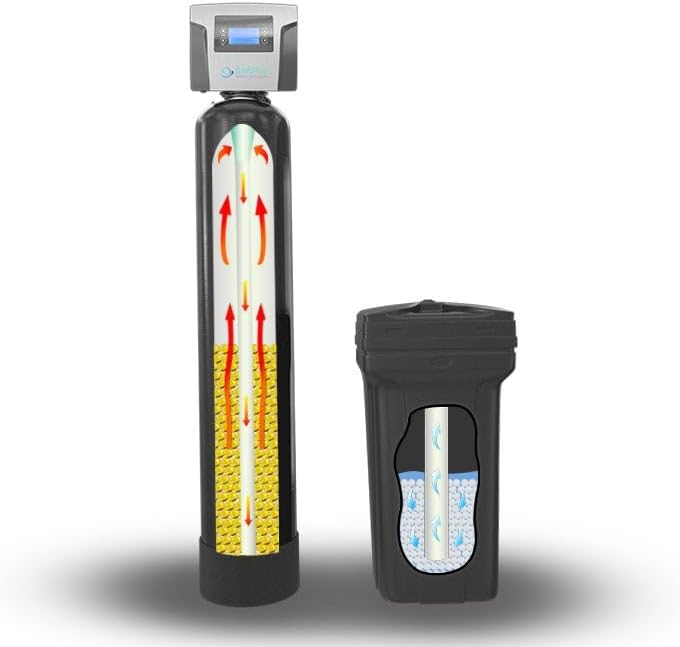
Express Water 3-Stage Whole House Water Filter System
For city water with chlorine and moderate sediment, the Express Water 3-Stage handles 5 micron sediment, KDF, and carbon block in one housing set. Mount it upstream of the GXSH40V on the cold water main, and you'll extend resin life by 3–5 years. Pressure drop is about 5 psi at 8 gpm. Check the Express Water 3-Stage on Amazon.
iSpring Iron & Manganese Whole House Water Filtration System
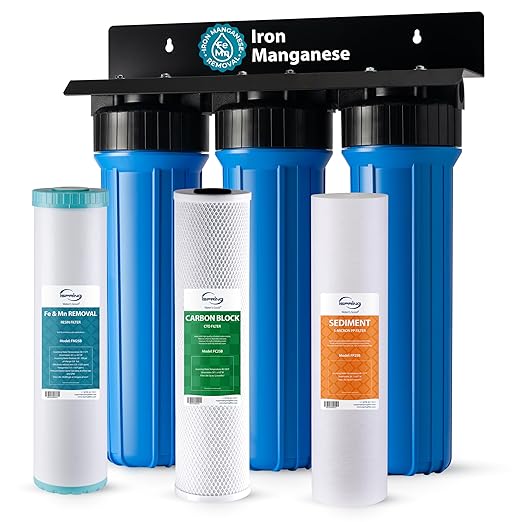
Well users with iron above 0.3 ppm should never put raw water into a softener—iron will permanently foul the resin within a year. The iSpring iron and manganese unit oxidizes and removes up to 3 ppm iron before the GXSH40V ever sees the water. View the iSpring Iron Filter on Amazon.
Aquaboon 5 Micron 10x4.5 Well Water Sediment Filter (4-Pack)
Stock up on replacement sediment cartridges before the install. A 4-pack lasts most households a full year. See the Aquaboon 4-Pack on Amazon.
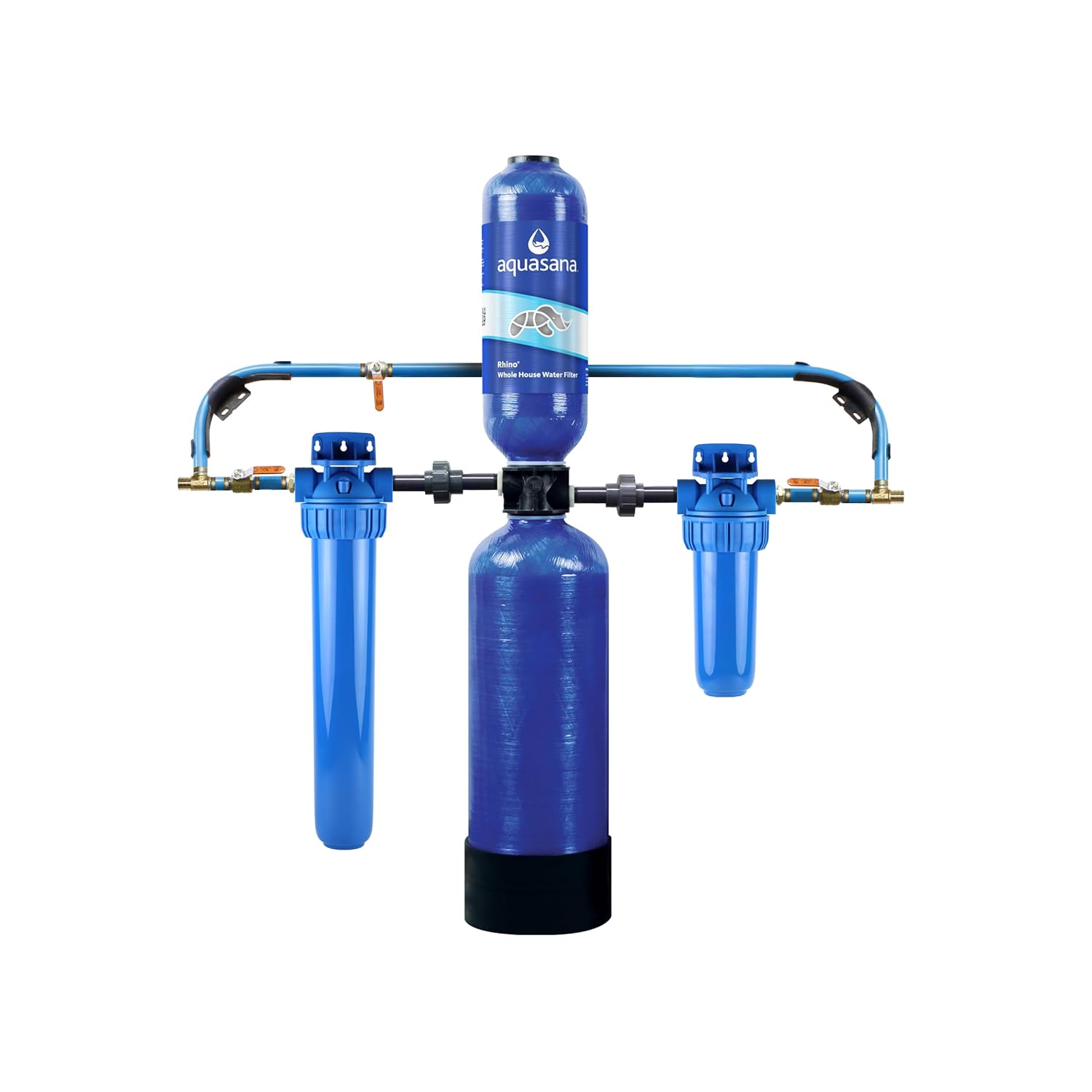
HQUA WF3-01 3-Stage Whole House Water Filtration System
A budget-friendly alternative to the Express Water with similar 5-micron sediment and carbon stages. Slightly lower flow ceiling but ideal for smaller homes pairing it with the GXSH40V. Check the HQUA WF3-01 on Amazon.
Aquasana Whole House Well Water Filter, 500K Gallons, UV+Carbon+KDF
If you're on well water and dealing with bacteria, UV is non-optional. The Aquasana 500K with UV is one of the few systems that bundles sediment, carbon, KDF, and UV into a single rack. View the Aquasana 500K UV on Amazon.
Step-by-Step Installation Without a Floor Drain
Here's the sequence I use when I install GE GXSH40V finished basement no floor drain jobs for clients. Plan on 4–6 hours for a tidy finished-basement install, longer if you're routing through finished walls.
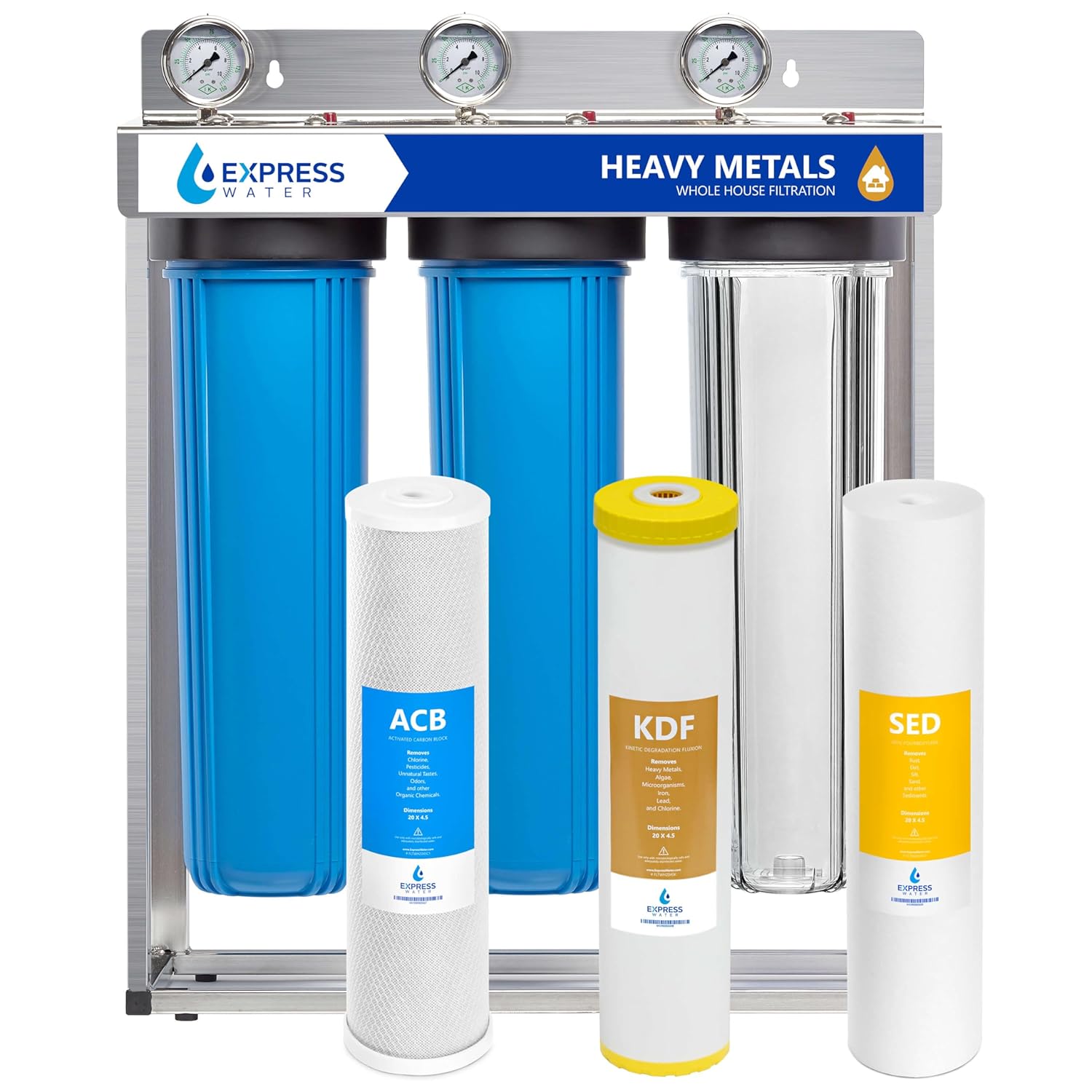
1. Shut Off Water and Drain the System
Close the main water shutoff, open the lowest faucet to drain pressure, and open a tap on each floor to admit air. The GXSH40V comes with a built-in bypass valve, but you still need zero pressure during the connect.
2. Mount and Plumb the Pre-Filter
Install your sediment or iron filter upstream of where the softener will sit. Use unions on both sides so you can service the filter without cutting pipe. Maintain at least 10 inches of clearance below the filter housing for cartridge swaps.
3. Set the Softener Location
Place the GXSH40V on a level surface with at least 24 inches of clearance in front for the lid to open during salt refills. In a finished basement, lay down a polyethylene drip tray with a leak sensor wired to a Wi-Fi shutoff valve—cheap protection for finished flooring.
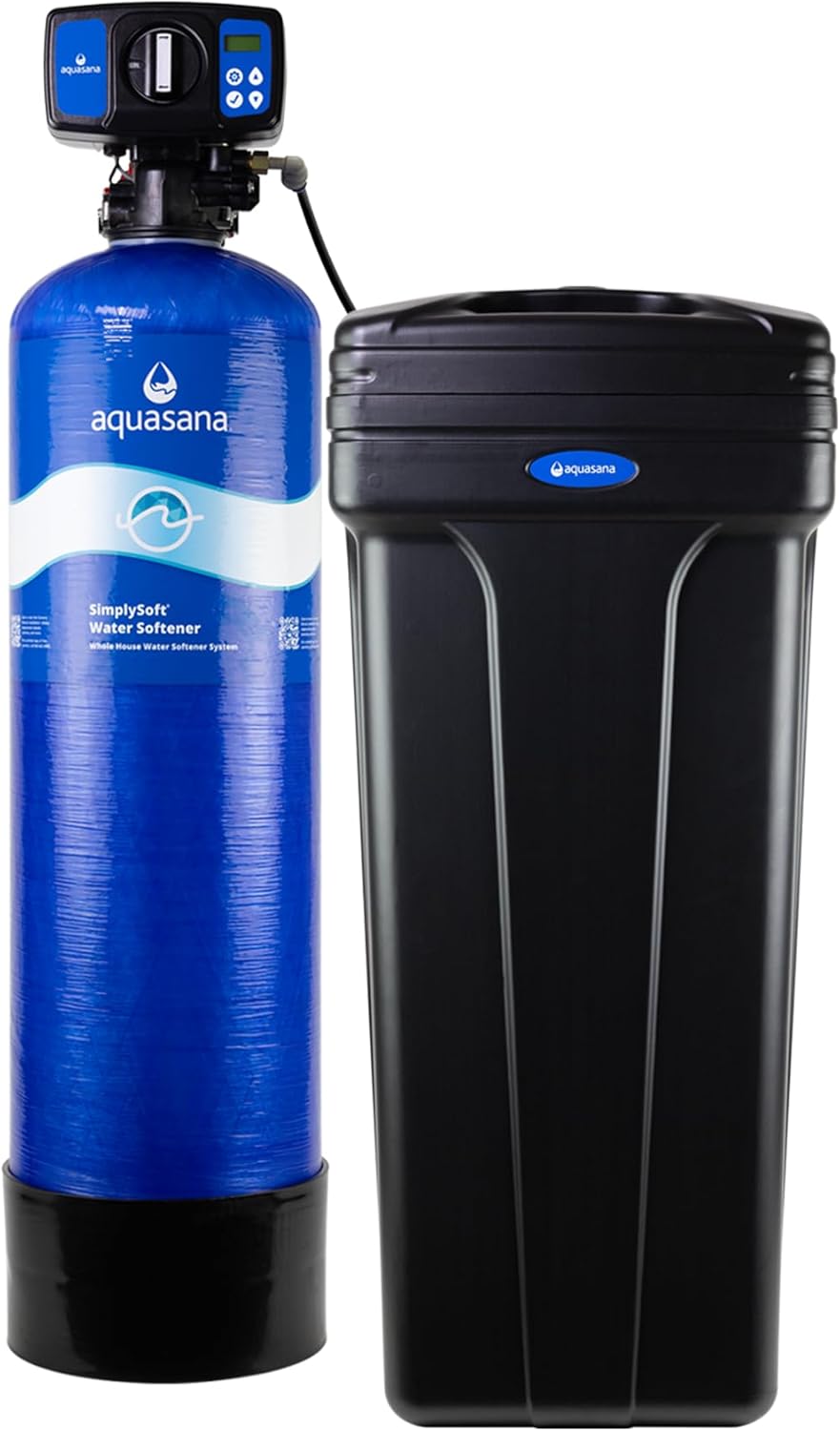
4. Connect Inlet and Outlet
The GXSH40V uses 1" NPT threaded connections via the included installation kit. Use braided stainless flex lines or push-to-connect fittings on the cold inlet and the conditioned outlet. Always plumb the bypass so you can isolate the unit for service.
5. Route the Drain Line
This is the step everyone gets wrong in finished basements. Run the 1/2" drain hose from the valve head to your chosen destination with no kinks and no more than 8 feet of vertical lift. Secure it every 4 feet with cable clips, and terminate with a minimum 1.5" air gap. Never push the hose end into a drain pipe or threaded fitting—that's a code violation and a back-siphon risk.
6. Route the Brine Tank Overflow
The brine overflow must run by gravity to the same destination, ideally with a downward slope of at least 1/4" per foot. If you can't get gravity flow, you'll need a separate condensate pump dedicated to the overflow—never combine the regeneration drain and the brine overflow into one line.
7. Program and Test
Set your water hardness in grains per gallon, plug in the GXSH40V, and trigger a manual regeneration. Watch the drain destination for the full 90-minute cycle to confirm no leaks, no air-gap splash, and no condensate pump failures. This is when you catch problems—not at 2 a.m. when the auto-regen kicks in.
Air Gap Compliance and Code Pitfalls
Every drain destination above requires a physical air gap of at least twice the pipe diameter (1.5 inches minimum for a 1/2" line). The IPC, UPC, and most state codes require this for any water softener. Inspectors flag direct-connected drains constantly—don't skip it. If your destination is a standpipe, the air gap is the vertical distance from the hose end to the standpipe rim. For a condensate pump, the air gap is at the pump's inlet, not the outlet.
One more thing about septic: if your home is on septic, check with your county before discharging softener brine. Some jurisdictions ban it outright. Others require an alternative discharge route—often a dry well or storm-sewer connection.
For more on prepping the supply side, see our companion guides on whole-house pre-filter sizing and softener bypass valve troubleshooting. If you're still deciding between cabinet and dual-tank units, our cabinet vs dual-tank softener comparison walks through the tradeoffs.
Frequently Asked Questions
Can I drain the GE GXSH40V into a sump pump pit in a finished basement?
In most municipalities yes, as long as the sump discharges to storm sewer or daylight and you maintain a 1.5" air gap above the high-water line. Avoid this route if your sump pumps to a septic field, because chloride from brine damages leach fields. Always check local code before committing.
How far can the GXSH40V drain hose run before I need a pump?
The factory drain hose handles up to 8 feet of vertical lift and roughly 20 feet of horizontal run at the unit's 0.25 gpm regeneration flow. Past that, install a condensate pump with a 1 gpm rating to avoid back-pressure on the valve head.
Do I need a separate drain line for the brine tank overflow?
Yes. The regeneration drain runs under pump pressure from the valve head, while the brine overflow is strictly gravity. Combining them risks brine flooding when the regeneration cycle pressurizes the line. Run two physically separate hoses to the same destination if needed.
Will a laundry standpipe handle the GXSH40V's regeneration discharge?
Easily. A standard 2" laundry standpipe is designed for 15+ gpm washer discharge. The GXSH40V's 0.25 gpm is a trickle by comparison. Just ensure the hose terminates with a 1.5" air gap above the standpipe and is secured so it can't fall in.
What pre-filter do I need before a GXSH40V on well water?
If iron exceeds 0.3 ppm, add a dedicated iron and manganese filter ahead of the softener—otherwise the resin fouls within 12 months. For sediment alone, a 5-micron whole-house filter is sufficient. UV is recommended if a recent well test showed coliform.
Can I install the GXSH40V myself or do I need a licensed plumber?
Most homeowners with basic soldering or push-fit experience can do this install in a weekend. However, many jurisdictions require a permit and inspection any time you tie into the potable supply or DWV system, especially for the drain air gap. Check before you start.
What happens if the condensate pump fails during a regeneration cycle?
Without a safety float switch, the pump's reservoir overflows and dumps brine onto your finished floor. Always wire the pump's high-level alarm contacts to a normally-closed valve on the softener inlet, or use a Wi-Fi leak sensor under the unit. A $30 sensor saves $3,000 in flooring.
Key Takeaways
- Choosing the right install GE GXSH40V finished basement no floor drain means matching capacity and output ports to your actual devices
- Always check actual watt-hours (Wh), not just watts — runtime depends on Wh, not peak output
- Also covers: GE GXSH40V drain pump install
- Also covers: softener install no floor drain
- Also covers: GE GXSH40V condensate pump option
- Compare price-per-Wh across models to find the best value for your budget