To install Fleck 5600SXT galvanized pipe transition fittings correctly, shut off the main supply, cut out a 3-foot section of galvanized pipe near the meter, install dielectric unions or brass nipples between the steel and copper/PEX, then run new piping to the softener's bypass valve using 1-inch NPT connections. The galvanized-to-Fleck junction is the single most failure-prone point of any softener install because dissimilar metals cause galvanic corrosion within months. Use brass transitions, flush the line of rust scale, and add a sediment pre-filter to protect the resin bed from iron sloughing off your old pipes.
Why galvanized pipe makes a Fleck 5600SXT installation tricky
If your home was built before 1970, the supply lines running into your basement or utility room are almost certainly galvanized steel. Over five decades, the zinc coating sacrifices itself, the interior bore narrows from rust tubercles, and the threads at the end of every nipple become brittle and clogged with scale. When you bolt a brand-new Fleck 5600SXT control valve onto that legacy plumbing, three problems show up immediately: dissimilar-metal corrosion at the brass-to-steel joint, rust particulate flushing into the softener's resin bed, and threads that simply will not seal because the male nipple is no longer round.
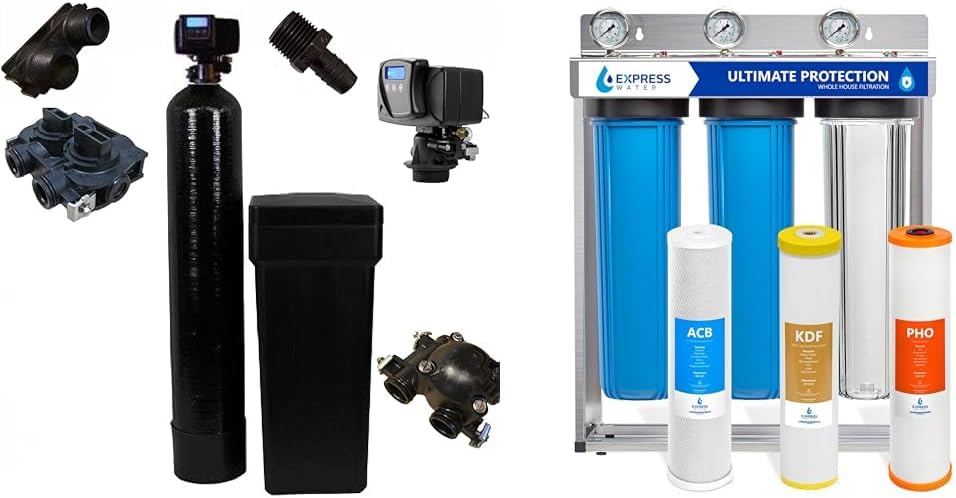

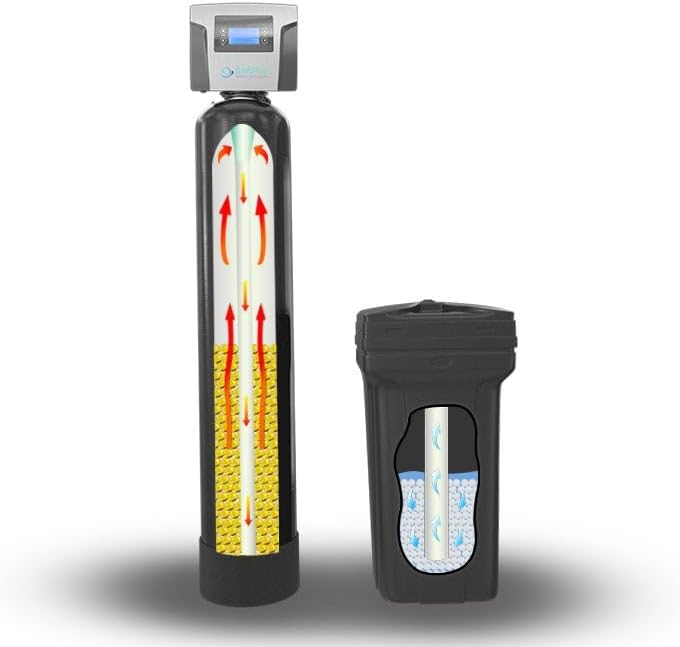
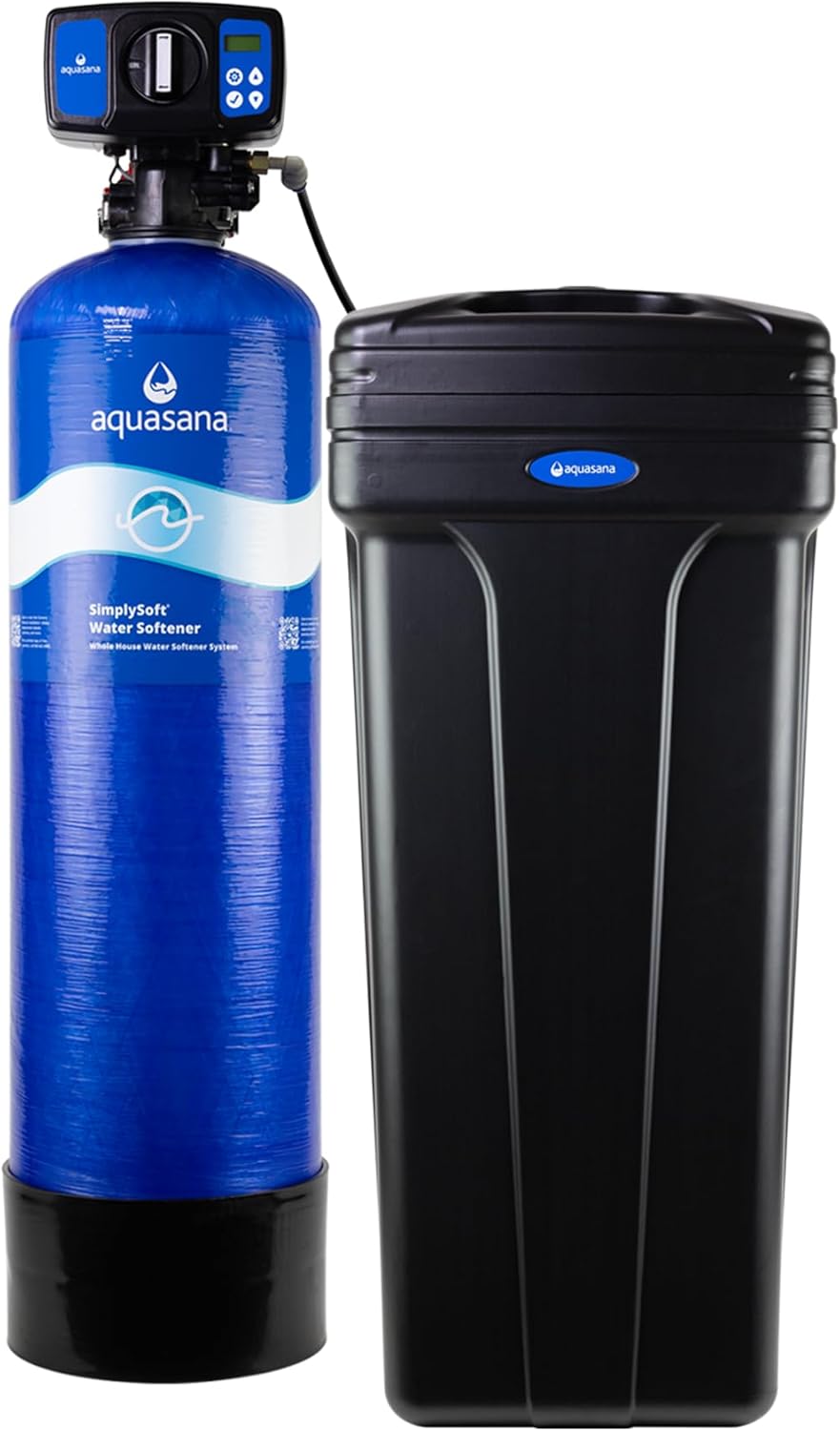
The Fleck 5600SXT itself uses a noryl-and-brass valve body with 1-inch NPT female ports (or 1-inch quick-connect through the supplied yoke). It does not care what your incoming pipe is made of — it only cares that the connection is leak-tight, clean, and electrically isolated from the steel.
Tools and transition fittings you actually need
Before you touch a wrench, gather the following so you don't have three trips to the hardware store mid-job:
- Two 14-inch pipe wrenches (one to back up, one to turn)
- Reciprocating saw with bi-metal blades — galvanized over 40 years old is too brittle to unthread cleanly
- Dielectric unions, 1-inch, brass-to-galvanized (two minimum)
- Brass nipples, 1-inch x 4-inch — a brass nipple between steel and the Fleck bypass acts as a sacrificial buffer
- SharkBite or ProPress fittings if you are transitioning to copper/PEX downstream
- PTFE tape rated for potable water plus a brush of pipe dope on the steel side
- 5-gallon bucket and shop-vac for the inevitable rust slurry
- Wire brush and a can of cold galvanizing spray for the cut ends you leave behind
The single most important fitting is the dielectric union. It physically separates the brass of the Fleck yoke from the steel of your house pipe with a rubber gasket and plastic sleeve, breaking the electrical circuit that drives galvanic corrosion. Skip it and you'll see green-blue weep stains within a year.
Step-by-step: install Fleck 5600SXT galvanized pipe transition
Here is the field-tested sequence professional installers use when retrofitting a 5600SXT to legacy steel plumbing in 2026:
- Shut off and depressurize. Close the main, open the lowest faucet in the house, and the highest one upstairs. Wait until flow stops completely — galvanized lines hold residual pressure longer than copper.
- Mark and cut. Identify a clean 36" horizontal run after the meter but before any branch tees. Mark two cut points 28" apart — this gives you working room for the bypass valve, two unions, and the brass buffer nipples.
- Cut, don't unthread. Old galvanized threads will twist off inside the fitting nine times out of ten. Use the reciprocating saw. Catch the water in your bucket.
- Ream and inspect. Look inside the cut ends. If the bore is more than 40% occluded with rust tubercles, plan to replace the run all the way back to the meter — the Fleck will starve for flow otherwise.
- Thread new nipples or transition couplings. If the existing threads are sound, clean them with a wire brush and thread on a 1" galvanized-to-brass dielectric union. If threads are shot, use a stainless compression coupling or a SharkBite transition rated for galvanized pipe.
- Install brass buffer nipples. Between the dielectric union and the Fleck bypass yoke, install a 4" brass nipple. This gives you a future service point and ensures no steel touches the valve body.
- Mount the Fleck bypass. Slide the bypass valve into the back of the 5600SXT control head, lock the clips, and orient the inlet/outlet arrows to match your flow direction. The inlet is always on the left when facing the valve.
- Pressure test slowly. Open the main one-quarter turn and watch every joint. Galvanized debris will jam the bypass spool if you ram full pressure in immediately — ease it in over 60 seconds.
- Flush before commissioning. Put the Fleck in bypass mode and run two full minutes of flow through the line. You will get a black-orange slurry. Once it runs clear, switch the bypass to service position.
Pre-filter protection: catch the rust before it reaches the resin
The single biggest mistake homeowners make when they install Fleck 5600SXT galvanized pipe transition setups is skipping the sediment pre-filter. Even after a thorough flush, a galvanized system continues to shed iron oxide every time pressure changes. That rust embeds itself in the cation resin and over 12-18 months your softener loses 30-50% of its exchange capacity — a process called "iron fouling" that no amount of regeneration will reverse.
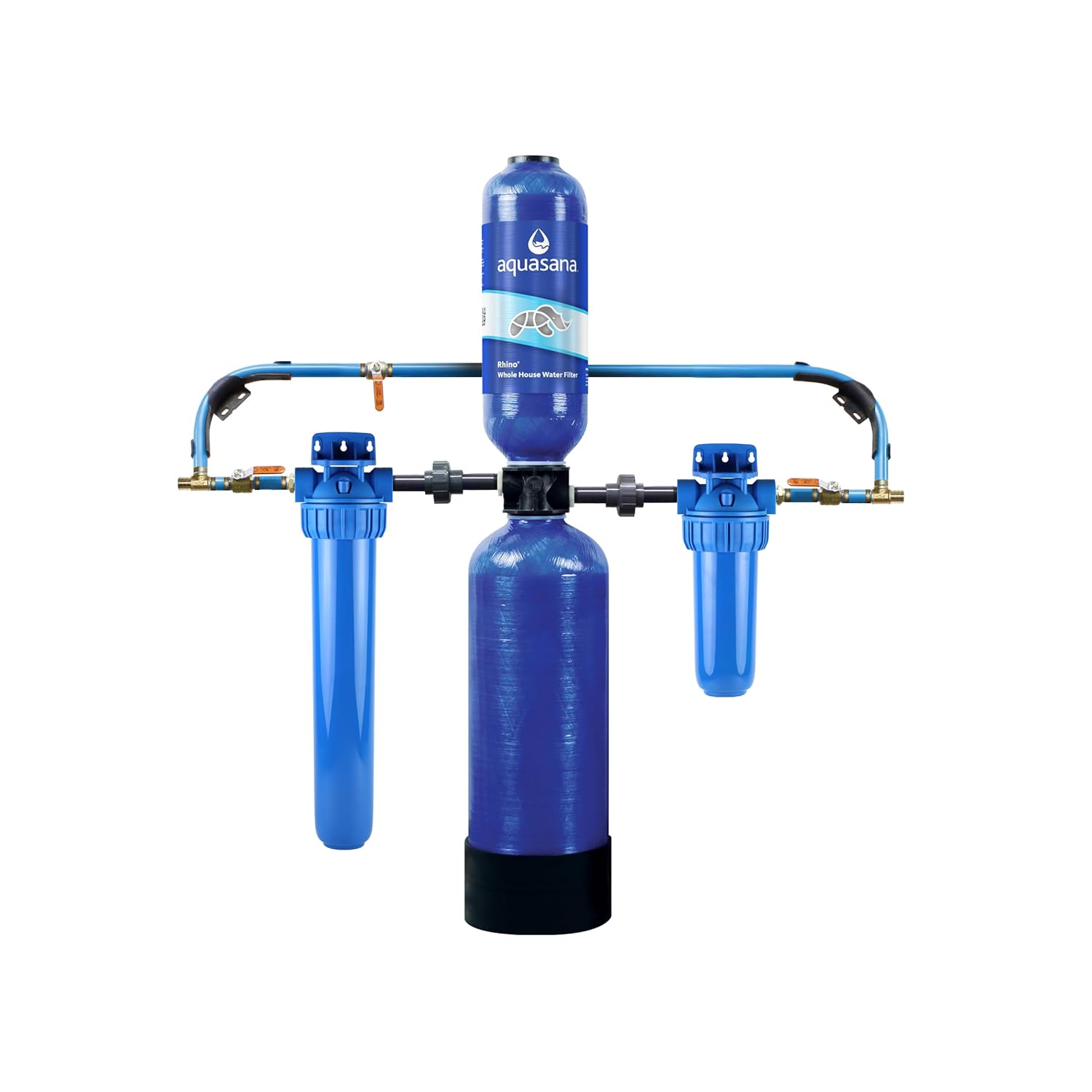
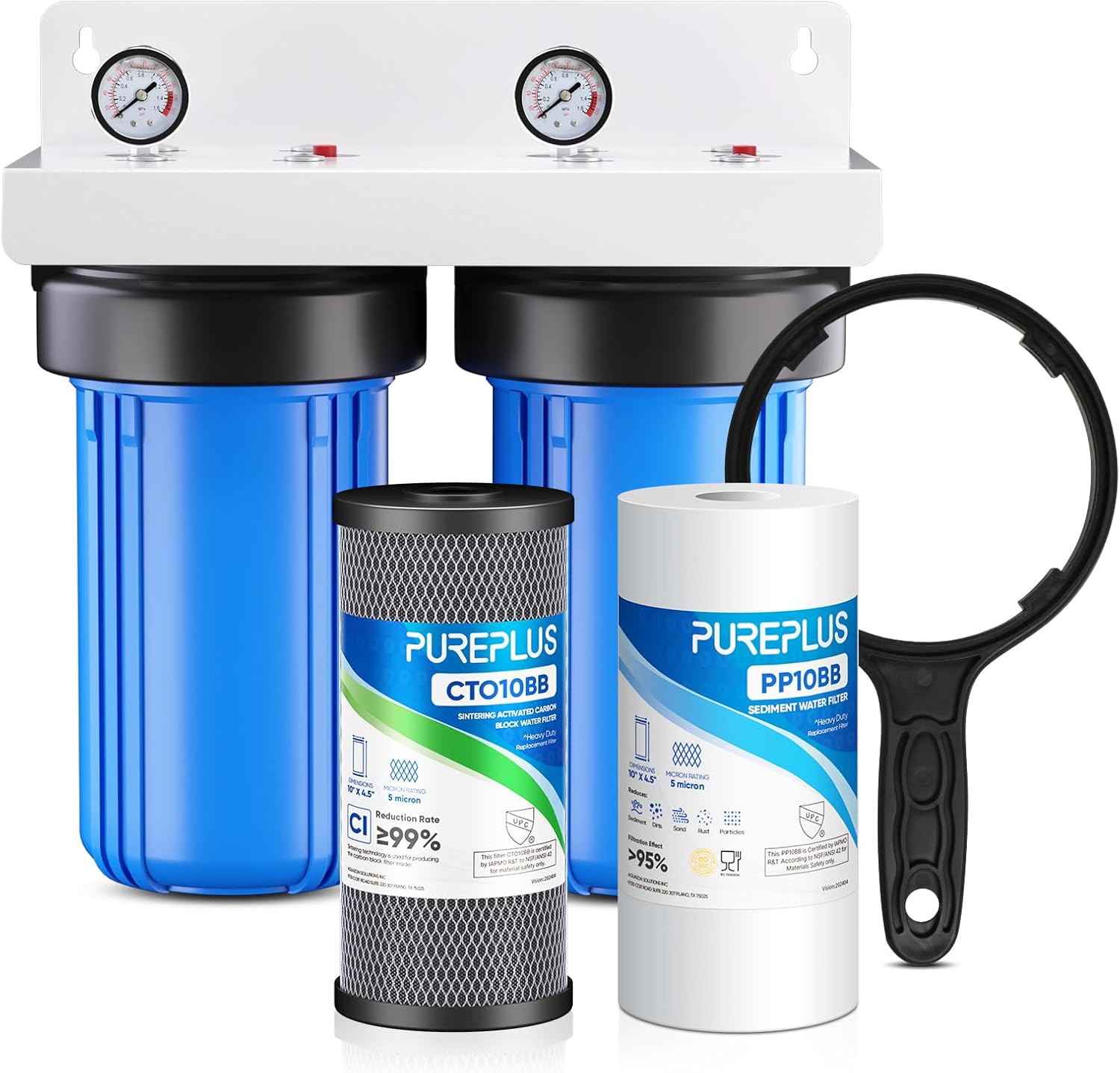
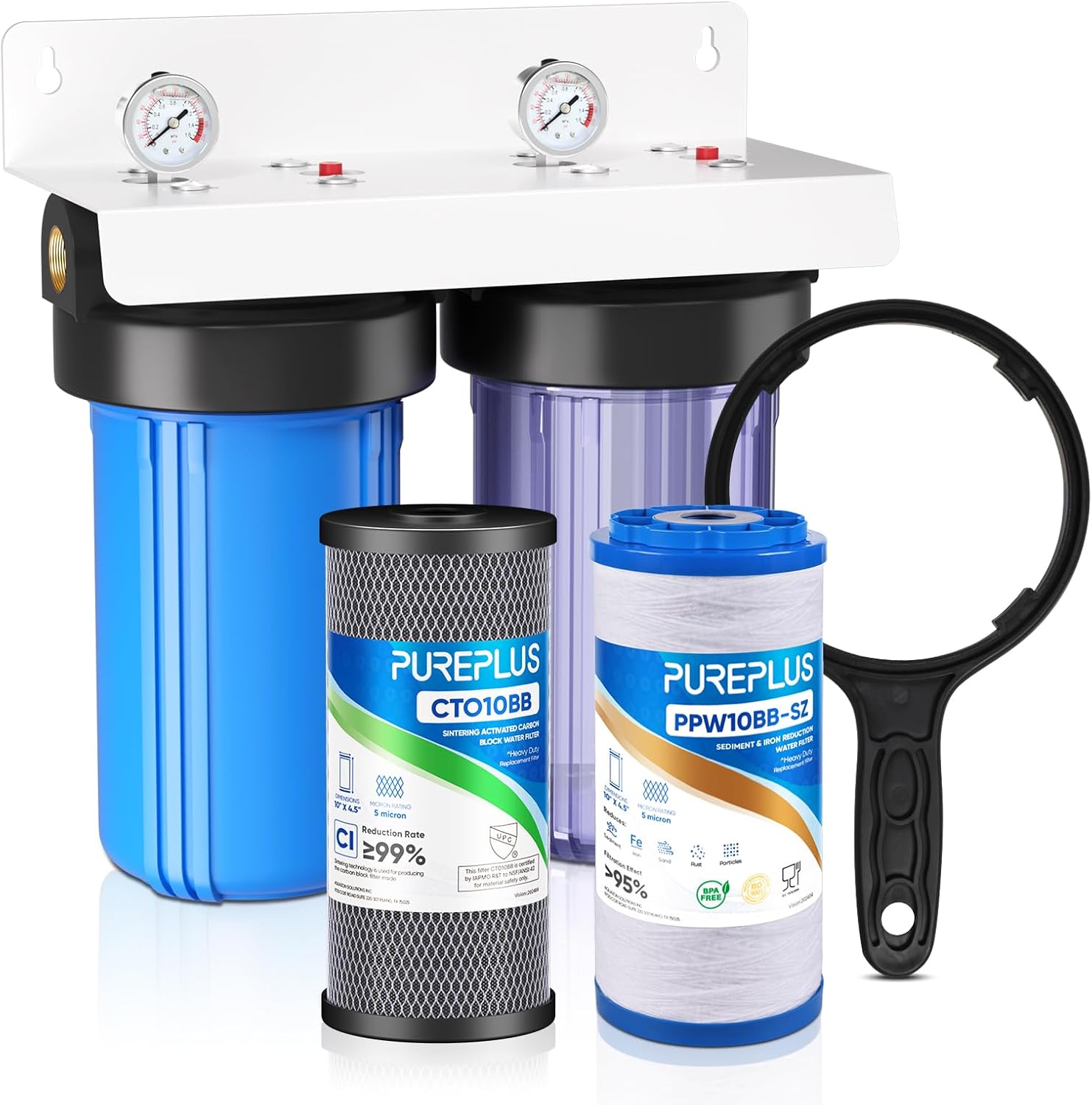
A 5-micron spun polypropylene cartridge in a 10"x4.5" big-blue housing, installed between the dielectric union and the Fleck inlet, removes 95% of the particulate that would otherwise foul the bed. For more on selecting cartridges sized to galvanized retrofit flow rates, see our guide to pre-filters for older homes.
Comparison: pre-filters and iron stages for galvanized retrofits
| System | Stages | Best for galvanized retrofit | Flow rate | Cartridge life |
|---|---|---|---|---|
| Express Water 3-Stage | Sediment + KDF + Carbon | Excellent — catches rust + chlorine | 15 GPM | 6-12 months |
| HQUA WF3-01 3-Stage | Sediment + GAC + CTO | Strong on particulate | 15 GPM | 6-12 months |
| iSpring Iron & Manganese | Backwashing iron media | Best when iron > 3 ppm | 15 GPM | 8-10 years media |
| Aquasana Well Water 500K | Sediment + UV + Carbon + KDF | Premium full-house | 7 GPM | 500,000 gal |
| Aquaboon 5-Micron Cartridge | Replacement sediment | Drop-in for any big-blue | n/a | 2-4 months |
Top product picks for the transition
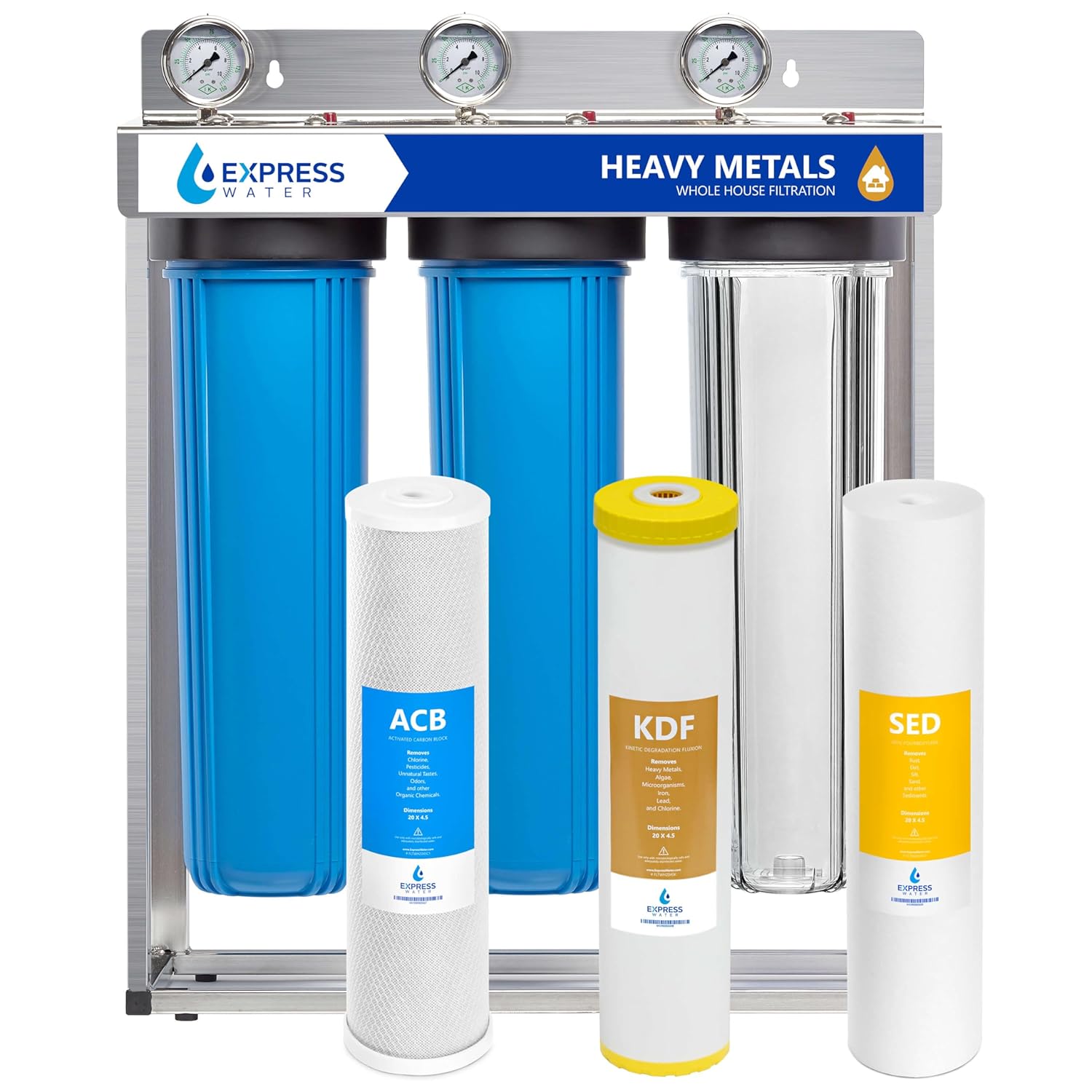
Express Water 3-Stage Whole House Filter — best all-purpose buffer
Mounted directly upstream of the Fleck inlet, this three-housing unit captures the heavy iron particulate that galvanized pipes shed during the first six months after a retrofit, then knocks out chlorine and VOCs through the KDF and carbon stages. The 1-inch NPT ports match the 5600SXT plumbing exactly, so you can thread your new brass nipples straight through without adapters. Check current price on Amazon.
iSpring Iron & Manganese Whole House System — when your galvanized pipe is sourcing the iron
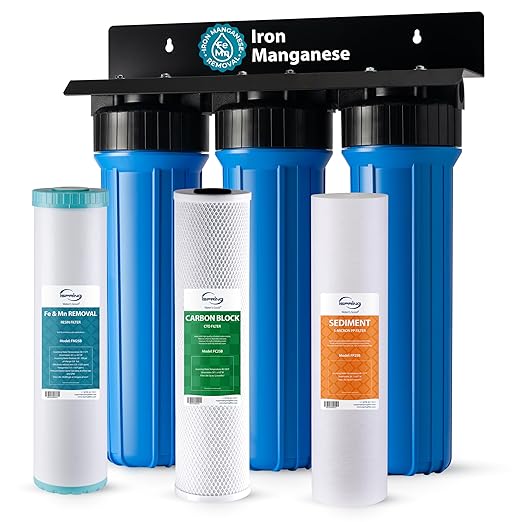
If you pull a water sample and see iron above 3 ppm, the rust isn't only coming from the pipe — your well or municipal source has dissolved ferrous iron that will precipitate the moment it hits the softener. A dedicated air-injection iron filter ahead of the 5600SXT solves this; the iSpring unit uses a backwashing media bed that lasts 8-10 years and protects both the new transition fittings and the resin downstream. View the iSpring on Amazon.
Aquaboon 5-Micron Sediment Cartridges — the consumable you'll replace constantly
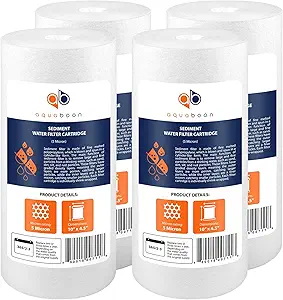
For the first three months after you install Fleck 5600SXT galvanized pipe transition fittings, you will burn through pre-filter cartridges fast. Buying a four-pack of 10"x4.5" 5-micron spuns saves about 40% versus single replacements and keeps you from running unfiltered water while you wait for shipping. See the 4-pack on Amazon.
HQUA WF3-01 3-Stage System — budget alternative to Express Water
If the Express Water unit is out of stock or your budget is tighter, the HQUA WF3-01 delivers nearly identical three-stage protection at a lower price point. The 1-inch brass ports accept dielectric unions cleanly, and the housings are the standard 20" big-blue size so replacement cartridges are universal. Compare HQUA pricing on Amazon.
Aquasana 500K Well Water Filter — premium long-term solution
For homeowners who plan to leave their galvanized service line in place for another decade or more, the Aquasana 500,000-gallon system adds UV sterilization on top of carbon and KDF filtration. It's the most thorough buffer between aging steel pipe and a brand-new Fleck control head, and the 500K-gallon rated life means most households go five-plus years before any media swap. Check Aquasana availability.
Frequently Asked Questions
Can I connect a Fleck 5600SXT directly to galvanized pipe without a dielectric union?
No, and you shouldn't try. The brass yoke on the 5600SXT and the steel of your galvanized pipe sit far enough apart on the galvanic series that they form a small electrochemical cell once water bridges them. Within 6-18 months you'll see green corrosion bloom at the joint, followed by pinhole leaks. A $12 dielectric union or a 4-inch brass buffer nipple eliminates the issue entirely.
What size pipe transition do I need for a Fleck 5600SXT on 3/4-inch galvanized?
The 5600SXT bypass yoke is 1-inch NPT, but your 3/4-inch galvanized line can step up using a 3/4" x 1" brass bushing or a reducing dielectric union. Don't reduce the 5600SXT down to 3/4" — you'll choke the service flow rate below the 7 GPM the valve expects during regeneration. Instead, expand the run to 1-inch for the last 24 inches before the softener.
Will the Fleck 5600SXT work on old galvanized well water plumbing?
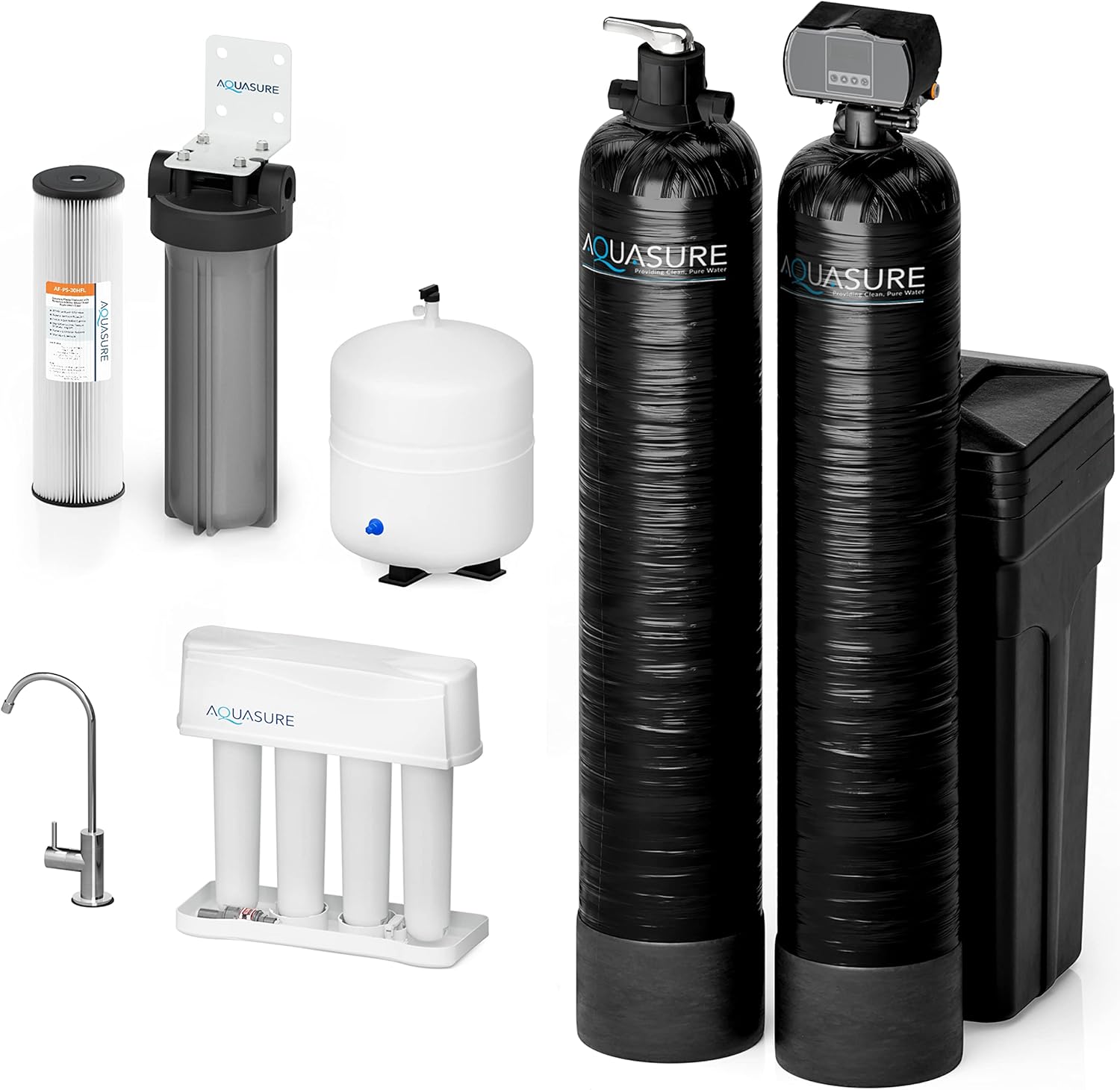
Yes, but only with proper pre-treatment. If your well water carries iron above 0.3 ppm, the dissolved iron will foul the resin no matter how clean your transition fittings are. Pair the 5600SXT with an iron filter and a sediment pre-filter ahead of it. Our comparison of Fleck control heads covers which valve is best for well applications.
How do I flush galvanized pipe before installing a water softener?
Open every cold-water tap in the house simultaneously after isolating the softener loop, then briefly cycle the main shutoff three or four times to dislodge tubercles. Run that water through a 5-gallon bucket placed at the lowest fixture until it runs clear — typically 8-20 minutes. For a deeper flush procedure, see our galvanized pipe flushing walkthrough.
Can I use SharkBite fittings on galvanized pipe for a softener install?
SharkBite makes specific transition couplings rated for galvanized-to-copper or galvanized-to-PEX, but the standard push-fit fittings are not rated for steel. Use the SharkBite UIP (Universal Inside Pipe) series or a compression coupling rated for galvanized. These dielectrically isolate steel from brass internally, which satisfies the same requirement as a dielectric union.
How long will a galvanized-to-Fleck transition last before it leaks?
With proper dielectric isolation and a brass buffer nipple, expect 15-25 years — longer than the resin bed itself. Without isolation, expect 12-36 months. The single biggest variable is water chemistry: high-TDS or low-pH water accelerates galvanic corrosion dramatically. If your TDS is over 500 ppm, replace the entire galvanized run rather than transition to it.
Do I need a permit to install Fleck 5600SXT galvanized pipe transition fittings myself?
In most U.S. jurisdictions in 2026, homeowners may modify their own plumbing downstream of the meter without a permit, but local rules vary. Check whether your municipality requires a plumbing permit for installing a softener, especially when the work involves cutting into a service line. Even where unpermitted, having a licensed plumber inspect the transition is cheap insurance.
What if my galvanized threads strip when I try to install the bypass?
Stripped or rust-bound threads are the most common roadblock. Don't force it. Cut back another 4-6 inches into clean pipe, then use a stainless-steel compression coupling or a SharkBite UIP fitting that doesn't rely on threading. These fittings grip on the pipe's outer diameter rather than the threads, and they pair cleanly with the dielectric union on the Fleck side.
Key Takeaways
- Choosing the right install fleck 5600sxt galvanized pipe transition means matching capacity and output ports to your actual devices
- Always check actual watt-hours (Wh), not just watts — runtime depends on Wh, not peak output
- Also covers: fleck 5600sxt galvanized to copper transition
- Also covers: installing water softener on galvanized plumbing
- Also covers: dielectric union fleck 5600sxt
- Compare price-per-Wh across models to find the best value for your budget