To install Fleck 5600SXT in mobile home belly board plumbing, you need to cut a service access in the belly board insulation wrap, locate the cold water trunk line running through the floor joists, install a bypass loop with PEX or CPVC transitions, and route the drain and overflow lines outside the underbelly through a sealed penetration. The softener head itself mounts upstairs near the water heater closet, while the brine tank typically lives in a utility area or skirted enclosure. Below is a complete 2026 walkthrough for owners doing a DIY install in a single-wide or double-wide manufactured home, plus the pre-filters that protect the resin bed from the sediment and iron that mobile home well systems almost always carry.
Why Mobile Home Belly Boards Complicate a Fleck 5600SXT Install
The "belly board" is the black poly or coroplast underbelly wrap that hangs beneath the floor joists of a manufactured home. It holds in batt insulation and protects the plumbing trunk lines from rodents, freeze, and road debris during transport. When you install Fleck 5600SXT in mobile home belly board plumbing, you are not working with a normal slab or basement layout — every cut you make in that wrap has to be re-sealed with belly tape and patched insulation, or you will create a cold spot that freezes the new softener loop the first hard night.
When shopping for install fleck 5600sxt in mobile home belly board plumbing, it pays to compare specs, capacity, and real-world runtime before committing.
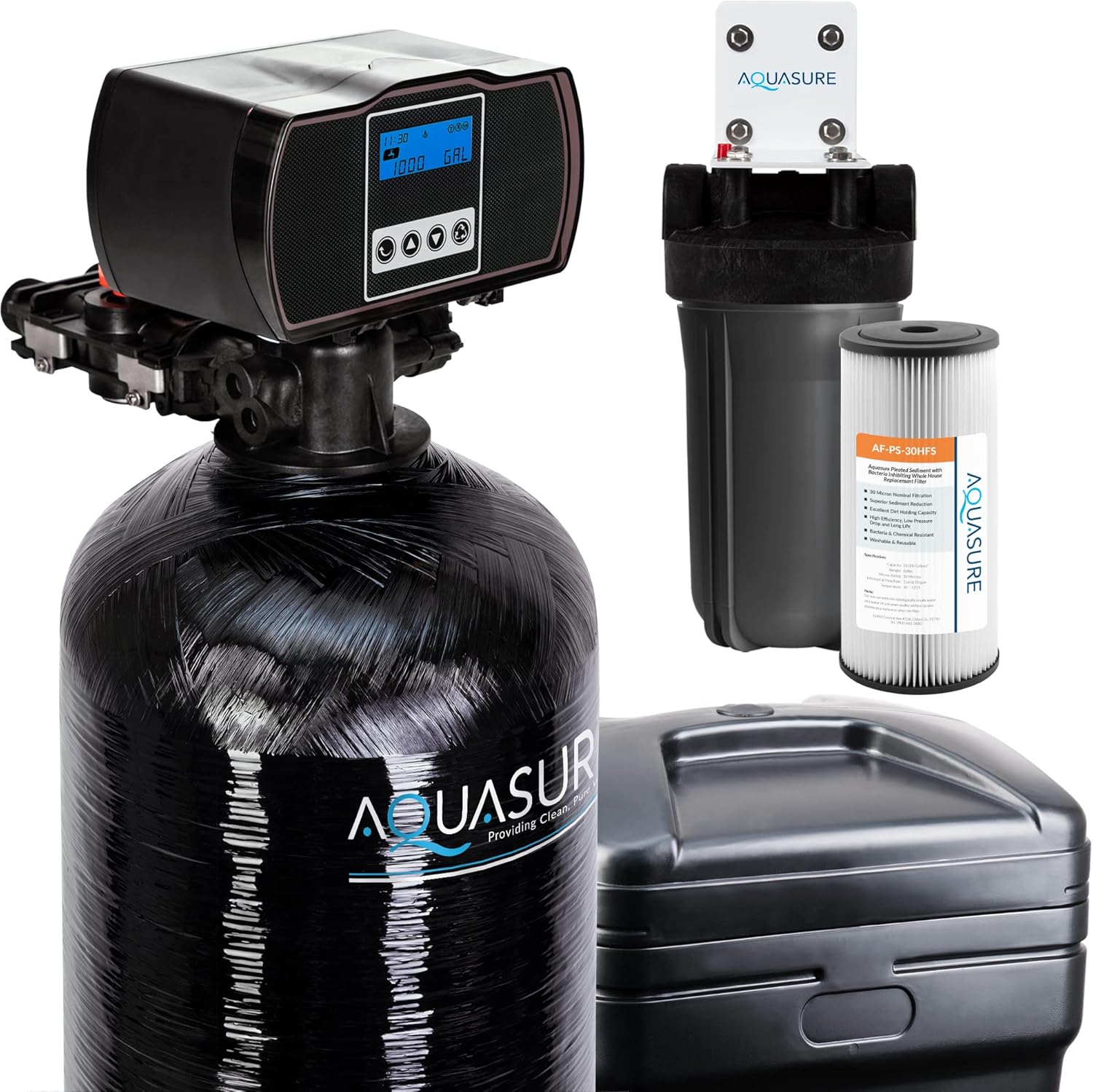
Most mobile homes built between 1995 and 2020 use 1/2" or 3/4" PEX-A or CPVC trunk lines clipped to the underside of the joists, then sleeved in foam pipe insulation. Older single-wides may still have gray Qest polybutylene, which you should not reuse — cut it out and transition to PEX with brass SharkBite-style fittings while you are already under the home. The 5600SXT control valve uses 1" NPT ports, so you will be stepping up from the 3/4" trunk to 1" at the bypass and back down on the outlet side.
Tools and Materials Checklist
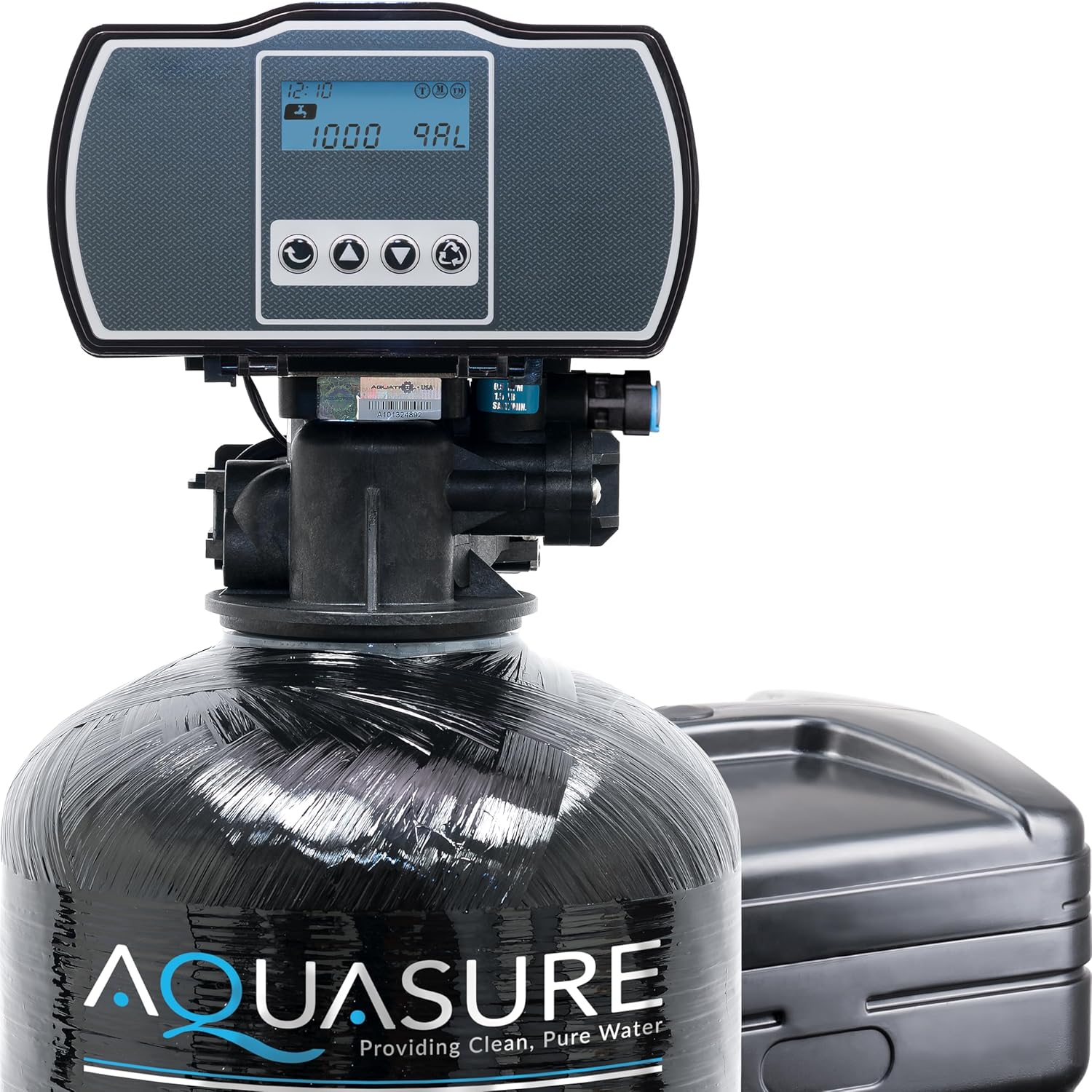
- Fleck 5600SXT control valve with bypass (typically paired with a 48,000-grain 10x54 mineral tank)
- 1" male NPT to 3/4" PEX adapters (two)
- PEX-A expansion tool or SharkBite push-fit fittings
- 5/8" OD polyethylene drain line and a 1/2" overflow line
- Air gap fitting for the drain termination
- Belly board repair tape (3M 8067 or equivalent) and R-19 batt for re-insulation
- Creeper, headlamp, and a respirator — fiberglass insulation will rain on you
- Pre-filter housing (more on this below) and a 5-micron sediment cartridge
Step 1: Map the Trunk Line Before You Cut
Slide under the home with the headlamp and trace the cold-water trunk from the well pressure tank or city service riser to the water heater closet. Mark with a paint pen where you want to break the line for the softener loop — ideally within 6 to 10 feet of the heater so you do not soften the outside hose bibs. Cut a roughly 24" x 24" service window in the belly board using a sharp utility knife, peeling the wrap back like a flap so you can tape it closed afterward.
Step 2: Install the Bypass Loop
Shut off the main, drain the lines from the lowest hose bib, and cut the cold trunk. Install two tees with 3/4" to 1" adapters that will rise vertically through the subfloor into the closet where the 5600SXT head sits. This is the part most DIYers skip — you must support the new vertical risers with strut hangers or plumber's tape on the joists, because a softener tank full of water and resin weighs about 150 lb and the rocking from road-vibration-cured floors will stress the fittings if they swing free.
Step 3: Pre-Filter Selection (Do Not Skip This)
Mobile home water sources — especially private wells common in rural manufactured home communities — push sediment, sand, and iron straight at the resin bed. A fouled resin bed is the #1 reason 5600SXT installs fail within 18 months. Install a sediment pre-filter before the softener, on the inlet side of the bypass.
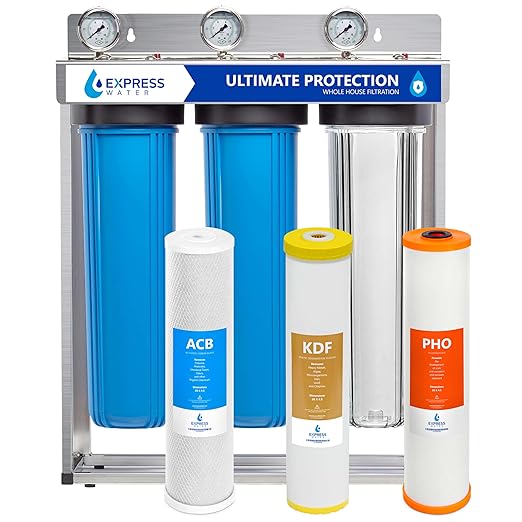
Express Water 3-Stage Whole House Water Filter System
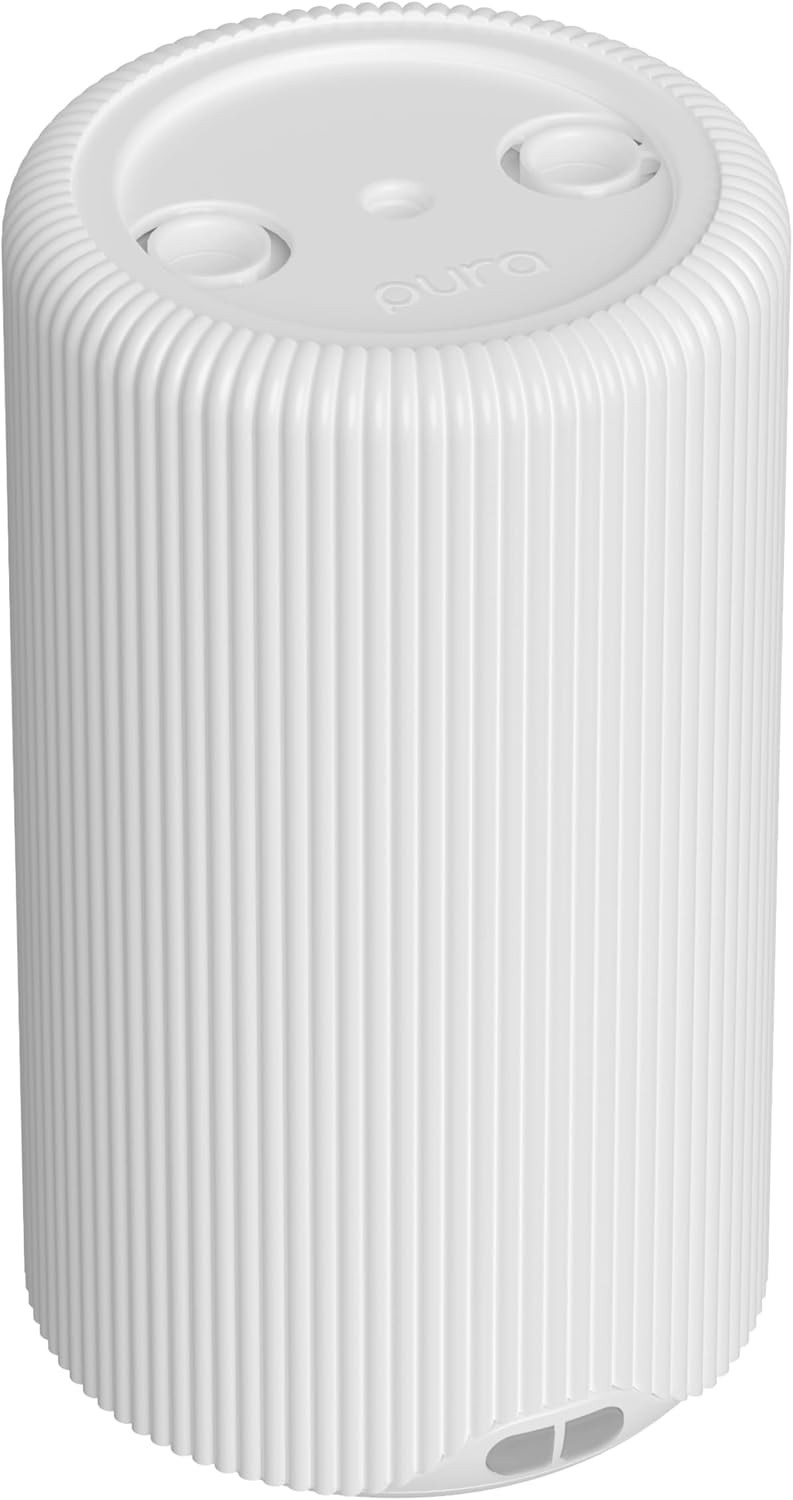
The Express Water 3-stage is the most common pairing with a Fleck 5600SXT in a mobile home because the housing footprint fits inside a standard 30" utility closet next to the softener head. It uses 4.5" x 20" cartridges, so cartridge changes are an annual job, not a quarterly one. Sediment, KDF, and carbon stages strip chlorine and sand before they reach the resin. Check the Express Water 3-stage system on Amazon.
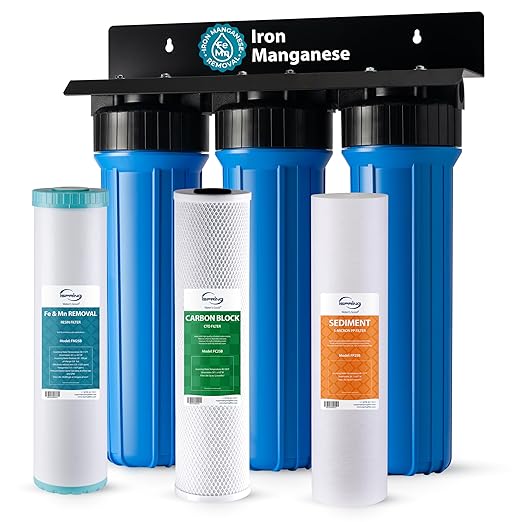
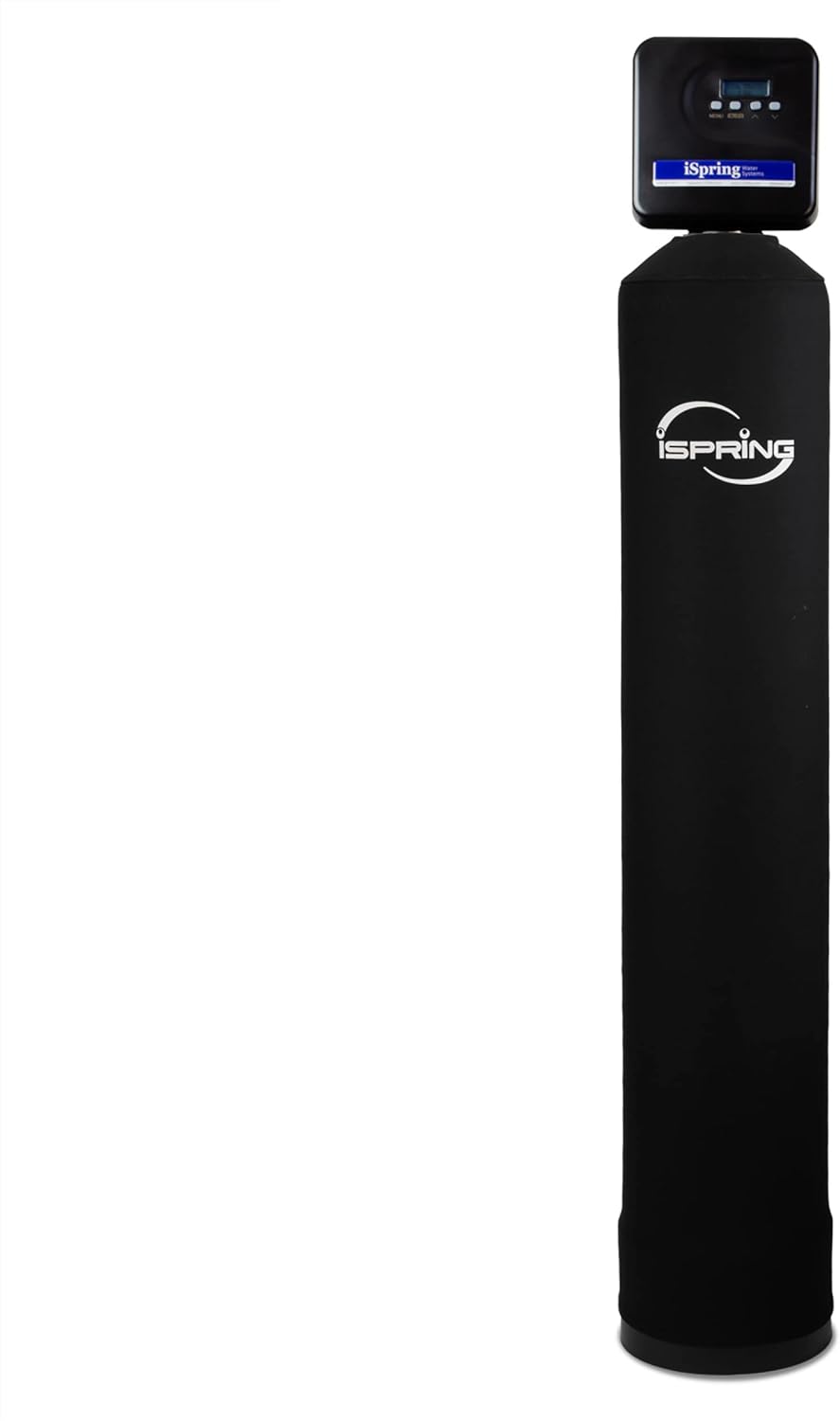
iSpring Iron & Manganese Whole House Water Filtration System
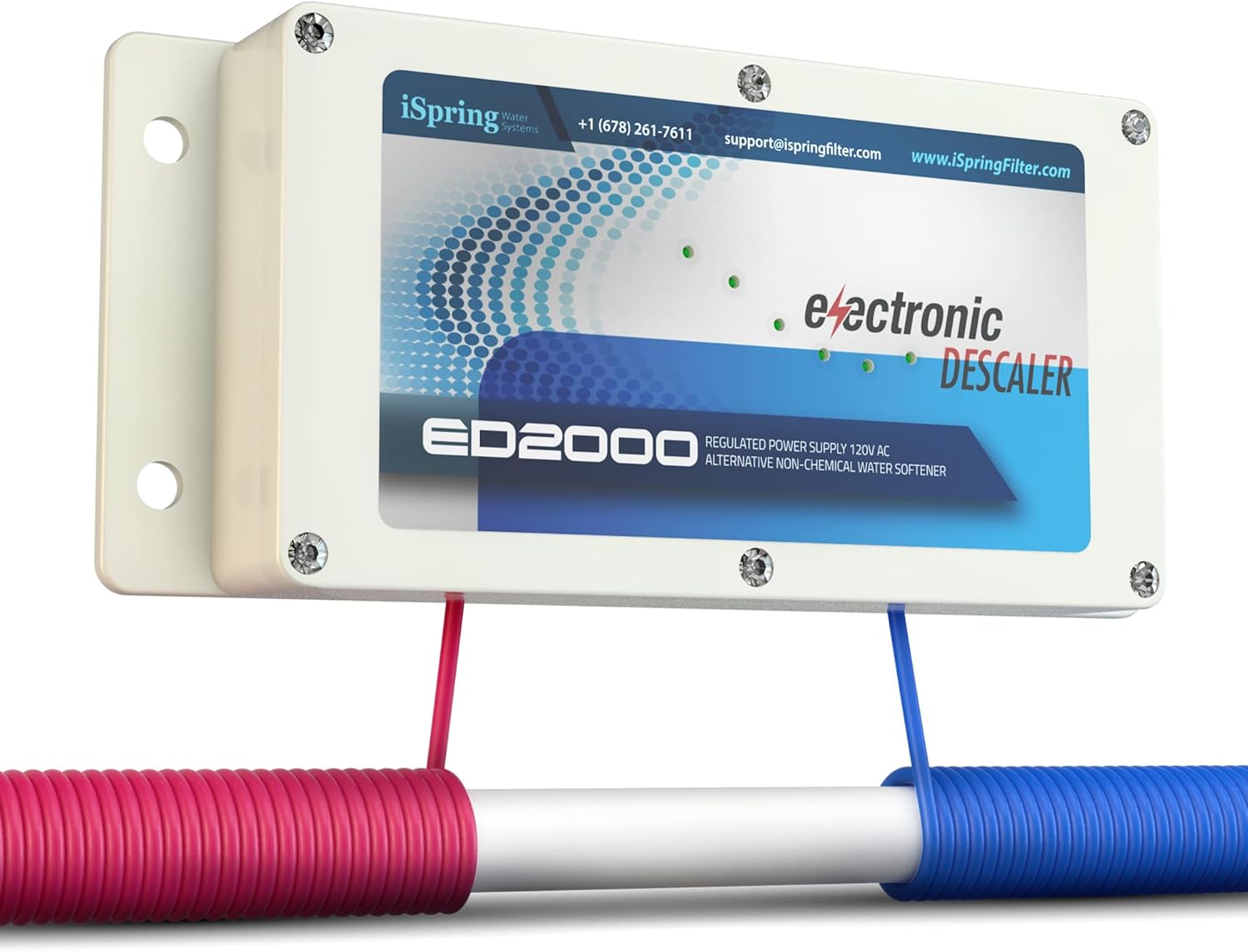
If your test strip shows iron over 0.3 ppm or you see orange staining in toilet tanks, do not rely on the softener alone — the 5600SXT will burn through salt trying to regenerate iron-fouled resin. The iSpring iron and manganese unit oxidizes ferrous iron upstream of the softener and dumps it through a backwash cycle. It is the right call for nearly any mobile home on a private well. View the iSpring iron and manganese system on Amazon.
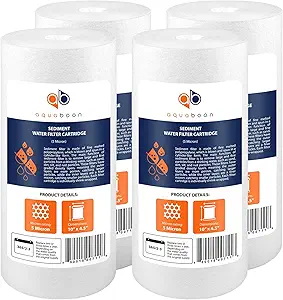
Aquaboon 5 Micron 10x4.5 Well Water Sediment Filter (4-Pack)
If you already own a Big Blue housing, just buy cartridges. The Aquaboon 5-micron 10"x4.5" wound polypropylene cartridges fit standard Pentek and Culligan housings and are sized correctly for the flow the 5600SXT expects (the valve flows about 27 GPM at peak). A four-pack gets you a year of changes on most mobile home well setups. See the Aquaboon 5-micron 4-pack on Amazon.
Aquasana Whole House Well Water Filter (500K Gallons, UV+Carbon+KDF)
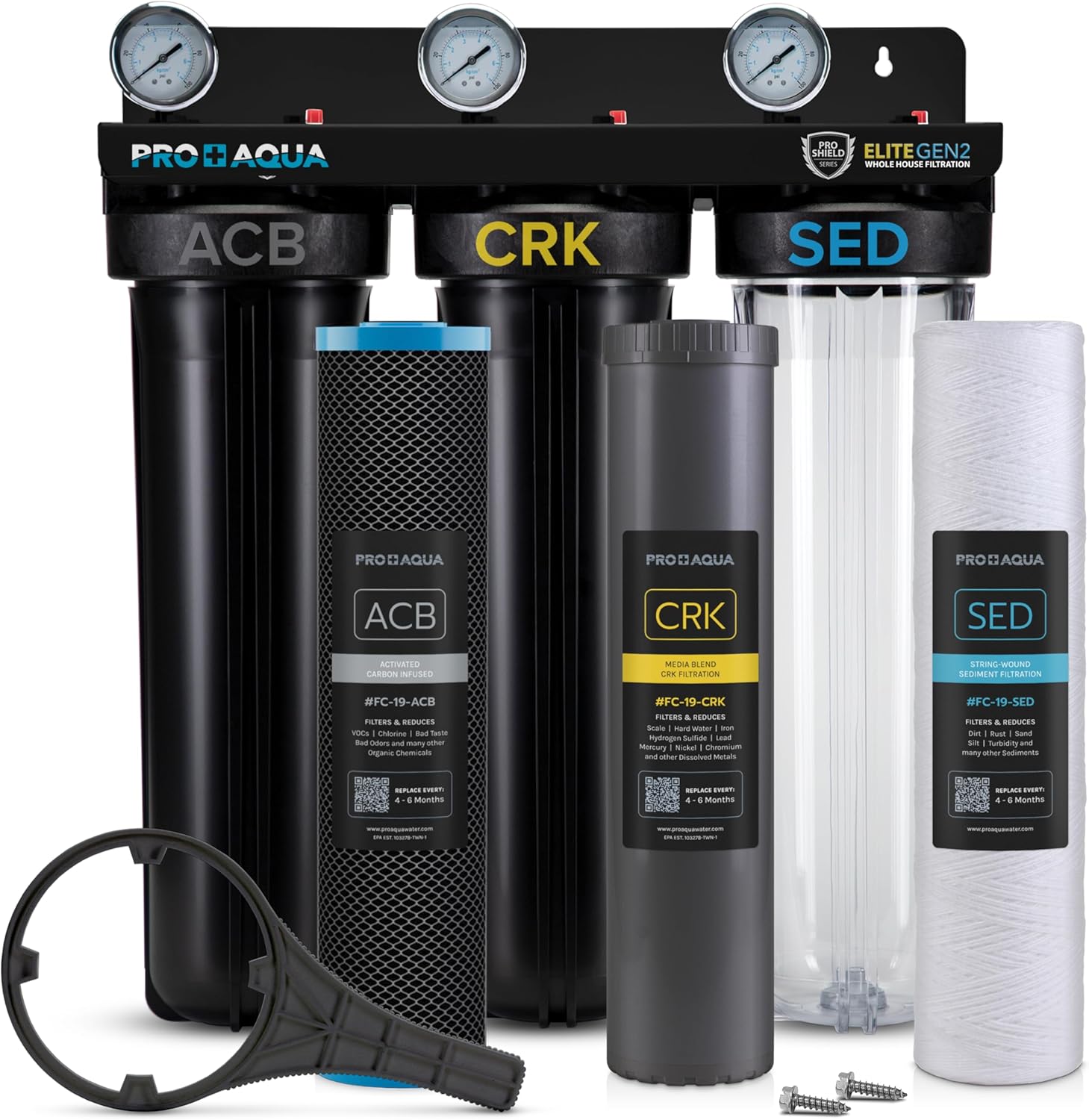
For mobile homes on shallow wells with bacterial risk, the Aquasana 500K-gallon well system adds UV disinfection upstream of the 5600SXT. It is overkill for city water but a smart pairing when you are already opening the belly board for a softener install. View the Aquasana well water filter on Amazon.
HQUA WF3-01 3-Stage Whole House Water Filtration System
Budget pick. The HQUA WF3-01 covers sediment, carbon block, and CTO stages and ships with 1" stainless brackets that mount cleanly on the same wall as the 5600SXT head. Check the HQUA WF3-01 on Amazon.
Comparison: Pre-Filters for a Mobile Home 5600SXT Install
| Pre-Filter | Best For | Stages | Cartridge Life | Footprint |
|---|---|---|---|---|
| Express Water 3-Stage | City + light well water | Sediment / KDF / Carbon | ~12 months | 30" wide bracket |
| iSpring Iron & Manganese | Iron-heavy wells | Oxidation media | 5+ years media | Tall, needs 60" clearance |
| Aquasana 500K UV | Shallow wells, bacteria risk | Sediment / Carbon / KDF / UV | ~12 months | Wide, needs outlet |
| HQUA WF3-01 | Budget builds | Sediment / Carbon / CTO | ~6-9 months | Compact 24" |
| Aquaboon 4-Pack | Existing Big Blue housings | 5-micron sediment only | 3 months each | N/A (cartridge) |
Step 4: Route the Drain and Brine Overflow Lines
This is the most-skipped step on mobile home installs. The 5600SXT discharges roughly 25 gallons of brine waste per regeneration through a 1/2" drain line. You cannot dump that into the kitchen sink P-trap like you might in a basement install — the belly board run lets you punch directly through to an outside air gap. Drill a 1" hole through the rim joist and belly wrap, push a 5/8" drain line through, terminate with a proper air gap to a French drain or yard daylight point at least 10 feet from the foundation skirting. Seal the penetration with expanding foam and belly tape so rodents do not follow the warm pipe inside.

The brine tank overflow line is gravity-fed, so it has to slope downhill the entire run. If your brine tank sits inside the utility closet, you may need to elevate it on a 4" platform to get drop into the daylight termination.
Step 5: Program the 5600SXT for Mobile Home Use
Default programming assumes a four-person household at 60-grain hardness. For mobile homes, two adjustments matter: set the day override to 4 days max (mobile home plumbing trunks have less total volume, so brine sits in resin longer between cycles), and set regen time to 2:00 a.m. instead of the 2:00 a.m. factory default only if your well pump can handle 3 GPM continuous for 90 minutes. Older 1/2 HP pumps cannot, so move regen to 3:00 a.m. when no one is showering.
Step 6: Reseal the Belly Board
This is where the install either lasts 15 years or freezes the first January. Push R-19 batt back into the cavity around the new risers, lap the original belly board flap closed, and seal every seam with 3M 8067 or aluminum-faced belly tape. Do not use duct tape — it dries out and falls off within two summers under a mobile home.
Related Reading
For more mobile home water system guides, see our walkthroughs on Fleck 5600SXT vs Iron Pro 2 for well water, sizing a water softener for a single-wide, and insulating mobile home water lines against freeze.
Frequently Asked Questions
Can I install a Fleck 5600SXT under the mobile home instead of in the closet?
No. The 5600SXT control head is not freeze-rated and the electronic timer board fails below 35°F. Even with belly board wrap and heat tape, the underbelly will drop below freezing in most US climates. Always mount the head and tank upstairs in conditioned space — only the trunk-line tap goes through the belly.
What size softener do I need for a single-wide mobile home?
A 32,000-grain 9x48 tank is plenty for a two-person single-wide on moderately hard water (10-20 gpg). Step up to a 48,000-grain 10x54 if you are on well water above 20 gpg or have a family of four. The 5600SXT valve handles both tank sizes without reprogramming changes.
Do I need a plumbing permit to install a softener in a mobile home?
In most US jurisdictions in 2026, manufactured home plumbing modifications require a permit if you are cutting into the trunk line or adding a drain penetration through the belly board. Park-model and HUD-tagged homes in licensed mobile home parks often have additional park rules. Check with your local building department before cutting the underbelly.
How do I prevent the brine tank from freezing in winter?
Keep the brine tank inside conditioned space — never in the skirted underbelly or an unheated utility shed. If you must place it in a vented utility closet, wrap the tank in an insulating jacket and run a thermostatic heat cable on the brine draw line. Salt slurry freezes at about 20°F.
Can I use SharkBite fittings on the 5600SXT bypass connections?
Yes, push-fit fittings are code-approved for the cold-line transitions under the mobile home and at the riser. However, do not use SharkBite directly on the 1" NPT bypass ports of the valve itself — use threaded brass adapters with PTFE tape there, since the bypass sees thermal cycling during regeneration that can loosen push-fit O-rings over time.
What pre-treatment do I need if my mobile home is on a private well?
At minimum, install a 5-micron sediment filter ahead of the softener. If iron exceeds 0.3 ppm, add a dedicated iron filter like the iSpring system. If you have any coliform history, add UV. The 5600SXT alone is not a water treatment system — it is a hardness exchanger and needs clean feed water to last.
How long does a Fleck 5600SXT installation take in a mobile home?
Plan on a full weekend for a first-time DIY install. The belly board work alone — cutting access, routing the drain through the rim joist, and resealing — takes 4-6 hours. Plumbing the bypass and setting the tank takes another 3-4 hours. Add 2 hours for programming and the initial regeneration cycle before the system is in service.
Key Takeaways
- Choosing the right install fleck 5600sxt in mobile home belly board plumbing means matching capacity and output ports to your actual devices
- Always check actual watt-hours (Wh), not just watts — runtime depends on Wh, not peak output
- Also covers: fleck 5600sxt mobile home installation
- Also covers: manufactured home water softener install
- Also covers: belly board plumbing softener hookup
- Compare price-per-Wh across models to find the best value for your budget