To install fleck 5600sxt with radiant floor heating, tee the softener into the cold main downstream of the pressure reducing valve but upstream of any branch feeding the boiler's automatic fill or radiant loop makeup line, then add a dedicated bypass and a check valve so softened water cannot back-feed the closed-loop heating circuit. Radiant systems are closed loops that should run on a separate makeup feed (often through a backflow preventer and PRV), so the softener treats domestic hot and cold water without continuously cycling salty regen water through your floor tubing. Get the loop separation right, and the Fleck 5600SXT will protect fixtures and water heaters without ever touching the glycol or PEX manifold side of the house.
Why Radiant Floor Heating Changes a Fleck 5600SXT Install
A standard whole-house softener install assumes one cold trunk line feeds everything: water heater, fixtures, hose bibs, and sometimes a hydronic makeup valve. With radiant floor heating, that hydronic makeup line is the problem. The Fleck 5600SXT regenerates by pulling brine through the resin tank, then flushing the system to drain. During that 90-minute cycle, hardness ions and trace sodium move through the head. If your boiler's auto-fill valve happens to open during regeneration—because a zone bled air or a PEX joint weeps—it can draw partially treated or even brine-tinted water into the closed heating loop. Over time, sodium accumulates in a sealed hydronic loop and accelerates corrosion of cast iron circulators, brass manifold bodies, and the boiler's heat exchanger.
When shopping for install fleck 5600sxt with radiant floor heating, it pays to compare specs, capacity, and real-world runtime before committing.
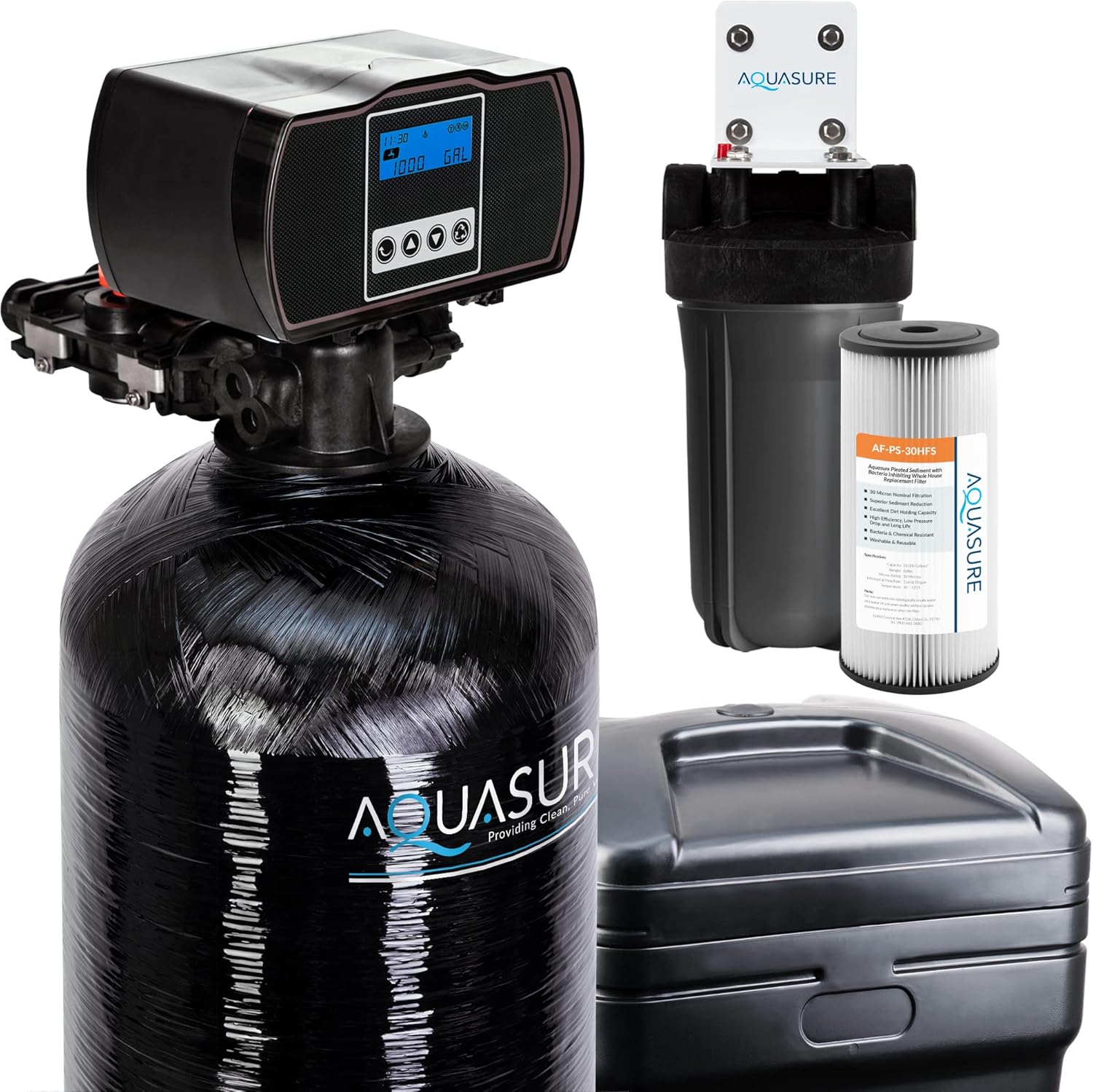

The fix is not exotic: you simply ensure the radiant makeup line is teed off the hard cold side, upstream of the softener's inlet, while every other domestic use comes off the soft side. This is the foundation for any successful plan to install fleck 5600sxt with radiant floor heating in the same mechanical room.
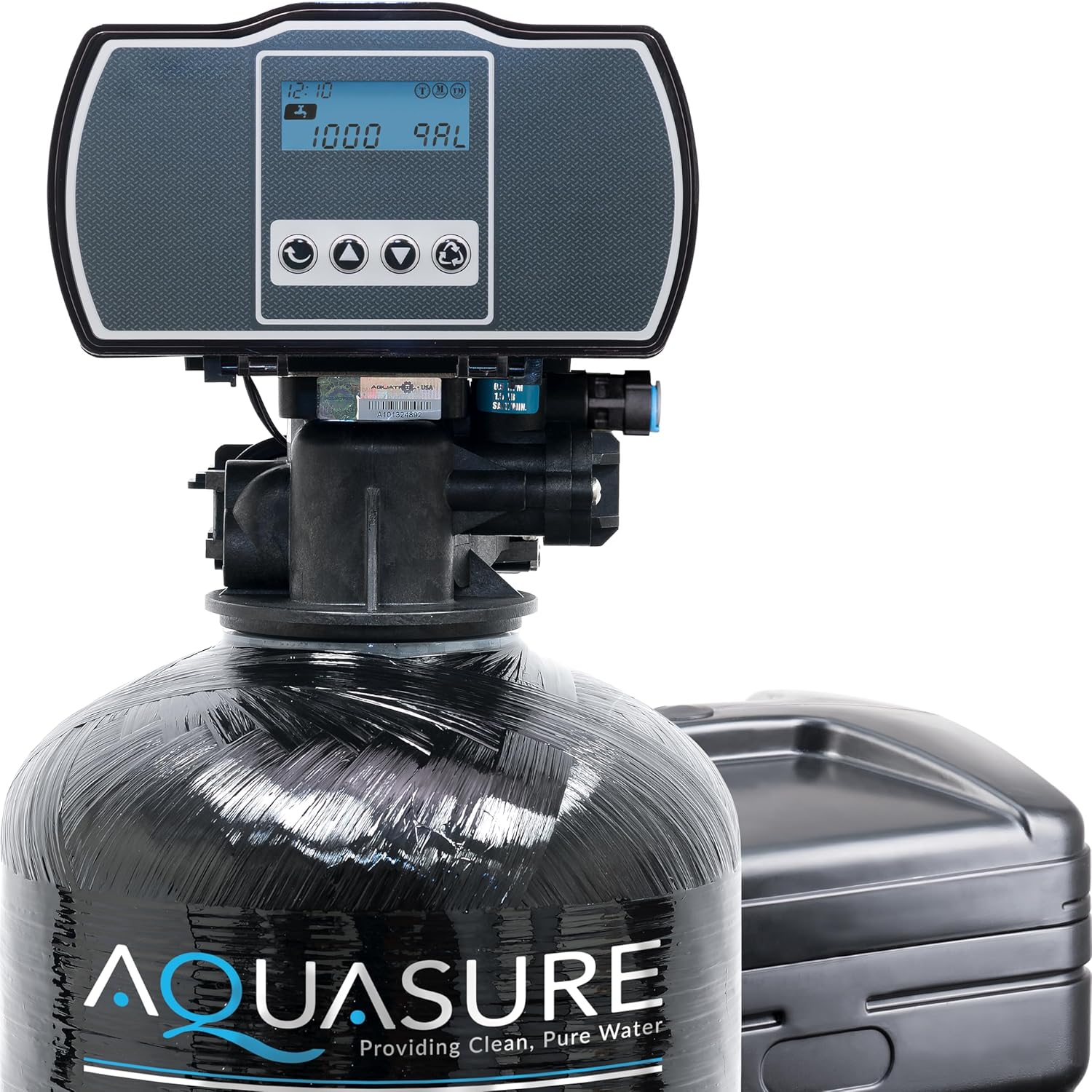
Plumbing Layout: Where the Softener Goes
Walk the main from the meter or well pressure tank inward. The order should be:
- Main shutoff and pressure gauge
- Whole-house sediment pre-filter (critical on well water)
- Tee for radiant boiler makeup line — branches off BEFORE the softener
- Fleck 5600SXT inlet, with bypass valve
- Soft water trunk feeding water heater, fixtures, dishwasher, and laundry
- Optional hose bib bypass for outdoor spigots
Confirm the radiant tee includes a backflow preventer (most codes require an RPZ or dual check) and an isolation ball valve. Label it. A homeowner three years from now should be able to see at a glance that the heating loop is fed from hard water by design, not by accident.
Pre-Filtration: Protect the Resin Bed
The Fleck 5600SXT's resin is sensitive to sediment, iron, and chlorine. Radiant homes often run on wells (rural new construction is the largest radiant market), so iron and sediment are common. A whole-house pre-filter extends resin life from 7 years to 12+ and prevents fouling that would force premature regenerations—which matter doubly when you've got a heating loop sharing the same mechanical room.
Express Water 3-Stage Whole House Water Filter System
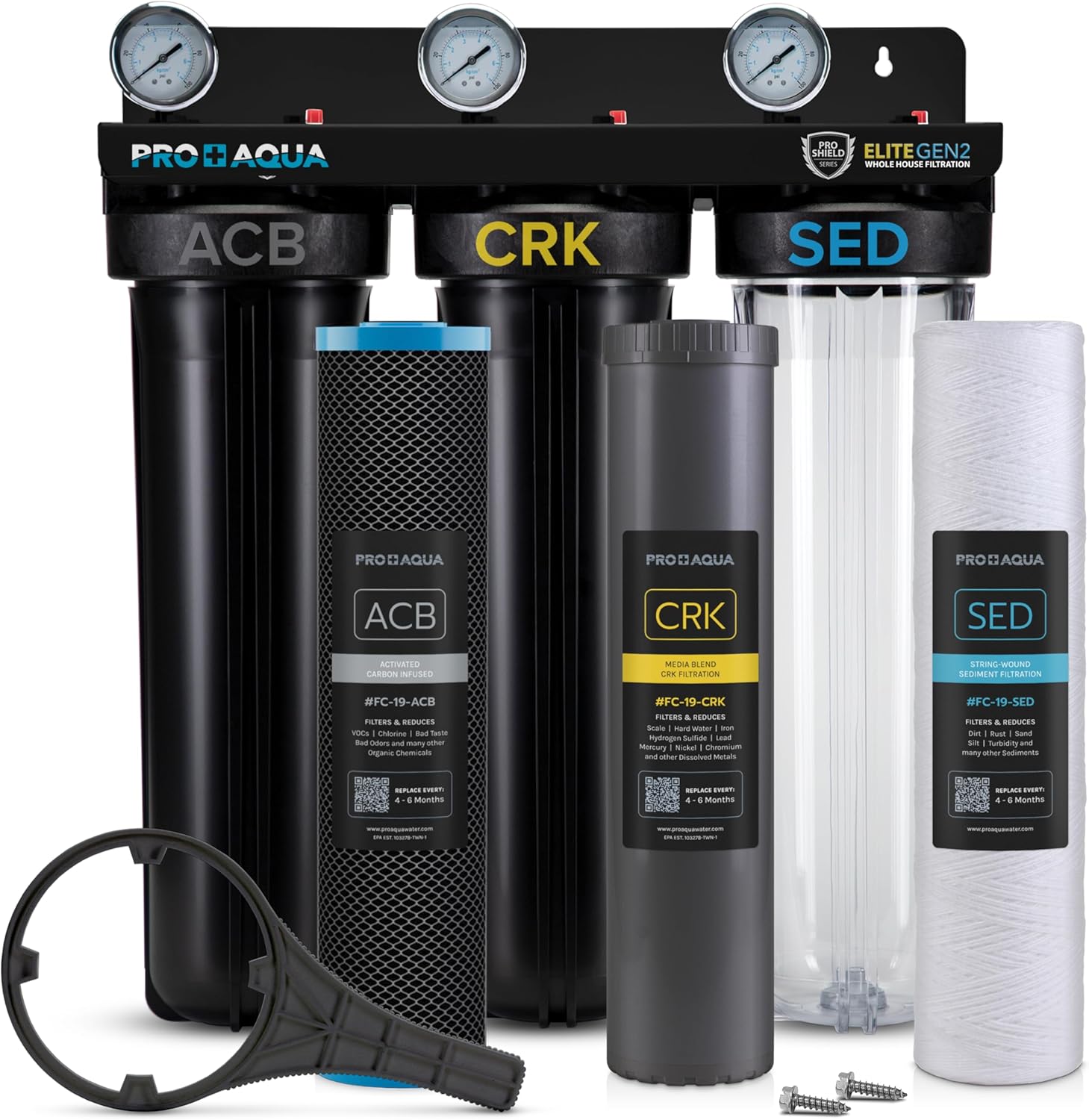
The three-stage sediment/carbon/KDF stack is the workhorse pre-filter for a Fleck 5600SXT install. The 1-inch ports won't bottleneck flow to your radiant manifold or domestic fixtures, and the clear first-stage housing lets you watch sediment loading without shutting the system down. Pair it directly upstream of the softener bypass. Check current price on Amazon.
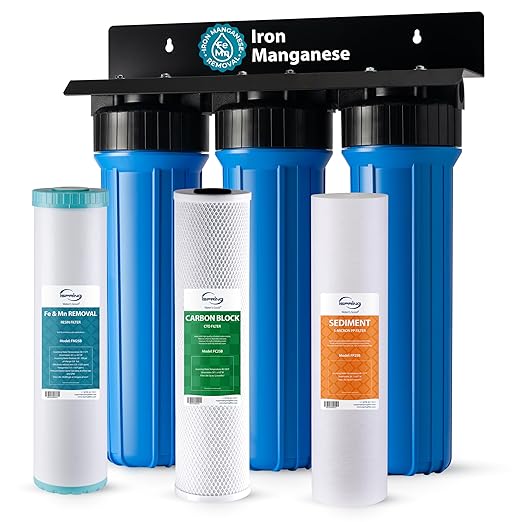
iSpring Iron & Manganese Whole House Water Filtration System
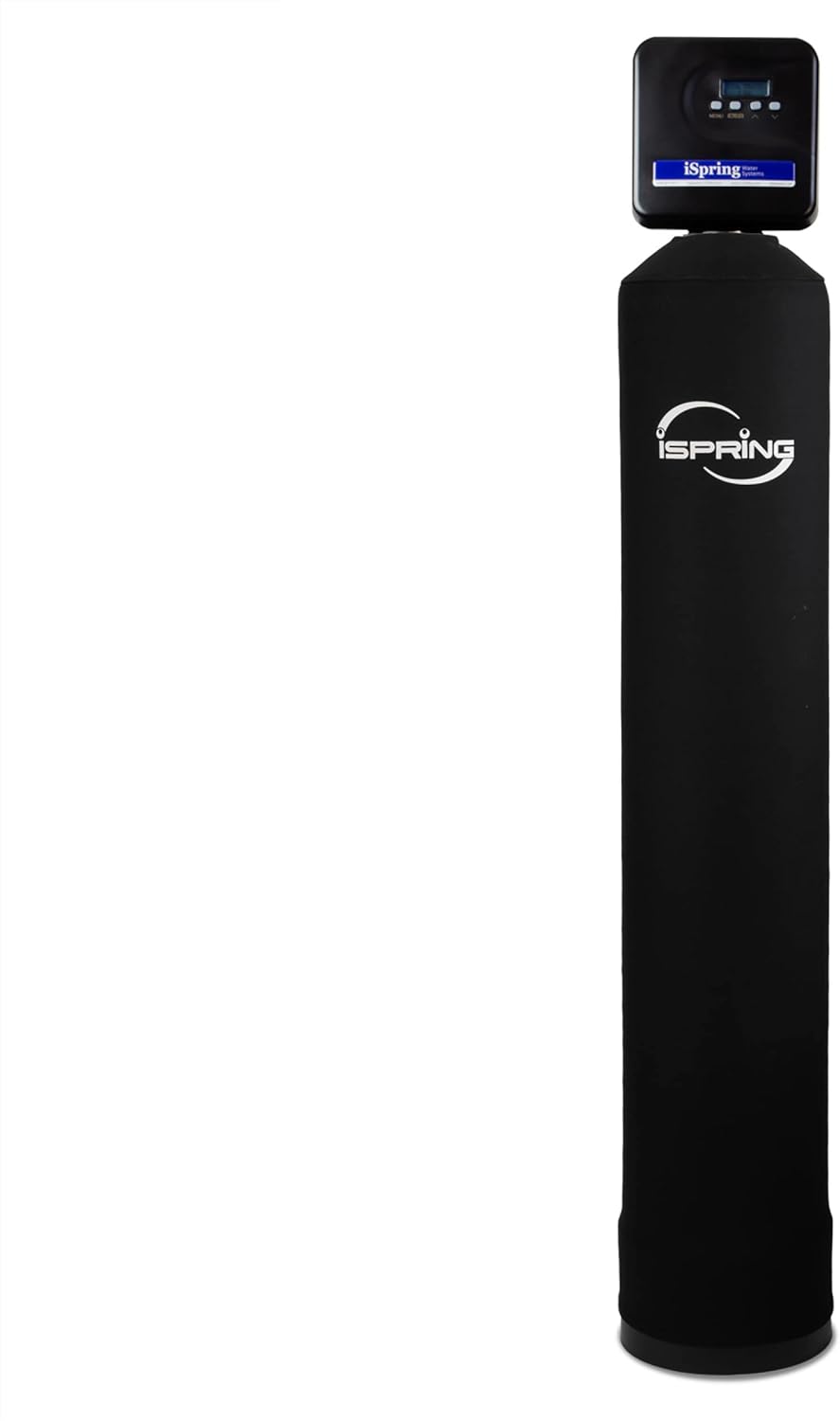
If your well shows iron above 0.3 ppm or any manganese, the resin in a 5600SXT will foul within months. The iSpring iron and manganese system uses oxidation and catalytic media to drop iron before it ever reaches the softener head, which also keeps rust from staining radiant manifold fittings during commissioning fills. View on Amazon.
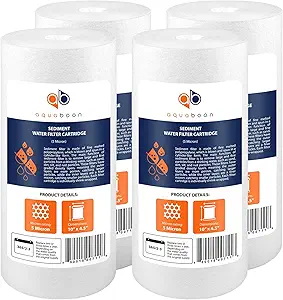
Aquaboon 5 Micron 10x4.5 Well Water Sediment Filter (4-Pack)
Standard 10x4.5 sediment cartridges that fit the Express Water housings (and most Big Blue clones). A four-pack covers a year of filter changes for a typical four-bedroom radiant home. Stock them before commissioning the softener—you'll burn through the first cartridge during initial flushing. See the 4-pack on Amazon.
Aquasana Whole House Well Water Filter, 500K Gallons, UV+Carbon+KDF
For radiant homes on rural wells with bacterial concerns, the Aquasana 500K combines UV, carbon, and KDF in one cabinet. It's a heavier capital investment but eliminates the need for a separate UV reactor between sediment and softener. Check it on Amazon.
HQUA WF3-01 3-Stage Whole House Water Filtration System
A budget-friendly alternative to the Express Water unit with similar three-stage architecture. Suitable for municipal-water radiant homes where iron isn't a concern and you just need sediment and chlorine knockdown ahead of the softener. View HQUA on Amazon.
Pre-Filter Comparison for Radiant + Fleck 5600SXT Installs
| Pre-Filter | Best For | Stages | Port Size | Notes |
|---|---|---|---|---|
| Express Water 3-Stage | Municipal or light well | Sediment + Carbon + KDF | 1" | Clear housing, easy monitoring |
| iSpring Iron & Manganese | Iron-heavy well water | Oxidation + catalytic | 1" | Required when iron > 0.3 ppm |
| Aquasana 500K UV | Rural well, bacterial risk | Sediment + Carbon + KDF + UV | 1" | Includes UV — saves a stage |
| HQUA WF3-01 | Budget municipal install | Sediment + Carbon + Carbon | 1" | Lowest cost, no KDF |
| Aquaboon 5-Micron (4pk) | Cartridge replacement | Sediment only | 10x4.5" | Annual stock for any housing |
Drain Line Routing Around Radiant Manifolds
Radiant mechanical rooms are crowded. Between the boiler, expansion tank, air separator, manifold cabinet, and circulators, you may have less than 24 inches of clear wall for the Fleck 5600SXT brine tank and resin tank. Two non-negotiables:

- Drain line must have an air gap. Run the 1/2-inch drain line from the 5600SXT control head to a floor drain or laundry standpipe with a visible air gap. Never tie it into hydronic piping or the boiler condensate drain.
- Brine line cannot share a chase with PEX heating loops. If you've got PEX-AL-PEX feeding manifolds along the ceiling, route the 3/8-inch brine line on its own tray. A pinhole leak in a brine line dripping onto warm PEX accelerates oxygen ingress and corrosion.
Programming the 5600SXT Around Heating Cycles
The Fleck 5600SXT defaults to a 2 a.m. regeneration. That's fine in a non-radiant home, but radiant systems often run setback recovery cycles between 4 a.m. and 6 a.m., when zone calls trigger the circulator and any pressure drop can pull the auto-fill open. Move regeneration to 1 a.m. or even midnight so the softener is finished and back in service before the heating system wakes up. On the 5600SXT, hold SET CLOCK, dial in 12:00 AM as the regen time, and confirm DAYS OVERRIDE is set per your water-use calculation.
Boiler Loop Isolation: The Backflow Preventer Question
Most modern hydronic codes require a backflow preventer on the makeup line between the domestic supply and the closed heating loop. With a softener in the picture, this becomes mandatory regardless of code — softened water sitting in a stagnant boiler loop will continue to swap sodium for trace minerals on any galvanized fitting, and a failed backflow could siphon glycol into your drinking supply. Install or verify a reduced-pressure zone (RPZ) device or dual-check backflow on the heating side, tested annually.
For more on isolation valves in mixed-system homes, see our guide to bypass valve setup for whole-house softeners.
Glycol Considerations
If your radiant system runs propylene glycol (common in unconditioned slab edges, garages, or vacation homes), make absolutely sure no softened water enters the loop. Glycol concentration is calibrated by the installer for freeze protection; even a half-gallon of softened makeup dilutes it. Soft water also strips inhibitors faster than hard water. The hard-water tee upstream of the softener is your insurance policy here.
Commissioning Order
When you fire everything up:
- Pressurize the cold trunk first with the softener in bypass.
- Flush the sediment pre-filter for 5 minutes to drain.
- Open the radiant makeup isolation valve and verify the boiler loop holds 12–18 psi.
- Take the softener out of bypass, run a manual regeneration, and discharge to drain. Watch for any pressure drop on the boiler gauge — if it falls, your hard-water tee is on the wrong side of the softener.
- Test soft water at the kitchen faucet after the cycle completes.
Common Mistakes to Avoid
- Teeing the boiler makeup off the soft side. This is the single most common error. Re-plumb it.
- Skipping the sediment pre-filter. Saves $80 today, costs $700 in resin and a service call in three years.
- Putting the drain line above the control head. The 5600SXT can lift drain water up to 8 feet, but the brine line cannot lift more than 4 feet of head. Keep brine tank floor level with or below the resin tank.
- Forgetting the air gap. Code violation and a contamination risk.
If you're combining the softener with a reverse osmosis drinking system, check our breakdown on RO installation downstream of a softener.
Sizing the 5600SXT for a Radiant Home
Radiant homes tend to be tightly built, which means lower occupancy per square foot and lower domestic water demand than the square footage suggests. A 48,000-grain Fleck 5600SXT handles four people at 15 grains per gallon hardness with regenerations every 10 days. Don't oversize — a softener that regenerates less than every 14 days suffers resin channeling and biofilm buildup. For sizing logic and worksheet examples, see our Fleck sizing guide.
Frequently Asked Questions
Can soft water damage a radiant floor heating system?
Soft water in a closed hydronic loop accelerates corrosion of brass and cast iron components because the sodium left behind after ion exchange is mildly aggressive on dissimilar metals. As long as your radiant makeup line tees off the hard-water side upstream of the Fleck 5600SXT — and you have a working backflow preventer — soft water never enters the loop and you're fine.
Should the boiler makeup line be on softened or hard water?
Hard water. Always. The boiler loop is sealed and runs on the same gallon of water for years, so hardness scaling is a one-time event that happens during initial fill and is negligible. Sodium loading, on the other hand, never stops. Run the radiant makeup off the hard cold trunk through a backflow preventer.
What size Fleck 5600SXT do I need for a 3,000 sq ft radiant home?
Square footage matters less than occupancy and hardness. Four people at 15 grains/gallon hardness need a 48,000-grain unit. Six people or hardness above 20 grains/gallon push you to a 64,000-grain. The radiant system itself doesn't add to demand because it's not pulled from the softener.
Does a Fleck 5600SXT need a separate sediment filter when used with radiant heating?
Yes, especially on well water. The pre-filter protects the softener resin from iron and silt, and indirectly protects the radiant loop because cleaner makeup water during commissioning means less crud reaches the boiler heat exchanger. A 5-micron Big Blue sediment housing ahead of the softener is the minimum.
Where should the brine tank sit relative to the boiler?
Keep at least 36 inches of clearance between the brine tank and any hot surfaces — boiler jacket, indirect water heater, or insulated supply piping. Brine tanks should never sit in a warm corner because evaporation concentrates the brine and triggers salt bridging, which then causes incomplete regenerations and hardness leakage.
Can I run the softener drain line into the boiler condensate drain?
No. Softener regeneration discharge is salty and at full water pressure; condensate drains are gravity and acidic. Mixing them will overflow the condensate neutralizer and may push brine into spaces it shouldn't be. Always run the softener drain to a dedicated air-gapped floor drain or laundry standpipe.
How often should I regenerate the 5600SXT in a radiant home?
Set the 5600SXT for metered regeneration based on actual gallons used, not a fixed schedule. The radiant system has no impact on this number because it's plumbed off the hard line. Most four-person households land between 7 and 12 days between regenerations with proper sizing.
Key Takeaways
- Choosing the right install fleck 5600sxt with radiant floor heating means matching capacity and output ports to your actual devices
- Always check actual watt-hours (Wh), not just watts — runtime depends on Wh, not peak output
- Also covers: fleck 5600sxt radiant heat loop
- Also covers: softener install radiant floor home
- Also covers: fleck 5600sxt hydronic heating bypass
- Compare price-per-Wh across models to find the best value for your budget