To install Aquasana Rhino with UV sterilizer well water already in place, you almost always want the UV unit to remain the last stage before the cold-water manifold, and the Rhino to sit upstream of it. The sequence that works in nearly every 2026 well-house retrofit is: pressure tank → 20” sediment pre-filter (5–1 micron stepdown) → iron/manganese stage if needed → Aquasana Rhino → existing UV sterilizer → house. This order protects the UV quartz sleeve from fouling, keeps the Rhino's KDF/carbon bed from being scoured by sediment, and lets you keep the UV lamp you already paid for instead of replacing it with the bundled Aquasana UV.
Why plumbing order matters when you install Aquasana Rhino with UV sterilizer well water setups
The UV chamber sterilizes microbes by exposing them to 254 nm light. Any turbidity, iron staining, or hardness scale on the quartz sleeve drops the lamp's effective dose below the 40 mJ/cm² NSF 55 Class A threshold. That is the entire reason every well-water UV manufacturer specifies a 5-micron absolute pre-filter and water clarity below 1 NTU. The Aquasana Rhino's carbon and KDF media do most of that polishing for you, removing chlorine (if your shock-chlorination cycles leave residual), VOCs, sulfur, and trace heavy metals. Put the Rhino downstream of the UV and you are sterilizing water and then dragging it through a tank that can re-introduce bacteria during stagnant overnight periods.
The other half of the install Aquasana Rhino with UV sterilizer well water decision is flow rate. The standard Rhino EQ-WELL-UV is rated at 7 GPM. Most residential UV chambers (Viqua, HQUA, Bluonics 12–55 W class) are rated 8–12 GPM. Size your sediment pre-filter housing to whichever component has the lower rated flow so you never starve the UV or push the Rhino past its contact-time spec.
What you need before touching a pipe
- A current well water test (total coliform, E. coli, iron, manganese, hardness, pH, TDS, hydrogen sulfide). Without it you are guessing at media.
- At least 4–5 feet of horizontal wall space downstream of your pressure tank.
- Two ball-valve bypass loops — one around the Rhino, one around the UV.
- Unions on every threaded connection so you can service the UV sleeve annually without cutting copper.
- A dedicated 15 A GFCI outlet for the UV ballast, ideally on its own circuit so a tripped breaker upstairs does not silently kill your disinfection.
Step-by-step retrofit sequence
- Shut down the well pump at the breaker and open the lowest fixture in the house to relieve system pressure. Confirm the pressure gauge on the tank reads zero before cutting.
- Disconnect the existing UV chamber from its inlet side only. Leave the outlet plumbing to the house in place — you will tie back into it last.
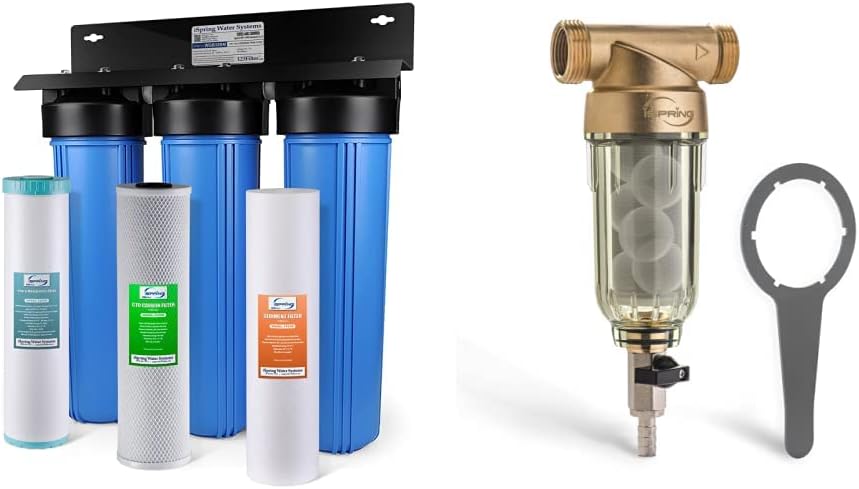
- Install a sediment pre-filter housing immediately after the pressure tank. A 20” Big Blue with a 5-micron pleated cartridge is the workhorse here. If your raw water shows visible turbidity, run a two-stage 20-then-5 micron arrangement.
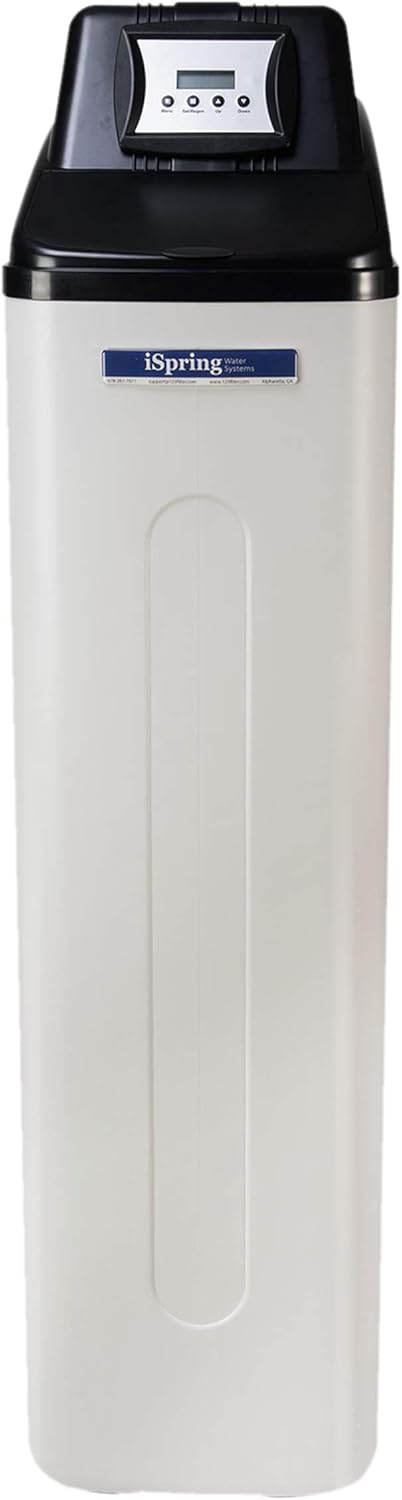
- Mount the Aquasana Rhino tank on a level, load-bearing surface. The 500K-gallon tank is roughly 9” wide x 52” tall and weighs over 60 lb when wet. Use the supplied bracket and plumb the inlet/outlet with 1” fittings, not 3/4”, to preserve flow.
- Add the post-filter housing (sub-micron carbon block) per Aquasana's manual. This is the stage that gives the UV the cleanest possible feed.
- Reconnect the UV inlet to the Rhino post-filter outlet. Use dielectric unions if your UV body is stainless and your Rhino fittings are brass — otherwise you will see galvanic corrosion within 18 months.
- Pressurize slowly. Open the bypass valves first to flush sediment around the Rhino, then close the bypass and let water creep into the Rhino tank from the bottom up. Air-bleed at the post-filter housing.
- Energize the UV lamp and let it warm for 5 minutes before drawing through the house lines. Shock-chlorinate downstream piping with a cup of unscented bleach per 50 ft of plumbing run, flush, then put the system in service.
Recommended products for the retrofit
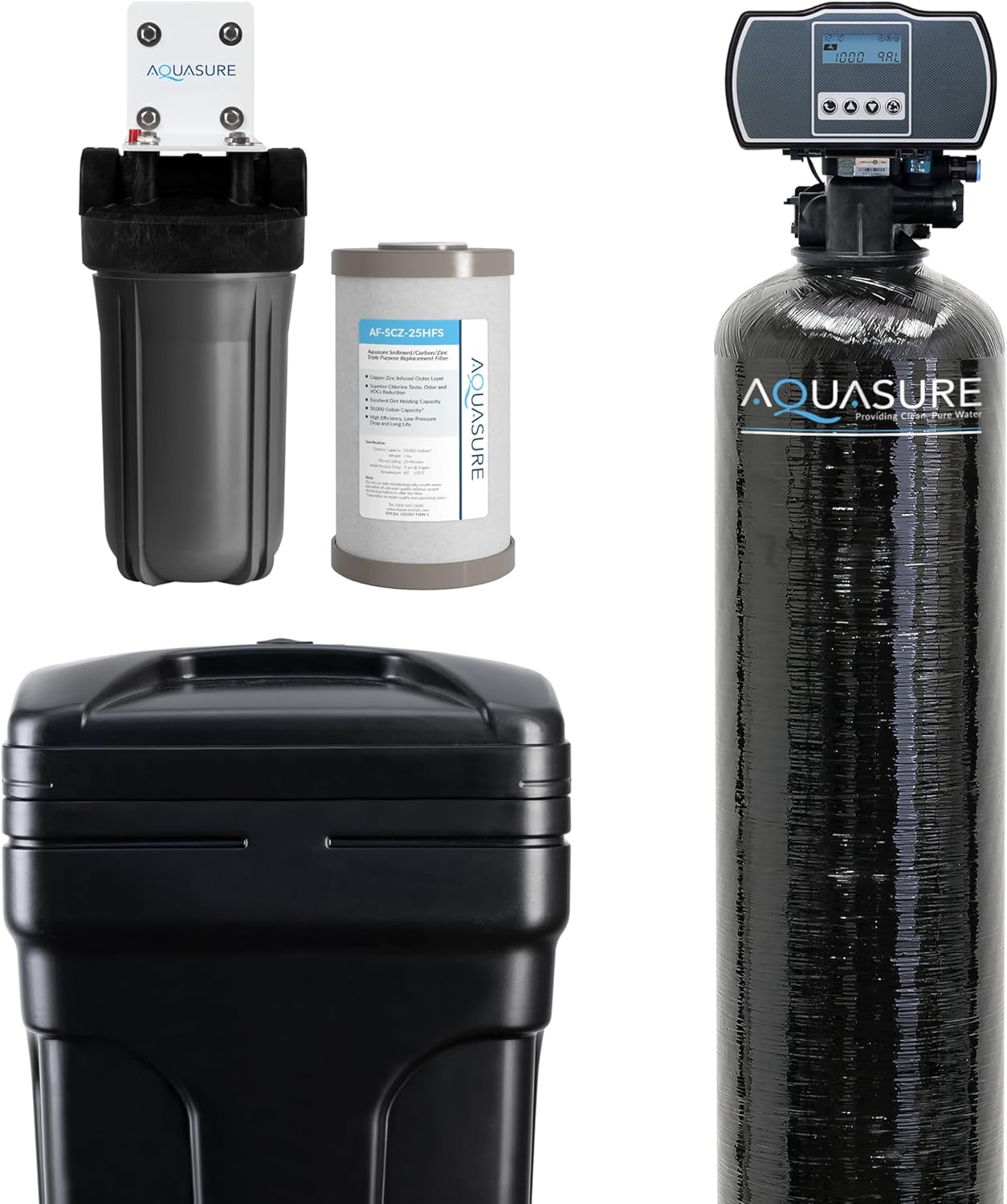
Aquasana Whole House Well Water Filter, 500K Gallons (UV + Carbon + KDF)
This is the Rhino itself. If you are reading this guide you almost certainly already own one or are about to. The 500K-gallon rating translates to roughly five years of use for a typical four-person well household. The bundled UV chamber can simply be left uninstalled or moved into your spare-parts shelf when you keep your existing sterilizer. Check current pricing on Amazon.
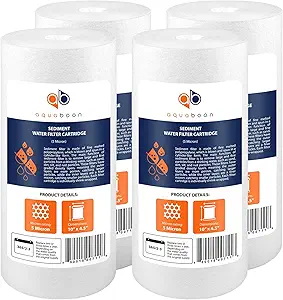
Aquaboon 5 Micron 10x4.5 Well Water Sediment Filter (4-Pack)
If your raw well water carries any silt at all, the Rhino's carbon bed will channel within months without a real pre-filter. The Aquaboon 4-pack of 10x4.5 Big-Blue-format 5-micron cartridges gives you a full year of changes at three-month intervals and costs less than a single replacement from a big-box store. They are the cheapest insurance you will buy for both the Rhino and the UV quartz sleeve. View on Amazon.
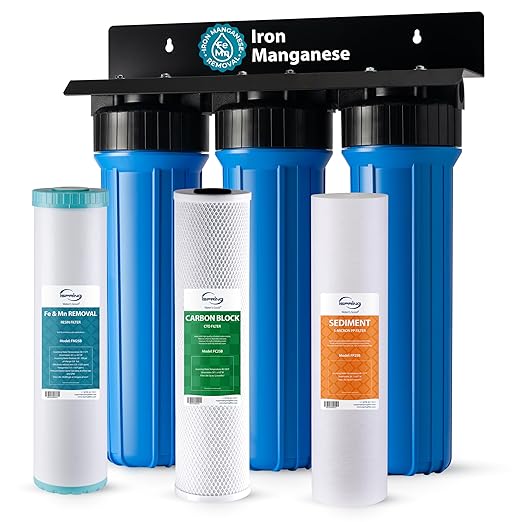
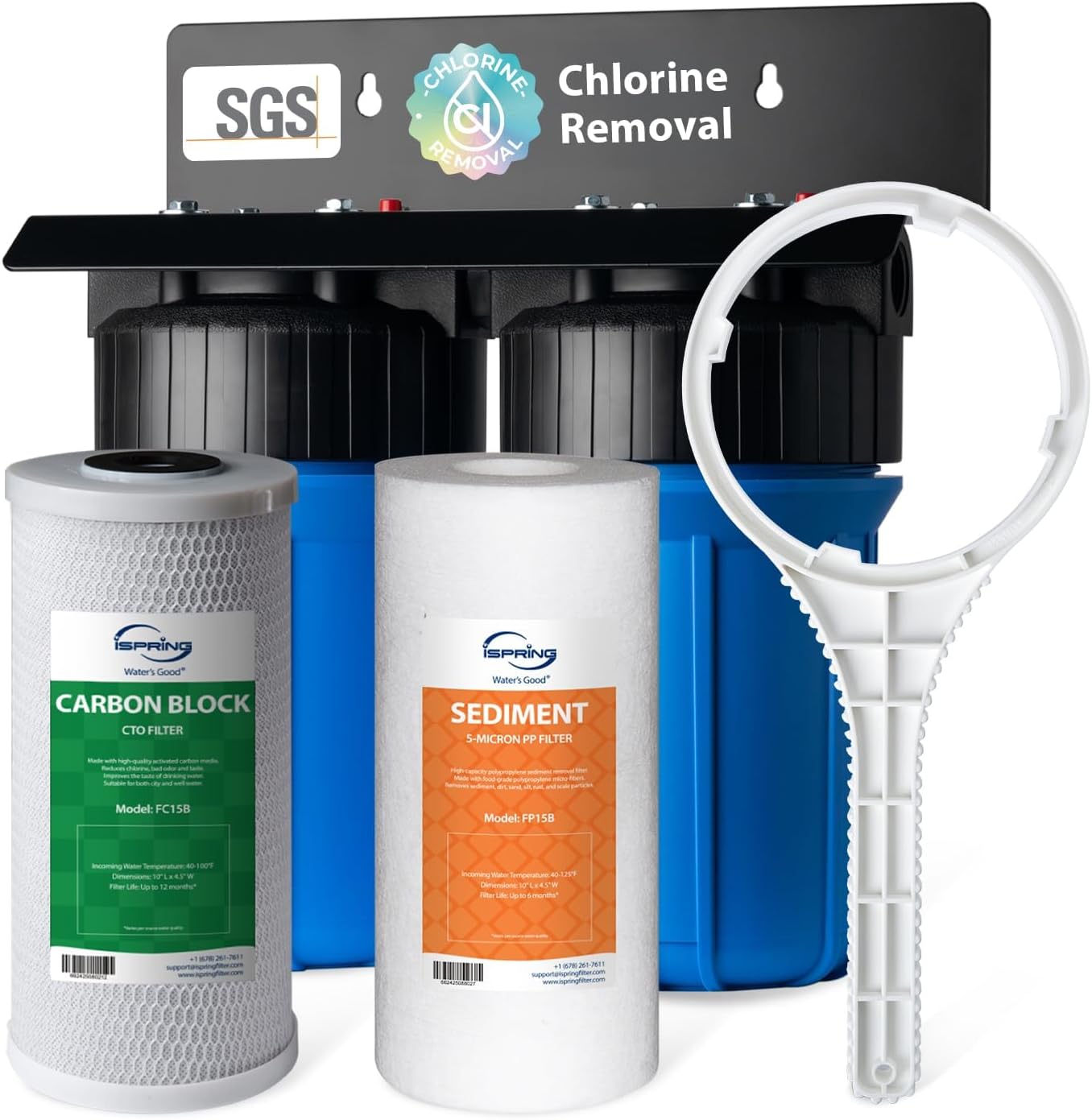
iSpring Iron & Manganese Whole House Water Filtration System
If your water test shows iron above 0.3 ppm or manganese above 0.05 ppm, you need an oxidizing iron stage before the Rhino. Iron will plate out on KDF media and shorten Rhino life dramatically, and it will stain the UV quartz sleeve into uselessness in weeks. The iSpring WGB32BM is the most common drop-in for this slot on private wells. Check it on Amazon.
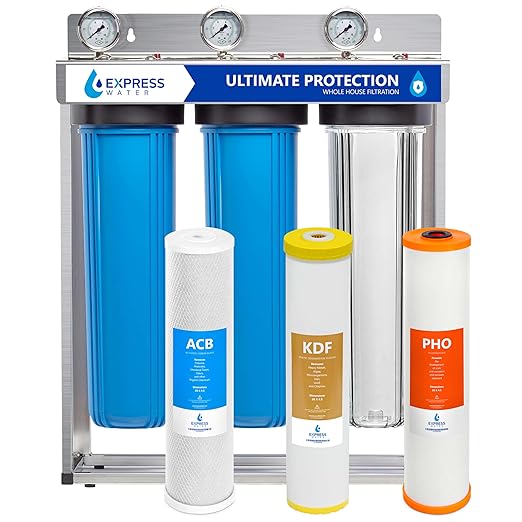
Express Water 3-Stage Whole House Water Filter System
For homeowners whose UV unit is already protected by a sediment housing but who want a beefier dual-stage pre-treatment in front of the Rhino, the Express Water 3-stage adds a sediment, a carbon block, and a KDF stage in transparent housings so you can see when cartridges are exhausted. Useful if your water chemistry is borderline and you want visual feedback. View it on Amazon.
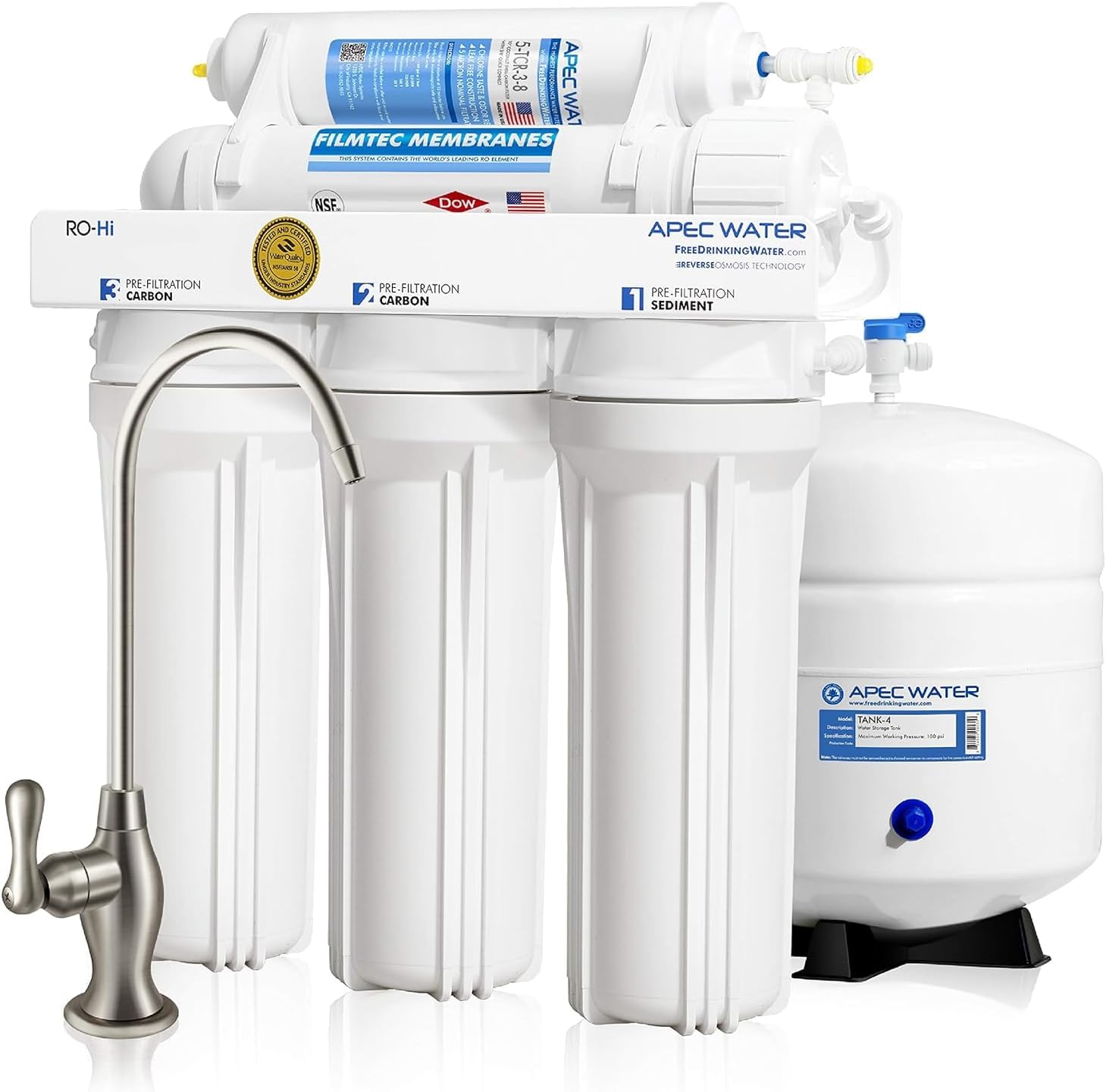
HQUA WF3-01 3-Stage Whole House Water Filtration System
A budget alternative pre-treatment stack. Same 10x4.5 Big Blue cartridge format as the Aquaboon recommendation above, so you can standardize all your spares on one cartridge size. Good choice if you are starting from a bare pressure tank and need housings as well as cartridges. Check on Amazon.
Comparison: pre-treatment stages for a Rhino + UV well install
| Product | Best for | Stages | Cartridge format | Notes |
|---|---|---|---|---|
| Aquaboon 5µm (4-pack) | Sediment-only pre-filter | 1 (cartridge only) | 10 x 4.5” | Pair with a Big Blue housing you already own |
| iSpring Iron & Manganese | Wells with iron > 0.3 ppm | 3 (oxidizing) | Tank + housings | Required before Rhino if iron staining is visible |
| Express Water 3-Stage | Visual cartridge monitoring | 3 (sed + carbon + KDF) | 10 x 4.5” clear | Clear housings show fouling at a glance |
| HQUA WF3-01 | Budget complete pre-treat | 3 (sed + carbon) | 10 x 4.5” | Lowest cost full housing set |
| Aquasana Rhino 500K | Main filtration body | 4 (sed + KDF + carbon + post) | Tank + housings | The system you are installing |
Common mistakes to avoid
Putting the UV first. Tempting because the UV is already plumbed in, but it sterilizes water that the Rhino then drags through 50 lb of carbon. Carbon beds are not sterile environments — you will inoculate the Rhino with whatever survived the lamp and grow a biofilm.
Skipping the post-filter. The Rhino's post sub-micron carbon block is what gives the UV chamber the clarity it needs. Without it, fines from the KDF/carbon bed will coat the quartz sleeve within a few months.
Undersized supply lines. A 7 GPM Rhino plumbed with 3/4” copper from a 1” well line will choke flow and cause pressure-drop complaints at upstairs showers. Use 1” throughout the treatment train and reduce only at the final tee to the house manifold if needed.
No bypass loops. You will need to service the UV sleeve every 12 months and replace the Rhino post-filter every 3 months. Without bypasses you shut down the whole house every service interval.
For more on sizing decisions, see our guides on choosing the right sediment pre-filter for well water, calculating UV sterilizer flow rate for whole-house use, and the Aquasana Rhino vs SpringWell comparison for private wells.
Frequently Asked Questions
Can I install the Aquasana Rhino before or after my existing UV light on a well?
Always before. The Rhino must polish the water (sediment, iron, sulfur, chlorine) so the UV sees clear, low-NTU water. Sterilized water flowing into a carbon tank is also a biofilm risk. Put the Rhino upstream, the UV last.
Do I still need the UV bulb that came with the Aquasana Rhino EQ-WELL-UV bundle?
No, if your existing UV unit is sized for your home's peak flow (usually 10–12 GPM minimum) and is NSF 55 Class A or B certified. Keep it, save the Aquasana lamp as a spare, and skip the duplicate install.
What micron rating should the pre-filter be when running both Rhino and UV?
5 micron absolute is the published minimum for residential UV. If your well runs sandy or pulls fines after a pump cycle, step down with a 20-micron then 5-micron two-stage arrangement to extend cartridge life.
Will the Aquasana Rhino reduce flow to my existing UV sterilizer?
A clean Rhino on 1” plumbing drops 2–3 psi at 7 GPM. A clogged sediment pre-filter, not the Rhino tank, is almost always the culprit when UV flow drops. Change cartridges every 3 months on average wells.
Does the Aquasana Rhino remove bacteria so I can skip UV on my well?
No. The Rhino is not certified for microbiological reduction. Any private well with a positive coliform or E. coli result requires a primary disinfection step — UV, chlorine, or ozone. Keep the UV.
How often do I need to replace the Aquasana Rhino post-filter when feeding a UV unit?
Every 3 months on a typical well, or whenever you see a 5+ psi pressure drop across the housing. The post-filter is the last line of defense for your UV quartz sleeve, so do not stretch this interval.
Can I plumb my iron filter, Rhino, and UV all in one well house with PEX?
Yes, PEX-A with brass crimp fittings is fine for the entire train as long as ambient temperature stays above freezing and the UV chamber inlet/outlet are kept in copper or stainless for the first 12” to handle radiant heat from the lamp ballast.
Key Takeaways
- Choosing the right install Aquasana Rhino with UV sterilizer well water means matching capacity and output ports to your actual devices
- Always check actual watt-hours (Wh), not just watts — runtime depends on Wh, not peak output
- Also covers: Aquasana Rhino UV light placement
- Also covers: Rhino install order UV well
- Also covers: UV sterilizer before or after Rhino
- Compare price-per-Wh across models to find the best value for your budget