If you need to flush Springwell CF1 after construction debris water main work has churned up your supply line, the short answer is: put the CF1 into bypass immediately, run every cold tap in the house until the water is clear, install a 5-micron sediment pre-filter ahead of the unit, then perform the manufacturer's air-cycle backwash before returning the system to service. Skipping the bypass step is the single biggest mistake homeowners make in 2026, because sand, PVC shavings, and pipe-dope slurry will pack into the catalytic carbon bed and permanently reduce flow. The procedure below walks through each stage in order, with the parts and pre-filters that protect your investment.
Why construction debris is uniquely dangerous to the CF1
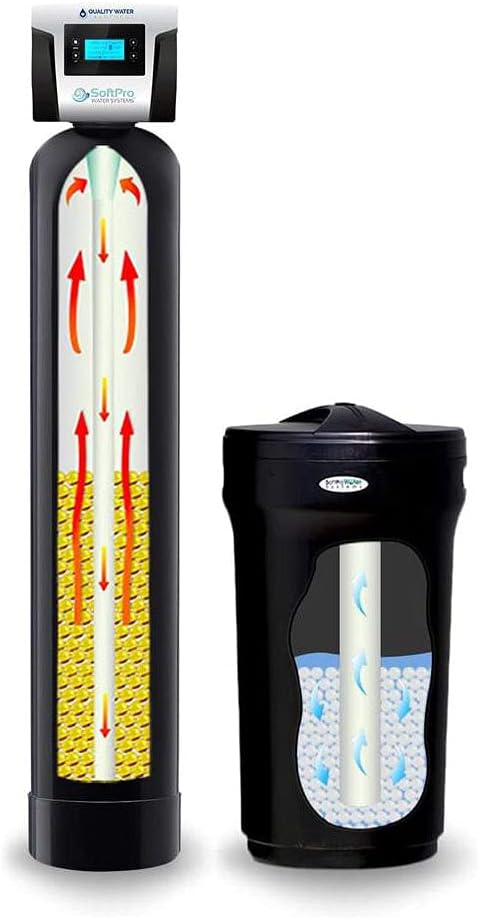
When a municipal crew replaces a water main, taps a new service line, or repairs a break on your street, the pressurized flush that follows pushes a slurry of iron oxide, hydrated lime, fine sand, biofilm fragments, and sometimes PVC cement shavings into every downstream service. The Springwell CF1 relies on an upflow bed of catalytic coconut-shell carbon and KDF-55 media. Unlike a downflow softener, the CF1 has no daily regeneration cycle to clear accumulated grit, so debris settles into the lower distributor and the bottom 4-6 inches of media. Once compacted, it channels water around the bed rather than through it, and you lose both contact time and chlorine reduction.

The damage is silent. Pressure across the unit drops only 2-3 psi at first, and taste does not change for weeks. By the time you notice chlorine on the back of your tongue at the kitchen sink, the lower distributor is usually already abraded. That is why the correct response is to flush Springwell CF1 after construction debris water main disturbances before you ever run treated water through the tank again.
Step 1: Identify that construction debris actually entered your line
Common signs in the first 24 hours after street work:
- Cloudy, milky, or rust-tinted water at outdoor hose bibs.
- Tiny black or gray flecks in the bottom of a clear glass after the tap settles.
- Aerators on bathroom faucets clogging within hours.
- A faint chemical or earthy smell that wasn't there yesterday.
- Reduced flow at the highest fixture in the home.
If you observe any two of these, assume debris has entered the service and act on the CF1 before running interior fixtures further.
Step 2: Put the CF1 into bypass — do this first
The CF1 ships with a three-valve bypass on the inlet/outlet head. Close the inlet valve, close the outlet valve, then open the center bypass valve. Water now routes around the tank to the rest of the house, but no contaminated water enters the media. Do this before you do anything else, including calling the utility. Most installers leave a yellow tag on the bypass handle; if yours is missing, the inlet valve is the one closest to the wall on most 2024-2026 installs.
Step 3: Flush the house plumbing on bypass
With the CF1 isolated, open every cold-water tap in the house starting at the fixture closest to the meter and working outward. Remove faucet aerators first — they will clog within minutes and stall the flush. Run each tap for at least 5 minutes, or until the water at the most-distant fixture runs clean for 2 full minutes. Flush the refrigerator line, ice maker, and any humidifier supplies. Do not run hot water; the water heater will trap debris and require its own drain-down later.
Step 4: Install or refresh a sediment pre-filter
The CF1 does not include a dedicated sediment housing. After a main-line event, you need one. A 10 x 4.5 inch "big blue" housing loaded with a 5-micron pleated cartridge will catch the bulk of what survived the house flush. If you do not have a housing installed, the cleanest retrofit is a three-stage cartridge unit upstream of the CF1 bypass.
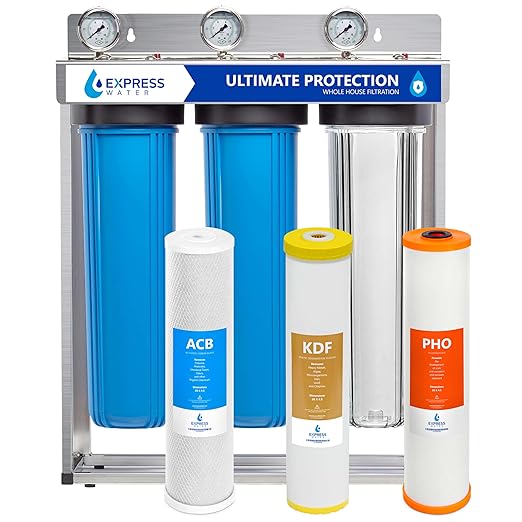
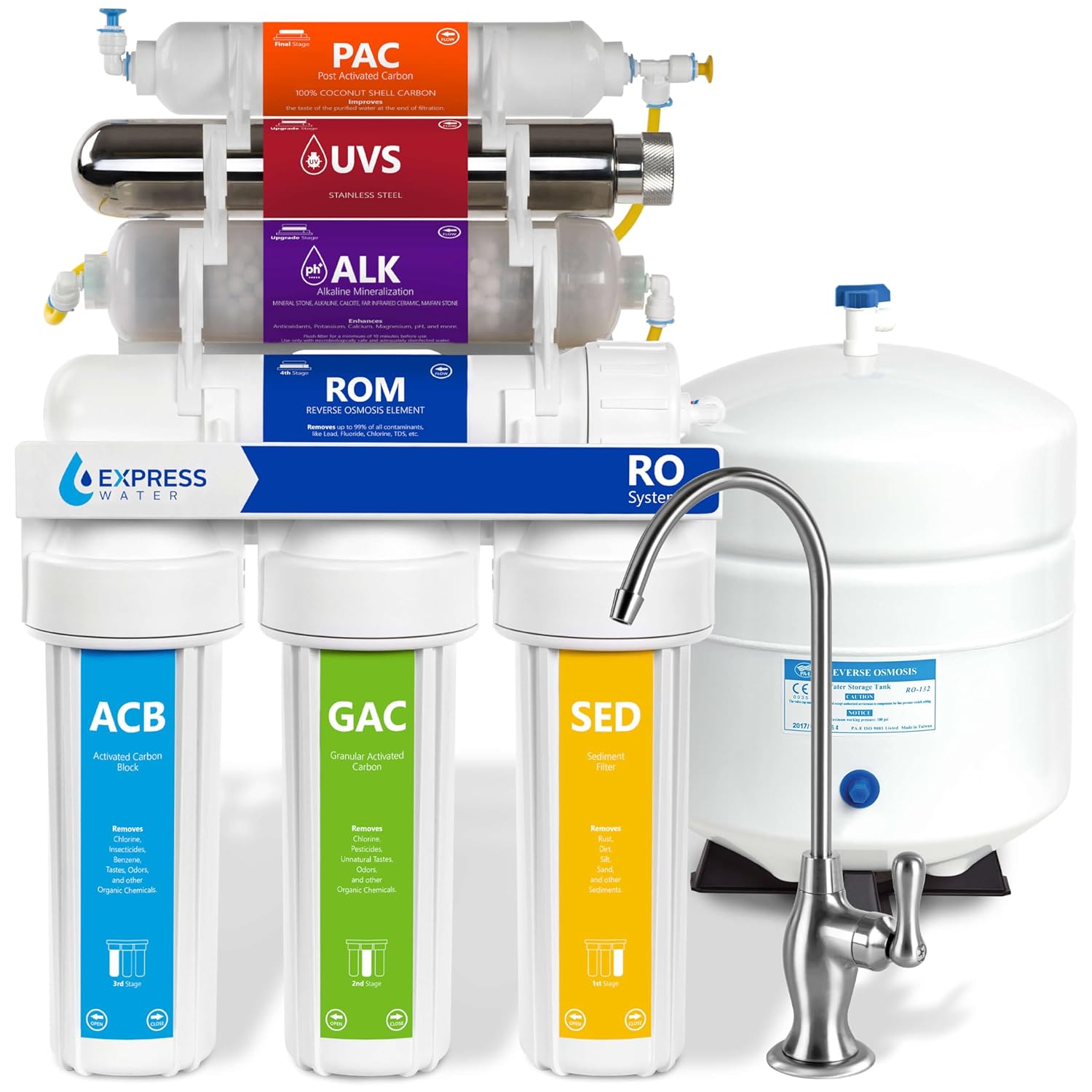
Express Water 3-Stage Whole House Water Filter System
This is the most common pre-filter people add ahead of a CF1 after a construction event. It runs a sediment, KDF, and carbon block in series, so the sediment stage catches grit while the second and third stages buffer any residual chlorine spike from the utility's post-repair shock-chlorination. It accepts standard 10 x 4.5 inch cartridges so you can repack it with whatever micron rating you need. Check current price on Amazon.
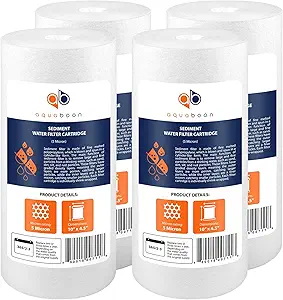
Aquaboon 5 Micron 10x4.5 Well Water Sediment Filter (4-Pack)
If you already own a big-blue housing, the cheapest insurance is a stack of 5-micron pleated cartridges. Plan to swap the cartridge twice in the first week after the event — once after the initial flush, and again after the CF1 backwash described below. Check current price on Amazon.
HQUA WF3-01 3-Stage Whole House Water Filtration System
A budget alternative to the Express Water if you only need temporary protection during a construction-debris cleanup. The housings accept the same standard cartridges so you are not locked into the brand's consumables. Check current price on Amazon.
Step 5: Quick comparison of pre-filter options
| Product | Stages | Best for | Cartridge size |
|---|---|---|---|
| Express Water 3-Stage | Sediment + KDF + Carbon | Construction debris + chlorine spike | 10 x 4.5" |
| HQUA WF3-01 | Sediment + 2 Carbon | Budget temporary protection | 10 x 4.5" |
| Aquaboon 5-Micron (4-pack) | Cartridges only | Refilling an existing housing | 10 x 4.5" |
| iSpring Iron & Manganese | Oxidation + birm | Rust-heavy main-line events | Tank-based |
| Aquasana 500K UV+KDF | Whole-system replacement | If the CF1 is already damaged | Tank-based |
Step 6: Perform the manufacturer's air-cycle backwash on the CF1
The CF1 control head has a manual regeneration option that drives a 12-minute backwash through the media bed. With the house plumbing flushed and the new pre-filter in place, you can safely return the CF1 to service and run its built-in flush.
- Close the bypass center valve, then open the outlet valve, then the inlet valve — in that order, to avoid a pressure hammer on the distributor.
- On the Bluetooth head, hold the regen button until the display shows "REGEN NOW" or use the app's manual cycle command.
- Let the full backwash + rinse cycle complete (about 22 minutes). The drain line will discharge dirty water — this is expected.
- Once the cycle finishes, open a single cold tap downstream of the CF1 and let it run for 5 minutes to flush any loosened fines through the new pre-filter.
- Inspect and replace the sediment cartridge. It will be visibly loaded.
Repeat the manual regen 24 hours later. The second cycle catches debris that worked free from the upper bed overnight. This two-cycle approach is what protects long-term flow rate when you flush Springwell CF1 after construction debris water main contamination.
Step 7: Drain and flush the water heater
If you ran any hot water before catching the debris, sediment is now in the bottom of your tank. Shut off the heater, connect a hose to the drain valve, open a hot tap upstairs to break vacuum, and drain until the discharge runs clear. For tankless units, run the manufacturer's flush procedure with white vinegar.
What if the CF1 is already damaged?
If pressure drop across the CF1 exceeds 10 psi at normal flow after two regen cycles, the lower distributor or media bed is likely compromised. Springwell offers a media-replacement service, but in some cases homeowners use the event as a reason to upgrade to a system with active backwash and integrated sediment handling.
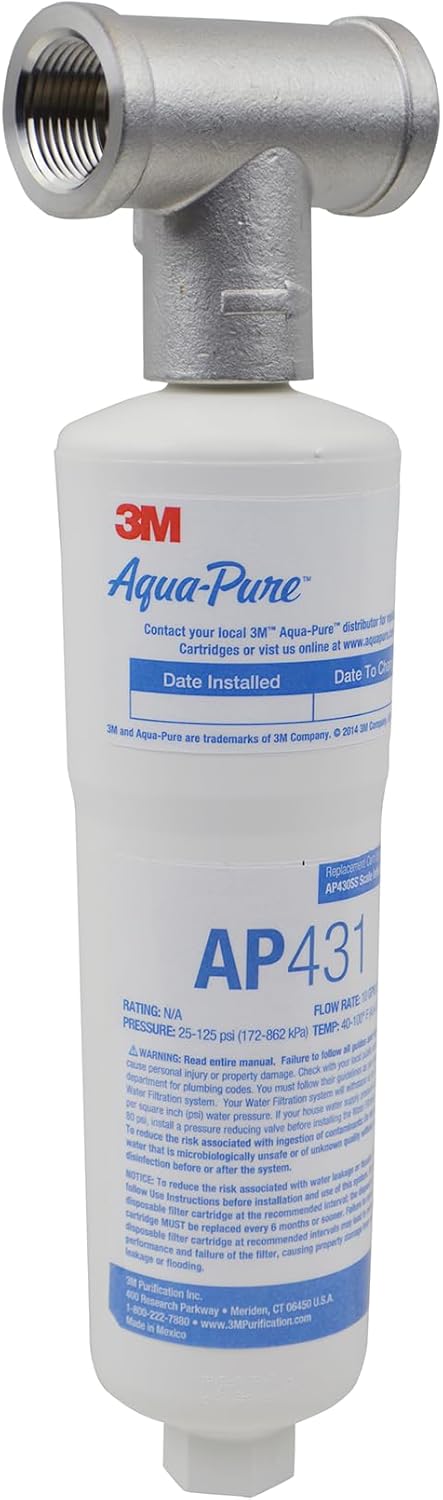
Aquasana Whole House Well Water Filter, 500K Gallons, UV+Carbon+KDF
If you are replacing a CF1 that took heavy debris damage, the Aquasana 500K with UV is the closest performance-equivalent on Amazon. It pairs KDF and catalytic carbon similar to the CF1 but adds UV disinfection — useful if your local main has biofilm history. Check current price on Amazon.
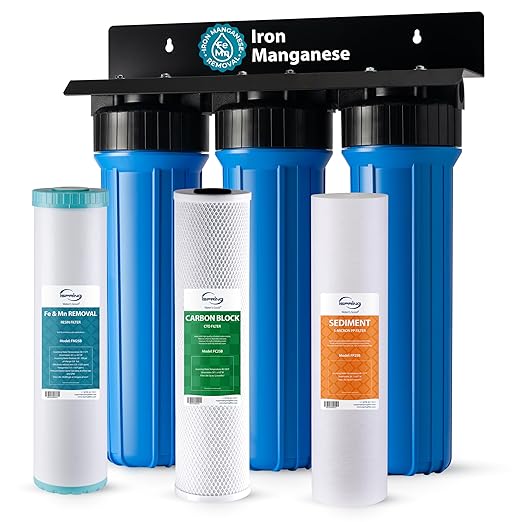
iSpring Iron & Manganese Whole House Water Filtration System
Construction events on older galvanized mains often release significant iron. If your post-event water tests above 0.3 ppm iron, an iron-specific stage ahead of any carbon system extends carbon life dramatically. Check current price on Amazon.
Preventive setup for the next event
Construction on your street is rarely a one-time event. Plan the permanent loop like this: street meter outdoor hose bib (for flushing without disturbing house plumbing) big-blue 5-micron sediment housing big-blue 1-micron polish housing CF1 with bypass softener if installed house. With that layout, the next main-line disturbance only costs you two cartridges.
For more on layering protection, see our guide on sizing sediment pre-filters, and for chlorine management after a utility shock event, see handling post-repair chlorine spikes. If you are still in the planning stage, our CF1 vs Aquasana Rhino 2026 comparison covers debris handling in detail.
Frequently Asked Questions
How long should I leave my Springwell CF1 in bypass after a water main break?
Leave it in bypass until the cold water at your outdoor hose bib runs visually clear for 10 consecutive minutes, and the post-meter sediment pre-filter has been changed at least once. For most municipal repairs that means 2-6 hours, but it can stretch to 24 hours if the utility runs a chlorine shock afterward.
Can I just run the CF1's regen cycle without flushing the house plumbing first?
No. The regen cycle pulls water from the inlet, so if the service line still contains debris you are feeding more grit into the bed during the backwash. Always flush the house on bypass first, then regen the CF1.
Will construction debris void my Springwell warranty?
The CF1 lifetime warranty covers tanks and valves but excludes media damage from upstream contamination when no sediment pre-filter was installed. If you add a 5-micron pre-filter before the event reaches you, you preserve the warranty and the media. Document the install date with a photo.
What micron rating should the pre-filter be when flushing after main-line work?
Run a 5-micron pleated sediment cartridge during the active flush, then switch to a 1-micron polish stage once the water is visibly clear. The 5-micron handles bulk grit without blinding off too fast; the 1-micron catches the fines that would otherwise reach the catalytic carbon.
How can I tell if the CF1 media bed is already damaged?
Measure inlet and outlet pressure with two gauges at normal household flow (around 8 gpm). A healthy CF1 shows 3-5 psi drop. Anything above 10 psi after two completed regen cycles indicates compacted media or a fouled lower distributor and warrants a service call.
Should I shock-chlorinate my CF1 after a construction event?
Generally no. The catalytic carbon will dechlorinate the shock dose anyway, and high chlorine concentrations can degrade KDF-55 prematurely. If your utility shock-chlorinated the main, keep the CF1 in bypass until the free chlorine at the hose bib drops below 4 ppm.
Do I need to replace the CF1 media after every water main break?
No. With a properly installed pre-filter and a two-cycle manual regen, the catalytic carbon and KDF-55 in a CF1 will survive multiple construction events over its 1,000,000-gallon service life. Media replacement is only warranted when pressure drop or taste breakthrough indicates exhaustion.
Key Takeaways
- Choosing the right flush springwell cf1 after construction debris water main means matching capacity and output ports to your actual devices
- Always check actual watt-hours (Wh), not just watts — runtime depends on Wh, not peak output
- Also covers: springwell cf1 sediment flush procedure
- Also covers: clean springwell filter after main break
- Also covers: post construction water filter flush
- Compare price-per-Wh across models to find the best value for your budget