To adjust Fleck 5600SXT backwash time for a low flow shallow well, shorten the backwash (BW) cycle to 4-6 minutes from the factory default of 10, downsize the drain line flow control (DLFC) button to 1.2-1.5 GPM, and confirm your pressure tank stores at least 20 gallons of drawdown. On a shallow well that delivers a sustained 4-6 GPM, the stock 2.0 GPM DLFC and 10-minute backwash will out-run the pump, collapse system pressure mid-cycle, and risk pulling air, sediment, or even softener resin out the drain. Tuning the fleck 5600sxt backwash time low flow shallow well settings around your actual recovery rate is the only safe long-term fix.
Why low flow shallow wells break the factory Fleck 5600SXT defaults
Pentair ships the 5600SXT valve programmed for a generic 9-10 inch softener tank running on a municipal water supply that can deliver 7-9 GPM continuously. Shallow jet pumps and small submersibles tied to driven points, sand points, or 25-50 foot dug wells often produce only 3-7 GPM at the pressure tank, and that number drops sharply as the static water level falls during the backwash. Run a stock valve on that supply for a single 10-minute backwash and you will routinely see the pressure switch drop below 20 PSI, the pump short-cycle, and the brine draw cycle fail to refill the brine tank properly.
The best fleck 5600sxt backwash time low flow shallow well for your situation depends on how you plan to use it and where.
Three failure modes show up over and over in 2026 service calls:
- Resin loss out the drain - the bed lifts but never fluidizes evenly, channels form, and fine resin escapes through the upper basket.
- Air slugs in the house plumbing - the pump pulls air past the foot valve when the well draws down, and that air shows up at every faucet for hours after regen.
- Iron breakthrough - insufficient lift means oxidized iron and manganese fines settle back onto the bed instead of leaving through the drain.
Every one of those failures traces back to a backwash that demands more water than your well can deliver. For deeper background on the wider plumbing context, see our 2026 shallow well pressure tank sizing guide.
Step-by-step: reprogramming the 5600SXT for a low flow well
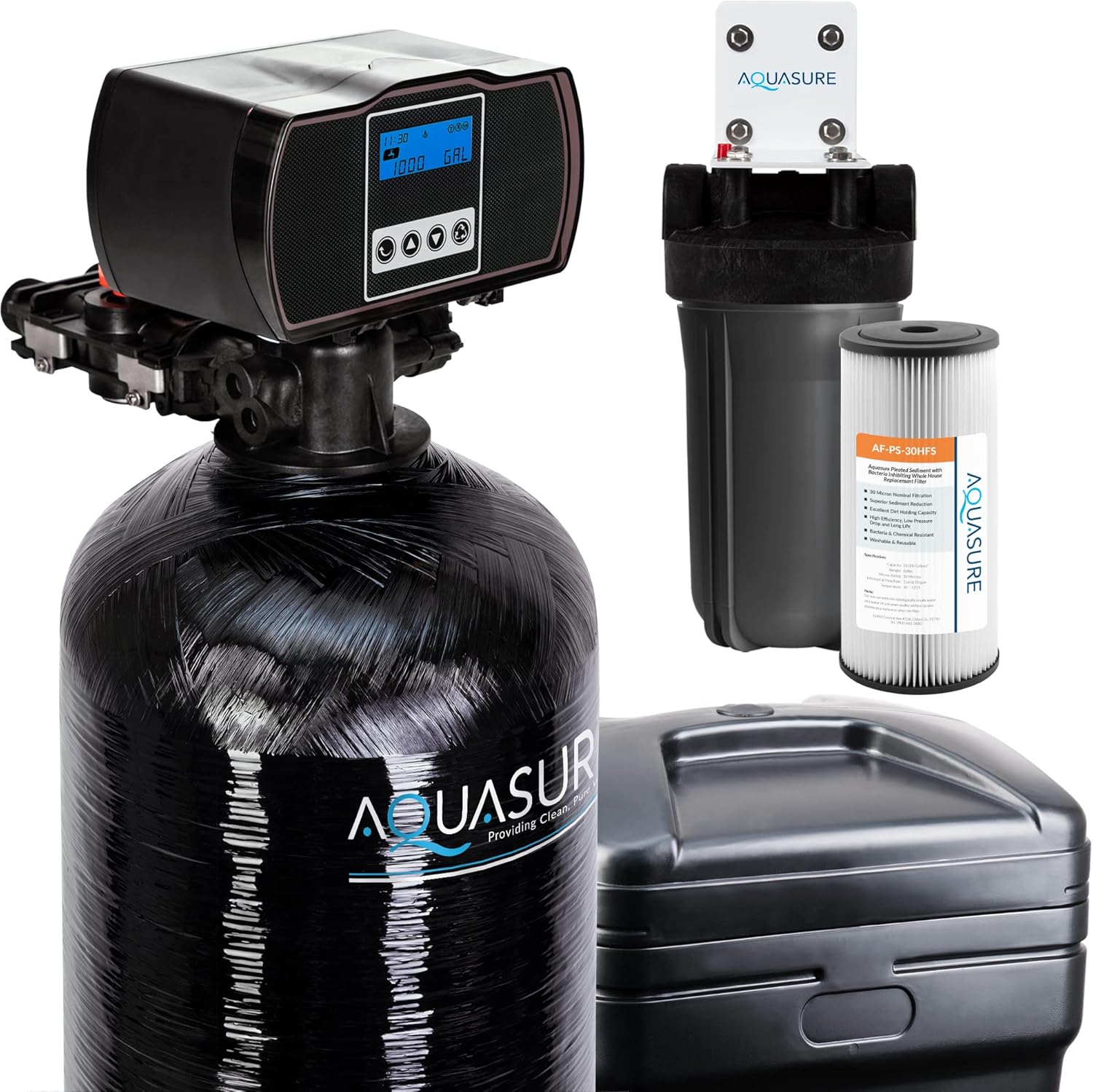
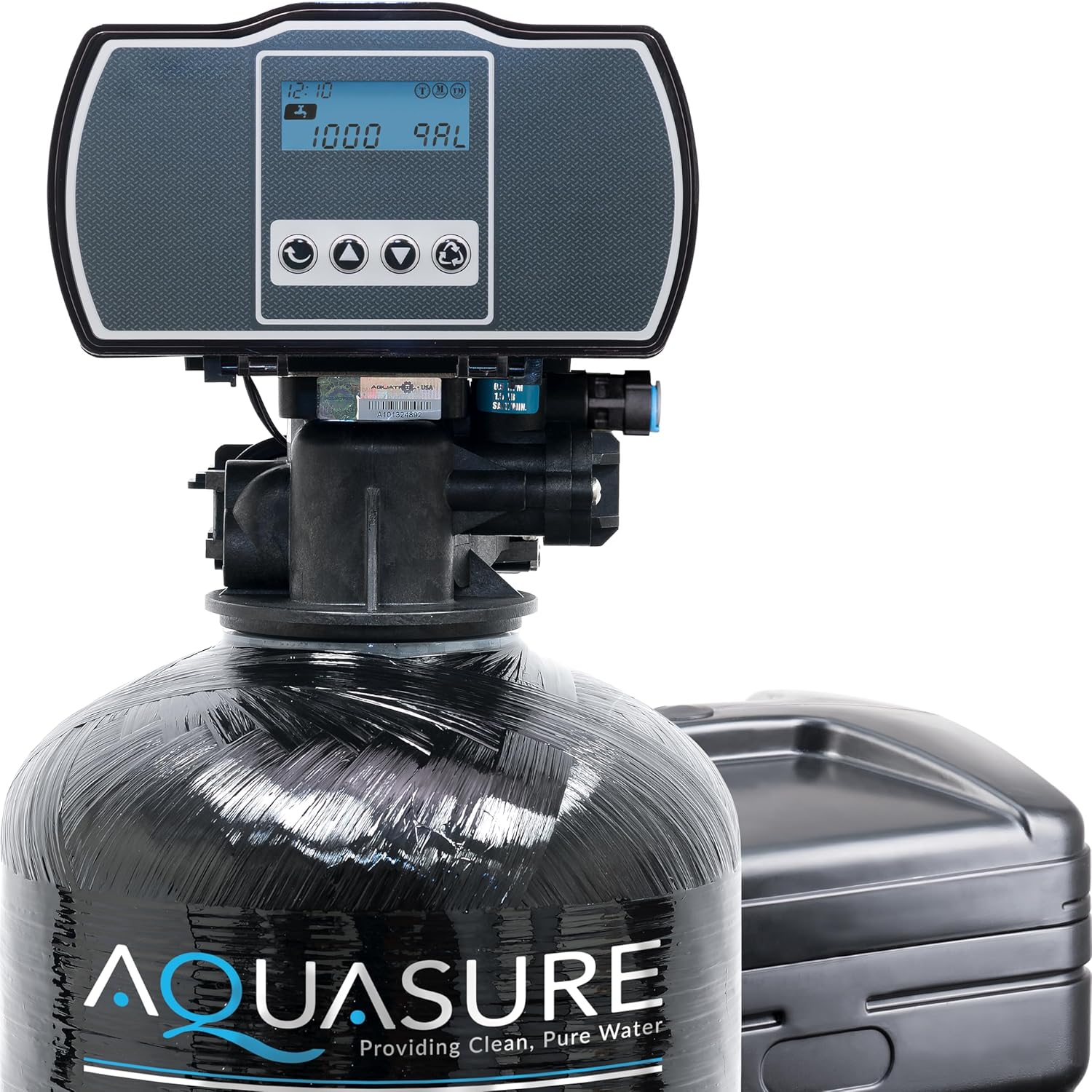
Hold the Up and Down arrows together for five seconds to enter Master Programming. The cycles you need to touch are BW (backwash), BD (brine draw / slow rinse), and RR (rapid rinse). Default values and the recommended shallow-well values are below.
1. Backwash (BW)
Default: 10 minutes. Set to 4 minutes if your sustained well yield is 4 GPM or less, 5 minutes at 5 GPM, and 6 minutes at 6 GPM. A shorter backwash with a correctly sized DLFC moves the same total gallons through the bed but spreads them out so the pump can keep up.
2. Brine Draw / Slow Rinse (BD)
Default: 60 minutes. Leave this alone in most cases - the eductor in the rotor only pulls 0.25-0.5 GPM, which any shallow well can support. The exception is when your brine tank uses a 0.5 GPM injector and your well drops below 1.5 GPM during draw; in that scenario shorten BD to 45 minutes and increase salt dose accordingly.
3. Rapid Rinse (RR)
Default: 10 minutes. Drop to 4 minutes on a 4-5 GPM well, 6 minutes on a 6-7 GPM well. Rapid rinse pulls water at the full DLFC rate, so this is the cycle that most often trips the pump's low-pressure cutoff.
4. Brine Refill (BF)
Default depends on capacity setting. The 0.33 GPM brine refill controller is gentle on the well, but verify the refill volume in gallons matches your salt dose - a stretched refill time on a starved well is what creates the dreaded "mushy salt bridge" you find six months later.
5. Day Override and Regen Time
Set regeneration to start at 3:00 AM rather than the default 2:00 AM. The extra hour gives the well's static level a fuller overnight recovery before drawdown begins, which matters most in late summer when shallow water tables are at their lowest.
Sizing the DLFC button - the single most important change
The drain line flow control is a small plastic button that sits in the drain elbow on the back of the 5600SXT valve. It is the mechanical governor that decides exactly how many GPM leave the valve during backwash and rapid rinse. The valve ships with a 2.0 GPM DLFC for 9-inch tanks and 2.4 GPM for 10-inch tanks. Both are too aggressive for a shallow well.
The rule of thumb for low yield wells is to size the DLFC to no more than 60-70 percent of your sustained well yield:
- 4 GPM well -> 1.2 GPM DLFC button
- 5 GPM well -> 1.5 GPM DLFC button
- 6 GPM well -> 2.0 GPM DLFC button (stock works)
- 7+ GPM well -> stock DLFC is fine
Replacement DLFC buttons cost a few dollars and snap into the same drain elbow - no tools other than a flathead. If you are running fine mesh resin or a 10 percent crosslink resin, bump up one button size because those resins fluidize at a lower velocity. For more detail on resin types, the resin loss troubleshooting guide covers the math.
Pre-filtration: the cheapest insurance for a shallow well softener
Shallow wells almost always pull sediment, iron flocs, and the occasional sand grain. The 5600SXT distributor basket has 20-slot openings that pass anything smaller than about 250 microns, and once sand or grit gets into the resin bed it grinds the beads on every regen. A 5-micron sediment cartridge upstream of the valve extends bed life from 5 years to 12-15 years and dramatically reduces the gallons you need to move during backwash, which directly supports a shorter BW cycle.
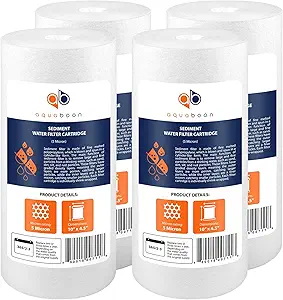
Aquaboon 5 Micron 10x4.5 Well Water Sediment Filter (4-Pack)
The 10x4.5 big-blue format flows 8-10 GPM with low pressure drop, which is exactly what a struggling shallow well system needs. Buying the 4-pack means you can swap cartridges every 90 days for a full year without thinking about it - critical when iron-laden well water can clog a single cartridge in six weeks. View on Amazon
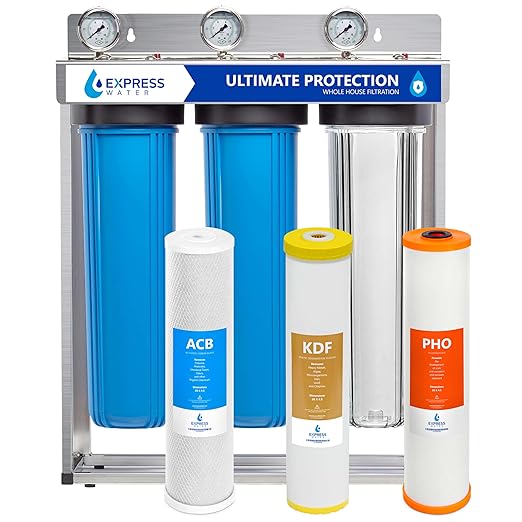
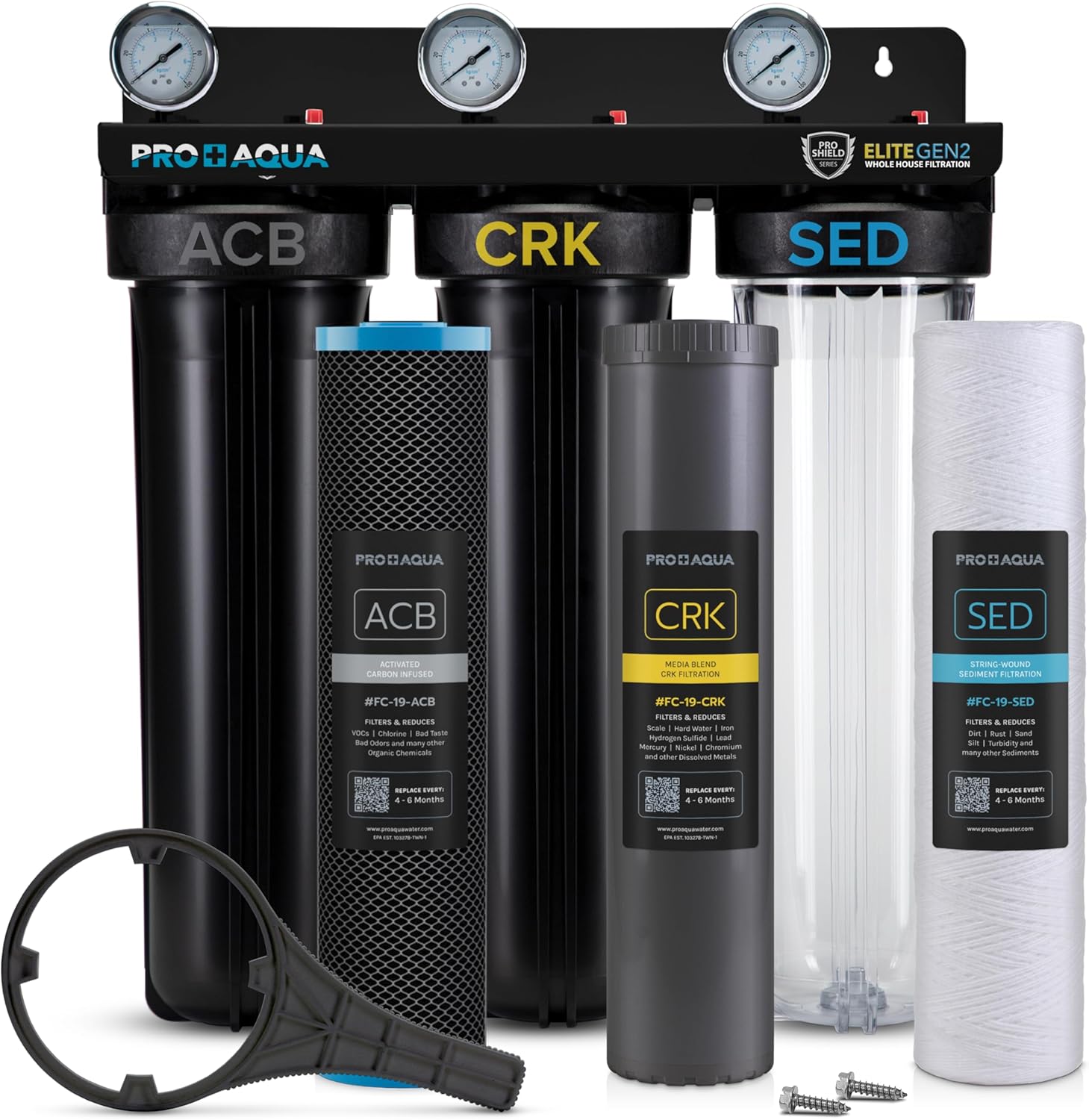
Express Water 3-Stage Whole House Water Filter System
If you want sediment, KDF, and carbon stages bundled into one housing set, the Express Water 3-stage runs all 10x4.5 cartridges and includes pressure gauges on inlet and outlet so you can actually see when a stage is loading up - invaluable for a shallow well operator. Install it upstream of the 5600SXT and you protect both the resin bed and the brine eductor. View on Amazon

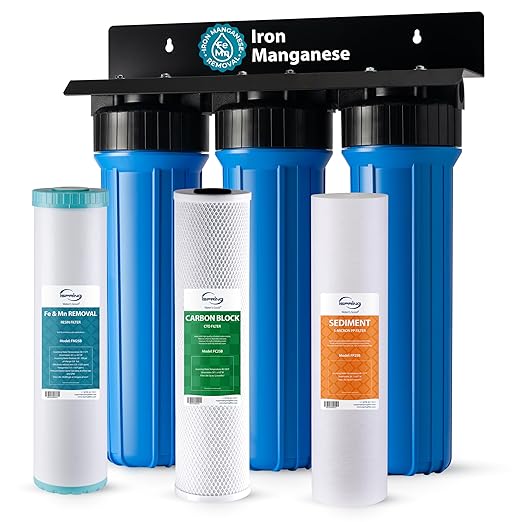
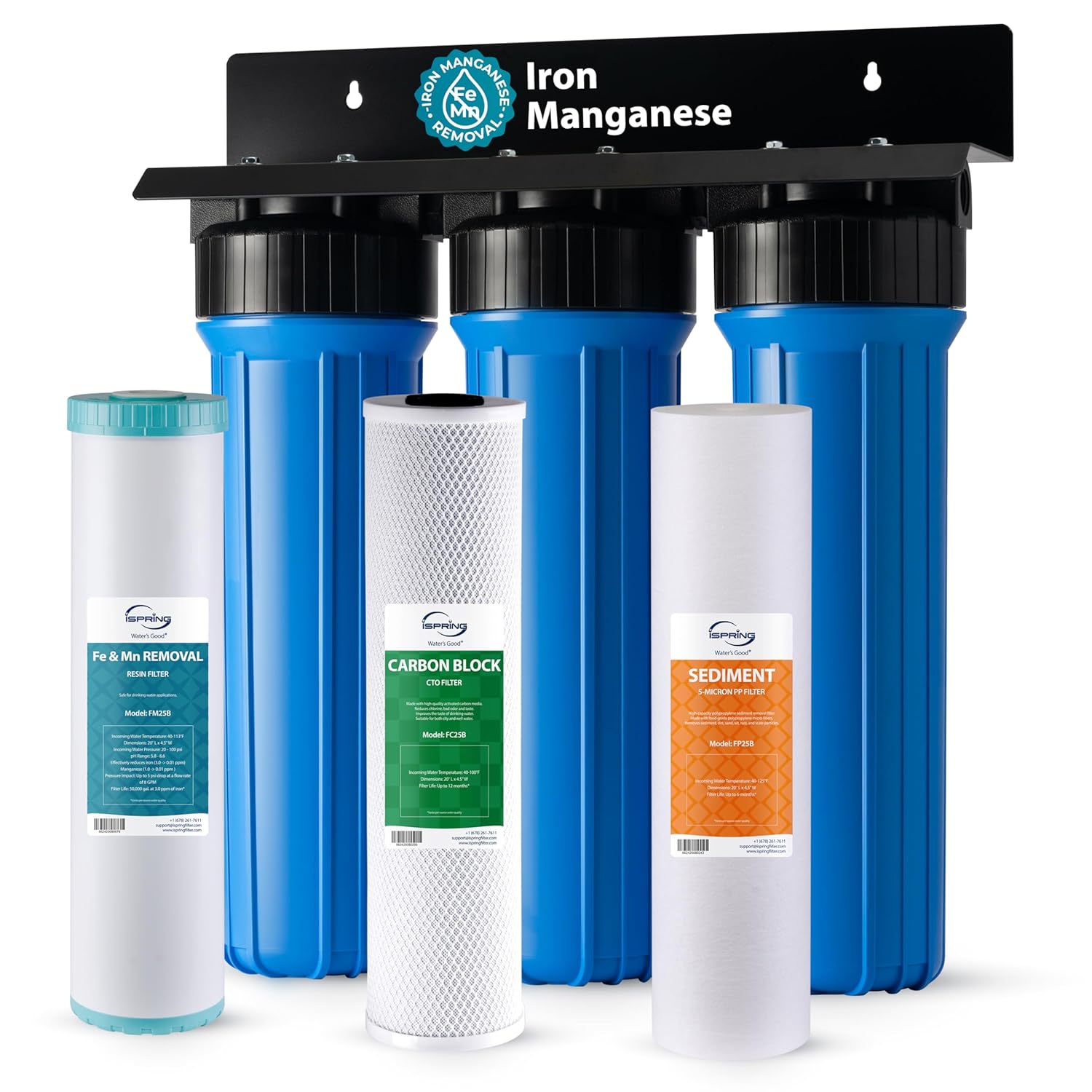
iSpring Iron and Manganese Whole House Water Filtration System
Shallow wells in glacial-till regions of the Midwest and Northeast frequently test above 0.3 ppm iron - the level at which a standard softener bed fouls within a year. The iSpring iron/manganese system oxidizes and traps Fe/Mn before it ever reaches the softener, which means your reduced backwash time still produces a clean rinse. Pair it with the Aquaboon sediment cartridges for a complete shallow well train. View on Amazon
Aquasana Whole House Well Water Filter (500K Gallons, UV+Carbon+KDF)
For shallow wells with bacterial risk - dug wells, sand points, and any well within 100 feet of agricultural runoff - the Aquasana adds UV disinfection on top of KDF and catalytic carbon. Its 7 GPM service flow matches a shallow well's realistic delivery rate, and the 500K gallon capacity means you replace media on the same schedule as your softener resin. View on Amazon
Pre-filter comparison for shallow well 5600SXT systems
| System | Stages | Service Flow | Best For | Cartridge Format |
|---|---|---|---|---|
| Aquaboon 5 Micron 4-Pack | Sediment only | 8-10 GPM | Sandy or silty shallow wells | 10x4.5 big blue |
| Express Water 3-Stage | Sediment + KDF + Carbon | 15 GPM rated | Mixed contaminant wells with gauges for monitoring | 10x4.5 big blue |
| HQUA WF3-01 3-Stage | Sediment + Carbon + Carbon | 12 GPM rated | Taste/odor plus sediment on shallow wells | 10x4.5 big blue |
| iSpring Iron and Manganese | Oxidation + Filtration | 15 GPM | Wells with iron above 0.3 ppm | Tank-based |
| Aquasana 500K Well Filter | UV + Carbon + KDF | 7 GPM | Wells with bacterial or runoff risk | Tank + UV |
Common mistakes that damage shallow well pumps during 5600SXT backwash
The most expensive failure we see in 2026 is a burned-out jet pump caused by repeated low-pressure cycling during a poorly tuned backwash. Five mistakes are responsible for nearly all of them:
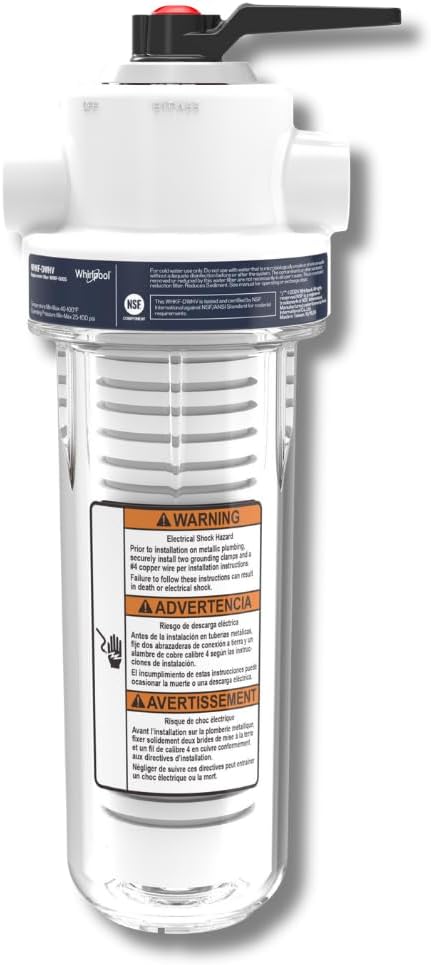
- Leaving the stock 2.0 GPM DLFC in place on a 4 GPM well - the pump runs continuously for the full backwash without ever satisfying the pressure switch.
- Not adjusting Rapid Rinse - operators correctly shorten BW but forget RR pulls the same flow rate, doubling the stress period.
- Regenerating during daytime water use - household demand layered on top of backwash demand crashes the pressure tank.
- Undersized pressure tank - a 20-gallon nominal tank holds only about 6 gallons of drawdown, which empties in 3 minutes at 2 GPM and forces the pump to deadhead.
- Skipping a sediment pre-filter - resin bed fouls, channels form, and you compensate by extending backwash time, which makes everything worse.
For deeper coverage of the programming menu beyond just the backwash cycle, the 5600SXT master programming guide walks through every parameter with screen-by-screen photos.
Verifying your new settings actually work
After you reprogram the valve and swap the DLFC, force a manual regeneration by holding the Regen button for five seconds. Stand at the pressure tank with a gauge during the backwash and rapid rinse cycles. You want to see pressure stay above 30 PSI the entire time. If it dips below 25 PSI, shorten the cycle by another minute or step down the DLFC one more size. Catch a sample of the drain water in a clear jar at minute 2 and minute 4 of backwash - the water should run from rusty brown to noticeably clearer. If it is still equally dirty at minute 4, your well can support a longer cycle and you can add a minute back.
Frequently Asked Questions
What is the minimum well GPM needed to run a Fleck 5600SXT softener?
With a downsized 1.2 GPM DLFC button and a 4-minute backwash, the 5600SXT will run on a well delivering as little as 3 sustained GPM, provided the pressure tank holds at least 20 gallons of drawdown. Below 3 GPM you should consider a twin-tank or up-flow design that uses less backwash water, or add a 250-gallon atmospheric storage tank with a booster pump between the well and the softener.
How do I know my shallow well's actual sustained GPM?
Turn on an outside hose bib, time how long the pressure tank takes to drop from cut-out (typically 50 PSI) to cut-in (typically 30 PSI), then time the recovery while the pump runs and the hose stays open. The flow rate during pump-only operation is your sustained well yield. Anything between 3 and 7 GPM qualifies as low flow for 5600SXT purposes.
Can I just skip backwash entirely on a low yield shallow well?
No. The backwash cycle does three jobs: it lifts and reclassifies the resin bed, removes accumulated sediment and iron fines, and ensures even brine distribution on the next regen. Skipping it lets the bed compact, channels form, and softening capacity drops by 30-50 percent within two months. Shorten and slow it instead of eliminating it.
Will a smaller DLFC reduce my softener's capacity?
Capacity is determined by resin volume and salt dose, not backwash flow rate. A correctly sized smaller DLFC matched to a shorter cycle time moves the same effective backwash gallons through the bed at a velocity the resin still needs - roughly 4-6 GPM per square foot of bed cross section. A 9-inch tank at 1.5 GPM achieves the minimum acceptable velocity for standard 8 percent crosslink resin.
Does the Fleck 5600SXT meter setting also need to change for a shallow well?
The meter setting controls how many gallons trigger regeneration, not how the regen runs, so it does not need adjustment for well yield. However, spacing out regenerations by sizing the softener correctly for your hardness and household size reduces total annual backwash water demand on the well, which is helpful in drought years. Aim for regen every 4-7 days, never daily.
Why does my pressure tank empty before backwash finishes even after reprogramming?
The pressure tank is undersized for the backwash demand. A 20-gallon nominal tank only stores 5-7 gallons of usable drawdown at standard 28/50 PSI settings. Upgrading to a 44-gallon or 86-gallon tank gives the pump time to catch its breath at each cycle transition. For shallow wells supporting a 5600SXT, the 86-gallon size is the sweet spot in 2026 pricing.
Should I install a pre-filter before or after the pressure tank?
After the pressure tank and before the softener. Installing before the pressure tank means the pump works against the cartridge restriction every cycle, shortening pump life and reducing tank fill rate. The order that works best on shallow wells is: well -> pressure tank -> iron filter (if needed) -> sediment cartridge -> 5600SXT softener -> house. See the well water iron removal guide for ordering decisions when iron is the dominant issue.
How often should I redo this tuning process?
Re-verify pressure-tank-during-backwash readings once a year, ideally in late summer when the water table is lowest. Static well levels fall over a 5-10 year horizon in most regions, and a setup that worked perfectly in 2024 may need another minute trimmed off backwash by 2027. Keep a service log inside the brine tank lid so the next homeowner or technician can see what you set and why.
Key Takeaways
- Choosing the right fleck 5600sxt backwash time low flow shallow well means matching capacity and output ports to your actual devices
- Always check actual watt-hours (Wh), not just watts — runtime depends on Wh, not peak output
- Also covers: 5600sxt backwash setting well
- Also covers: shallow well softener flow rate
- Also covers: fleck backwash duration low gpm
- Compare price-per-Wh across models to find the best value for your budget