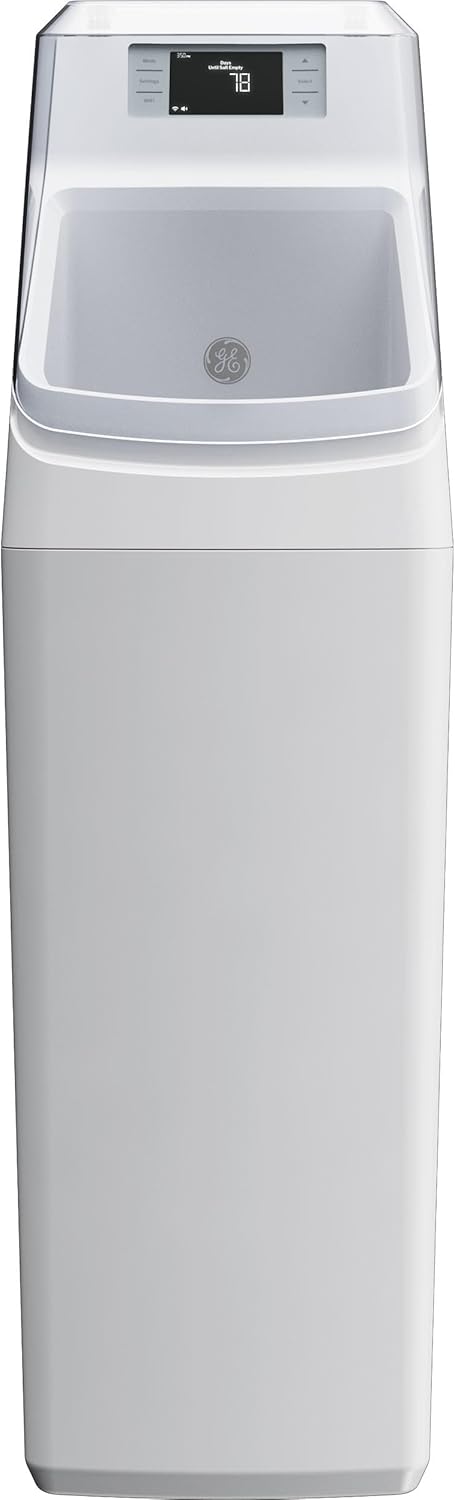
The GE GXSH40V is an excellent water softener for couples living in 1500 square foot condos. Its 40,000-grain capacity provides ample softening for two people, regenerating roughly every 14 to 21 days depending on local hardness. Choosing the ge gxsh40v for small condos balances performance, footprint (about 19 inches wide and 47 inches tall), and efficiency — its SmartSoft technology learns your household usage patterns to minimize salt and water waste. The unit handles iron up to 7 PPM and hardness up to 175 GPG, which covers nearly every municipal supply serving urban condo buildings in 2026.
Why the GE GXSH40V Fits Two-Person Condos
Most water-softener guides assume single-family homes with three to five occupants and 2,500+ square feet. A couple in a 1500 sq ft condo has very different demand: lower daily gallons (typically 100 to 150 total), fewer bathrooms, and tighter mechanical-room footprints. The GXSH40V was engineered for households of one to four people pulling up to 14 GPG of hardness, which slots cleanly into the condo demographic without forcing you into commercial-grade pricing.
The biggest practical advantage for condo installs is the brine tank's integrated cabinet design. Unlike older two-tank softeners that need four to five feet of horizontal clearance, the GXSH40V is a single-cabinet unit with a 9.4-inch diameter brine well stacked above the resin bed. That means you can slot it next to a water heater in a closet under 25 inches deep, which is a make-or-break dimension in newer high-rise condos where mechanical chases were value-engineered down to bare minimums.
Sizing Math for the GXSH40V in a 1500 Sq Ft Condo
Correct sizing is the single biggest predictor of long-term salt costs and resin life. For two adults averaging 75 gallons each per day at 10 GPG hardness, daily grain removal works out to:
2 people × 75 gallons × 10 GPG = 1,500 grains per day
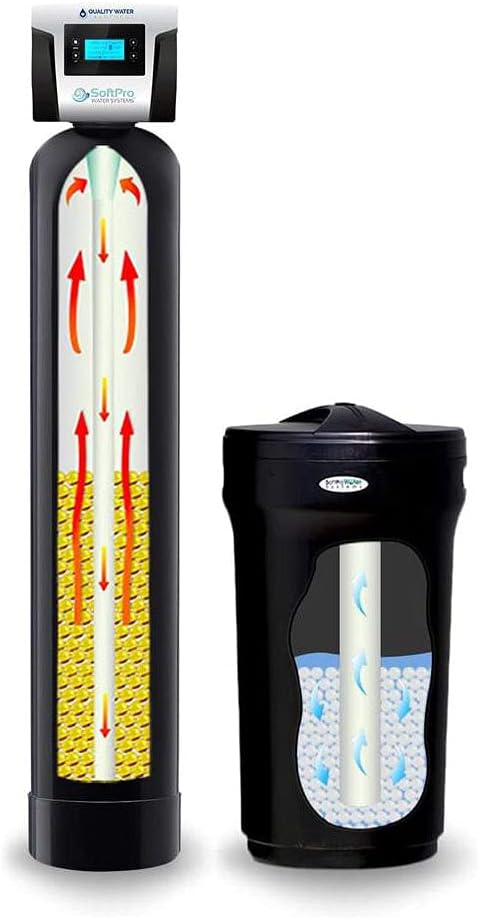
A 40,000-grain unit operating efficiently uses about 75 percent of its rated capacity between regenerations, giving roughly 30,000 usable grains. That math gives you a 20-day regen cycle — comfortably inside the GXSH40V's preferred range and conservative enough that the resin bed never gets fully exhausted before refresh. If your water tests at 15 GPG (common in parts of the Midwest and Southwest), expect regens every 13 to 14 days, still well within healthy duty.
Going larger than 40K grains is the most common condo mistake. A 48K-grain unit in a two-person condo regenerates so infrequently that the resin bed develops channeling and biofilm, hurting both performance and salt efficiency. The ge gxsh40v for small condos hits the sizing sweet spot — not because GE marketed it that way, but because the math genuinely works out.
Condo-Specific Installation Considerations
Three things make condo installation different from installing in a house: HOA rules, drain access, and shared-stack discharge limits.
HOA approval: Most condo HOAs require written approval before installing a softener. Submit the GXSH40V spec sheet, your plumber's quote, and proof of liability insurance. Brine discharge into a shared sewer stack is generally fine, but a handful of buildings explicitly prohibit salt-based softeners over chloride-load concerns — check before buying, not after.
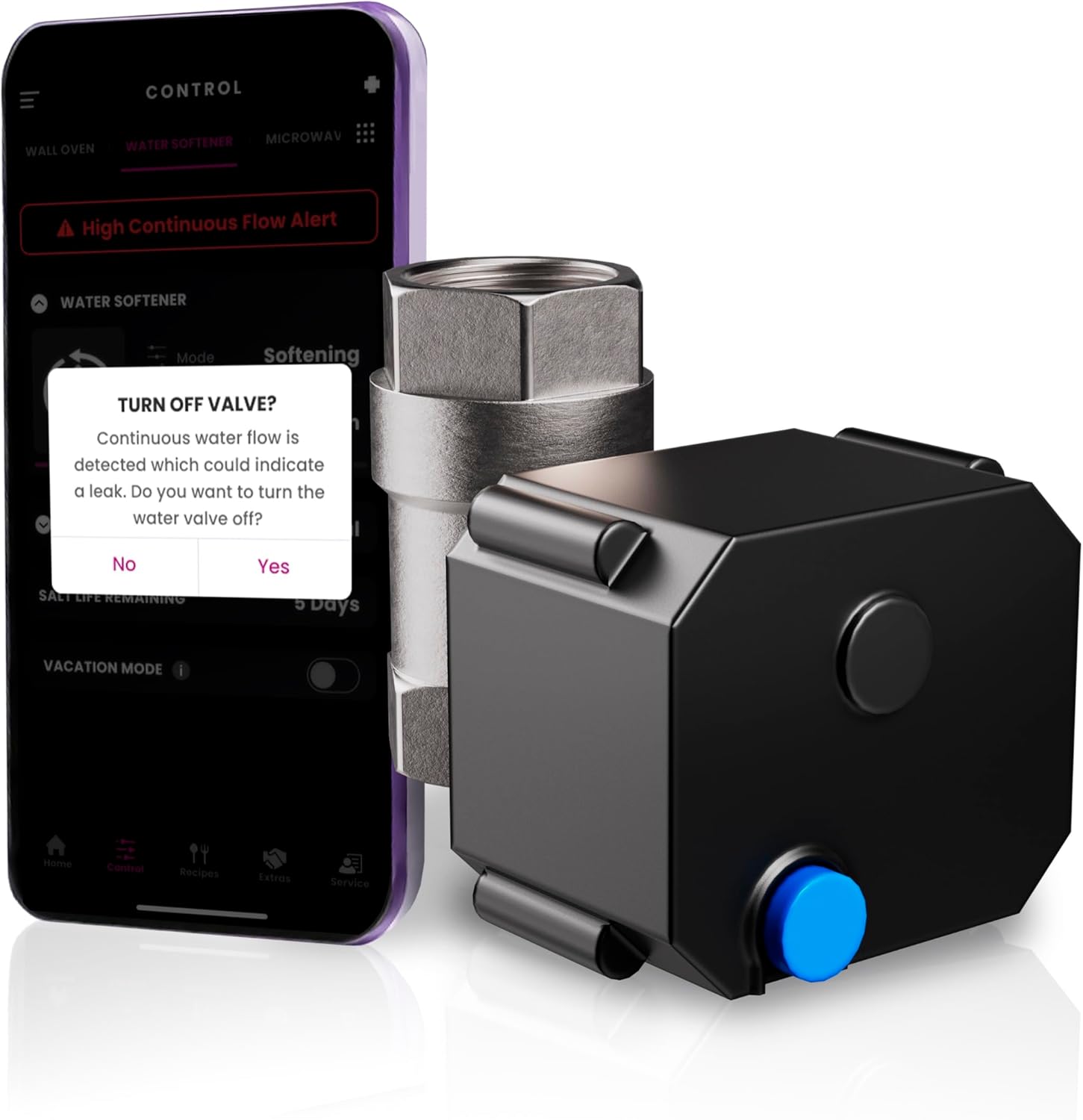
Drain access: The GXSH40V needs a 1/2-inch drain line for backwash water. In condos, this typically routes to a nearby floor drain, laundry standpipe, or condensate drain. If your mechanical closet doesn't have one within 10 feet, plan on a small condensate pump (about $90) plus an air gap to prevent siphon contamination.
Electrical: The unit needs a standard 120V outlet within six feet. The control valve draws negligible power (under 10 watts standby), so no dedicated circuit is required — a shared utility outlet is fine.
For a deeper walkthrough of condo plumbing constraints and HOA paperwork, see our condo water softener installation guide.

Why Pre-Filtration Matters for Softener Lifespan
Even municipal water serving condo towers contains sediment, chlorine, and trace iron that shorten softener resin life by 30 to 40 percent. Resin beads cost roughly $200 to $300 to replace and another $250 in labor if you don't DIY, so pairing the GXSH40V with a sediment-and-carbon pre-filter pays for itself within three years of normal couple-sized usage.
The filter installs upstream of the softener, ideally right after the main shutoff. Cartridge filters require a quarterly swap; the trade-off is lower upfront cost versus the convenience of a backwashing tank-style filter. For a couple's modest demand profile, cartridges are almost always the smarter call — you'll spend $40 to $60 a year on replacements rather than $700+ on a backwashing tank.
Best Pre-Filter Pairings for the GXSH40V
I've narrowed this list to filters that genuinely make sense for the GXSH40V in condo settings. Skip the giant well-water systems unless you're actually on a private well — they're oversized, overpriced, and unnecessary for treated municipal supply.
| Pre-Filter | Stages | Best For | Capacity |
|---|---|---|---|
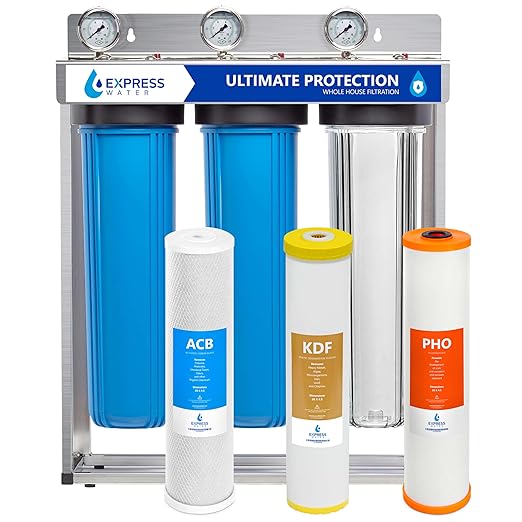
| Express Water 3-Stage | Sediment + KDF + Carbon | Municipal water with chlorine | ~100,000 gallons |
| HQUA WF3-01 3-Stage | Sediment + GAC + CTO | Budget all-in-one filtration | ~80,000 gallons |
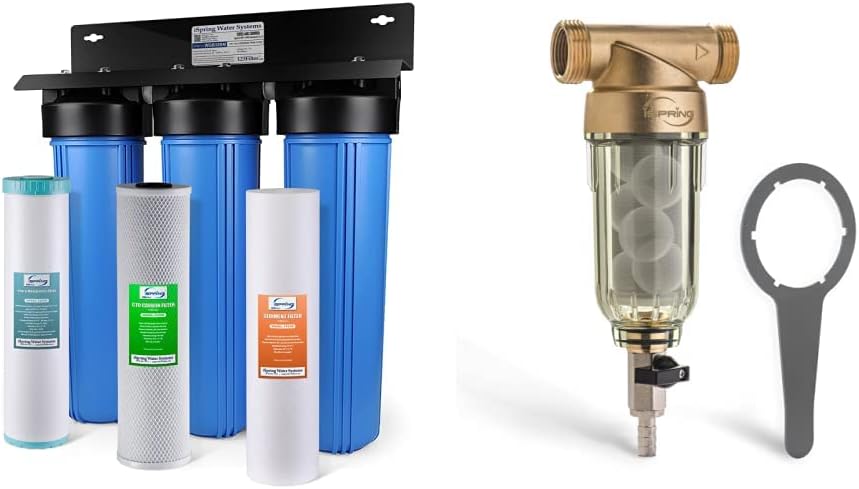
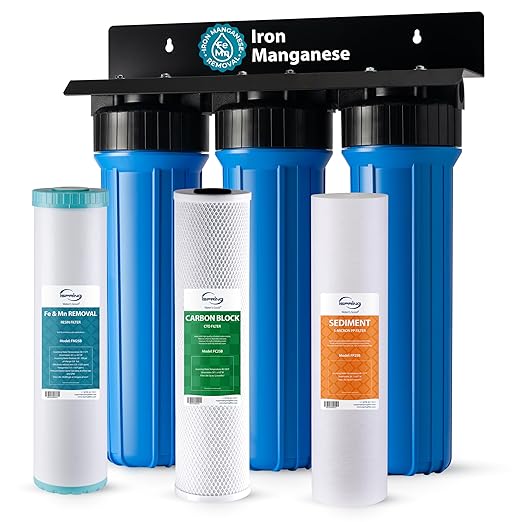
| iSpring Iron & Manganese | Iron-specific media | Iron above 1 PPM | ~50,000 gallons |
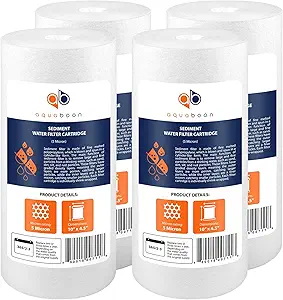
| Aquaboon 5 Micron 10x4.5 (4-pack) | Sediment cartridges only | Replacement sediment stage | ~3 months each |
Best Overall Pre-Filter: Express Water 3-Stage Whole House System
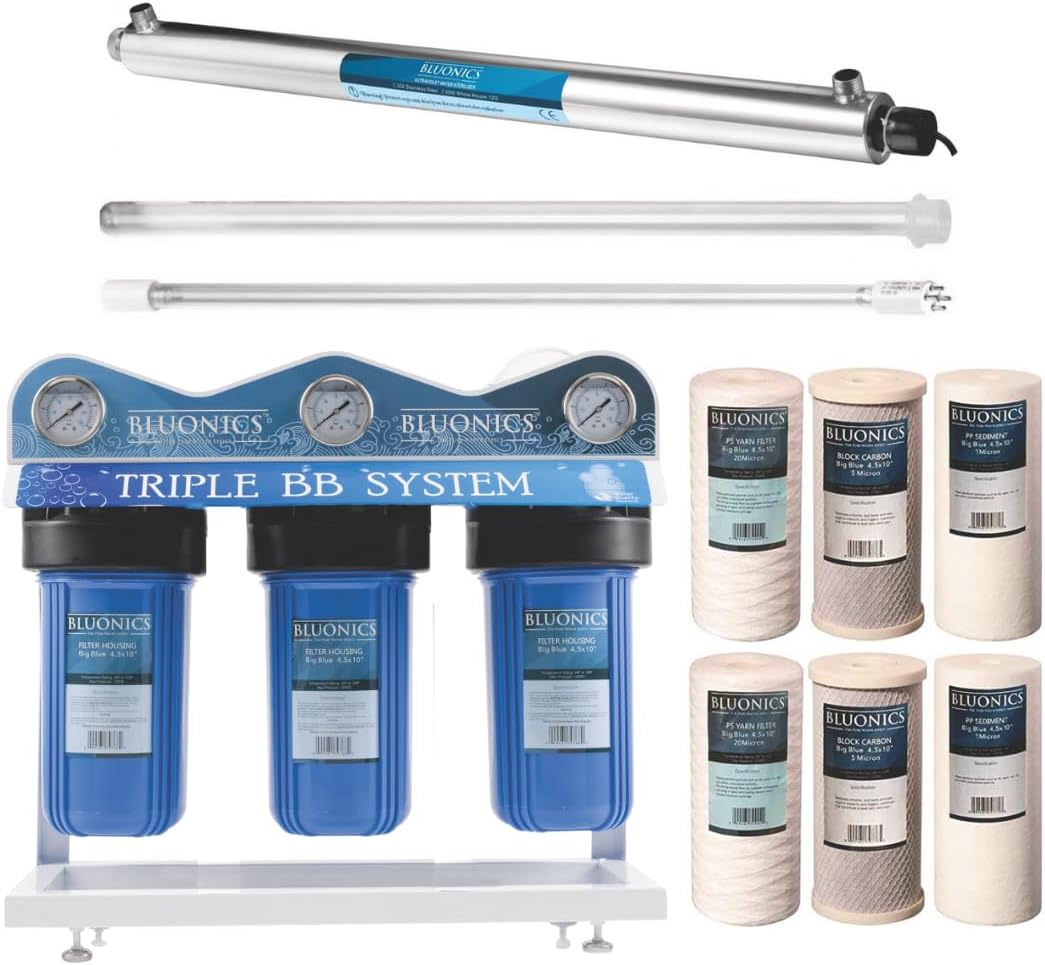
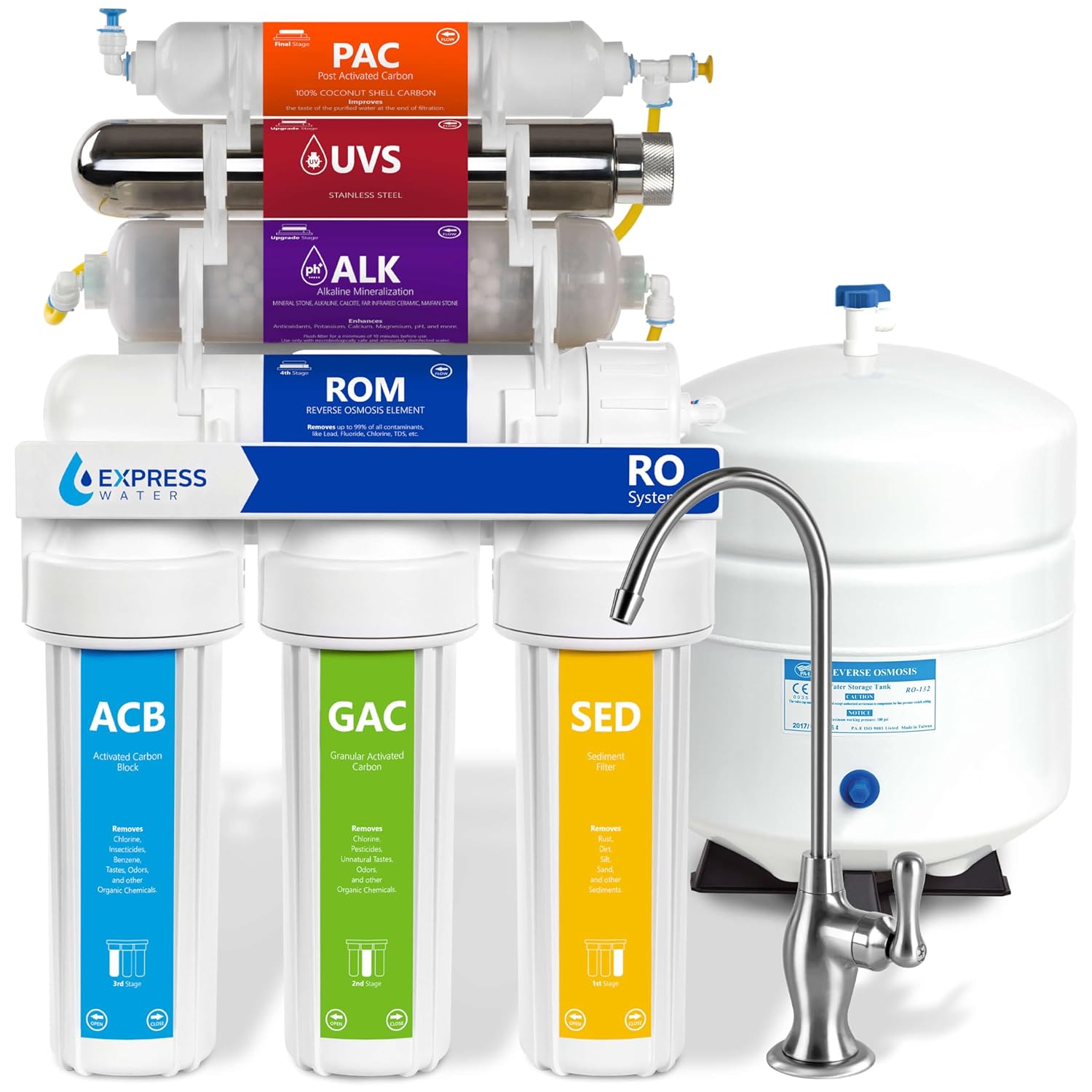
The Express Water 3-Stage system is the strongest match for a couple running the GXSH40V on municipal water. Its sediment-KDF-carbon stack catches the rust, chlorine, and fine sand that would otherwise foul softener resin. The 1-inch ports won't bottleneck condo flow rates (typically 6 to 10 GPM at the main), and the clear sediment housing lets you eyeball cartridge condition without breaking out a wrench every quarter. Check the Express Water 3-Stage on Amazon.
Best Budget Pre-Filter: HQUA WF3-01 3-Stage
If you want similar three-stage performance at a lower price, the HQUA WF3-01 is the closest competitor. It uses standard 10x4.5 cartridges (the exact size as the Aquaboon 4-pack below), so replacement media is easy to source from any vendor and never falls into proprietary-cartridge price-gouging territory. Flow rate caps around 15 GPM, which is more than the GXSH40V or a two-person condo will ever realistically pull. See the HQUA WF3-01 on Amazon.
Best for Iron-Heavy Water: iSpring Iron & Manganese
If your water test shows iron above 1 PPM, the GXSH40V can technically handle it but at a steep resin-life cost. The iSpring Iron & Manganese system removes ferrous iron and manganese before the softener ever sees them. Older condo buildings with galvanized riser pipes often dump 1 to 3 PPM of iron into individual units even when the city water leaves the treatment plant essentially iron-free, so test your tap rather than relying on the municipal water report. View the iSpring Iron & Manganese system on Amazon.
Best Sediment Cartridge Refills: Aquaboon 5 Micron 4-Pack
Whichever 3-stage housing you choose, you'll burn through sediment cartridges fastest. The Aquaboon 5-micron 10x4.5 four-pack stocks you up for a full year of quarterly swaps and runs about 60 percent cheaper per cartridge than name-brand refills. They fit any standard big-blue housing without modification. Check the Aquaboon 4-pack on Amazon.
Salt and Operating Costs in 2026
A two-person condo running the GXSH40V at typical municipal hardness consumes one 40-pound bag of solar salt every six to eight weeks. At 2026 pricing (roughly $8 to $11 per bag at warehouse stores), annual salt cost lands at $60 to $95. Water consumption for regeneration adds about $30 per year on most municipal rate sheets. Pre-filter cartridges run $40 to $60 per year depending on which 3-stage system you paired with.
Total annual operating cost for the ge gxsh40v for small condos comes in around $130 to $185 — significantly cheaper than the bottled-water and descaler habit it tends to replace, and noticeably easier on appliances downstream.
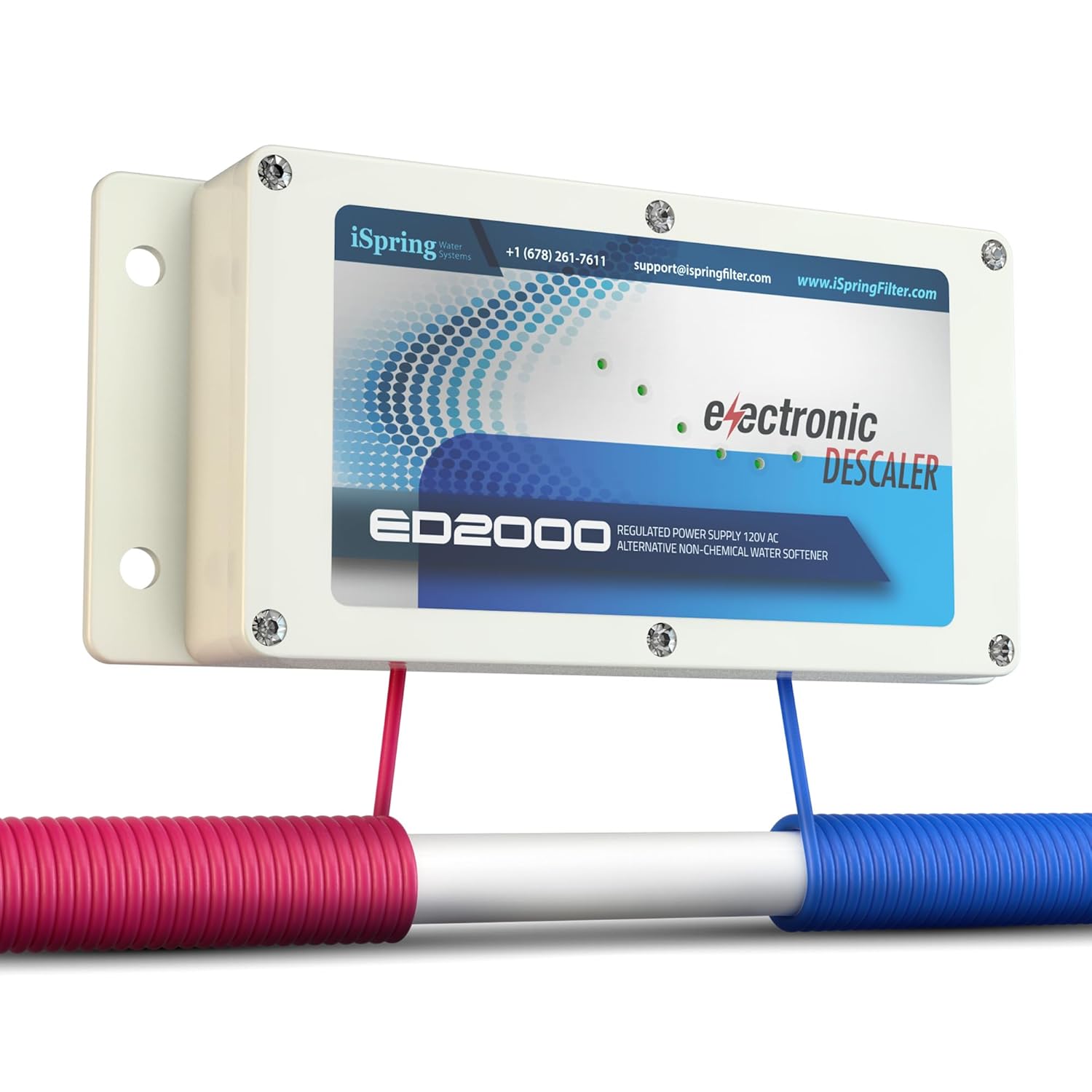
For a deeper cost breakdown including saltless alternatives, browse our salt vs saltless softener comparison.
Frequently Asked Questions
Is the GE GXSH40V too big for a 1500 sq ft condo?
No — 40,000 grains is properly sized, not oversized, for two adults on moderately hard water. Anything smaller (like a 30K-grain unit) would regenerate every 7 to 10 days and accelerate resin wear. The GXSH40V's 14 to 21 day cycle is the longevity sweet spot for couple-sized demand.
How long does the GE GXSH40V last in a two-person condo?
With a sediment-and-carbon pre-filter and annual brine-tank cleaning, expect 12 to 15 years of service. A resin replacement around year 10 extends that another five to seven years. The lower duty cycle in two-person homes means less mechanical wear on the rotary valve than in family installations.
Can I install the GXSH40V myself in a condo?
Technically yes, but most condo HOAs require licensed plumber installation for warranty and insurance reasons. DIY installation runs about three to four hours if you're handy with a sweat or SharkBite connection; professional install typically costs $300 to $500 including the bypass valve kit and HOA-required permits.
Does the GE GXSH40V need a separate iron filter for city water?
Only if iron exceeds 1 PPM. Most municipal supplies test below 0.3 PPM at the meter. Older condo buildings with steel risers can introduce iron downstream — test water from your kitchen tap rather than trusting the city report. The iSpring Iron & Manganese pre-filter pays for itself within 18 months if iron measures above 1 PPM at your tap.
How often does the GXSH40V regenerate in a two-person home?
Every 14 to 21 days at 8 to 12 GPG hardness with normal usage. The SmartSoft control logs your daily flow and only regenerates when the resin is actually depleted, rather than running on a fixed weekly schedule. Expect a 75-minute regen cycle that uses about 25 gallons of water and roughly 8 pounds of salt.
Will the GXSH40V fit in a typical condo utility closet?
The GXSH40V's 19-inch base footprint and 47-inch height fit standard utility closets. You'll need six inches of side clearance for the bypass valve and 12 inches of top clearance to refill salt without tipping the bag. Most condo closets accommodate this without modification, though older buildings with stacked washer-dryer closets can be tight.
What's the difference between the GXSH40V and the GXSH45V?
The GXSH45V adds 5,000 grains of capacity (45K total) and a slightly larger brine tank. For a couple in 1500 sq ft, that extra capacity goes unused and you'd regenerate every 24+ days, which can lead to resin channeling. The GXSH40V is the better match for two-person demand. See our full GXSH40V vs GXSH45V comparison for a spec-by-spec breakdown.
Key Takeaways
- Choosing the right ge gxsh40v for small condos means matching capacity and output ports to your actual devices
- Always check actual watt-hours (Wh), not just watts — runtime depends on Wh, not peak output
- Also covers: ge gxsh40v two person household
- Also covers: ge gxsh40v condo install
- Also covers: ge gxsh40v 1500 sqft sizing
- Compare price-per-Wh across models to find the best value for your budget