If rust-colored rings keep returning to your toilet bowls within days of scrubbing, you are likely dealing with dissolved iron, not just calcium hardness. In the Fleck 5600SXT vs Springwell SS1 iron staining toilets debate, both softeners can remove low levels of ferrous (clear-water) iron through cation exchange, but neither is built as a dedicated iron filter. The Fleck 5600SXT control valve, paired with fine-mesh resin, handles roughly 6 to 8 ppm of clear-water iron, while the Springwell SS1 quotes a similar 6 to 7 ppm ceiling. If your iron tests above that, or if you have any ferric (red, already oxidized) iron, you will need an iron pre-filter to stop the staining at the source.
Why softeners alone rarely eliminate rust rings in toilets
A water softener swaps calcium and magnesium ions for sodium using a resin bed. Ferrous iron, which is invisible and fully dissolved when it leaves the well, behaves chemically like a hardness mineral, so resin grabs it on contact. The problem is that the moment ferrous iron meets air, chlorine, or even a slow trickle in a toilet tank, it oxidizes into ferric iron and drops out as a stubborn brown or orange stain. If even 0.3 ppm of iron slips past the softener, your toilet tank acts as a slow-motion oxidation chamber, and the bowl gets re-stained every flush.
When shopping for Fleck 5600SXT vs Springwell SS1 iron staining toilets, it pays to compare specs, capacity, and real-world runtime before committing.
That is why the toilet-staining question is really two questions: how much iron does your softener actually capture, and what happens to the iron that escapes? Both the Fleck 5600SXT and the Springwell SS1 deserve credit for handling moderate iron, but they have different ceilings, different resin options, and different cleaning routines that matter when stains are your main complaint.
Fleck 5600SXT: the DIY workhorse
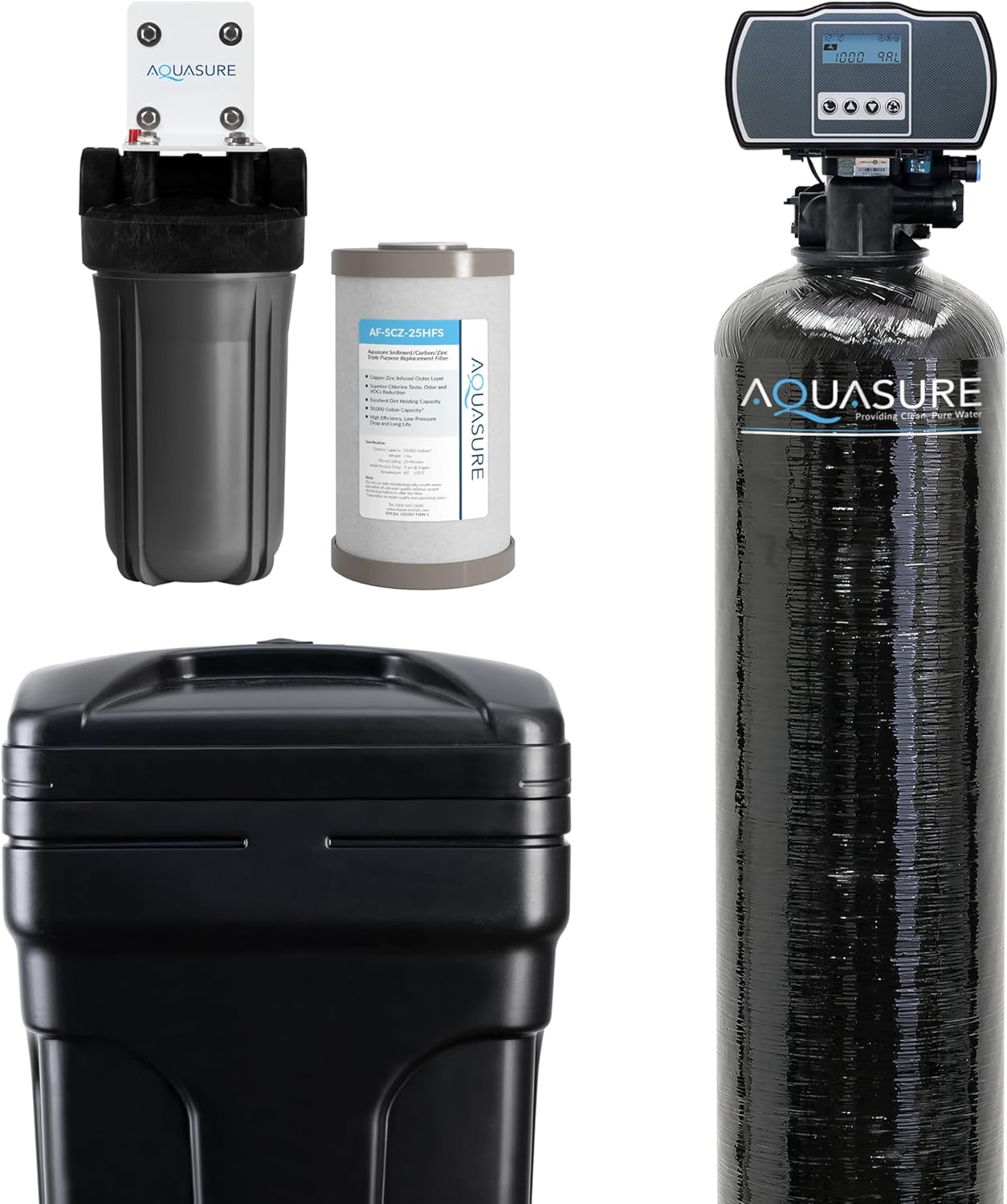
The Fleck 5600SXT is technically a control valve, not a complete system. Builders like SoftPro, AFWFilters, and DuraWater pair it with a 9x48 or 10x54 brine tank and a chosen resin to make a turnkey softener. For homes fighting iron staining, the configuration that matters most is the resin: standard 8% cross-linked resin tolerates only about 2 ppm of iron before fouling, while 10% cross-linked or fine-mesh resin pushes that ceiling to 6 to 8 ppm. Pair that with a Fleck head set to a 7- to 10-day forced regeneration cycle and a quarterly dose of an iron-removing resin cleaner, and you have a softener that can hold its own against moderate well-water iron.
The 5600SXT's strengths for iron-staining households: programmable reserve, easy bypass, downflow brining that lets you adjust salt dose upward (15 lbs per cubic foot of resin instead of the default 6), and a service network that includes almost every well-water plumber in North America. The weakness: it is on you, the buyer, to spec the right resin and regen schedule. A stock 8% resin Fleck will foul within two seasons if your iron is above 3 ppm.
Springwell SS1: the plug-and-play option
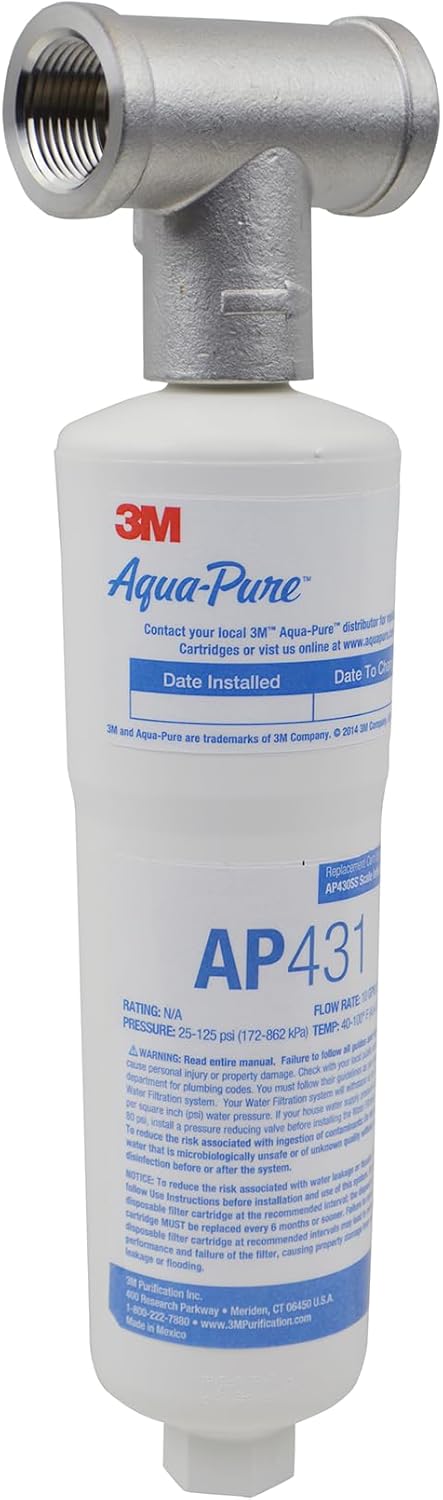
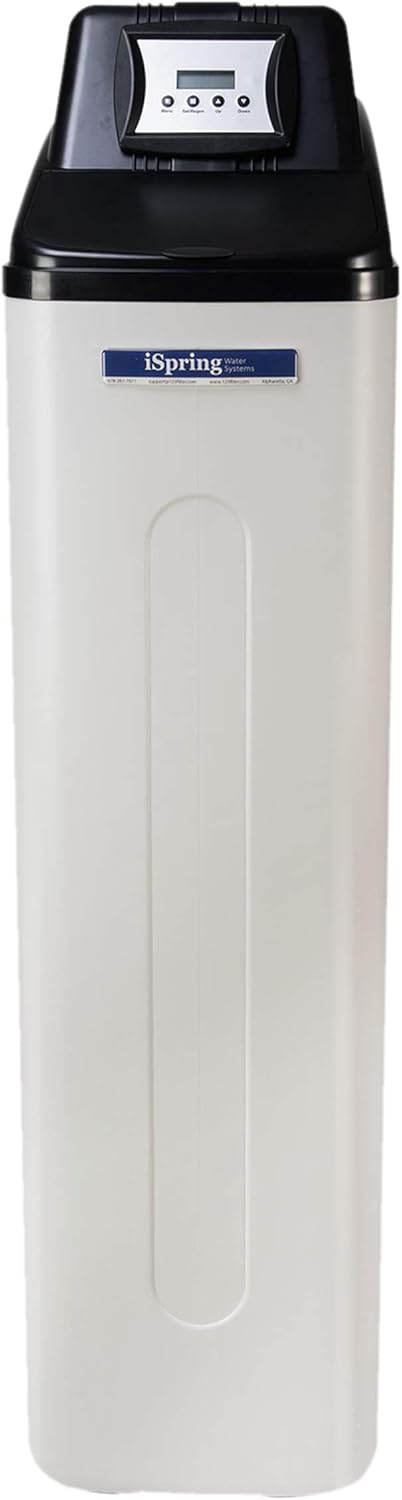
The Springwell SS1 is the company's single-tank softener for households up to four bathrooms (the SS4 and SS+ scale up from there). It ships with a Vortech-style distributor, 10% cross-linked resin out of the box, and a Bluetooth-enabled head that lets you set regen cycles from your phone. Springwell rates the SS1 for up to 7 ppm of ferrous iron when paired with their recommended salt dose, and they sell a dedicated iron and sulfur pre-filter (the WS1) as an upstream add-on.
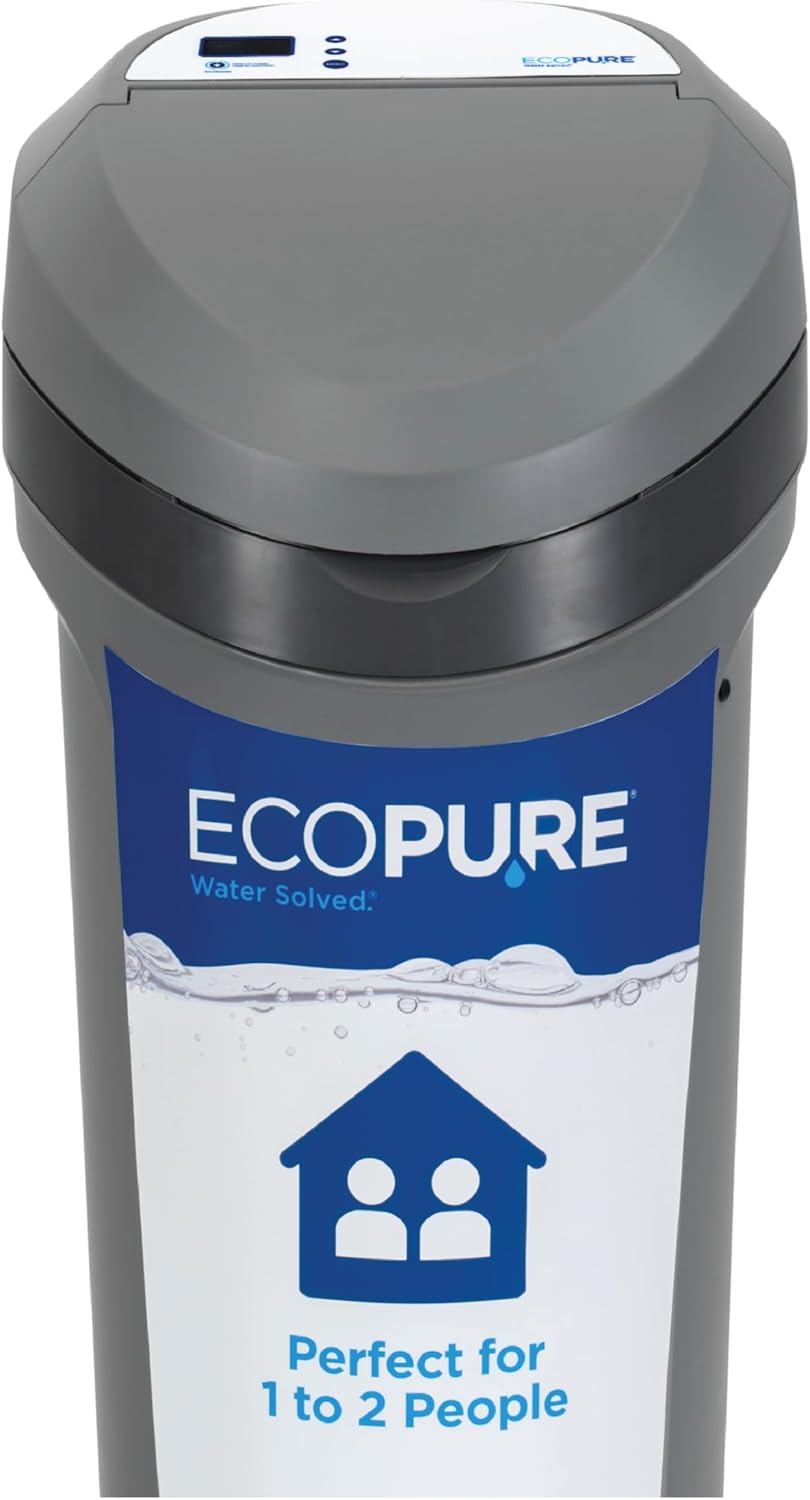
Where the SS1 wins is the resin choice and the warranty. The lifetime warranty on the tank and valve is rare in this price range, and the upgraded resin means you do not have to negotiate with a reseller about which beads to ship. Where it loses is repairability. Springwell uses a proprietary head, so if a paddle wheel or sensor fails out of warranty, you are buying parts from one source instead of any plumbing supply house.
Head-to-head comparison
| Feature | Fleck 5600SXT (with upgraded resin) | Springwell SS1 |
|---|---|---|
| Max ferrous iron tolerance | 6-8 ppm (with 10% resin + fine mesh) | 6-7 ppm (factory configuration) |
| Ferric (red) iron tolerance | Negligible; needs pre-filter | Negligible; needs pre-filter |
| Resin shipped | Depends on reseller; insist on 10% cross-linked | 10% cross-linked standard |
| Control head | Mechanical/digital, no app | Bluetooth app control |
| Warranty | 5 years valve, 10 years tank (typical) | Lifetime tank and valve |
| Repair parts availability | Excellent, universal | Springwell-only |
| Typical installed price (2026) | $650-$1,100 | $1,400-$1,700 |
| Best for iron-stained toilets? | Yes, if you pair with the right resin and pre-filter | Yes, if you add the WS1 or third-party iron pre-filter |
The verdict for iron-stained toilets
For the specific problem of Fleck 5600SXT vs Springwell SS1 iron staining toilets, the honest answer is that neither softener fixes the problem alone if your iron test reads above about 3 ppm or shows any ferric iron. Both units are excellent softeners with broadly equivalent iron-handling capacity once you upgrade the Fleck's resin to match Springwell's stock spec. The Fleck wins on price, repairability, and resin flexibility. The Springwell wins on warranty, ease of setup, and app control. Whichever you choose, the toilet stains will keep coming back until you put a sediment-rated and iron-oxidizing pre-filter in front of the softener.
If you are still weighing the underlying softener decision, our companion guide softener vs iron filter: which comes first walks through plumbing order, and the best iron filters for well water covers air-injection and birm-based alternatives that bolt onto either softener.
The pre-filters and add-ons that actually stop toilet stains
Whether you pick the Fleck or the Springwell, the components below are what keep your toilets stain-free between softener regenerations. Iron drops out of solution the moment it sees oxygen, so the strategy is to oxidize and trap it upstream before it ever touches the resin or your fixtures.
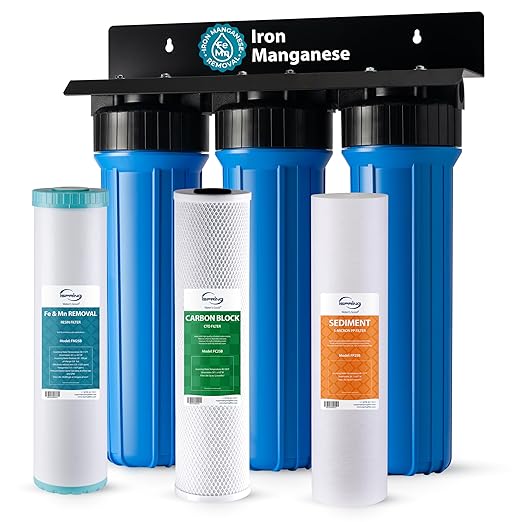
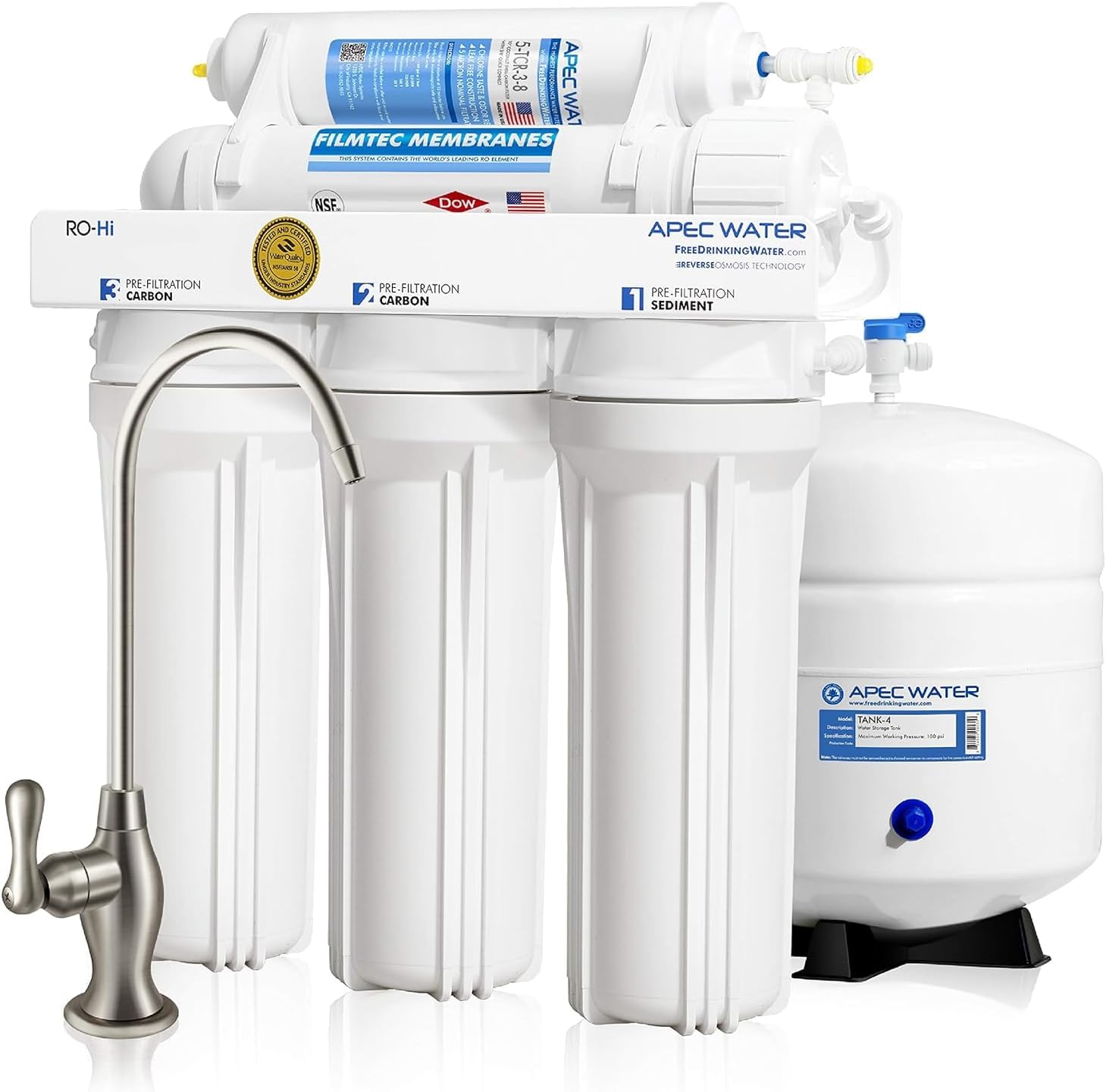
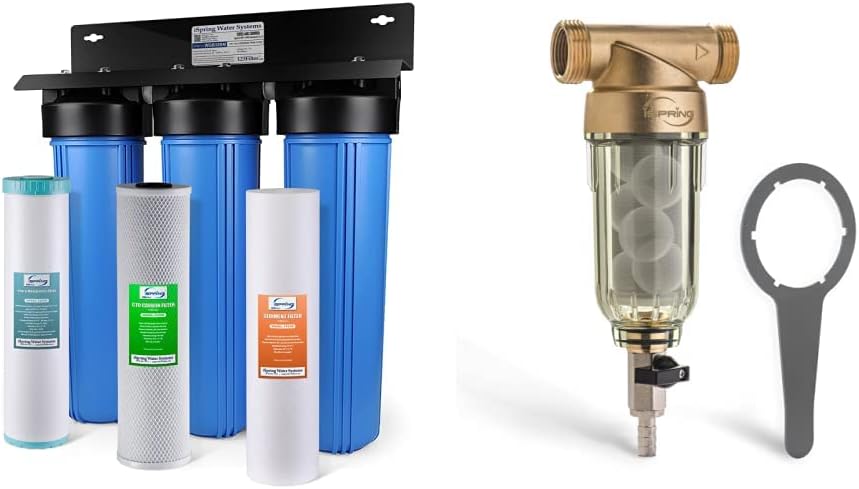
iSpring Iron and Manganese Whole House Water Filtration System
This is the single most useful add-on for a household whose toilets stain despite a working softener. The iSpring iron and manganese system uses a manganese greensand media to oxidize ferrous iron into ferric, then physically catches it before it reaches your softener. It handles up to 3 ppm of iron and 1 ppm of manganese, regenerates with potassium permanganate, and protects your softener resin from premature fouling. If your toilet tank still shows orange film after a softener install, install this in front of either the Fleck or the Springwell. iSpring Whole House Water Filter System, Reduces Iron, Manga
Aquasana Whole House Well Water Filter (500K Gallons, UV + Carbon + KDF)
For well-water homes where iron staining shows up alongside taste, odor, and microbial concerns, the Aquasana 500K combines sediment, KDF, carbon, and a UV lamp in one cabinet. The KDF stage specifically targets dissolved iron and hydrogen sulfide via redox, which means it shrinks the load on your softener resin and reduces the iron that escapes downstream to your toilets. It is the most expensive add-on in this guide but it consolidates four jobs into one. Aquasana Whole House Well Water Filter | 500K Gallons | UV,
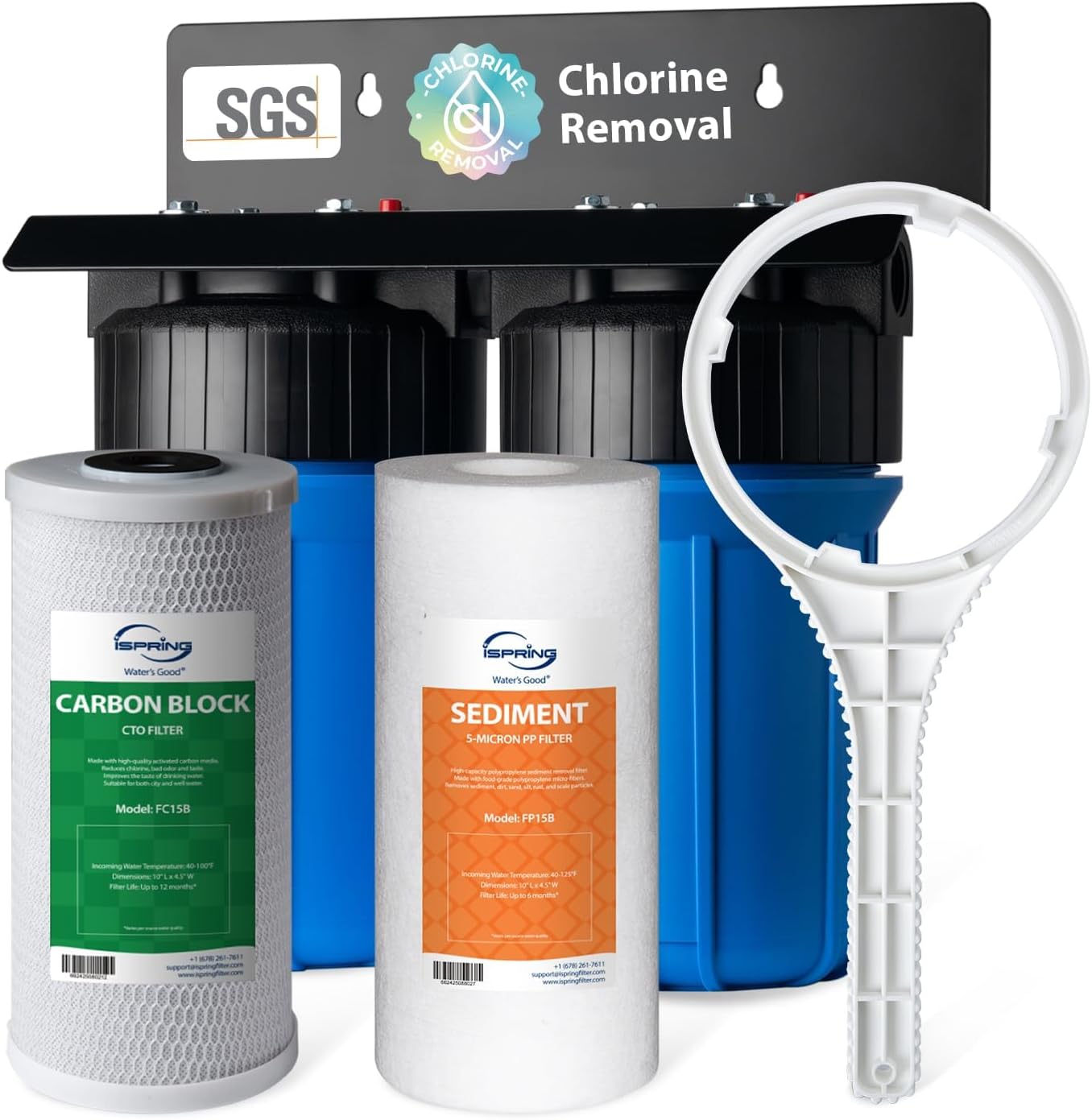
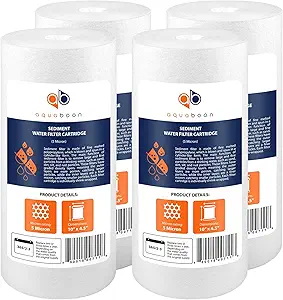
Aquaboon 5 Micron 10x4.5 Well Water Sediment Filter (4-Pack)
Any iron that has already oxidized in the well casing or pressure tank arrives at your house as visible particles. A 5-micron pleated sediment cartridge in a big-blue housing catches that ferric iron before it reaches the softener or, worse, settles into your toilet tank. A four-pack lasts most well-water households a full year. Pair it with either the Fleck or the Springwell as the first stage in your treatment train. Aquaboon 5 Micron 10 x 4.5 Well Water Sediment Filter Replac
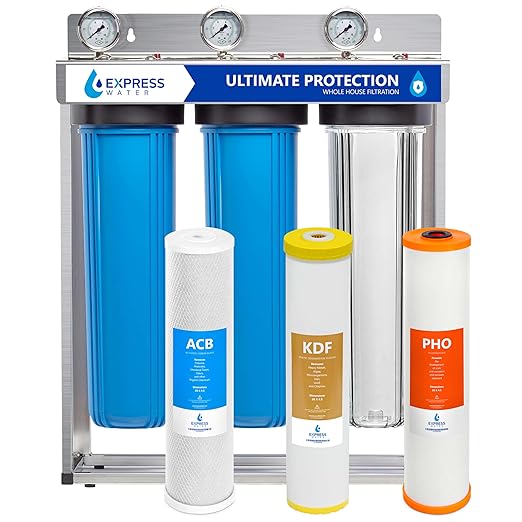
Express Water 3-Stage Whole House Water Filter System
If you want a budget-friendly canister system that handles sediment, KDF, and carbon in one housing trio, the Express Water 3-stage is the workhorse pick. The KDF stage in particular helps capture residual dissolved iron after the softener, which is the iron that historically ends up in your toilet tank. It is not a substitute for the iSpring iron and manganese unit at higher iron levels, but it is a strong polishing stage for homes whose iron tests at 1 to 2 ppm. Express Water 3-Stage Whole House Water Filter System, Reduc
HQUA WF3-01 3-Stage Whole House Water Filtration System
The HQUA WF3-01 is a similar three-canister setup at a slightly lower price point, with a sediment stage, a CTO carbon block, and a granular activated carbon stage. It is the right pick if your toilet stains are mild (iron under 1 ppm) and you mainly want to keep oxidized particles from settling into the tank between softener cycles. WF3-01 3-Stage Whole House Water Filtration System, Reduces
Installation order and ongoing costs in 2026
The correct plumbing order from the well or meter is: pressure tank, sediment filter, iron/manganese filter, softener, and finally a carbon polish. Putting the softener first dooms the resin to iron fouling. Skipping the sediment stage shortens every downstream cartridge's life. For a Fleck 5600SXT build with upgraded resin, an iSpring iron and manganese filter, and an Aquaboon sediment pre-filter, expect to spend $1,400 to $1,900 in parts plus a Saturday of plumbing. The Springwell SS1 plus the WS1 iron pre-filter plus a sediment housing runs $2,200 to $2,600 but ships pre-configured. Annual salt costs for either softener run $80 to $150 for a four-person household, and resin cleaner adds another $30 per year if you have any measurable iron.
If you are still narrowing down softener brands, our Fleck 5600SXT buyer's guide breaks down which resellers ship which resin grade.
Frequently Asked Questions
Can a water softener alone remove iron stains from toilet bowls?
Only if your iron level is under about 2 ppm, the iron is fully dissolved (ferrous, not ferric), and you run the softener on a forced 7-day regeneration cycle with 15 lbs of salt per cubic foot of resin. Above 2 ppm, or if any iron has already oxidized in the well casing, the softener will let enough iron through to keep staining your toilet tank. Add a dedicated iron pre-filter.
Will the Fleck 5600SXT foul if I have 4 ppm of iron in my well water?
The stock 8% cross-linked resin will foul within 12 to 18 months at 4 ppm. Insist that your reseller ship 10% cross-linked fine-mesh resin, run a forced regeneration every 5 to 7 days, and dose Iron-Out or Pro Res Care into the brine tank quarterly. Even then, a greensand or air-injection iron pre-filter upstream is the more durable fix.
Does the Springwell SS1 come with an iron pre-filter included?
No. The SS1 ships as a standalone softener. Springwell sells the WS1 well-water filter as a paired upstream stage for iron and sulfur, and it is the configuration they recommend for households with visible toilet staining. You can also pair the SS1 with a third-party iron and manganese filter at lower cost.
What iron level finally requires a dedicated air-injection iron filter instead of a softener?
Above roughly 6 to 7 ppm of ferrous iron, or any measurable ferric iron, both the Fleck 5600SXT and Springwell SS1 will struggle. Above 10 ppm, you need an air-injection oxidation tank (AIO) with a separate softener downstream. Get a Hach iron test kit before you spec equipment; a $30 test saves $1,000 in wrong-system regret.
How often should I clean toilet tanks while a new softener and iron filter are bedding in?
For the first 30 days after installation, drop a citric-acid tank tablet (not chlorine bleach, which oxidizes iron faster) into each toilet weekly. After the iron pre-filter and softener resin settle into their regeneration rhythm, the staining should slow to a monthly wipe.
Will the Springwell SS1's Bluetooth head save salt compared to the Fleck 5600SXT's mechanical timer?
The app gives you visibility, not magic. Both heads run metered regeneration based on water use, so salt consumption is similar when configured identically. The Springwell app is genuinely useful for catching missed regenerations early, which matters in iron-staining households because a skipped cycle shows up as fresh toilet rings within 48 hours.
Can I install the Fleck or Springwell myself, or do I need a plumber?
Both are DIY-friendly for any homeowner comfortable with PEX or copper sweat connections, a drain line tie-in, and a 120V outlet. Budget four to six hours for the softener alone, plus another two hours for a paired iron pre-filter. If you are running a dedicated softener loop for the first time, hire a plumber for the manifold and do the cartridge swaps yourself thereafter.
Key Takeaways
- Choosing the right Fleck 5600SXT vs Springwell SS1 iron staining toilets means matching capacity and output ports to your actual devices
- Always check actual watt-hours (Wh), not just watts — runtime depends on Wh, not peak output
- Also covers: Fleck 5600SXT iron stain removal
- Also covers: Springwell SS1 toilet stains
- Also covers: best softener iron stained porcelain
- Compare price-per-Wh across models to find the best value for your budget