For Fleck 5600SXT vs 7000SXT mountain sloped homes, the short answer is this: the 7000SXT is the better fit for most steeply sloped properties because its higher service flow rate (up to 27 GPM versus 20 GPM on the 5600SXT), 1.05-inch valve porting, and downflow/upflow flexibility handle the pressure losses, elevation gain, and long uphill plumbing runs that are typical when your well, pressure tank, and fixtures are spread across a hillside. The 5600SXT remains an excellent, budget-friendly softener for a flat lot or a small cabin, but once you start pumping water uphill more than 40 vertical feet to a master bath, the 7000SXT's hydraulics earn their keep.
Below, we break down exactly why elevation, slope, and well placement change the math, when the 5600SXT is still the smart pick, and which prefilters and iron filters belong upstream of either valve on a mountain property in 2026.
Why slope and elevation change the Fleck 5600SXT vs 7000SXT decision
On a flat suburban lot, the Fleck 5600SXT and 7000SXT look almost interchangeable on paper. Both are mechanical, metered control valves, both run the same resin tanks, both regenerate on demand, and both have proven 10-plus-year service lives when paired with a clean feed. The Fleck 5600SXT vs 7000SXT mountain sloped homes comparison only gets interesting once you add gravity, friction, and a deep well into the equation.
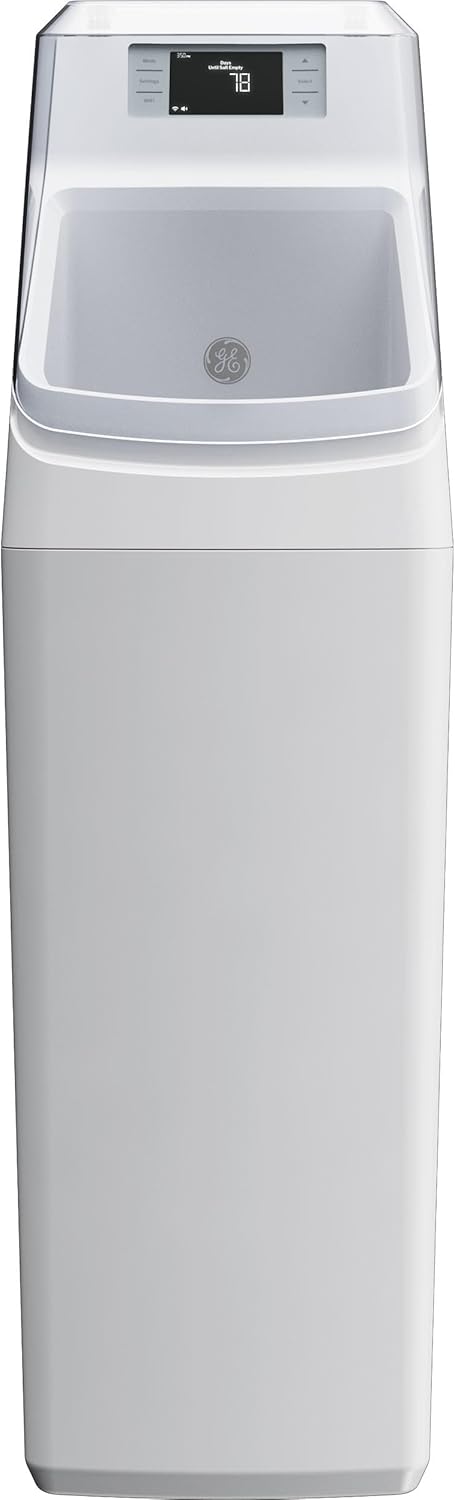
Three physical realities drive the choice on a steep property:
- Static pressure loss from elevation. Every 2.31 vertical feet of lift costs you 1 PSI. A well house 90 feet below your kitchen sink is already eating ~39 PSI before any friction.
- Friction loss in long runs. Mountain properties routinely have 200–600 feet of buried line between the wellhead and the mechanical room. Even 1-inch PEX loses meaningful PSI at 10+ GPM.
- Peak demand timing. Sloped homes are often multi-level, with a primary suite at the top of the hill. Simultaneous shower-plus-laundry demand is unforgiving when the softener valve becomes the bottleneck.
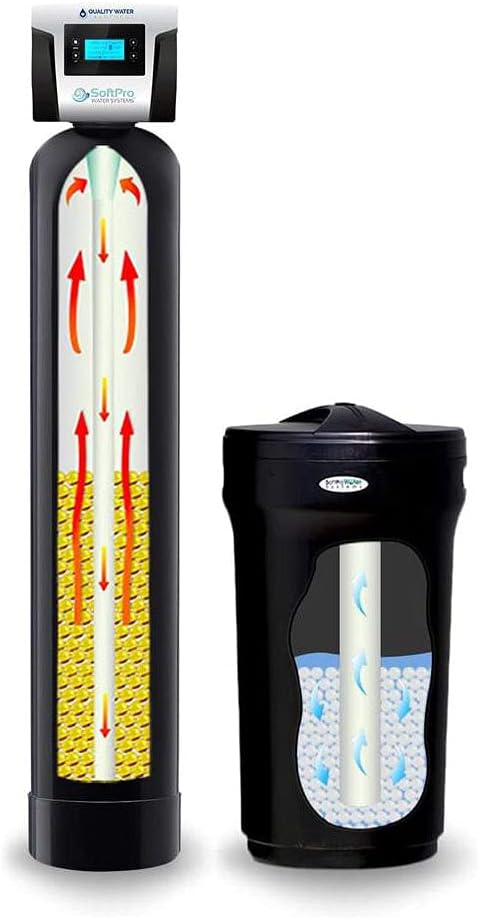
The 5600SXT uses a 3/4-inch internal porting path with a service flow of roughly 20 GPM and a pressure drop near 15 PSI at that rate. The 7000SXT uses 1.05-inch porting, hits 27 GPM service flow, and drops only about 15 PSI at 27 GPM — meaning at any given flow rate below peak, the 7000SXT gives back several PSI to the rest of your house. On a hillside where you started the day with 55 PSI at the pressure tank, those PSI matter.
Head-to-head: Fleck 5600SXT vs 7000SXT for mountain sloped homes
| Spec | Fleck 5600SXT | Fleck 7000SXT |
|---|---|---|
| Valve porting | 3/4" effective | 1.05" effective |
| Service flow (continuous) | ~12 GPM | ~21 GPM |
| Peak flow | ~20 GPM | ~27 GPM |
| Pressure drop at peak | ~15 PSI @ 20 GPM | ~15 PSI @ 27 GPM |
| Regeneration cycle | ~90 min | ~30 min (fast cycle) |
| Upflow brining | No (downflow only) | Yes |
| Best lot type | Flat, 1–3 bath, < 30 ft elevation gain | Sloped, 3+ bath, 30 ft+ elevation gain, long runs |
| Typical bypass | Plastic 3/4"–1" | Brass/noryl 1" |
If you remember nothing else from the Fleck 5600SXT vs 7000SXT mountain sloped homes comparison, remember this: the 7000SXT gives you a faster regeneration window (so you are less likely to be caught mid-regen during the morning rush) and a real 1-inch flow path that preserves PSI for the long uphill push.
When the 5600SXT is still the right call on a mountain property
Plenty of sloped properties do not actually need the 7000SXT. The 5600SXT is the right pick when:

- The home is 1–2 bathrooms with two or fewer permanent residents.
- The wellhead is uphill of the house (gravity is on your side, not against you).
- Peak simultaneous demand stays under 10 GPM.
- Your raw water is already low in iron and tannin — no oxidizing prefilter required.
- You want the cheapest competent metered softener that still uses genuine Pentair Fleck parts.
For these homes, a 5600SXT paired with a 32,000-grain resin tank is plenty. You can read our full sizing walk-through in our Fleck 5600SXT sizing guide for small mountain cabins before committing.
When the 7000SXT earns its price premium
Choose the 7000SXT for steeply sloped properties when any of these apply:
- The mechanical room is more than 40 vertical feet above the wellhead or pressure tank.
- You have 3+ bathrooms, a soaking tub, or a hot tub fill line.
- Buried supply line from the well exceeds 200 feet.
- Static pressure at the house entry is already 50 PSI or lower.
- You want shorter regen windows because guests, short-term renters, or a home office mean unpredictable daytime water use.
The 7000SXT also tolerates higher iron loads better, which matters because mountain wells frequently pull water through iron-rich bedrock. That brings us to the equipment that belongs upstream of either valve.
What goes upstream: sediment and iron prefiltration for sloped wells
Neither the 5600SXT nor the 7000SXT is a filter — they are ion-exchange softener valves. Mountain well water almost always needs sediment removal first, and often iron and manganese removal before that. Skip this step and you will foul the resin in 12–18 months regardless of which valve you bought.
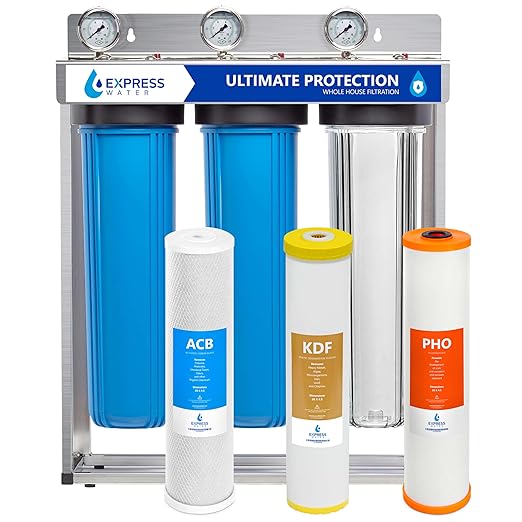
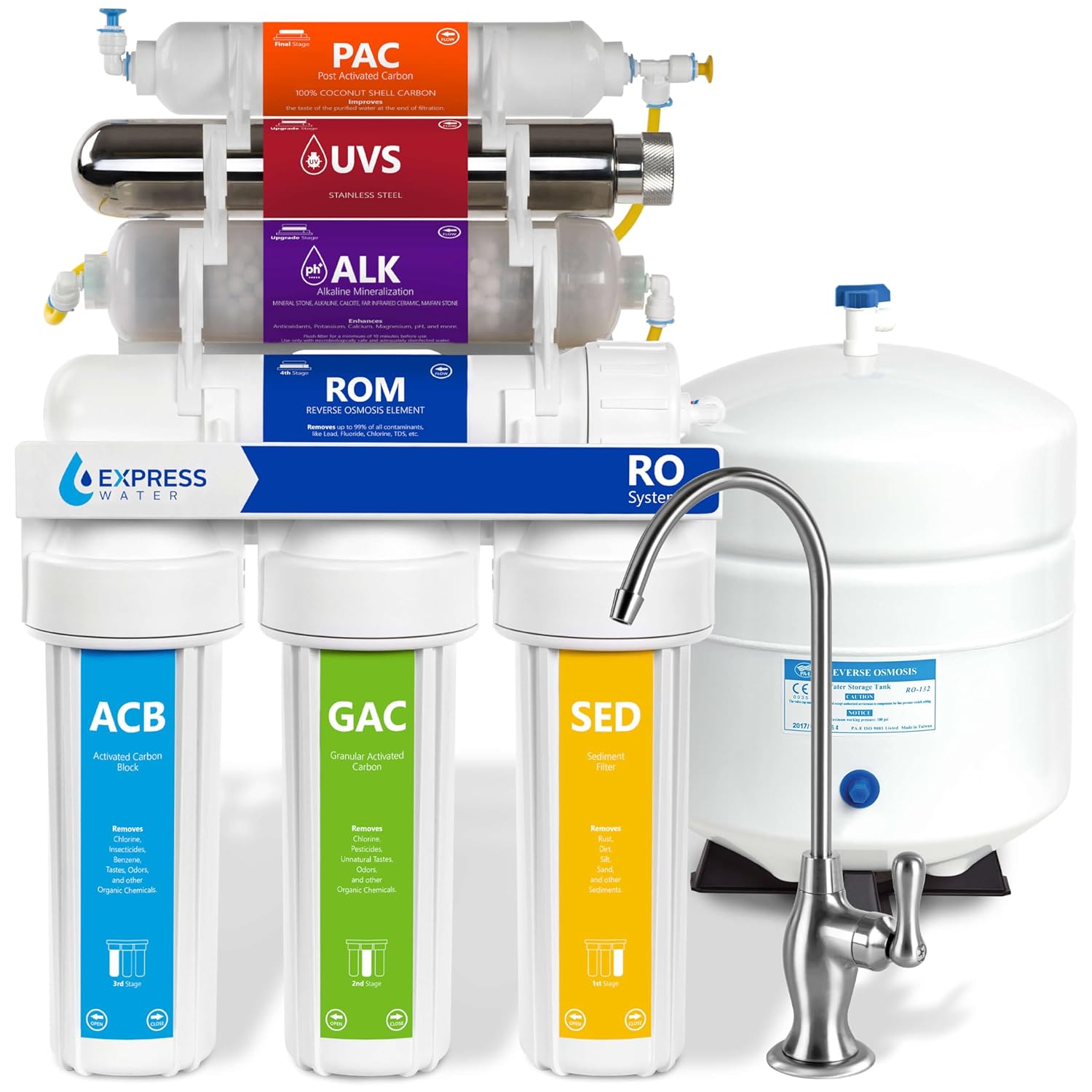
Express Water 3-Stage Whole House Water Filter System
This is the easiest upstream prefilter to install in a mountain mechanical room because the three stages (sediment, KDF/carbon, carbon block) live in one bracketed housing with 1-inch ports. On a sloped property where you are already squeezing pipe runs around a crawlspace or pump house, the consolidated footprint is genuinely useful. Spec it ahead of either Fleck valve to catch the silt and fine sand that hillside wells stir up after heavy rain. Check the Express Water 3-Stage system on Amazon.
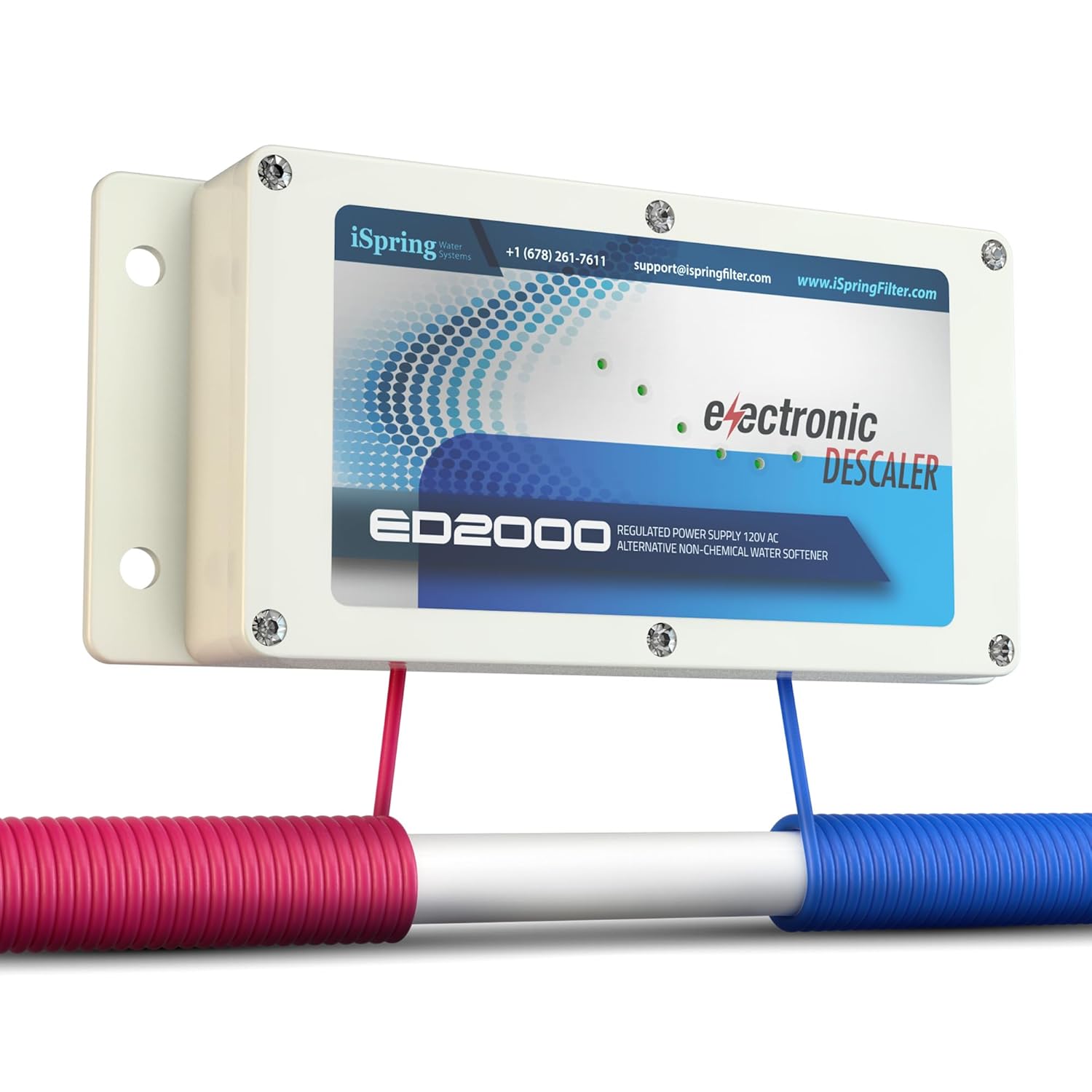
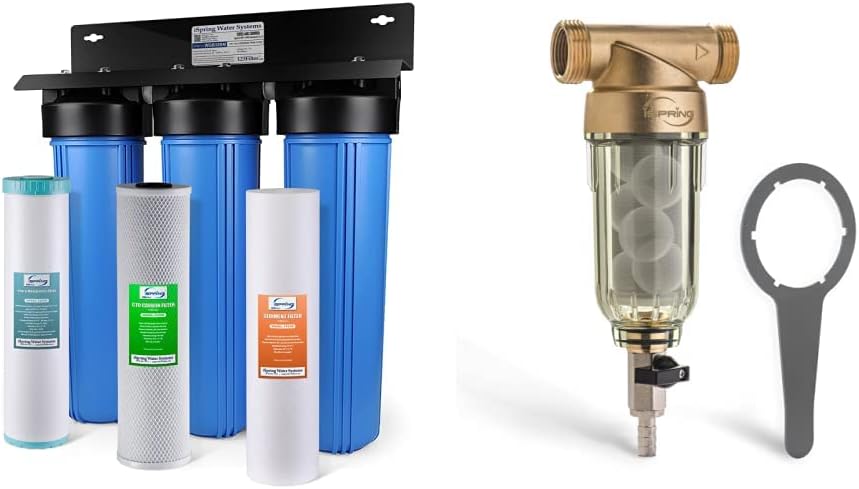
iSpring Iron & Manganese Whole House Water Filtration System
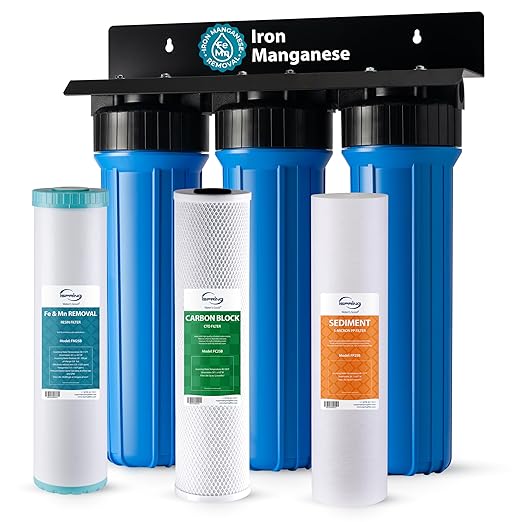
If your well report shows iron above 0.3 ppm or manganese above 0.05 ppm — extremely common on granite and basalt mountain aquifers — install a dedicated iron filter ahead of the softener. The iSpring unit oxidizes and traps iron, manganese, and hydrogen sulfide before they ever touch your softening resin, which is the single biggest determinant of how long a 5600SXT or 7000SXT actually lasts on a mountain well. See the iSpring iron and manganese system on Amazon.
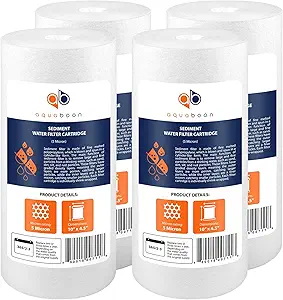
Aquaboon 5 Micron 10x4.5 Well Water Sediment Filter (4-Pack)
Even with a 3-stage system, sloped properties benefit from a dedicated 4.5-by-10-inch big-blue sediment cartridge as the very first stage. The Aquaboon 4-pack at 5 micron is the cheapest insurance against the seasonal silt slugs that come down a steep aquifer after spring melt. Plan on swapping cartridges every 2–3 months in year one until you learn your well's pattern. Grab the Aquaboon 4-pack on Amazon.
Aquasana Whole House Well Water Filter, 500K Gallons, UV+Carbon+KDF
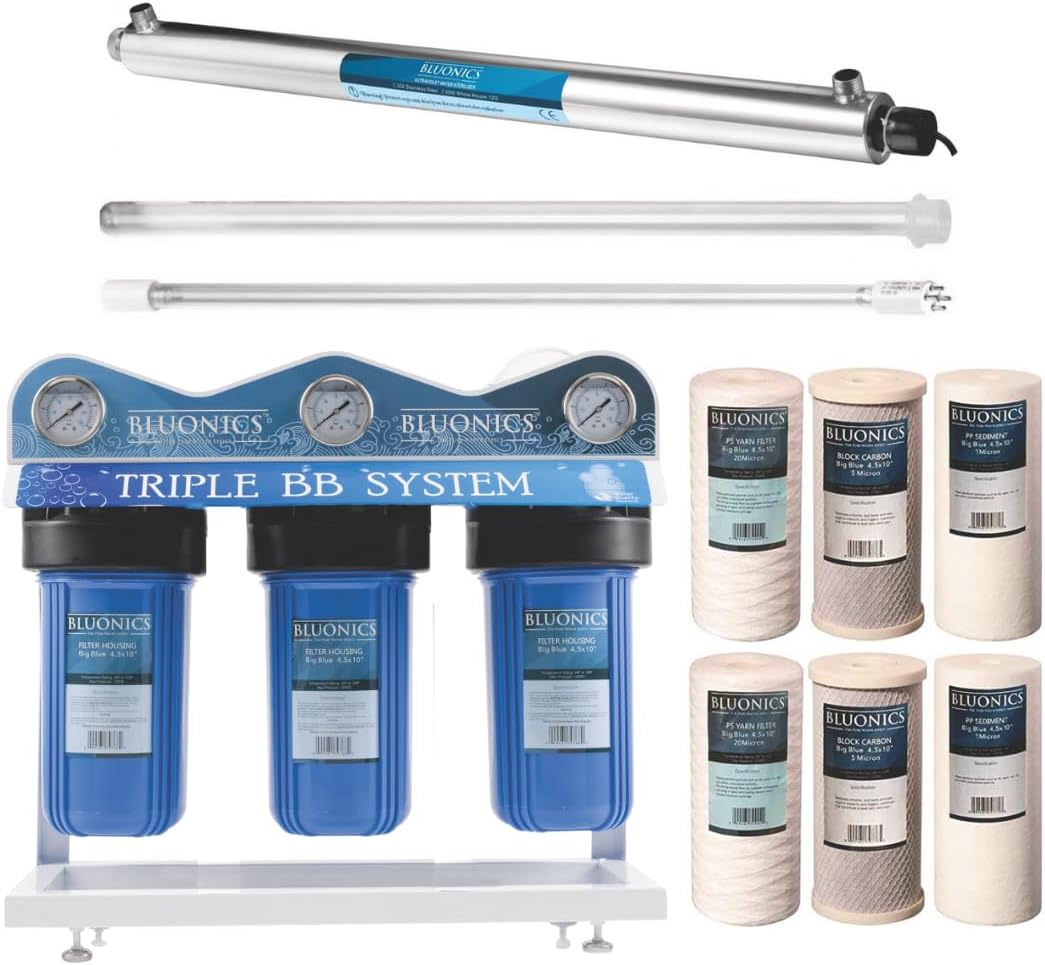
For homeowners who want a single integrated well-water treatment train — UV disinfection, carbon, and KDF — ahead of either Fleck valve, the Aquasana 500K is the most complete option in this list. It is overkill for a 1-bath cabin, but on a 4-bath mountain home where you are already buying a 7000SXT, the matching upstream capacity makes sense. Review the Aquasana 500K system on Amazon.
HQUA WF3-01 3-Stage Whole House Water Filtration System
The HQUA WF3-01 is a value-tier 3-stage prefilter that pairs well with a 5600SXT on a smaller, less iron-loaded mountain property. The pressure drop is modest, the cartridges are standard 10x4.5 sizes, and replacement supply is easy to source. See the HQUA WF3-01 on Amazon.
Sizing the resin tank for elevation gain
Resin tank capacity is set by your water hardness and daily demand, not directly by slope. But slope indirectly drives it: families on mountain properties usually under-report water use because the well, pump, and pressure tank are out of sight. A pressure tank cycling more often than every 90 seconds during peak is a sign your softener is undersized regardless of valve choice.
A useful rule for the Fleck 5600SXT vs 7000SXT mountain sloped homes decision: if your calculated daily softening demand exceeds 4,500 grains per person and you have more than 30 feet of elevation gain inside the building envelope, jump up one resin tank size and pair it with the 7000SXT. The extra resin buys you longer intervals between regens, and the 7000SXT's fast cycle keeps you out of bypass during morning showers.
For a deeper dive on grain capacity math, see how to size whole house softener grain capacity.
Installation notes specific to steeply sloped properties
- Anchor the brine tank. On any floor with measurable slope, shim or strap the brine tank level. A leaning brine tank reads salt level incorrectly and can cause the air-check valve to malfunction.
- Use brass bypass on the 7000SXT. The brass/noryl bypass tolerates thermal cycling in unconditioned mountain mechanical rooms better than the plastic 5600SXT bypass.
- Insulate the drain line. Run the regen drain line to daylight with continuous insulation; on a slope, freeze risk is highest at the lowest exit point.
- Leave a service loop. Mountain mechanical rooms tend to be tight. Leave 18 inches of flexible service loop above the valve so you can lift the head without cutting pipe.
- Plan for power outages. Both valves have battery backup on the timer, but the 7000SXT recovers faster after extended outages. For off-grid or generator-backed homes, this is a real consideration.
For more mechanical room planning, see our mountain well mechanical room layout guide.
Quick verdict
For Fleck 5600SXT vs 7000SXT mountain sloped homes, the 7000SXT wins for any home with 3+ bathrooms, more than 40 feet of elevation gain, or a long uphill run from the well. The 5600SXT remains the smart choice for compact cabins, retirement homes, and gravity-fed wellsites where the well sits above the house. In either case, prefilter aggressively for sediment and iron — that one decision matters more to long-term softener life than which valve you mount on top of the tank.
Frequently Asked Questions
Does a Fleck 7000SXT actually boost water pressure on a sloped property?
It does not generate pressure, but it preserves it. The wider 1.05-inch flow path drops fewer PSI at any given flow rate compared to the 5600SXT, so the pressure you arrive with at the softener inlet is closer to the pressure you leave with at the outlet. On hillside homes that start with 50 PSI, that 3–6 PSI savings is the difference between a usable second-floor shower and a trickle.
Can I run a Fleck 5600SXT on a 4-bathroom mountain home if the well is uphill?
Yes, gravity-fed setups change the math significantly. If the wellhead is 50+ feet above your highest fixture, you have free head pressure and the 5600SXT's narrower porting becomes less of a bottleneck. Confirm static pressure at the house entry is 60+ PSI under simultaneous demand before committing.
Do I need an iron filter before a Fleck softener on well water?
If your well tests above 0.3 ppm iron or 0.05 ppm manganese, yes. Softener resin will technically remove small amounts of dissolved iron, but it fouls quickly and your resin bed will lose capacity within 18 months. A dedicated iron filter is cheap insurance on a multi-thousand-dollar softener install.
How often does the Fleck 7000SXT regenerate compared to the 5600SXT?
Both regenerate on demand based on metered water use. The difference is cycle duration: a 7000SXT completes a full regen in roughly 30 minutes versus 90 minutes for a 5600SXT. On a mountain home with unpredictable peak demand, the shorter window dramatically reduces the chance you'll be in bypass during a morning shower.
What pipe size should I run from a Fleck 7000SXT to feed a sloped multi-level home?
Use 1-inch minimum from the valve to the first major branch, then size down only at the riser. PEX-A handles thermal cycling well in unconditioned mountain spaces and reduces friction loss compared to galvanized or older copper. Avoid 3/4-inch trunk lines on any home with elevation gain.
Will either Fleck valve work with a holding tank and booster pump setup?
Yes, and on properties with weak wells this is often the right architecture. Place the holding tank and booster downstream of the prefilter and upstream of the softener. The 7000SXT is the better match for booster setups because boosters often deliver higher peak flow rates than the original well pump.
How long should a Fleck 5600SXT or 7000SXT last on a mountain well?
Both valves regularly hit 12–15 years of service when fed clean, prefiltered water. Resin typically needs replacement at year 8–10. The single biggest variable is upstream filtration: properties that skip iron and sediment prefiltration see resin life cut in half and valve seal wear accelerate noticeably by year 5.
Key Takeaways
- Choosing the right Fleck 5600SXT vs 7000SXT mountain sloped homes means matching capacity and output ports to your actual devices
- Always check actual watt-hours (Wh), not just watts — runtime depends on Wh, not peak output
- Also covers: Fleck softener mountain elevation comparison
- Also covers: sloped property water softener choice
- Also covers: Fleck 7000SXT high elevation install
- Compare price-per-Wh across models to find the best value for your budget