If your private well smells like rotten eggs at every tap, you need a whole house filter for sulfur smell well water that targets hydrogen sulfide (H2S) at the point of entry, not just at the kitchen sink. The fastest-acting 2026 options pair an oxidizing media (catalytic carbon, KDF-85, or air injection) with a sediment pre-filter so iron, manganese, and sulfur bacteria don't clog downstream equipment. Below are the most relevant systems still in stock this year, ranked by how well they neutralize sulfur in untreated well water, plus a sizing guide, install notes, and an FAQ covering flow rates, softener pairing, and bacterial sulfur reduction.
Why Sulfur Smell Happens in Private Wells
That rotten-egg odor is almost always hydrogen sulfide gas dissolved in your groundwater. It enters wells three ways: naturally from decaying organic matter in the aquifer, from sulfate-reducing bacteria (SRB) that thrive in anaerobic well casings and water heaters, and occasionally from chemical reactions with magnesium anode rods. A proper whole house filter for sulfur smell well water has to oxidize the H2S so it can be physically captured, because standard carbon block filters saturate within weeks when sulfur levels exceed 1 ppm.
When shopping for whole house filter for sulfur smell well water, it pays to compare specs, capacity, and real-world runtime before committing.
Before buying anything, get a well water test that reports H2S in ppm, plus iron, manganese, pH, and total dissolved solids. Systems that work beautifully at 0.3 ppm sulfur will fail by month two at 4 ppm. If you smell sulfur only from the hot tap, the issue is your water heater anode rod, not your well — swap to an aluminum/zinc rod first and save yourself $1,500.
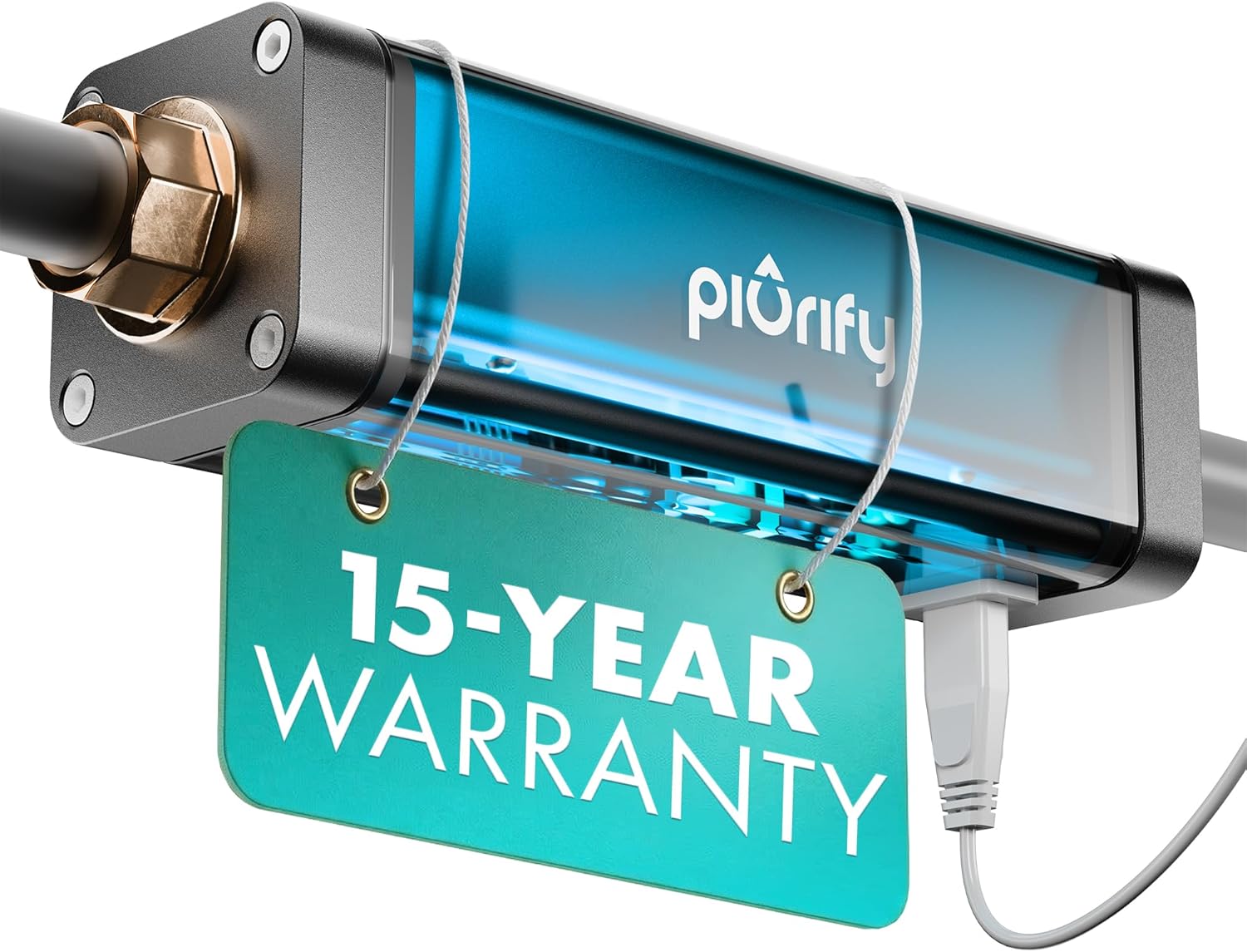
2026 Comparison: Top Whole House Sulfur Filters
| System | Best For | Capacity | Flow Rate | Sulfur Range |
|---|---|---|---|---|
| Aquasana 500K UV+KDF | Bacterial sulfur + low H2S | 500,000 gal | 7 GPM | Up to 1 ppm |
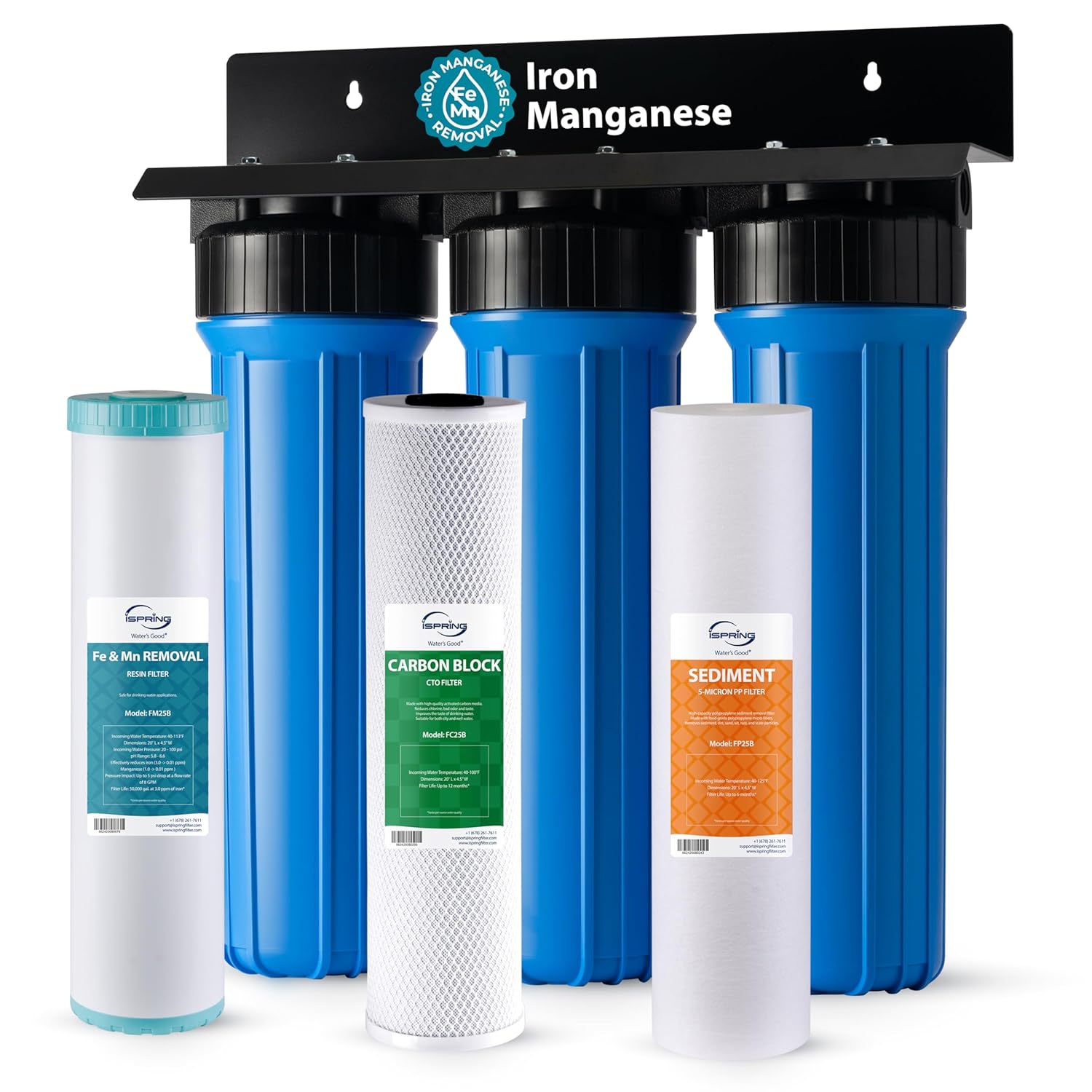
| iSpring Iron & Manganese WGB22BM | Iron-driven sulfur smell | 100,000 gal | 15 GPM | Up to 3 ppm |
| Express Water 3-Stage | Light sulfur + sediment | 100,000 gal | 15 GPM | Under 0.5 ppm |
| HQUA WF3-01 3-Stage | Budget chlorine/sulfur taste | 50,000 gal | 15 GPM | Under 0.3 ppm |
| Aquaboon 5 Micron Sediment | Pre-filter for any system | Per cartridge | 20+ GPM | N/A (sediment only) |
Top Picks Reviewed
Best Overall for Moderate Sulfur: Aquasana Whole House Well Water Filter, 500K Gallons, UV+Carbon+KDF
This is the system most homeowners with a confirmed rotten-egg well should look at first. The four-stage design runs sediment, then a catalytic carbon and KDF-55 tank, a sub-micron post-filter, and finally a UV sterilizer that kills sulfate-reducing bacteria — the root cause of recurring sulfur smell in many wells. KDF-55 oxidizes hydrogen sulfide into insoluble sulfate, which is then captured by the carbon bed. Five-year/500,000-gallon capacity means a family of four typically gets the full lifespan without media replacement, though tannic or high-iron wells will need a softener or iron filter upstream. The 7 GPM rated flow is the one tradeoff — large homes with simultaneous shower and laundry use should size up or add a parallel unit. Check current price on Amazon.
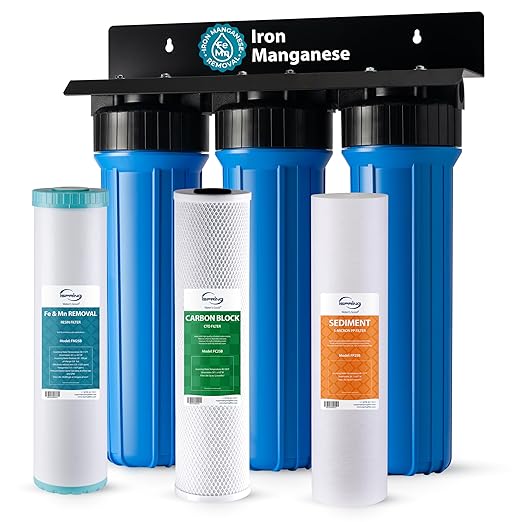
Best for Iron-Driven Sulfur Smell: iSpring Iron & Manganese Whole House Water Filtration System
If your water test shows iron above 0.3 ppm alongside the sulfur smell, you almost certainly have iron bacteria producing H2S as a metabolic byproduct. The iSpring WGB22BM uses a dedicated iron and manganese reduction media in the third stage that also strips low-level hydrogen sulfide via catalytic oxidation. It handles up to 3 ppm iron and roughly 3 ppm sulfur — far beyond what carbon-only systems can manage — and delivers 15 GPM, enough for a 3-4 bathroom home. Cartridges are user-replaceable without specialty tools, and the housing accepts standard 4.5" x 20" filters from any brand, so you're not locked into proprietary refills. Plan on replacing the iron/manganese stage every 6-9 months on heavy wells. View on Amazon.
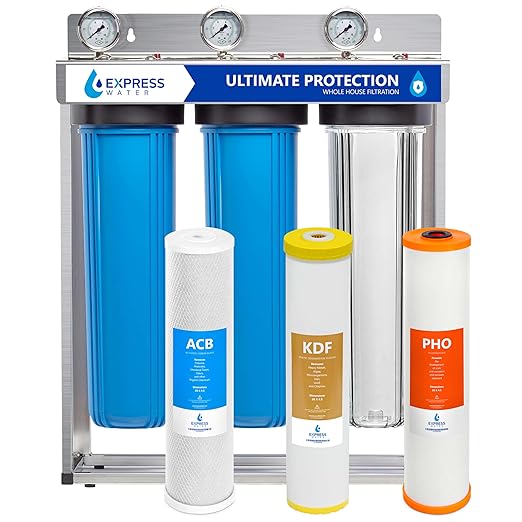
Best Budget for Light Sulfur: Express Water 3-Stage Whole House Water Filter System
For wells with intermittent sulfur smell under 0.5 ppm — or as a polishing stage downstream of an air-injection oxidizer — the Express Water 3-Stage is hard to beat at its price point. It runs a 5-micron sediment cartridge, then a KDF/coconut carbon block, then an activated carbon block. The KDF stage is what makes it viable for sulfur; pure carbon systems at this price simply don't oxidize H2S. Pressure gauges between stages let you see exactly when cartridges are loading up, which is critical for sulfur applications where breakthrough happens quickly. Cartridges last 6-12 months on average wells. See pricing on Amazon.
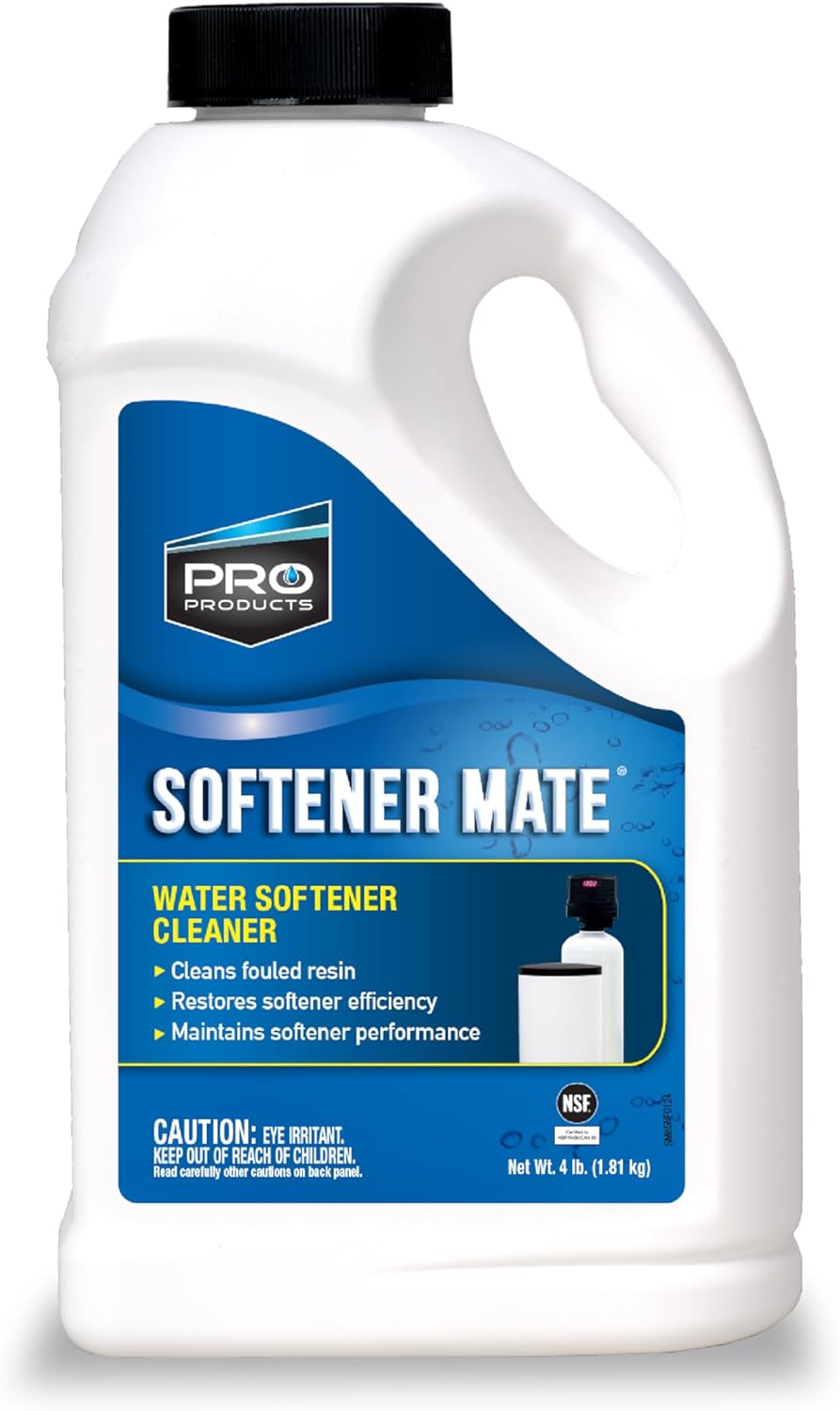
Best Budget Standalone: HQUA WF3-01 3-Stage Whole House Water Filtration System
The HQUA WF3-01 is the lowest entry point for a true whole-house setup, and it makes sense in two scenarios: a small cabin or single-bath home with very mild sulfur taste, or as a sediment/chlorine polisher after a chlorination injection system. It uses standard 10" x 4.5" cartridges so replacements are cheap and universally available. Don't expect it to handle persistent rotten-egg odor above 0.3 ppm H2S on its own — but as a pre-filter for an oxidizer or a backup loop, it pulls its weight. Installation is straightforward with included mounting bracket and bypass-ready fittings. Check Amazon listing.
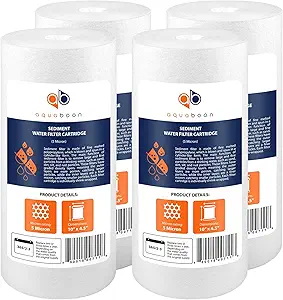
Best Pre-Filter Cartridge: Aquaboon 5 Micron 10x4.5 Well Water Sediment Filter (4-Pack)
Every sulfur removal system lives or dies by what hits it first. Iron particulates, sand, and rust will foul KDF, catalytic carbon, and UV lamp sleeves within weeks if you skip sediment pre-filtration. The Aquaboon 4-pack fits the standard 10" x 4.5" big-blue housings used by iSpring, Express Water, HQUA, and most generic whole-house enclosures. Five-micron rating is the sweet spot for well water — finer cartridges clog too quickly on iron-heavy supplies, and coarser ones let particulates through to your oxidation media. Buying in 4-packs gets you a full year of changes at typical well water sediment loads. View 4-pack on Amazon.
How to Choose the Right System for Your Well
Match the system to your H2S concentration, not to your bathroom count. At under 0.3 ppm sulfur, a quality KDF/carbon cartridge system like Express Water or HQUA will keep the smell out for months at a time. Between 0.3 and 1 ppm, step up to the Aquasana 500K with its UV stage — bacterial sulfur is the most common cause in this range and a sterilizer ends the cycle. Between 1 and 3 ppm, or anywhere with measurable iron, the iSpring iron/manganese system is the right call. Above 3 ppm sulfur, you've moved past cartridge filtration entirely and need an air-injection oxidation tank or chlorination injection upstream of any cartridge filter.
Flow rate matters too. A two-bathroom home needs roughly 7 GPM sustained; a four-bathroom home with laundry running simultaneously wants 12-15 GPM. Undersizing causes pressure drops that get worse as filters load — you'll blame the filter when it's really a flow mismatch.
Sulfur Filtration and Water Softeners
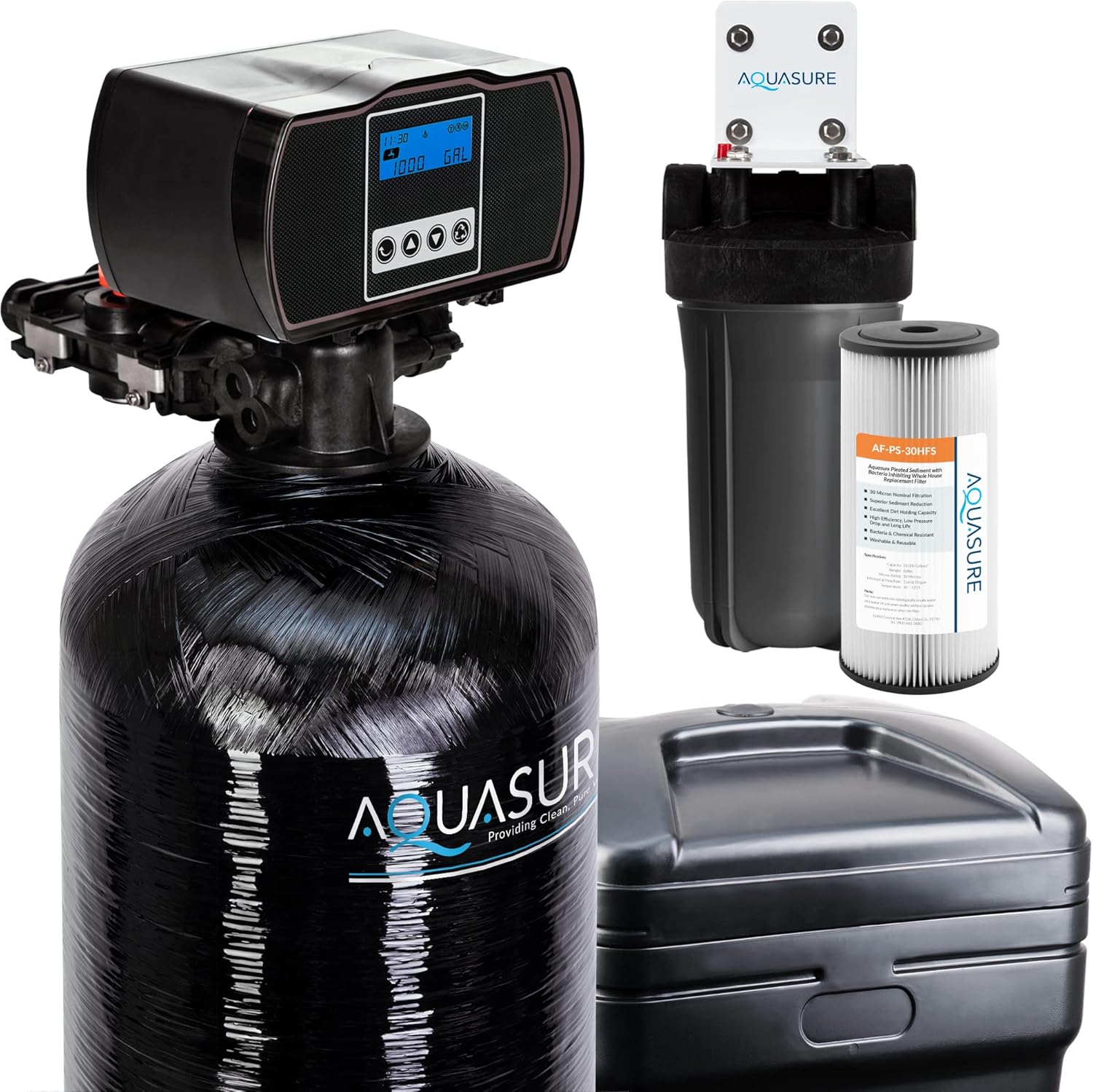
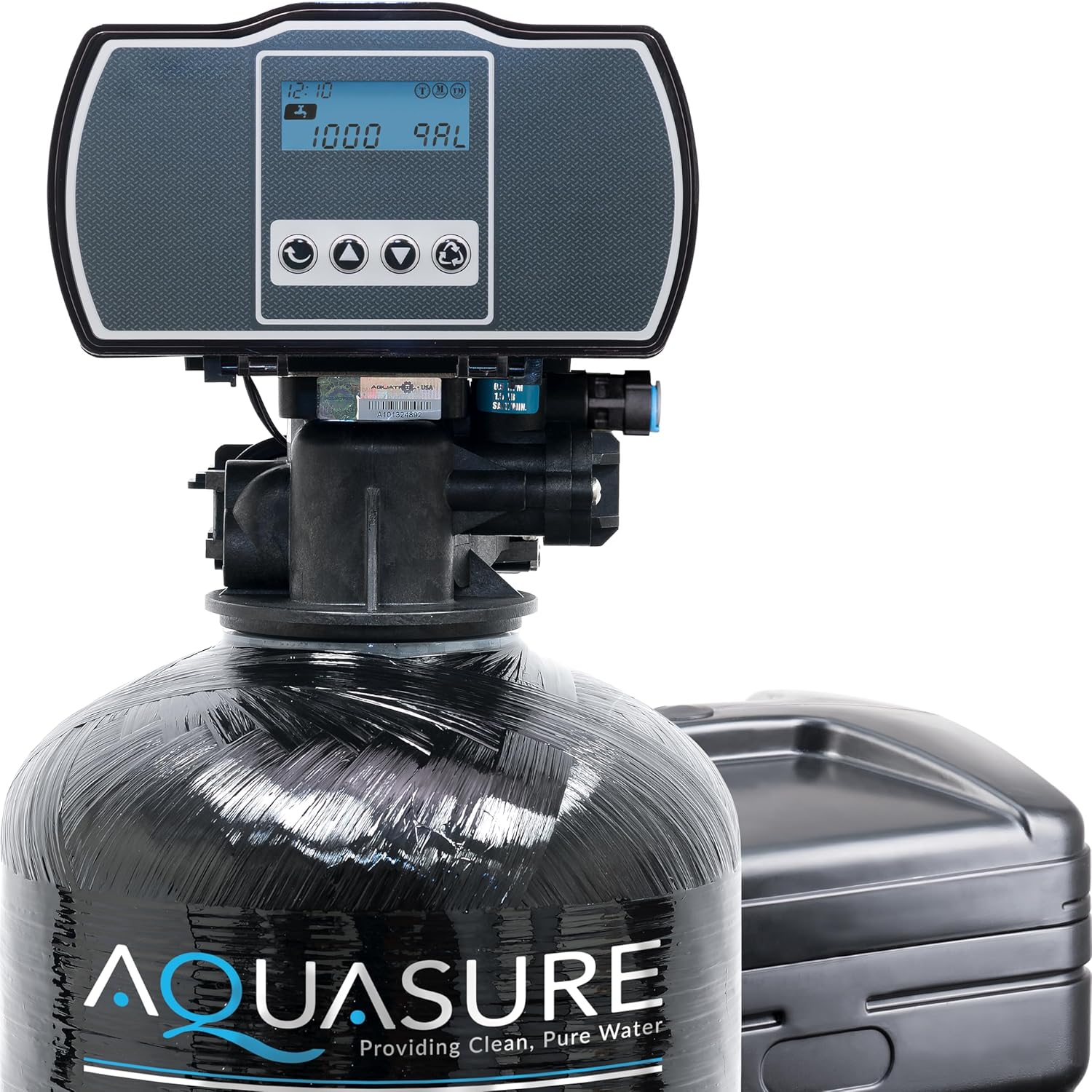
A water softener does not remove sulfur smell — that's a separate problem requiring different media. But sulfur removal systems and softeners interact in ways that affect both. Always place the sediment and sulfur stages upstream of the softener: hydrogen sulfide degrades softener resin and iron fouls it permanently. Some homeowners with combined hardness, iron, and sulfur issues are better served by an all-in-one tank system using a single mineral media bed than by stacking separate appliances. For more on pairing, see our guide to combining a softener with an iron filter and our whole house softener comparison for well systems.
Installation Notes for Well Owners
Whole-house systems install on the cold water line after the pressure tank and before any branch to the water heater or softener. You'll need a bypass loop (every system above includes one or accepts standard 1" bypass fittings) so you can service cartridges without shutting down the house. Plumb in a sediment pre-filter even if your system already includes one — the second one protects your investment and is cheap to replace. Most installs take 2-4 hours for a competent DIYer with a propane torch or PEX crimper. If your well sits below the house and you have pressure-tank issues already, address those first; no filter will compensate for a failing pressure switch or waterlogged tank. For the chemistry behind H2S formation and treatment chemistry, our well water testing guide walks through what to test for and how to interpret results.
Frequently Asked Questions
How do I get rid of sulfur smell in well water permanently?
Permanent removal requires identifying the source first. If sulfate-reducing bacteria live in your well casing, you need shock chlorination plus a UV sterilizer (the Aquasana system) to prevent recolonization. If hydrogen sulfide is dissolved naturally from the aquifer, you need oxidation media like KDF-85 or catalytic carbon. If only the hot water smells, replace your water heater's magnesium anode rod with an aluminum/zinc alternative. Combination systems address multiple causes simultaneously and are the most reliable long-term fix.
Will a regular carbon filter remove hydrogen sulfide from well water?
Standard activated carbon filters remove only trace amounts of H2S and saturate quickly above 0.3 ppm. You specifically need catalytic carbon (chemically modified to oxidize sulfide ions) or carbon paired with KDF-55/KDF-85 media. Brands marketing "sulfur removal" with plain coconut carbon are typically only effective at very low concentrations and require cartridge changes every 30-60 days on smelly wells.
What size whole house sulfur filter do I need for a 4-bedroom home?
Plan on 12-15 GPM sustained flow and 4.5" x 20" cartridge housings (or a tank-based system with at least 1.5 cubic feet of media). The iSpring WGB22BM hits 15 GPM at full pressure and is the right size for most 4-bedroom homes. Smaller 10" cartridge systems work for 1-2 bathroom homes but cause pressure drops with simultaneous fixture use.
Does a water softener remove sulfur smell from well water?
No. Ion-exchange softeners remove calcium and magnesium hardness but do nothing for hydrogen sulfide. Worse, H2S degrades softener resin over time, so you should always install sulfur filtration upstream of the softener. Some all-in-one systems use specialty media that handles both hardness and low-level sulfur, but a standard softener alone will not solve the rotten-egg problem.
How often do I replace cartridges in a sulfur whole house filter?
Sediment cartridges last 3-6 months on typical well water. KDF/carbon stages last 6-12 months at sulfur levels under 0.5 ppm and 3-6 months at higher levels. Tank-based systems like the Aquasana 500K run 5+ years on the main media bed but need UV bulb replacement annually. Track inlet pressure gauges — a 10 PSI drop across any stage means it's time to swap that cartridge.
Can I install a whole house water filter for sulfur smell well water myself?
Yes, if you're comfortable with basic plumbing. Most cartridge systems use 1" NPT inlet/outlet connections, come with mounting brackets, and ship with installation instructions. Tank-based systems with UV lamps add electrical wiring (standard 120V outlet within 6 feet of the unit). Budget 2-4 hours and plan for an extra sediment pre-filter and bypass loop. Hire a plumber if your supply line is older galvanized pipe that needs replacement or if you don't have a pressure tank with clean outlet plumbing.
What's the difference between KDF-55 and KDF-85 for sulfur removal?
Both are copper-zinc redox media, but KDF-85 is formulated specifically for iron and hydrogen sulfide reduction, while KDF-55 targets chlorine and heavy metals. For dedicated sulfur removal, KDF-85 in a backwashing tank is the gold standard. KDF-55 still helps at low sulfur concentrations and is what most cartridge systems use because it works alongside chlorine taste/odor reduction. If your H2S is consistently above 1 ppm, look for systems advertising KDF-85 specifically.
Key Takeaways
- Choosing the right whole house filter for sulfur smell well water means matching capacity and output ports to your actual devices
- Always check actual watt-hours (Wh), not just watts — runtime depends on Wh, not peak output
- Also covers: rotten egg smell well water filter
- Also covers: hydrogen sulfide whole house filter
- Also covers: best sulfur filter private well
- Compare price-per-Wh across models to find the best value for your budget