If you've pulled white sheets from the washer only to find purple-black blotches, you need a whole house filter manganese laundry stains well water can't sneak past. Rural well users in 2026 face manganese levels that often exceed the EPA's 0.05 mg/L secondary standard, turning every load into a gamble. The fix is a properly sized point-of-entry system that oxidizes dissolved manganese before it reaches your washer. Below we break down the best whole house filters for this exact problem, compare oxidizing-media systems against multi-stage carbon rigs, and explain why iron-and-manganese-specific cartridges outperform generic sediment housings for laundry protection.
Why Manganese Wrecks Rural Well Laundry
Manganese enters groundwater naturally from soil and bedrock, especially in glacial till regions and shield geology common across the rural Midwest, Appalachia, and Atlantic Canada. In its dissolved (Mn²⁺) form, the water looks crystal clear coming out of the tap. The trouble starts the moment it hits oxygen, chlorine bleach, or hot water in your washing machine. Manganese oxidizes to MnO₂, a stubborn black-brown precipitate that bonds with cotton, linen, and synthetics. Once it sets through the dryer cycle, those stains are nearly permanent.
When shopping for whole house filter manganese laundry stains well water, it pays to compare specs, capacity, and real-world runtime before committing.
What makes this worse than iron staining is the threshold. Iron typically needs to exceed 0.3 mg/L before staining becomes obvious. Manganese will mark fabric at just 0.02 mg/L, less than half the EPA secondary standard. That's why so many well owners pass their bacteriological tests, see no orange staining in toilets, and still end up with ruined laundry. Bleach makes it dramatically worse, instantly converting the dissolved manganese into the visible oxide right inside the fabric weave.
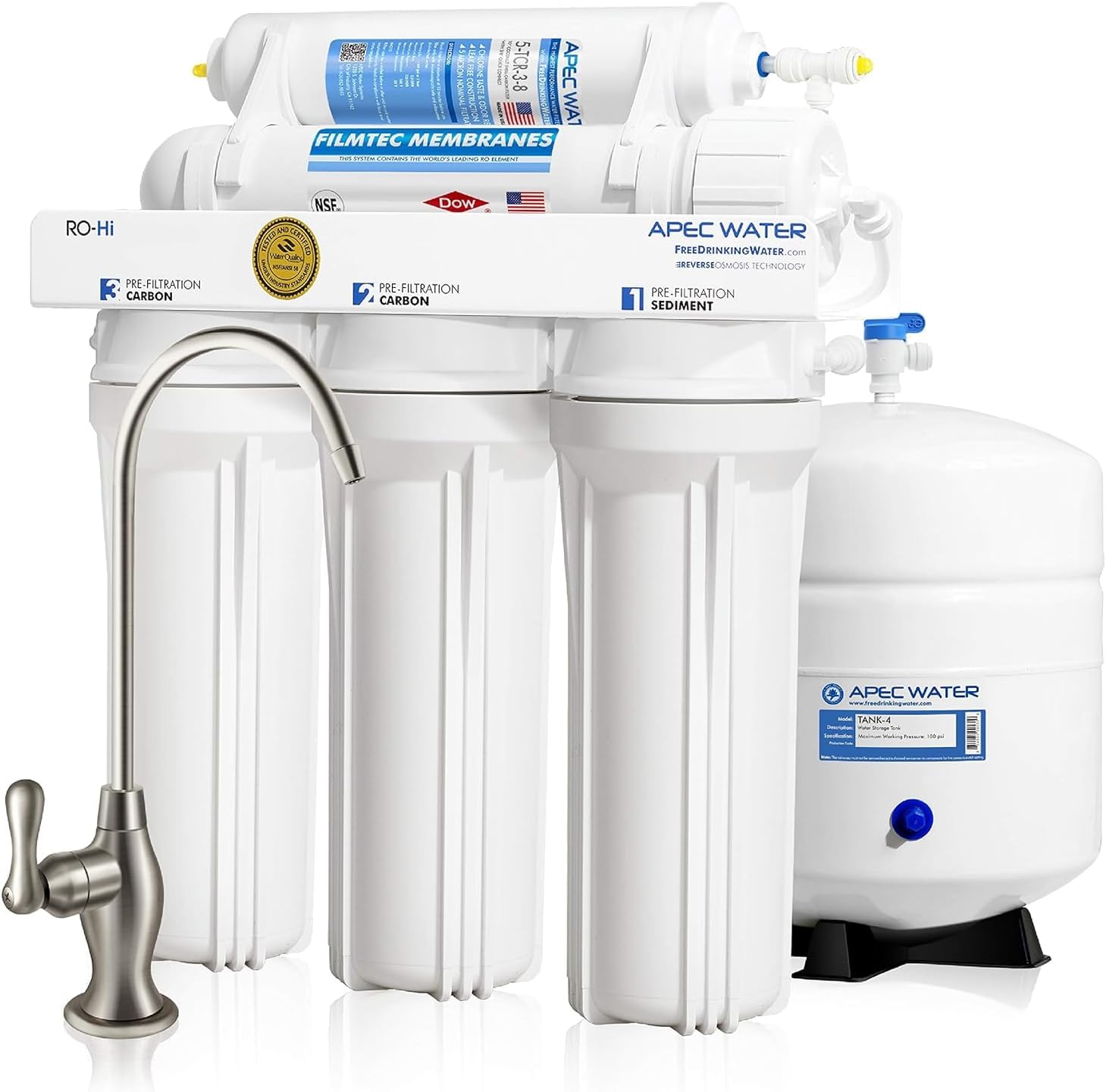
What to Look For in a Whole House Manganese Filter
Not every whole house system handles manganese. Generic sediment-and-carbon stacks will catch already-oxidized particles but pass dissolved Mn²⁺ straight through to your washer. For laundry-grade protection, look for these features.
- Oxidizing media or pre-oxidation. Manganese greensand, catalytic carbon, or birm media convert dissolved manganese into filterable solids. Without this step, downstream cartridges do almost nothing.
- Adequate flow rate. A 3-bath home washing two loads simultaneously needs at least 10–15 GPM service flow. Undersized systems channel water through media too fast for oxidation to occur.
- Backwashing capability for high-manganese wells (above 0.5 mg/L). Sealed cartridge housings clog within weeks at that concentration.
- pH compatibility. Most oxidizing media need pH 6.8 or higher. If your well runs acidic, you'll need a neutralizer upstream.
- Sediment pre-filtration at 5 microns or finer to protect the main system from grit that masks manganese on tests.
The choice between a tank-based oxidizing system and a cartridge-based multi-stage rig comes down to your manganese level and budget. For wells under 0.3 mg/L, a quality 3-stage cartridge system with iron/manganese media can keep laundry stain-free for $300–$500 and an annual cartridge swap. Above that, you need a backwashing tank.
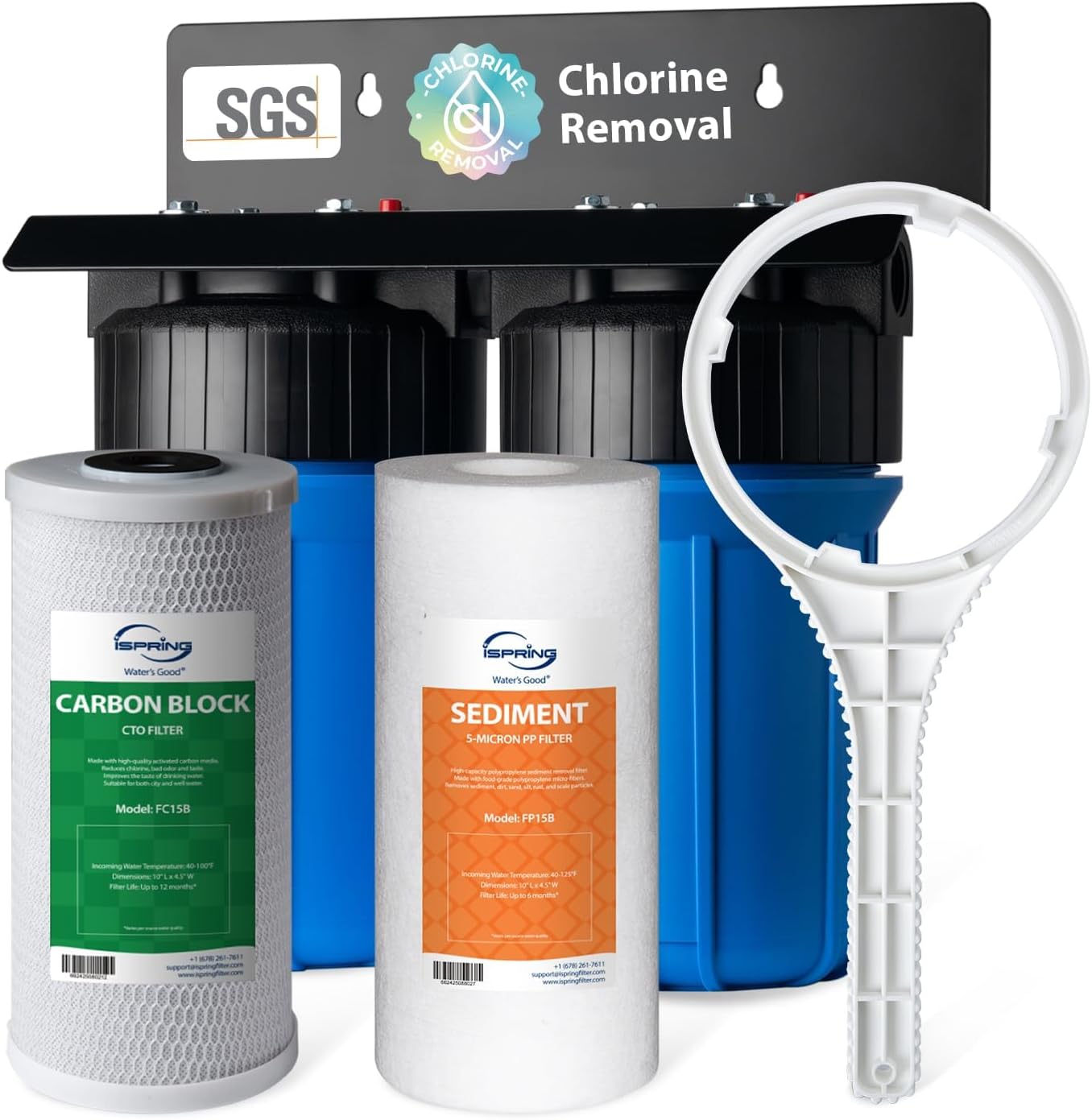
Comparison: Top Whole House Filters for Manganese Staining
| System | Best For | Service Flow | Mn Capacity | Maintenance |
|---|---|---|---|---|
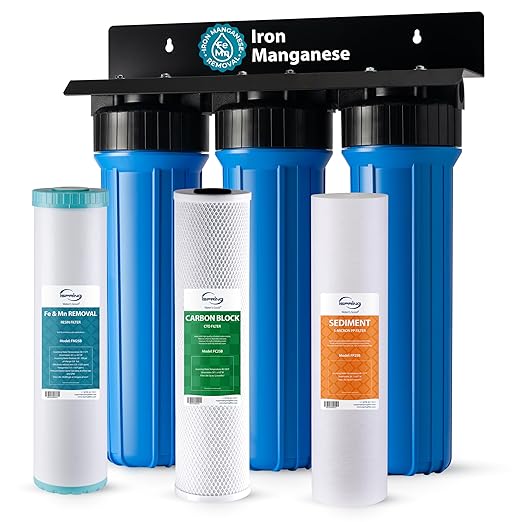
| iSpring Iron & Manganese | Dedicated Mn/Fe removal, 0.3–3 mg/L | 15 GPM | Backwashing tank, ~5 years media | Auto backwash, low-effort |
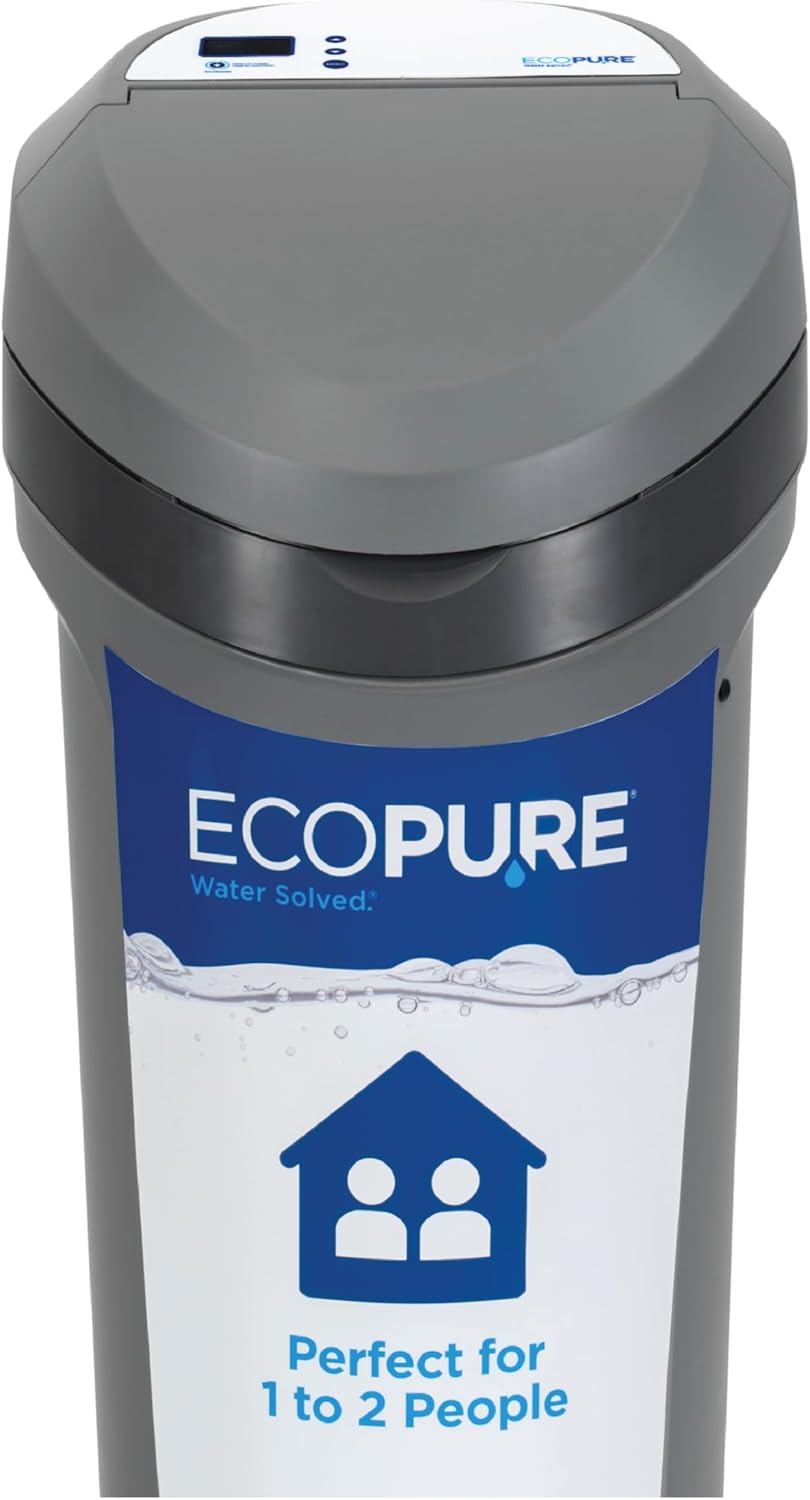
| Aquasana 500K Well | Whole-home, UV + carbon + KDF | 7 GPM | Low Mn (under 0.3 mg/L) | 3-month pre, 5-yr main |
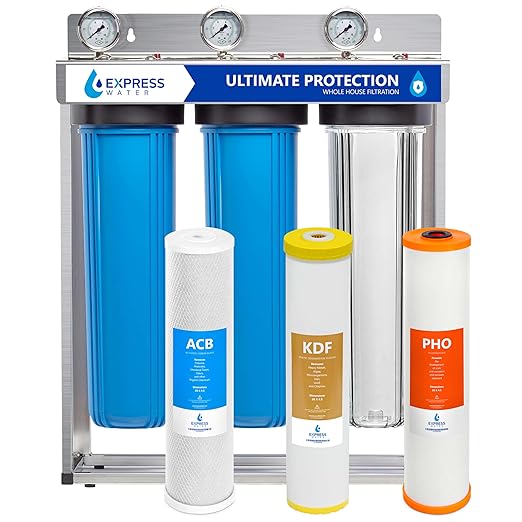
| Express Water 3-Stage | Mixed sediment + dissolved Mn | 15 GPM | Moderate, with KDF cartridge | Cartridge swap every 6–12 mo |
| HQUA WF3-01 3-Stage | Budget multi-stage protection | 15 GPM | Light Mn, mostly sediment | Cartridge swap every 6 mo |
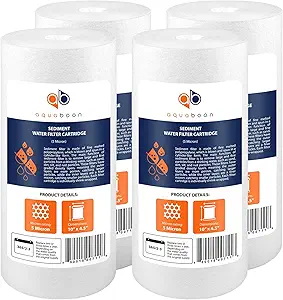
| Aquaboon 5-Micron Sediment | Pre-filter for any of the above | Pass-through | Catches oxidized Mn solids | Replace every 2–3 mo |
Best Overall: iSpring Iron & Manganese Whole House System
For a rural well producing visible laundry stains, this is the system to beat. The iSpring uses a backwashing tank with manganese-targeting media that oxidizes dissolved Mn²⁺ into filterable particles, then flushes them automatically on a timed cycle. Unlike cartridge systems that load up and fail unpredictably, the tank renews itself, which matters when your manganese reading is anywhere above 0.3 mg/L. It handles up to 3 mg/L of combined iron and manganese, runs at 15 GPM for whole-home service, and the media lasts roughly five years before replacement. Installation requires a drain line for the backwash discharge, which is the one consideration that may push smaller cabins toward a cartridge option. Check the iSpring Iron & Manganese system on Amazon.
Best Multi-Stage Cartridge: Express Water 3-Stage Whole House
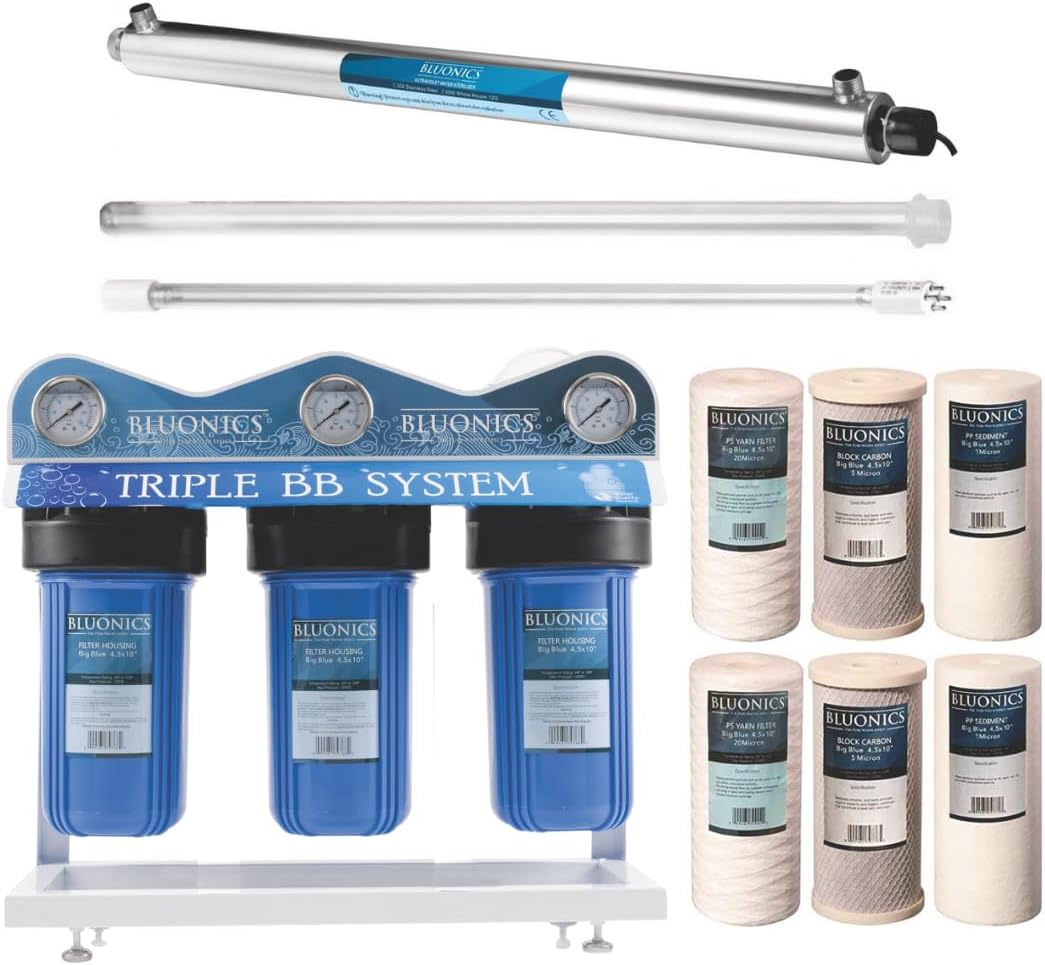
If your manganese reading sits between 0.05 and 0.3 mg/L, a multi-stage cartridge system gives you the cleanest installation with no drain plumbing. The Express Water 3-Stage uses sediment, KDF/carbon, and a fine carbon block in three swappable 20-inch housings. The KDF stage is the key for manganese: KDF-85 media catalytically oxidizes dissolved manganese and iron into particles the downstream carbon traps. Flow stays strong at 15 GPM, and the clear front housing on the sediment stage lets you visually monitor cartridge load, a small touch that saves a lot of guesswork. Pair it with a finer pre-filter and you've got a solid laundry-saver for under $400. See the Express Water 3-Stage on Amazon.
Best for Combined Well Concerns: Aquasana 500K Whole House Well Water
If your well also has bacterial pressure (think shallow drilled wells, springs, or old casing), the Aquasana 500K bundles UV sterilization with carbon and KDF stages. It won't handle heavy manganese loads alone, but for low-Mn wells where you also need pathogen control, it's a one-box solution. The 500,000-gallon capacity translates to roughly five years for a typical family before main-tank replacement, with quarterly pre-filter changes. Flow is more modest at around 7 GPM, so families with three-plus baths should size up or pre-treat manganese with a dedicated upstream stage. View the Aquasana 500K well water system on Amazon.
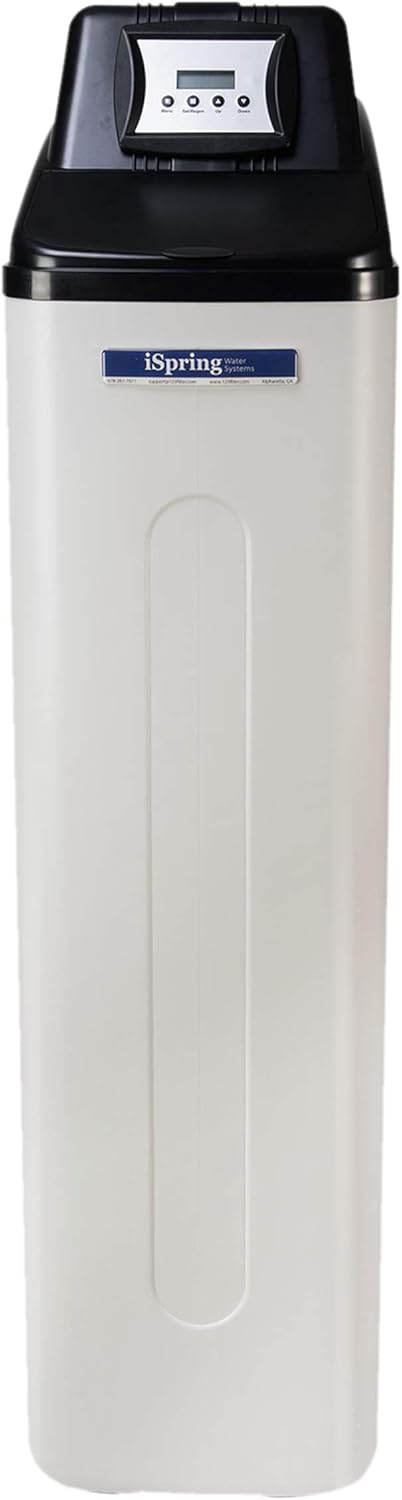
Best Budget Multi-Stage: HQUA WF3-01 3-Stage System
The HQUA WF3-01 is the no-frills option for renters, hunting cabins, or anyone testing whether filtration will solve their staining before committing to a tank system. Three 10-inch housings handle sediment, carbon, and a polishing stage at 15 GPM. It won't oxidize heavy dissolved manganese, but with a manganese-reduction cartridge swapped into the middle housing, it keeps lightly-affected wells in the clear. Budget around two cartridge swaps per year. Check the HQUA WF3-01 on Amazon.
Essential Add-On: Aquaboon 5-Micron 10x4.5 Sediment Pre-Filter
Whatever main system you choose, a 5-micron sediment pre-filter protects it from grit, sand, and already-oxidized manganese particles flushed during well pump cycling. The Aquaboon 4-pack fits standard 10x4.5 Big Blue housings, gives you a year of pre-filtration, and dramatically extends the life of downstream KDF and carbon stages. Skipping this step is the single most common reason cartridge systems fail early on rural wells. Grab the Aquaboon 4-pack on Amazon.
Sizing and Installation for Rural Wells
Before you buy anything, get a current water test. Mail-in kits from state extension labs run $30–$80 and give you iron, manganese, hardness, pH, and TDS, the five numbers you need to size correctly. A whole house filter manganese laundry stains well water owners install in 2026 will only perform to spec within its design parameters. If pH is below 6.8, install a calcite neutralizer upstream of any oxidizing media. If hardness exceeds 7 grains per gallon, plan for a softener after the manganese filter, not before. The order matters because softener resin fouls quickly when exposed to manganese.
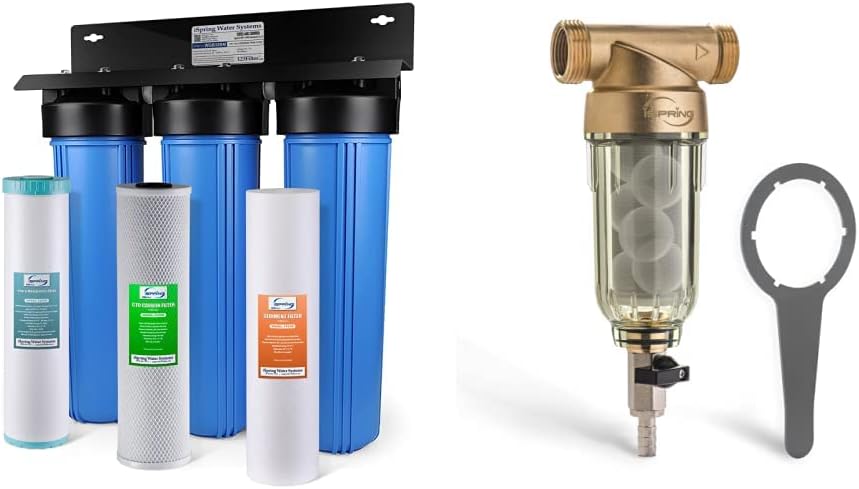
Plumb the system at the point of entry, after the pressure tank but before any branch lines. Use full-port ball valves on a three-valve bypass so you can service cartridges without shutting off the house. For tank systems, the backwash drain needs a one-inch air gap to a floor drain or laundry standpipe, never directly into the sewer line.
Maintenance Schedule That Actually Saves Laundry
Even the best system fails if you ignore it. Build these habits:
- Inspect sediment pre-filter monthly. Replace when discoloration covers half the surface.
- Run a manganese strip test quarterly at a laundry tap, the most distant cold line. Catching breakthrough early means no ruined sheets.
- For tank systems, verify the backwash cycle runs on schedule by checking the controller display monthly.
- Note the date on every cartridge change. KDF and carbon work by contact time and degrade silently.
- Test the well annually for bacteria and re-test manganese if you notice any staining return.
For a deeper dive on coordinating filters with softeners and pH neutralizers, see our guide on the correct order for rural well water treatment stages. If your laundry stains include orange streaks alongside the black, you likely have an iron problem too; our iron-specific whole house filter comparison walks through the differences. And before you commit to media, check whether a softener or a filter is the right starting point for your specific water chemistry.
Frequently Asked Questions
Why does my well water look clear but still stain laundry black?
Manganese in groundwater is dissolved as Mn²⁺, which is colorless. It only turns visible when it oxidizes to MnO₂, and that happens inside your washer when the water meets air, hot temperatures, or bleach. By the time you see the black-brown stain, the oxidation is already locked into the fabric weave. The fix is to oxidize it upstream of your washer, inside a filter that can trap the particles before they reach laundry.
What manganese level requires a whole house filter for laundry protection?
Anything above 0.02 mg/L will mark white cottons over time, and above 0.05 mg/L (the EPA secondary standard) staining becomes obvious within a few washes. Below 0.3 mg/L, a cartridge-based system with KDF or manganese-reduction media will keep you stain-free. Above 0.3 mg/L, plan for a backwashing tank system because cartridges will clog within weeks.
Can I remove existing manganese stains from clothes I've already washed?
Yes, but never with chlorine bleach, which permanently sets the stain. Use a reducing agent like sodium hydrosulfite (sold as Iron Out or Rover Rust Remover) in a soak, followed by a rinse in your now-filtered water. For old set-in stains, the success rate drops significantly after the fabric has been heat-dried more than once.
Will a standard water softener remove manganese from well water?
A softener can remove low levels of dissolved manganese (under about 0.1 mg/L) through ion exchange, but it's not designed for the job. Higher levels foul the resin, which then loses softening capacity and starts releasing trapped manganese during regeneration. For reliable laundry protection, install a dedicated manganese filter ahead of the softener and let each unit do what it does best.
How often do I need to replace cartridges in a whole house manganese filter?
For wells with manganese under 0.1 mg/L, expect 6–12 months per cartridge set. Between 0.1 and 0.3 mg/L, plan on 3–6 months. Above 0.3 mg/L, cartridge systems become uneconomical and you should switch to a backwashing tank. Sediment pre-filters always need more frequent changes than the main stages, sometimes monthly during high-iron seasons.
Do I need a UV light along with my manganese filter on a rural well?
Only if your bacteriological test shows coliform or your well is shallow (under 50 feet), spring-fed, or has a history of contamination. Manganese filtration alone doesn't address pathogens. If you do add UV, install it as the last stage after all particle filtration, because manganese particles shadow the UV bulb and reduce kill rates.
Can I install a whole house manganese filter myself?
Cartridge systems are realistic DIY projects if you're comfortable with copper sweating or PEX crimping, have 36 inches of clearance for housing changes, and can install a three-valve bypass. Backwashing tank systems are tougher because you need to plumb a drain, set the controller, and load media without contaminating the bed. Most homeowners successfully install cartridge systems and call a well contractor for tank systems.
Key Takeaways
- Choosing the right whole house filter manganese laundry stains well water means matching capacity and output ports to your actual devices
- Always check actual watt-hours (Wh), not just watts — runtime depends on Wh, not peak output
- Also covers: remove manganese from well water
- Also covers: black manganese stains laundry whites
- Also covers: manganese filter rural well system
- Compare price-per-Wh across models to find the best value for your budget