If you have hard well water and a tankless heater, the right salt free softener for tankless water heater protection prevents scale buildup on the heat exchanger, extends warranty life, and skips the salty brine discharge that septic systems hate. But here is what most 2026 buyers miss: a TAC (template-assisted crystallization) conditioner alone will not stop the iron, sulfur, and sediment in raw well water from fouling its media and destroying your tankless. You need a complete system, sediment pre-filter, iron/manganese removal, then your salt-free softener. This guide covers the five well-water pre-treatment systems we recommend pairing with a salt-free conditioner in 2026.
Why a salt-free softener alone is not enough on hard well water
Tankless heaters fail early for two reasons on well water: calcium scale that armor-plates the copper heat exchanger, and iron-bacteria sludge that clogs the inlet screen. A salt-free softener for tankless water heater service uses TAC media to convert dissolved calcium and magnesium into microscopic crystals that pass through your plumbing without sticking. That works beautifully on city water. On well water, however, the same media gets coated in iron oxide within months, dropping conversion rates from 95% to under 40%. Manufacturers like Navien and Rinnai specifically void warranties when total iron exceeds 0.3 ppm or manganese exceeds 0.05 ppm.
When shopping for salt free softener for tankless water heater, it pays to compare specs, capacity, and real-world runtime before committing.
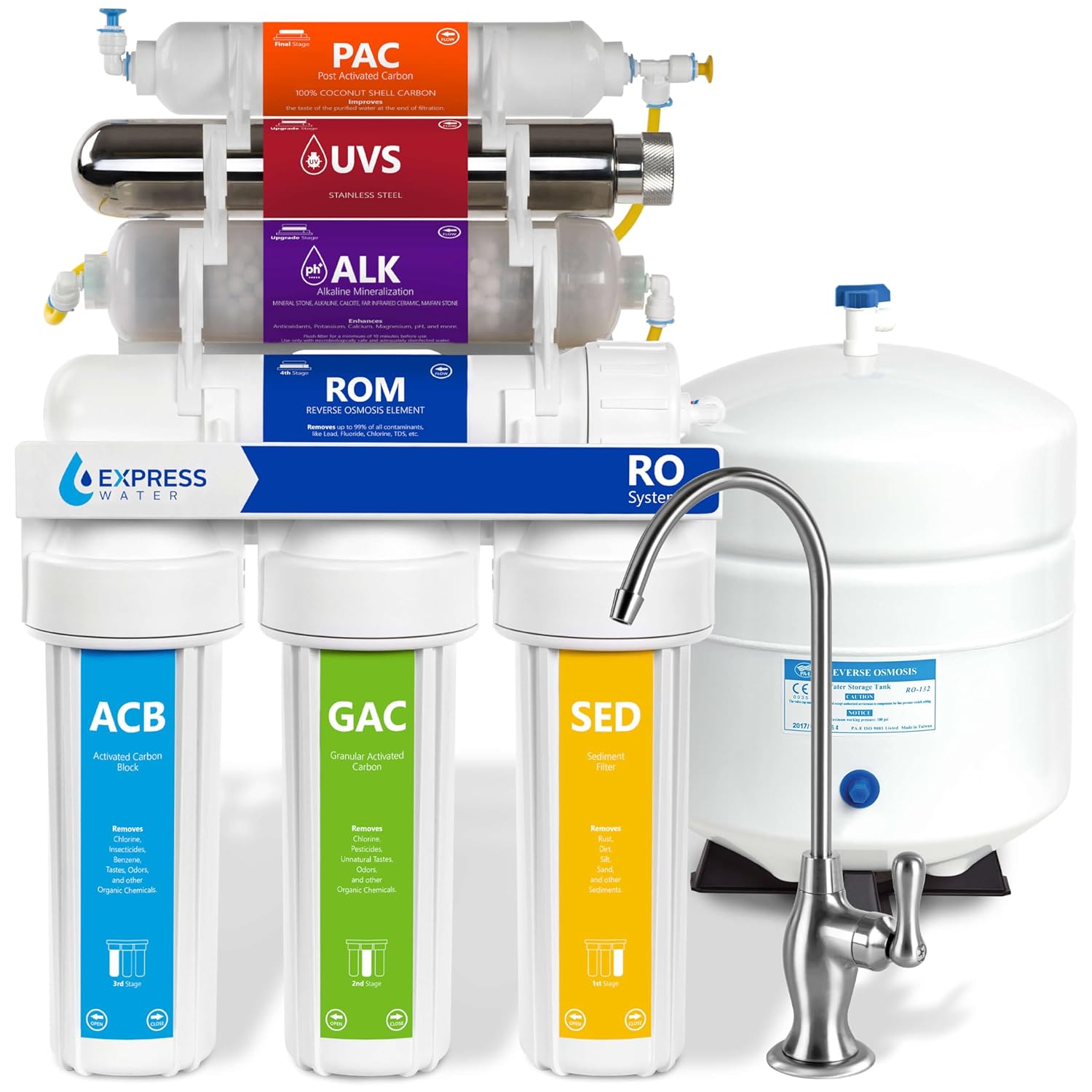
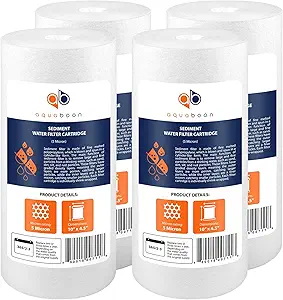
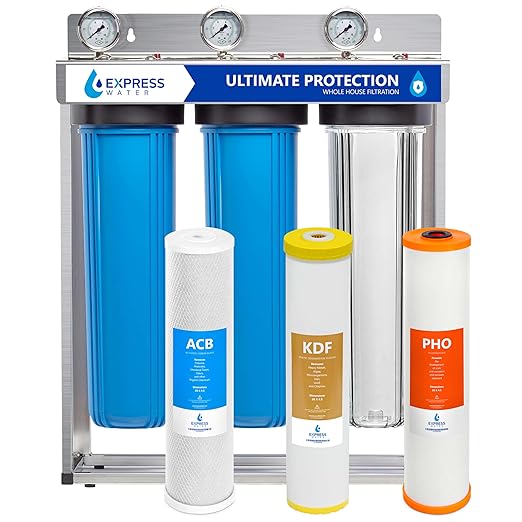
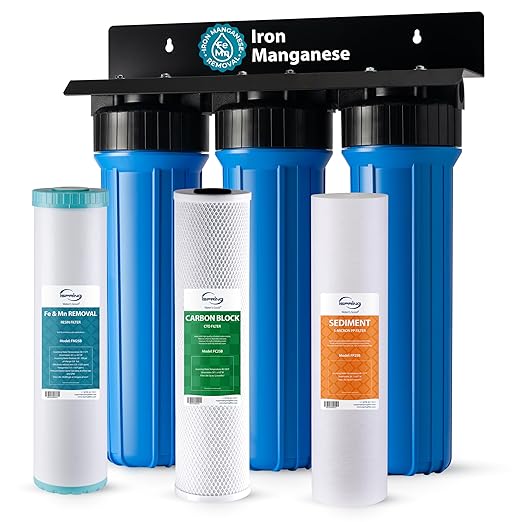
The fix is sequencing. Run well water through a 5-micron sediment filter first, then an iron/manganese stage, optionally a carbon and UV stage, and finally your salt-free conditioner. Every product below handles one or more of those upstream stages, which is why we are recommending them as the foundation of a salt free softener for tankless water heater system rather than as standalone softeners.
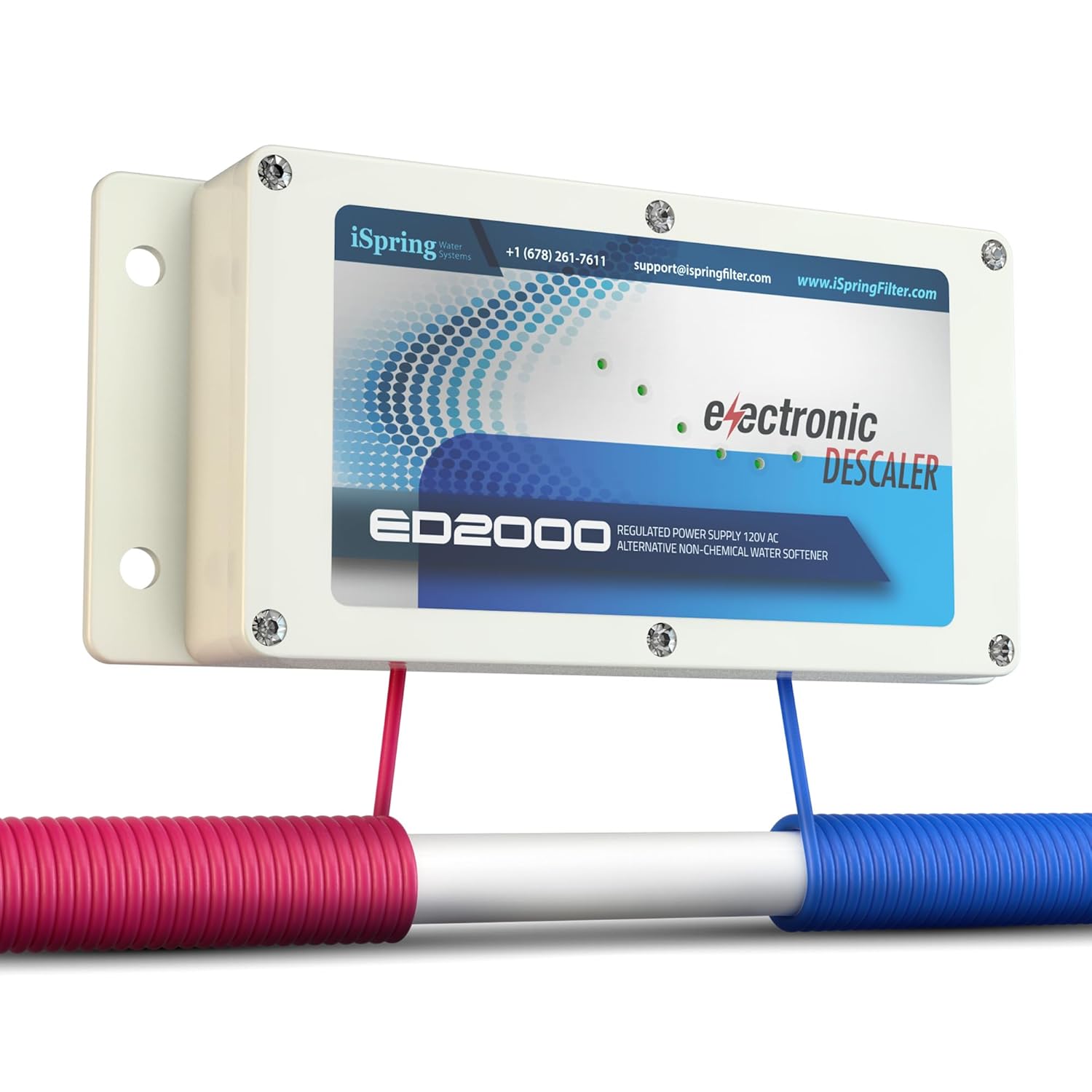
2026 comparison: well-water pre-treatment for salt-free softener systems
| System | Stages | Best For | Capacity | Tankless Pairing |
|---|---|---|---|---|
| Aquasana Well 500K | UV + Carbon + KDF + Sediment | Bacteria + chemical well water | 500,000 gal | Excellent |
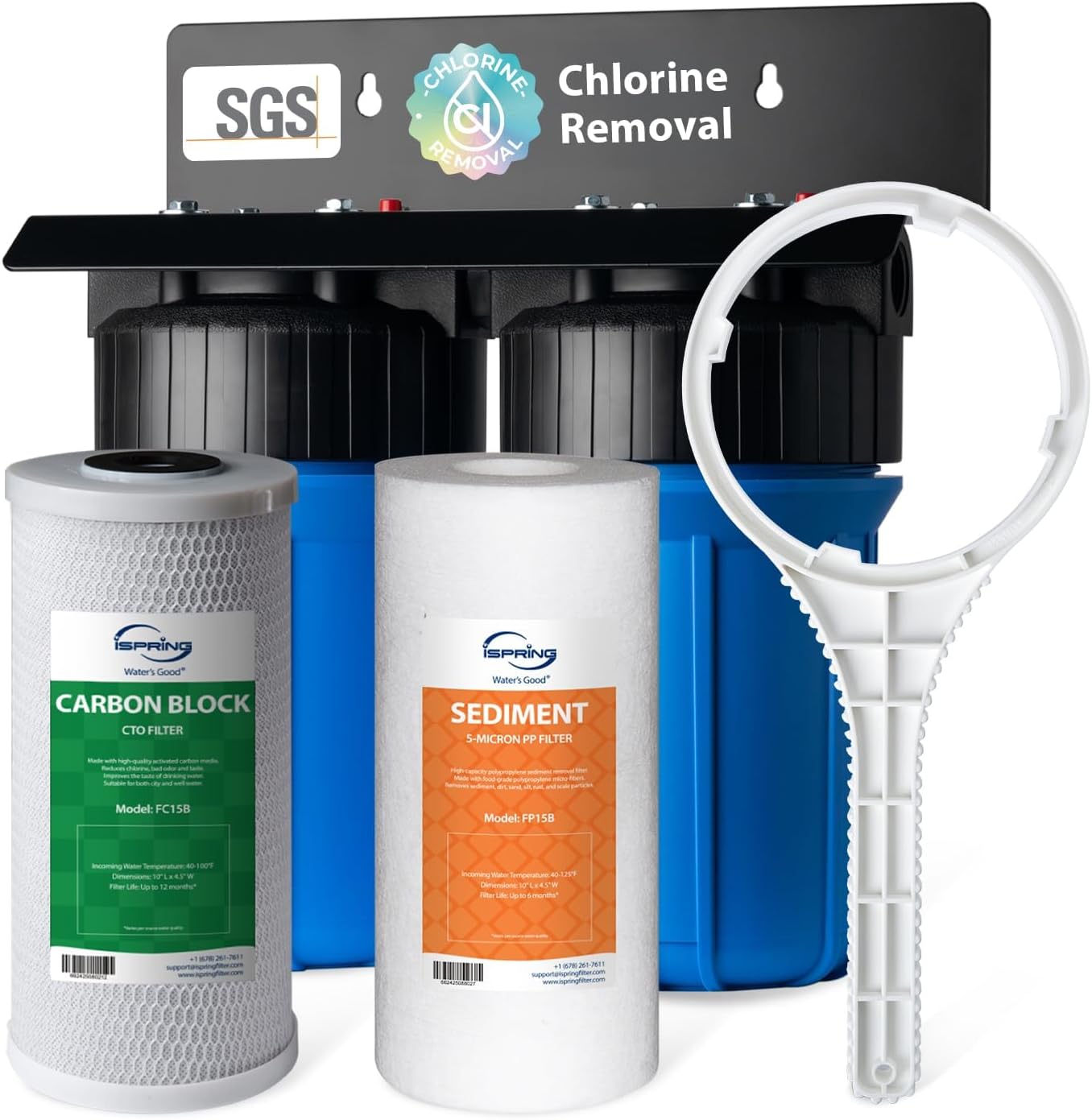
| iSpring WGB32BM | Sediment + Carbon + Iron/Mn | Iron-heavy wells | 100,000 gal | Excellent |
| Express Water 3-Stage | Sediment + KDF + Carbon | Mixed sediment + chlorine | 100,000 gal | Good |
| HQUA WF3-01 | Sediment + Carbon Block + GAC | Budget pre-filter | 100,000 gal | Good |
| Aquaboon 5-Micron 4-Pack | Sediment only | Replacement cartridges | ~3 mo each | Required |
Top 2026 picks to pair with your salt-free softener
1. Aquasana Whole House Well Water Filter (500K Gallons, UV + Carbon + KDF) — Best overall pre-treatment
If your well test shows any coliform bacteria, sulfur smell, or tannin staining, this is the system we recommend installing immediately upstream of a salt-free conditioner. The UV chamber handles microbiological contaminants that would otherwise breed in TAC media beds, while the KDF-85 and catalytic-carbon stages strip the hydrogen sulfide and low-level iron that fouls tankless heat exchangers. At 500,000-gallon capacity, you are looking at roughly six to ten years of service for a family of four before media replacement. The 1-inch port sizes also match the flow demands of a 199K BTU tankless without throttling, which is the single most overlooked spec when buyers shop pre-filters. Check current price on Amazon.
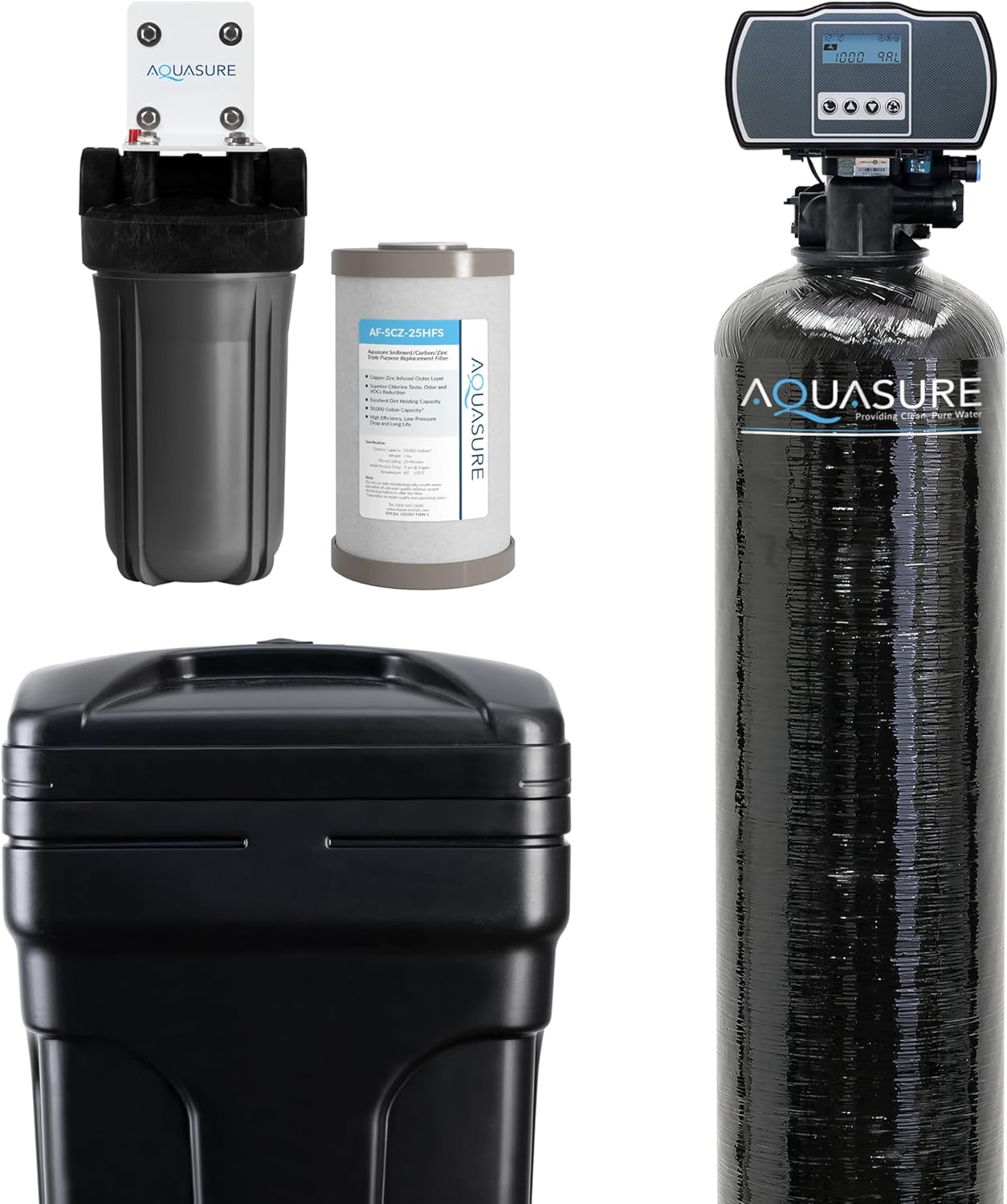
2. iSpring WGB32BM Iron & Manganese Whole House System — Best for iron-heavy wells
For wells testing above 0.3 ppm iron or any orange staining in toilets and tubs, the iSpring WGB32BM is purpose-built for the exact problem that kills tankless heaters paired with salt-free softeners. The dedicated iron-and-manganese reduction stage uses a specialized media that oxidizes and traps dissolved iron up to 3.0 ppm and manganese up to 1.0 ppm, which is far beyond what a standard KDF cartridge can handle. The 20-inch big-blue housings give you the dwell time needed for the chemistry to actually work, and the included carbon block stage polishes the water before it hits your TAC conditioner. Plan on replacing the iron stage roughly every 12 months on a heavy iron well. See it on Amazon.
3. Express Water 3-Stage Whole House Water Filter System — Best budget all-rounder
The Express Water 3-Stage is the system I recommend to buyers who already know their well is low in iron (under 0.3 ppm) but want belt-and-suspenders insurance for a tankless and salt-free softener combo. The sediment-KDF-carbon sequence catches the broad category of contaminants that would gradually degrade TAC performance, including chlorine if your well is occasionally shock-chlorinated, plus heavy metals and VOCs. The clear first-stage housing is genuinely useful here because you can visually monitor sediment loading without having to schedule cartridge changes blindly. Pressure-gauge ports on both sides let you watch differential pressure climb as filters load, which is the early-warning signal that protects your tankless from starvation. View on Amazon.
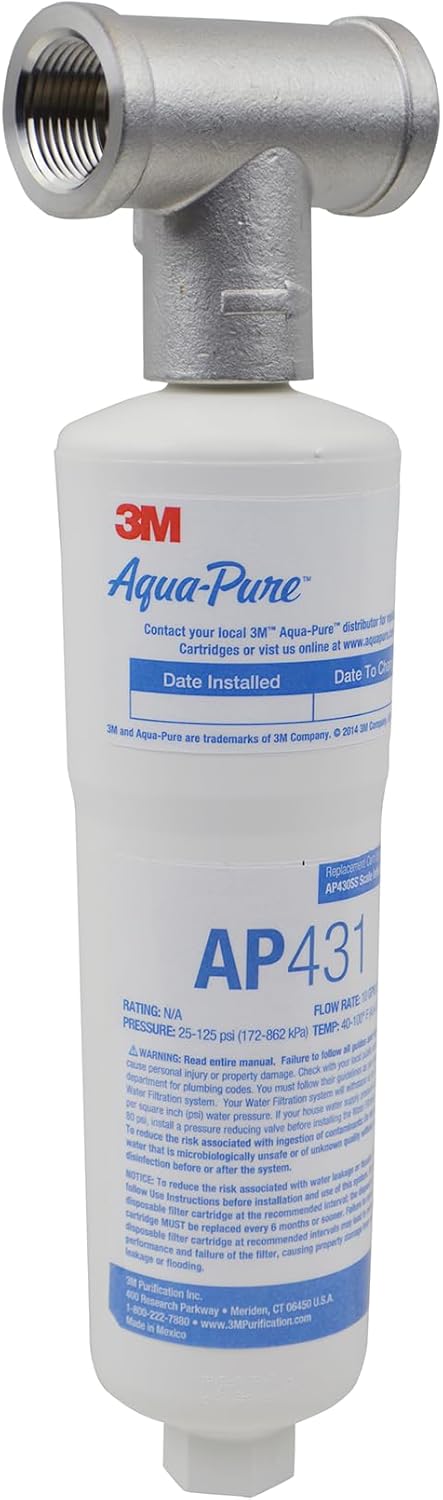
4. HQUA WF3-01 3-Stage Whole House Water Filtration System — Best entry-level pre-filter
The HQUA WF3-01 hits a sweet spot for cabins, vacation homes, and smaller well systems where the goal is simply protecting the salt-free softener and tankless heater from incoming sediment and basic chemical contamination. The three-stage sediment-carbon-block-GAC sequence is exactly what a TAC conditioner manufacturer like Filtersmart or SpringWell specifies as the minimum upstream protection. At its price point, it is one of the few systems I trust as a real long-term install rather than a stopgap. Just be aware that 1-inch ports may bottleneck a high-end 11+ GPM tankless during simultaneous showers, so consider it for 7-9 GPM units. Check Amazon listing.
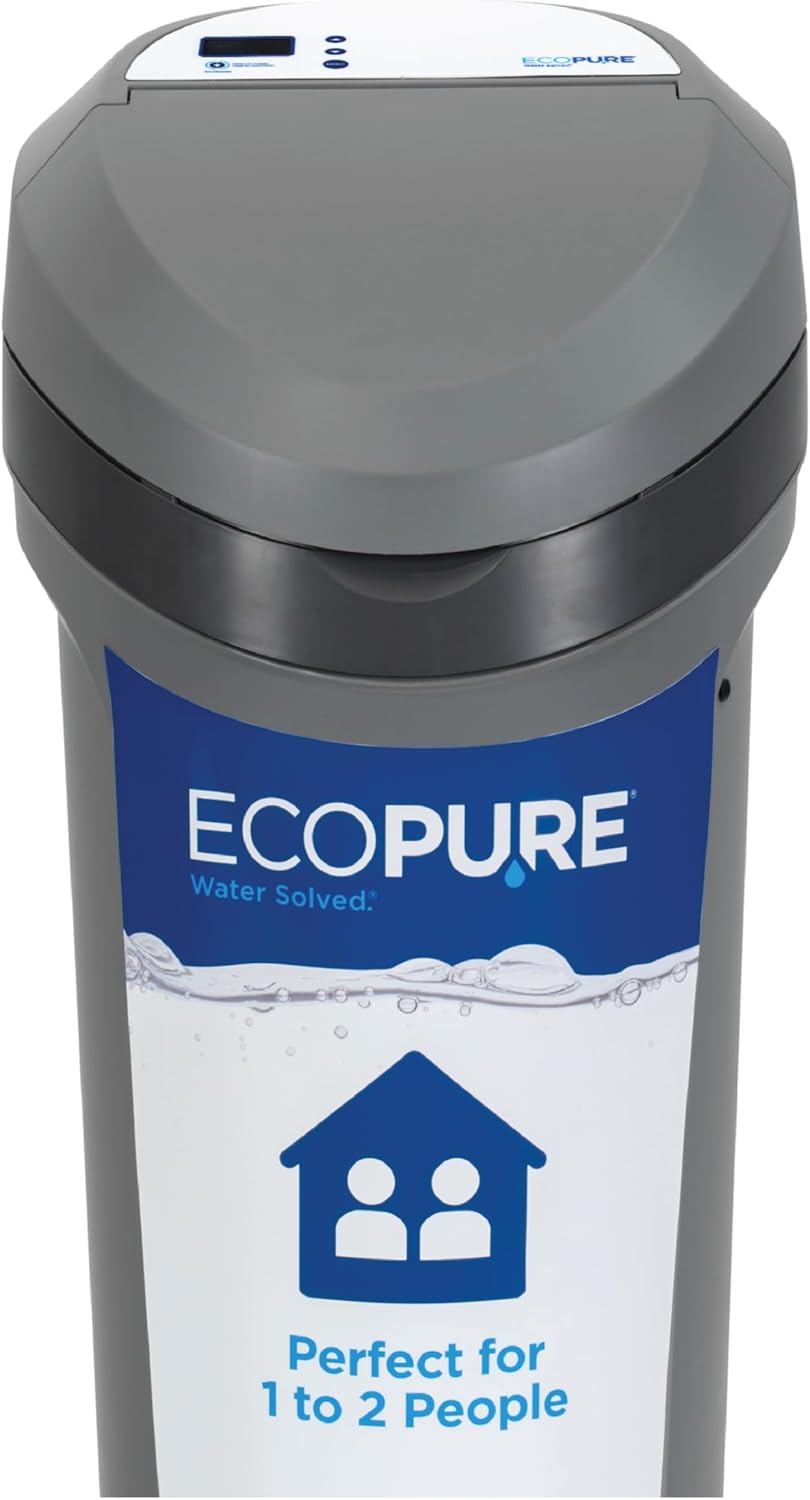
5. Aquaboon 5-Micron 10x4.5 Well Water Sediment Filter (4-Pack) — Best replacement cartridges
Whichever main system you choose, you will need replacement sediment cartridges, and the Aquaboon 4-pack of 5-micron 10x4.5 big-blue cartridges fits the iSpring, Express, HQUA, and most generic big-blue housings on the market. A 5-micron rating is the goldilocks zone for tankless pre-treatment: fine enough to catch the sand and silt that fouls TAC media, but not so fine that pressure drop chokes your heater during demand. Stocking a full year of replacements means you actually change them on schedule, which is the single biggest factor in keeping a salt-free softener running at spec. Grab the 4-pack on Amazon.
How to size a salt-free softener for tankless water heater service
Tankless heaters demand consistent flow at consistent pressure, so undersizing the softener and pre-filters causes more failures than any other installation mistake. Calculate your peak demand by adding up the GPM of any fixtures that could run simultaneously: a typical 199K BTU tankless wants 9-11 GPM of supply. Your salt-free conditioner needs to deliver at least that flow rate with under 7 PSI pressure drop, and each pre-filter stage should match. That means 1.5-inch porting and 20-inch big-blue housings for most homes, not the 3/4-inch under-sink size that some sellers market as “whole house.”
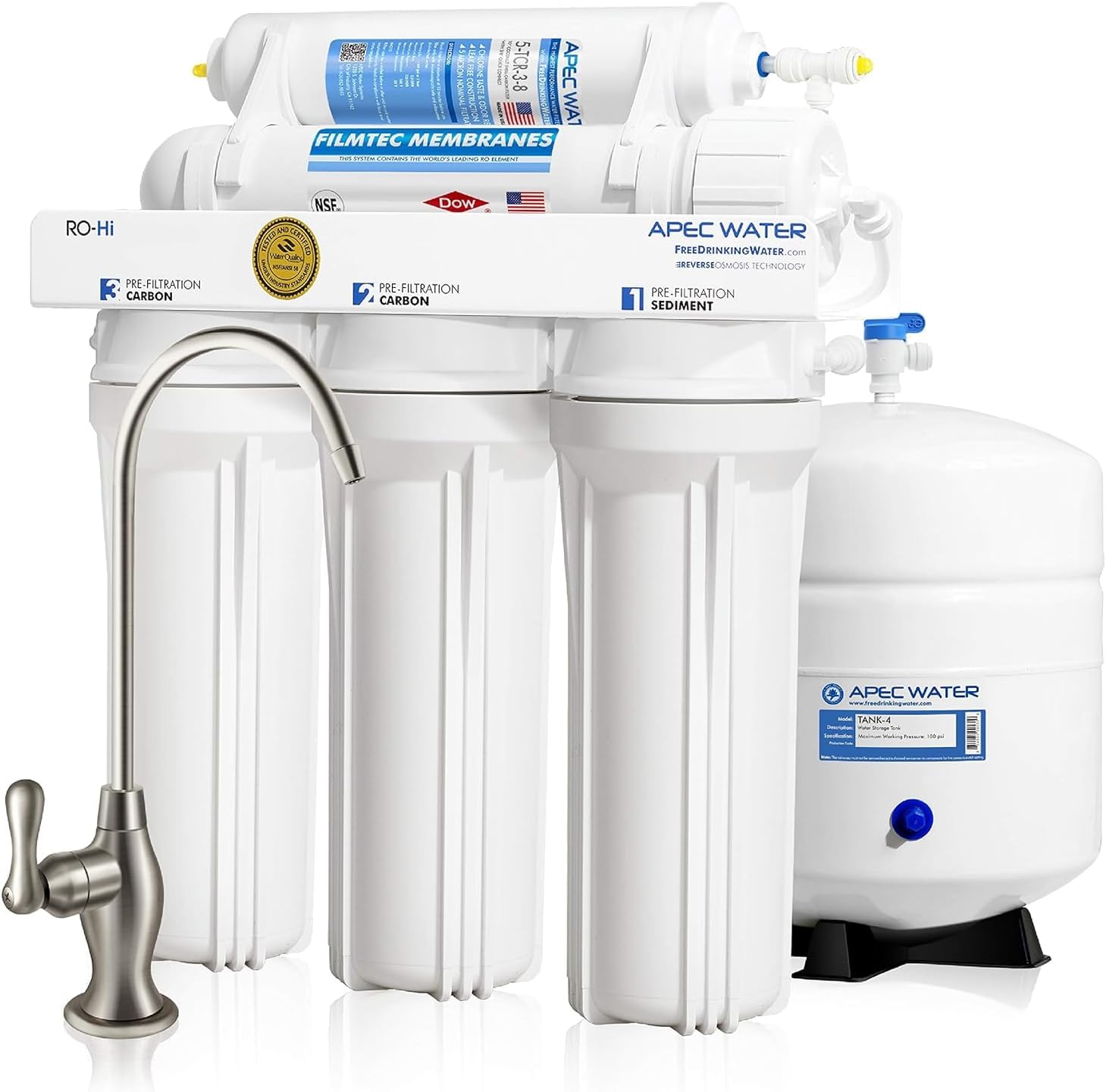
For more on matching flow specs, see our guide to whole-house filter flow-rate sizing and our breakdown of TAC vs salt-based softeners.
Installation order that protects your tankless
The sequence matters as much as the products. From the pressure tank outward, the order should be: spin-down pre-filter (catches rust flakes from the well pump), 5-micron sediment cartridge, iron/manganese stage, carbon/KDF stage, UV (if needed), salt-free TAC conditioner, then a 5-foot copper riser before the tankless inlet. The copper riser between conditioner and heater is required by most tankless warranties because PEX directly out of a TAC system can allow micro-crystals to recombine into scale on plastic surfaces. Skipping it is the most common warranty-voiding installation mistake we see in 2026.
Also bypass-loop everything. A simple three-valve bypass around each stage lets you change cartridges without shutting down the whole house, and lets you isolate a stage if it fails. For a deeper installation walkthrough, see our whole-house filter installation checklist.
Frequently Asked Questions
Does a salt-free softener really work for tankless water heaters on hard well water?
Yes, but only when paired with proper pre-treatment. TAC media converts calcium and magnesium into harmless crystals that pass through the heat exchanger without depositing as scale, and major tankless brands including Rinnai and Navien accept TAC conditioning in their warranty language. The catch on well water is that iron above 0.3 ppm will foul the TAC media and drop conversion efficiency. Get your well tested, install the right iron and sediment pre-filters, and a salt-free softener for tankless water heater service will perform comparably to salt-based on hardness under 25 grains.
What hardness level is too high for a TAC salt-free conditioner?
Most TAC manufacturers spec their systems up to 75 grains per gallon (gpg), though performance starts to drop above 25 gpg. If your well water tests above 30 gpg, expect to see some residual spotting on glass shower doors and stainless sinks even with a properly sized salt-free system. For wells in the 40-75 gpg range, a salt-based softener may still be the better choice despite the brine discharge, or you can run a salt-based pre-stage followed by a TAC polish.
Can I install a salt-free water softener before a tankless without a sediment filter?
No. Every TAC manufacturer requires at minimum a 5-micron sediment pre-filter, and most also require iron removal below 0.3 ppm. Installing a salt-free softener directly off raw well water voids both the softener warranty and the tankless warranty, and you will see TAC performance collapse within 6-12 months as iron and sediment coat the media beads.
How often do salt-free softener media beds need replacement on well water?
On properly pre-filtered well water, TAC media typically lasts 5-7 years before efficiency drops noticeably. On under-treated well water with iron breakthrough, expect 12-24 months before replacement is needed. The media is non-regenerating, so unlike salt-based resin you cannot rinse it back to spec, you replace it. Budgeting $150-300 every 5 years is realistic on a well-maintained system.
Will a salt-free softener remove existing scale from my tankless heater?
No, salt-free conditioners are preventive, not corrective. If your tankless already has scale buildup, you need to descale it with a vinegar or citric-acid flush before installing the conditioner. Most tankless manufacturers publish a descaling procedure that takes about 90 minutes with a submersible pump and two short hoses. After descaling, the salt-free softener for tankless water heater protection will prevent new scale from forming.
Do I need a UV system in addition to a salt-free softener on a private well?
Only if your well tests positive for coliform bacteria or you have a shallow well prone to surface infiltration. UV does not affect hardness or scale, so it is a parallel concern, not a substitute for a salt-free softener. If you need UV, place it after the carbon stage and before the salt-free conditioner so the lamp sees clear water. The Aquasana 500K system bundles UV into the same unit, which simplifies the install.
Can I run a salt-free softener with a well pressure tank under 50 PSI?
Most TAC systems need a minimum 25 PSI to function, and tankless heaters need 30 PSI minimum to fire reliably, so 50 PSI at the pressure tank usually leaves enough headroom for both. If your pump cuts in at 30 and out at 50, monitor pressure drop across each filter stage. If you ever see inlet pressure under 35 PSI during peak demand, upsize your pre-filter housings to 20-inch big-blue, or raise your pressure switch to 40/60.
Bottom line for 2026
The right approach to a salt-free softener for tankless water heater protection on hard well water is to think of the softener as the last stage of a four or five stage system, not as a standalone product. Pair the Aquasana 500K (or iSpring WGB32BM if iron is your main problem) with the salt-free TAC conditioner of your choice, stock Aquaboon 5-micron replacements, and you will have a system that protects your tankless investment for 10+ years with zero salt, zero brine discharge, and minimal maintenance.
Key Takeaways
- Choosing the right salt free softener for tankless water heater means matching capacity and output ports to your actual devices
- Always check actual watt-hours (Wh), not just watts — runtime depends on Wh, not peak output
- Also covers: tankless heater hard well water conditioner
- Also covers: salt free conditioner tankless protection
- Also covers: best descaler tankless water heater
- Compare price-per-Wh across models to find the best value for your budget