Choosing the best salt free softener pottery studio clay slip mixers can rely on means looking past the softener label and at the chemistry that actually touches your clay. Salt-based ion exchange swaps calcium for sodium, and even trace sodium changes deflocculation, drying behavior, and glaze fit. A salt-free conditioner (template-assisted crystallization, or TAC) prevents scale without adding ions, while a paired filtration train pulls out the iron, manganese, and sediment that stain porcelain or ruin white slip. For 2026, the sharpest studio setups combine a TAC head with a carefully chosen whole-house pre-filter—often more decisive for slip quality than the softener itself.
Why salt-free matters when you mix clay slip
Slip is a deflocculated suspension. The dispersants we use—sodium silicate, Darvan 7, soda ash—rely on a careful sodium budget to keep clay platelets repelled from each other. When you run a conventional salt-based softener, your supply water already arrives carrying 50 to 200 milligrams per liter of additional sodium. The deflocculant you weigh out at the bench is no longer the only sodium source, and the slip behaves erratically: viscosity drifts, casting rates change between batches, and slip-cast walls release inconsistently from plaster molds.


A salt-free system avoids this entirely. TAC media converts dissolved calcium and magnesium into microscopic, electrically neutral crystals that stay suspended and pass through plumbing without forming hard scale. The hardness number on a test strip stays the same, but the water no longer plates out on element heaters, faucet aerators, or—critically—on the pug mill rollers and slip-mixing blades where build-up changes shear behavior over time.
What pottery studios actually need from a water system
Before picking a salt-free conditioner, audit the water that will feed it. Three contaminants destroy pottery work long before hardness does:
- Iron and manganese: Even 0.3 mg/L of iron turns porcelain slip pink-buff after firing. Manganese leaves brown specks on celadons.
- Sediment and turbidity: Well-water clays and silica fines clog mixer screens and contaminate translucent porcelain bodies.
- Chlorine and chloramine: Municipal disinfectants do not ruin clay, but they degrade rubber gaskets on mixers and accelerate corrosion on stainless paddles.
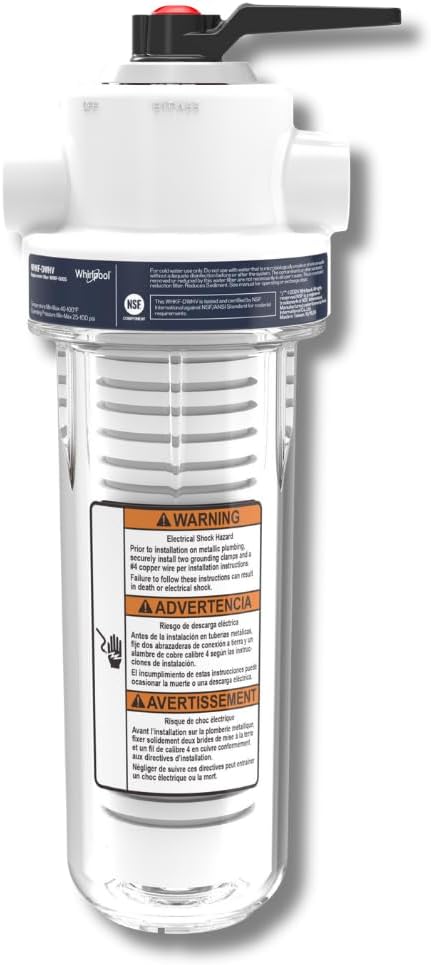
Solve those first with a whole-house filter, then place your salt-free head downstream. Below are five whole-house pre-filters we would pair with a TAC head to build the best salt free softener pottery studio clay slip mixers can run reliably for years.
Comparison: best whole-house pre-filters for a salt-free pottery setup
| System | Best for | Iron removal | Sediment stage | Capacity |
|---|---|---|---|---|
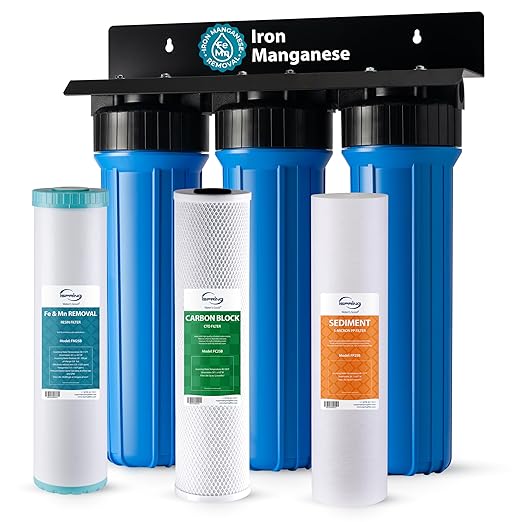
| iSpring Iron & Manganese | Well water with iron staining | Yes (up to 3 mg/L) | 5 micron | ~100,000 gal |
| Aquasana 500K Well | City + light well water | Carbon + KDF | Pre-filter | 500,000 gal |
| Express Water 3-Stage | Mixed municipal supply | Limited | 5 micron sediment | ~100,000 gal |
| HQUA WF3-01 3-Stage | Budget studios | No | 5 micron sediment | ~100,000 gal |
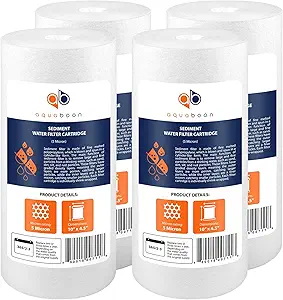
| Aquaboon 5 Micron (4-pack) | Replacement cartridges | N/A | 5 micron | ~25,000 gal each |
Top picks for a pottery studio
Best for iron-stained well water: iSpring Iron & Manganese Whole House System
If your studio runs off a well and you have ever pulled a bisque-fired test tile flecked with rust, this is the unit to install upstream of your salt-free conditioner. The iSpring system uses a manganese greensand-style oxidizing bed that targets dissolved iron up to about 3 mg/L and manganese up to 1 mg/L—the exact contaminants that wreck white stoneware and porcelain. Studios mixing translucent bone china or Limoges-style slip cannot tolerate even trace iron, and this filter is the most effective standalone iron remover at the residential price point. Pair it with a TAC salt-free head and you have water that will not add sodium to your deflocculant budget or color your porcelain. Check the iSpring system on Amazon.
Best all-in-one filtration: Aquasana 500K Well Water Filter
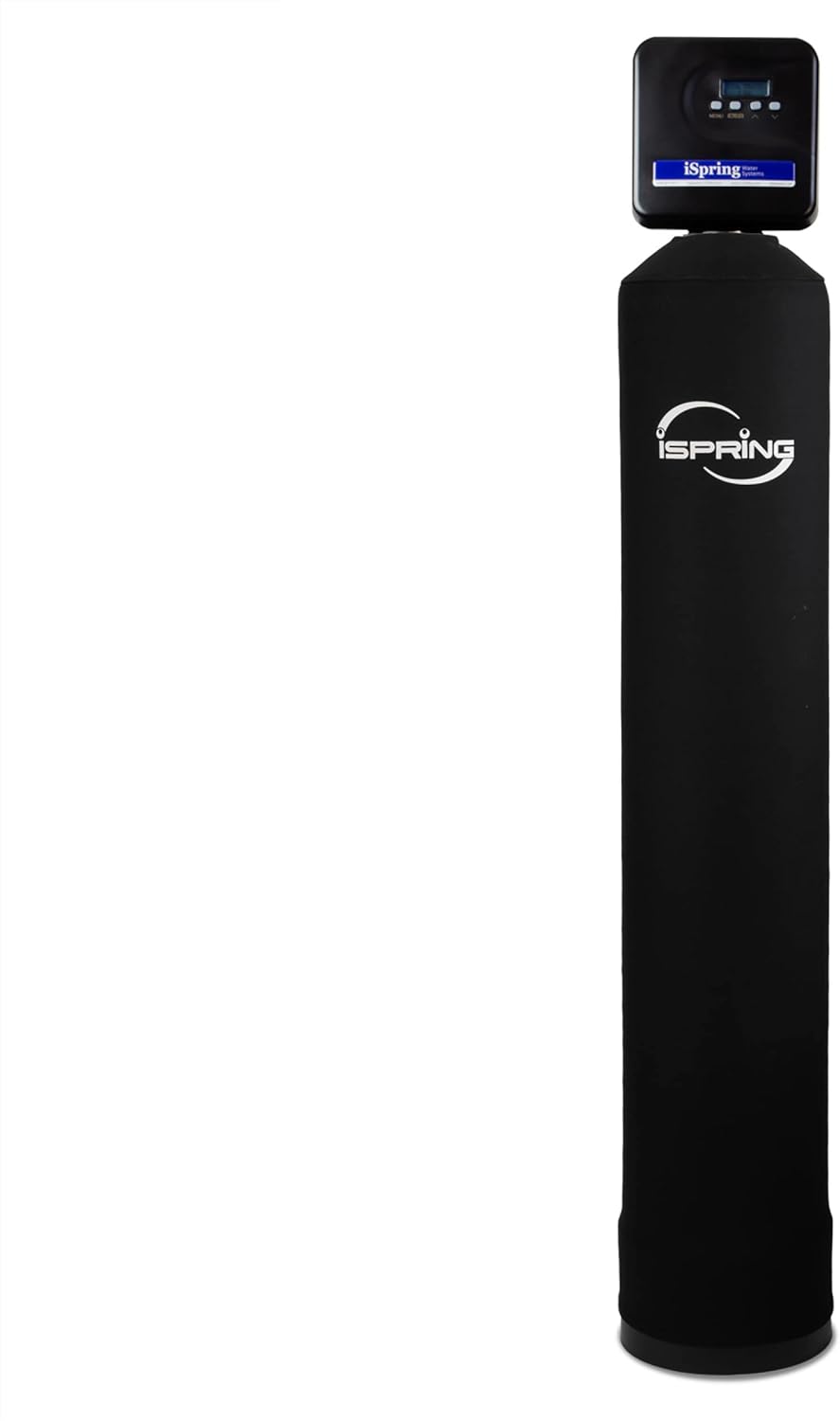
For studios on a private well that is not heavily iron-loaded but still carries organics, sulfur traces, or seasonal cloudiness, the Aquasana 500K combines UV disinfection with KDF and catalytic carbon. The half-million-gallon capacity is realistic—most home pottery studios use 8,000 to 15,000 gallons a year between throwing, cleanup, slip mixing, and plaster work, so a single Aquasana stack will run roughly 30 years before media exhaustion. The UV stage matters if you store slip in covered buckets for weeks at a time: water-borne organics that make it into a slip batch become a smell problem within days. See the Aquasana 500K on Amazon.
Best budget three-stage: Express Water 3-Stage Whole House System
For studios on municipal water that just need chlorine knockdown and sediment control before a salt-free softener, the Express Water 3-Stage is the most cost-effective entry point. The three stages—sediment, KDF/carbon, and a polishing carbon block—remove the chlorine that corrodes pug mill components and trap the rust flakes that municipal pipes shed seasonally. It is not an iron filter in the same league as the iSpring, but for city-water studios in apartments or accessory buildings, it is the sensible pre-filter to put ahead of your salt-free head. View the Express Water system on Amazon.
Best low-cost three-stage alternative: HQUA WF3-01
The HQUA WF3-01 is a near-identical specification to the Express Water unit at a lower MSRP, and worth considering if you have already got iron handled separately or are running a small home studio with light water usage. It uses standard 10x4.5 inch cartridges, so replacement filter media is widely available—including the Aquaboon four-packs reviewed below. For a pottery hobbyist mixing under 50 pounds of clay a week, this is plenty of capacity ahead of a salt-free conditioner. Check the HQUA WF3-01 on Amazon.
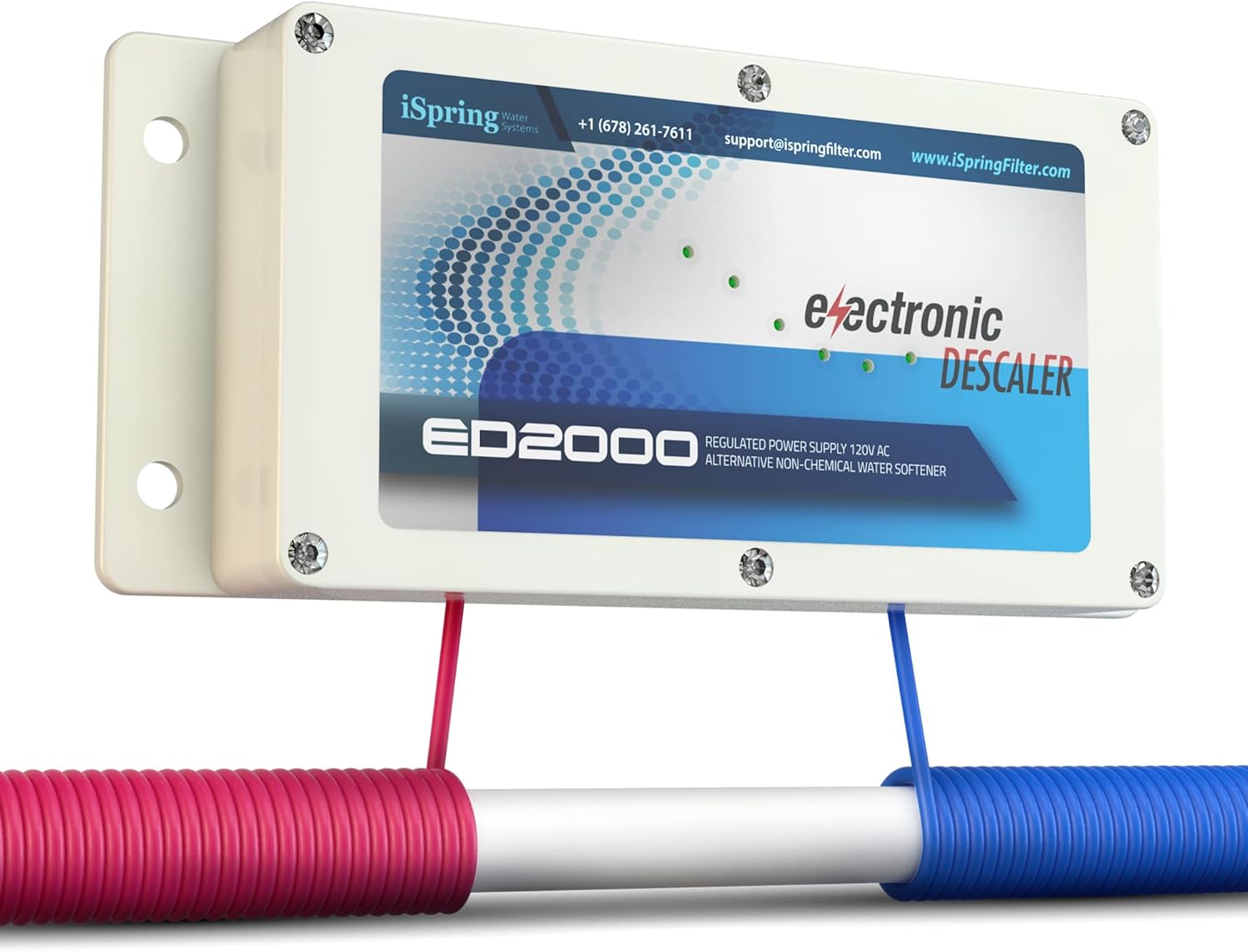
Best replacement cartridges: Aquaboon 5 Micron Sediment Filters
Whichever three-stage housing you choose, you will burn through sediment cartridges on a six-month rotation if you mix slip frequently—clay dust eventually finds its way back into supply lines through splashback at the studio sink. The Aquaboon 5 micron filters fit any standard 10x4.5 housing and the four-pack works out to about two years of replacements for a typical home studio. Five microns is the sweet spot: tight enough to catch the silica fines that contaminate white slip, but not so tight that pressure drops below the threshold your salt-free conditioner needs to perform. See the Aquaboon 4-pack on Amazon.
How to build the full salt-free pottery water train
The order matters. Run the supply through this sequence and your studio slip will stay consistent batch after batch:
- Sediment filter (5 micron) to remove silt and rust flakes.
- Iron and manganese removal if you are on a well—iSpring or similar.
- Carbon/KDF stage for chlorine, chloramine, and organics.
- Salt-free conditioner (TAC media) to prevent scale without adding sodium.
- Dedicated studio tap teed off the conditioned line, ideally with a check valve to prevent backflow contamination from clay-heavy sinks.
The actual best salt free softener pottery studio clay slip work demands is whichever TAC unit fits your flow rate—but it only works as designed if iron, manganese, and sediment are removed first. Skipping the pre-filter loads the TAC media with iron oxides and shortens its life from ten years to two.

For deeper detail on each stage, see our guides on sizing sediment housings for studio flow, iron removal for pottery and ceramic water, and choosing a TAC salt-free conditioner head.
Frequently Asked Questions
Does a salt-free softener actually soften water for slip mixing?
Not in the chemical sense. A TAC salt-free conditioner leaves the hardness number unchanged but converts calcium and magnesium into inert nano-crystals that do not deposit as scale. For slip mixing, this is exactly what you want: no sodium added to the water, no scale built up on mixer blades, and a stable mineral profile so your deflocculant ratios behave the same week after week.
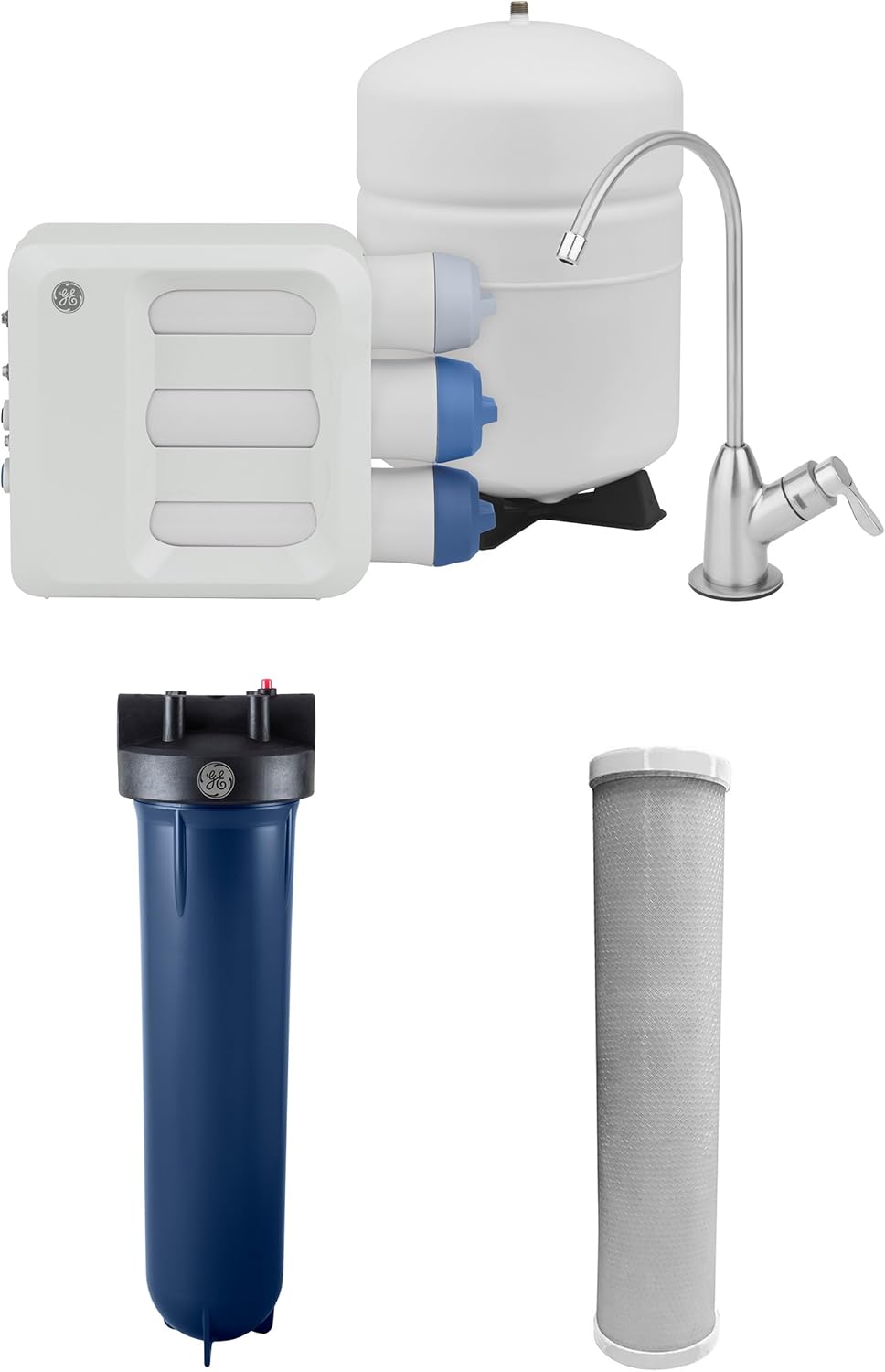
Will hard water ruin clay slip even after a salt-free conditioner?
Hardness itself is not the slip killer—sodium is. A well-deflocculated slip made with moderately hard, conditioned water (say, 8 to 12 grains per gallon) actually casts more predictably than slip made with very soft sodium-laden water. The TAC process keeps the minerals dissolved instead of precipitating onto your mixing equipment, which is the practical concern for studios.
Can I use reverse osmosis water for clay slip instead?
You can, but it is expensive and wasteful for a studio. RO strips out everything, including the trace minerals that help slip behave normally. Studios that do use RO typically remineralize for slip work or reserve RO water for glaze slurries and underglaze where ionic purity matters more. For everyday throwing water and slip mixing, a salt-free conditioner downstream of a good iron and sediment filter is more practical.
How do I know if my well water has too much iron for porcelain work?
Run an inexpensive iron test kit and look for results above 0.3 mg/L. Even at 0.1 to 0.2 mg/L, you will see warm tinting on translucent porcelain bisque. The iSpring iron and manganese system handles up to 3 mg/L of iron and 1 mg/L of manganese, which covers the vast majority of residential well chemistry in pottery-friendly North American regions.
Does chlorinated city water affect clay slip?
Chlorine does not change clay chemistry meaningfully, but it does two things you will notice in a studio: it accelerates corrosion on stainless mixer paddles and pug mill blades, and it kills the biological cultures that develop in aged slip (some studios age throwing slip for weeks for plasticity). A carbon-stage pre-filter ahead of your salt-free conditioner removes chlorine and protects equipment.
How often do I replace cartridges if I mix slip weekly?
For a home studio mixing slip once a week and throwing 3 to 4 days, plan on six-month sediment cartridge changes and twelve-month carbon changes. A four-pack of Aquaboon 5 micron filters covers two years of sediment replacements at that pace. Iron and manganese filter media on the iSpring lasts 5 to 10 years depending on iron load.
Can I install this myself or do I need a plumber?
Most pottery studios install the three-stage housings themselves with standard 1-inch threaded fittings; the iron filter is similar but heavier and benefits from a helper. The salt-free TAC head is the simplest stage—no backwash plumbing, no brine line, no drain—so most studios run it inline themselves. If you are not comfortable cutting into the main supply, a plumber should bill 2 to 3 hours for the full train.
Key Takeaways
- Choosing the right best salt free softener pottery studio clay slip means matching capacity and output ports to your actual devices
- Always check actual watt-hours (Wh), not just watts — runtime depends on Wh, not peak output
- Also covers: pottery studio water hardness
- Also covers: salt free softener ceramics
- Also covers: clay mixing water purity
- Compare price-per-Wh across models to find the best value for your budget