For homes with a recirculating hot water pump, the best salt free softener recirculating hot water pump shoppers should consider is a template-assisted crystallization (TAC) or NAC conditioner — never a brine-based ion exchange unit. Recirc loops continuously cycle hot water through copper, brass, and the bronze impeller of the pump itself, and chloride-rich softened water dramatically accelerates pitting corrosion at the temperatures (120-140°F) these loops hold. A TAC media converts dissolved hardness into harmless microscopic calcite crystals that pass through the pump without seeding scale on the cartridge, the impeller, or the loop's return tee.
Why ion-exchange softeners and recirc loops don't mix
A traditional softener swaps calcium and magnesium for sodium (or potassium) using a brine regeneration cycle. The resulting water carries dissolved sodium chloride at low concentrations — fine for a cold service line, but it has three failure modes in a recirculating hot system:

- Chloride pitting: Industry guidance flags copper systems above 140°F with chloride levels over 75 ppm as seeing measurable pitting within 18-36 months. Softened water at 7-10 gpg hardness regenerates to chloride concentrations that meet or exceed that threshold.
- Recirc pump seal failure: bronze cartridge pumps (Grundfos UP15, Taco 003, Watts 500800) rely on a thin lubrication film; sodium-rich water reduces the protective oxide layer and shortens cartridge life from 8-10 years to 3-4.
- Brine interruption in tankless setups: if your loop is fed by a tankless heater, the softener's nightly regen interrupts hot water delivery and dumps 35-50 gallons of brine to drain.
A salt-free conditioner — specifically TAC — sidesteps every one of these because nothing gets added to the water. The calcium stays in solution as a tiny crystal that simply doesn't bind to hot surfaces.
What to look for in a salt-free softener paired with a recirc loop
When evaluating the best salt free softener recirculating hot water pump compatibility, focus on these specs:
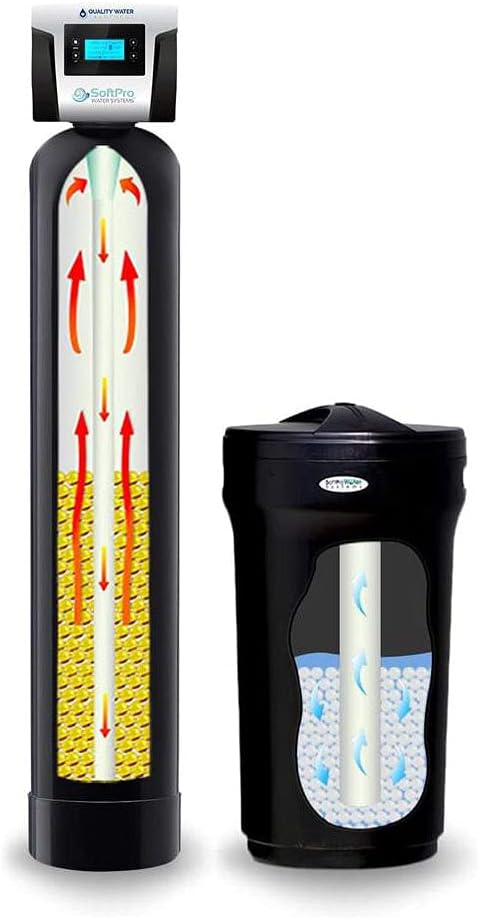
- Certified TAC or NAC media — look for NSF/ANSI 61 certification and ideally a DVGW W512 scale-reduction rating of ≥90%.
- Pre-filtration to 5 microns or finer — TAC media is sensitive to sediment, iron, and chlorine. Without a sediment prefilter and carbon stage, the resin balls foul in months instead of years.
- Iron under 0.3 ppm — TAC tolerates almost no iron. If you're on well water, add an iron filter ahead of the conditioner.
- Service flow ≥7 gpm — recirc loops add about 0.5-1.5 gpm of continuous flow to your peak demand, so size the bed accordingly.
- No backwash requirement — true TAC tanks are upflow; they don't need a drain line, which simplifies install in a tight mechanical closet.
Pre-treatment components that protect a salt-free softener on a recirc loop
The salt-free conditioner tank itself rarely makes or breaks the install — it's the pre-treatment train ahead of it that determines whether your TAC media lasts 18 months or 6 years. The comparison table below covers the upstream components most homeowners actually buy on Amazon.
| Product | Role in the recirc setup | Flow rate | Best for |
|---|---|---|---|
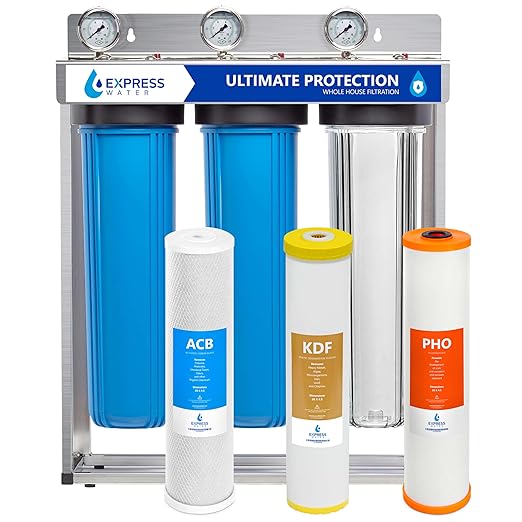
| Express Water 3-Stage | Sediment + carbon + KDF pre-filter | 15 gpm | City water with chlorine |
| Aquasana 500K Well | UV + carbon + KDF for well-fed loops | 7 gpm | Well water, bacteria risk |
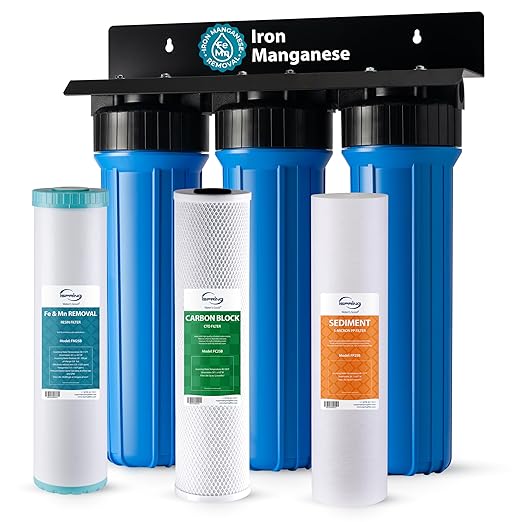
| iSpring Iron & Manganese | Iron/Mn removal to <0.3 ppm | 15 gpm | Wells with Fe over 0.3 ppm |
| HQUA WF3-01 | Budget 3-stage prefilter | 15 gpm | Small homes, light sediment |
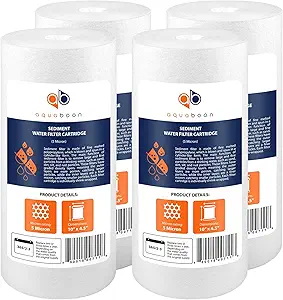
| Aquaboon 5 Micron (4-pack) | Replacement sediment cartridges | n/a | Annual maintenance |
The supporting products you actually need
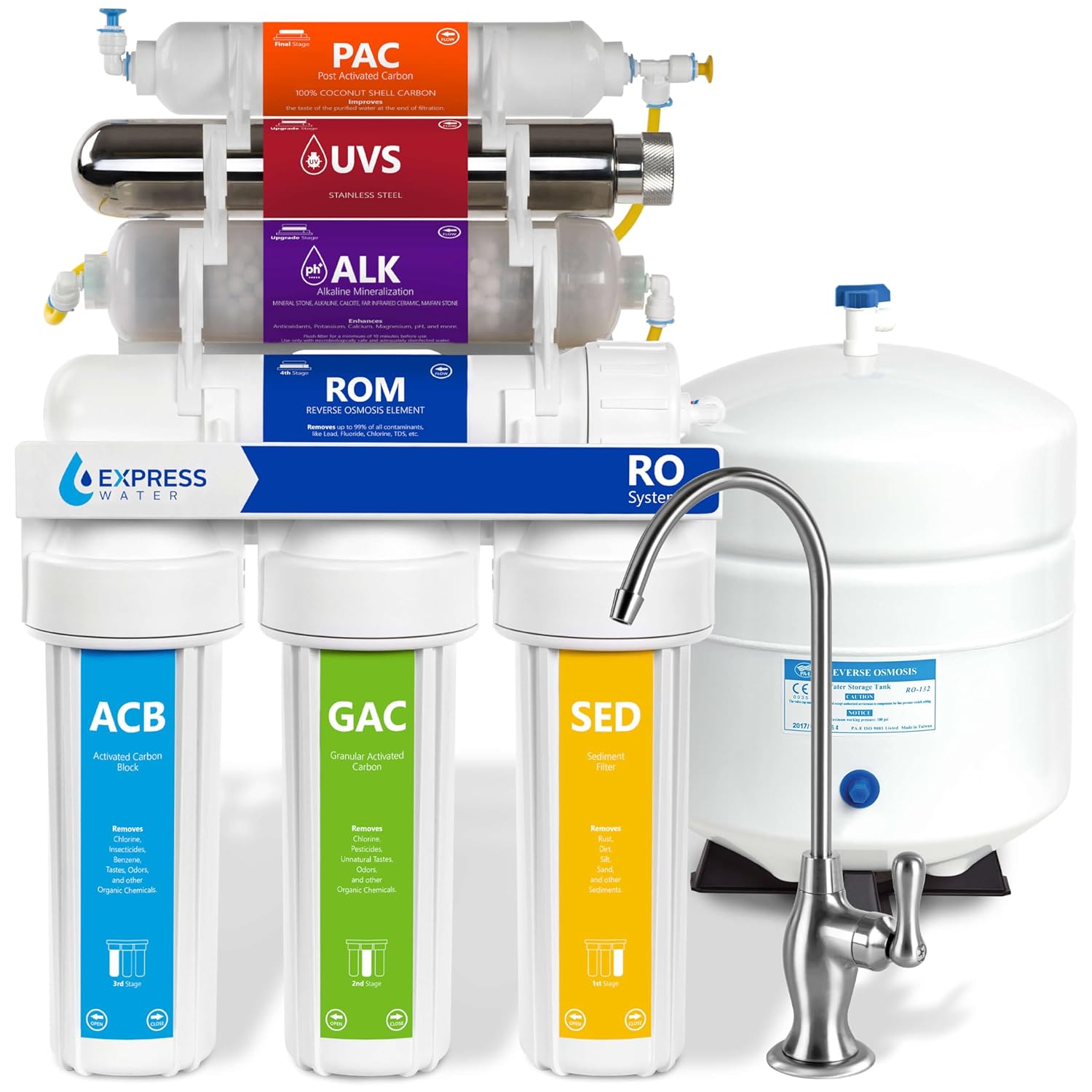
Express Water 3-Stage Whole House Water Filter System — best chlorine and sediment pre-filter for city water
If you're on municipal water, chlorine is the silent killer of TAC media — it oxidizes the resin's active sites within 12-18 months. The Express Water unit stacks a 5-micron sediment cartridge, a KDF/carbon block, and a polishing carbon stage in three clear 4.5" x 20" housings, giving you visual confirmation when cartridges load up. At 15 gpm it won't bottleneck a recirc-fed loop, and the 1" stainless ports match standard 3/4" or 1" softener bypass kits. This is the prefilter I'd pair with any salt-free conditioner on a chlorinated supply.
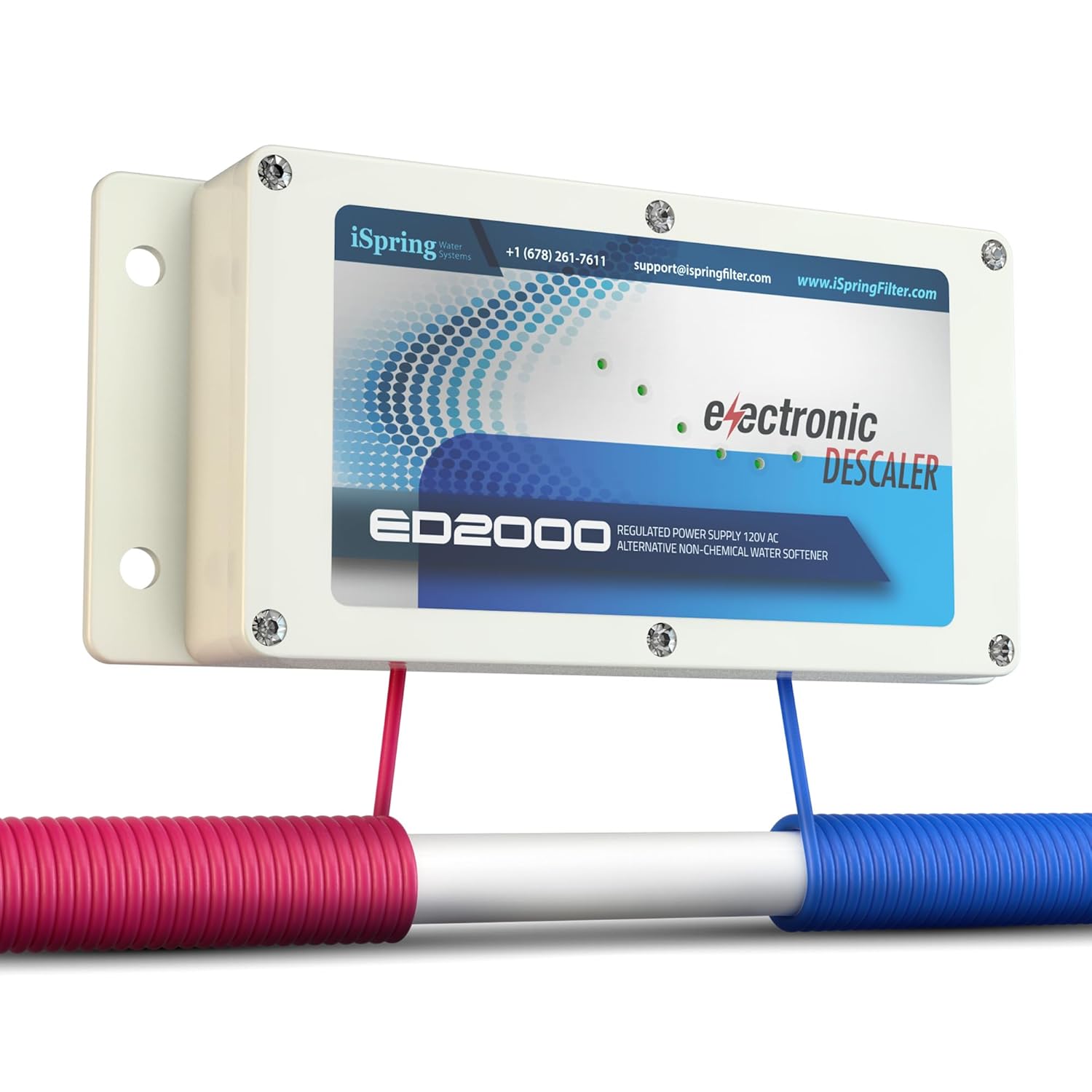
iSpring Iron & Manganese Whole House Water Filtration System — must-have for well-fed recirc loops
Iron is the number-one reason salt-free softeners fail prematurely. Even 0.5 ppm of dissolved iron will coat TAC beads in a rusty sludge, blocking the nucleation sites that turn hardness into harmless crystals. The iSpring uses a manganese greensand bed with air injection regeneration to drop iron and manganese to non-detect levels before the water ever touches your conditioner. If you see a rust ring in your toilet bowl or orange staining in laundry, you need this ahead of any salt-free unit on a recirc loop.
Aquasana Whole House Well Water Filter (500K Gallons, UV+Carbon+KDF) — total well water solution upstream of the softener
For homes on private wells with bacterial concerns, this Aquasana system bundles UV disinfection with KDF/carbon in a 500,000-gallon capacity stack. UV sterilization is critical when a recirc loop holds water at 100-130°F overnight — Legionella's growth sweet spot. The 7 gpm service flow is the floor I'd accept for a recirc-equipped home; size up if your peak demand exceeds that. The bundled UV stage is the feature that makes this preferable to a generic carbon-only setup for any well-fed recirculating system.
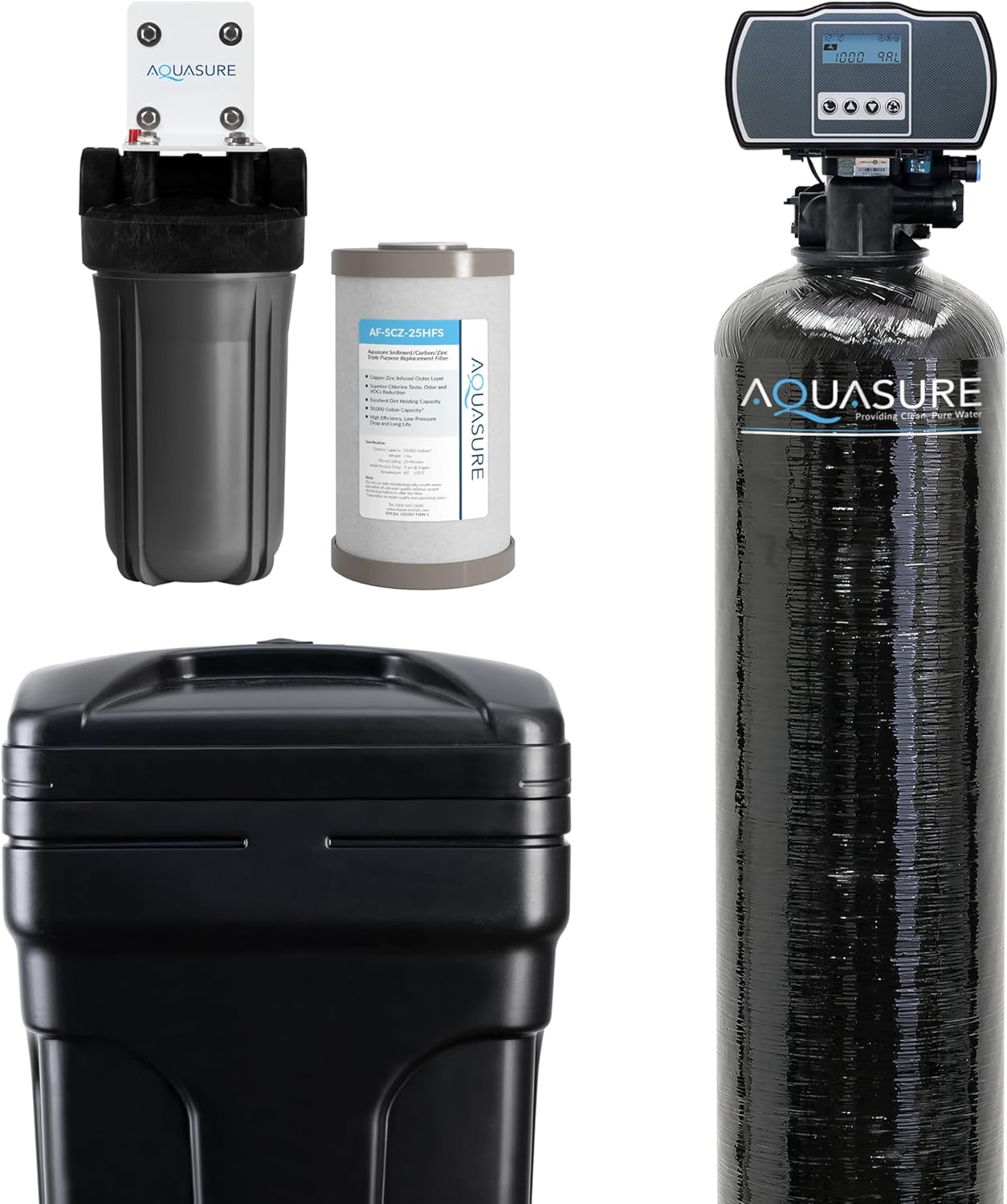
Aquaboon 5 Micron 10x4.5 Sediment Filter (4-Pack) — annual replacement set
TAC media is unforgiving of sand, silt, or pipe scale flakes. A 5-micron sediment cartridge changed every 3-4 months keeps the media bed clean and your service flow consistent. The 4-pack covers a full year, and the 10" x 4.5" Big Blue form factor fits virtually every brand of housing including the Express Water and HQUA units above. Buy this once a year, set a calendar reminder for changeouts, and you'll add three to four years of life to whatever salt-free softener you install.
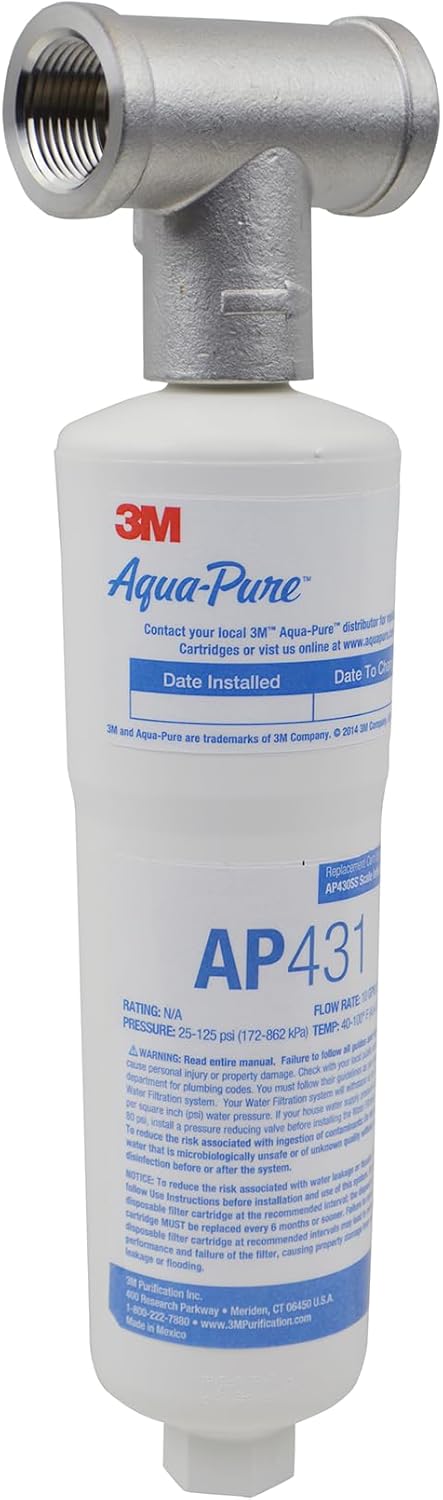
HQUA WF3-01 3-Stage Whole House Water Filtration System — budget pre-filter for smaller homes
If you're outfitting a 2-bathroom home with a short recirc loop and want pre-treatment under $200, the HQUA WF3-01 covers the basics — sediment, GAC carbon, and CTO block in three housings. Service flow tops out around 15 gpm but realistically you'll see 8-10 gpm sustained with a recirc tap pulling continuously. It's the right choice if your incoming water is already reasonably clean and you mainly need to strip chlorine before the TAC tank.
Installation order for a recirc-loop setup
Plumb your treatment train in this sequence, with the salt-free conditioner last before the water heater feed:
- Whole-house sediment filter (5 micron)
- Iron/manganese filter (well water only)
- Carbon/KDF block (chlorine removal for city supplies)
- UV sterilizer (well water only)
- Salt-free TAC conditioner
- Hot water heater + recirc loop return tee
Critical detail: the recirc return line must reconnect downstream of the conditioner so the recirculating water passes through the TAC media on every cycle around the loop. If your plumber tees the return line ahead of the conditioner, only the cold service side gets treated and the hot loop continues to scale. Many DIY installs get this wrong because the conditioner sits in the basement next to the heater and the existing recirc tee was already plumbed cold-side.
For more depth on these decisions, see our sediment prefilter sizing guide, the deeper review of TAC media brands, our recirc pump scale prevention playbook, and the well water iron filtration guide if you're on a private well.
Sizing the conditioner for 2026 recirc-equipped homes
Most 2026 home plans pair a 50-gallon tank-type or condensing tankless heater with a continuous-duty recirc pump (Grundfos Alpha 15-55 or Taco 006e3). Peak hot water demand for a 3-bath home runs 9-11 gpm; adding 1.5 gpm of recirc flow puts you at 10.5-12.5 gpm sustained. Pick a TAC bed rated for at least 15 gpm to keep pressure drop under 5 psi at peak. Undersized beds bypass hardness during peak draws — exactly when scale formation in the heater is worst.
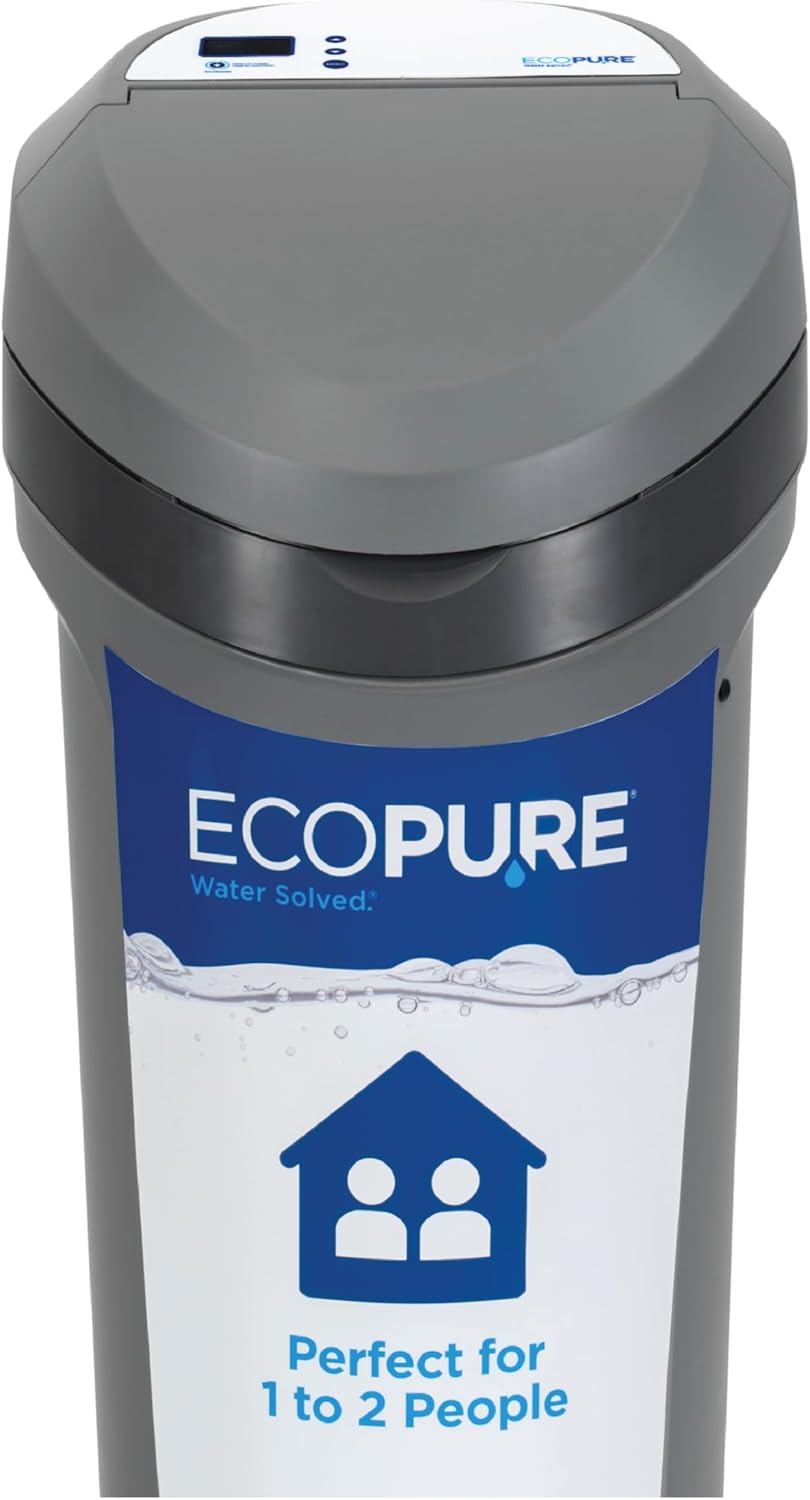
Picking the best salt free softener recirculating hot water pump compatible system isn't about brand prestige; it's about pairing the right TAC bed with the right pre-treatment train so the media stays clean for years.
Frequently Asked Questions
Does a salt-free softener actually work on a recirculating hot water pump system?
Yes — and arguably better than a salt-based softener. Template-assisted crystallization (TAC) media converts hardness ions into stable microcrystals that resist binding to copper, brass, and bronze surfaces even at the 120-140°F temperatures recirc loops hold. Unlike brine softeners, there's no chloride introduced to corrode the pump's cartridge or impeller, and the conditioner doesn't interrupt hot water delivery for regeneration cycles.
Will a salt-free conditioner protect my Grundfos or Taco recirc pump from scale?
Properly sized TAC systems achieve 88-99% scale prevention in independent DVGW W512 testing. That's not removal — calcium is still in the water — but the crystals don't adhere to hot surfaces. After 12-18 months on a TAC system you'll often see existing scale slowly soften and flake off the pump cartridge, especially if your loop runs warmer than 130°F.
What's the difference between TAC and NAC media in salt-free softeners?
TAC (template-assisted crystallization) uses a polymer bead with millions of nucleation sites that convert calcium carbonate to its non-adherent aragonite form. NAC (nucleation-assisted crystallization) is functionally similar but uses a different polymer chemistry. For recirc loops either works — what matters more is the bed sizing relative to your peak flow and the quality of pre-filtration ahead of it.
How often do I need to replace TAC media in a salt-free softener?
With proper pre-filtration (sediment + carbon, no iron, no chlorine reaching the bed) TAC media lasts 5-7 years. Without pre-filtration, expect 12-24 months. The Aquaboon 4-pack of sediment cartridges and a carbon prefilter like the Express Water unit will pay for themselves multiple times over by extending media life from two years to six.
Can I use a salt-free softener with a tankless water heater on a recirc loop?
This is actually the ideal pairing. Tankless heaters are extremely scale-sensitive — Rinnai and Navien both flag warranty concerns above 7 gpg hardness with no treatment. A salt-free conditioner protects the heat exchanger without the regen-cycle hot water interruptions that traditional softeners cause. You'll still want an annual descaling flush as a backup, but most homeowners report no measurable scale after 3-4 years on TAC.
Do I need a separate sediment prefilter if my water looks clean?
Yes. "Looks clean" only catches particles above roughly 40 microns. TAC media is fouled by particles in the 5-50 micron range — too small to see but plenty large enough to coat the beads. A 5-micron sediment filter ahead of the conditioner is non-negotiable; the Aquaboon 4-pack handles this for under $40 a year.
What about Legionella risk in a recirculating loop with a salt-free softener?
Salt-free conditioners do not disinfect water. If your loop temperature can drop below 122°F (the lower bound for Legionella suppression), add a UV sterilizer ahead of the conditioner — the Aquasana well water system bundles UV, KDF, and carbon in one stack. Keep loop temperatures at 124°F or above and run the recirc pump continuously rather than on a timer for the best biological control.
Key Takeaways
- Choosing the right best salt free softener recirculating hot water pump means matching capacity and output ports to your actual devices
- Always check actual watt-hours (Wh), not just watts — runtime depends on Wh, not peak output
- Also covers: salt free softener with recirc pump
- Also covers: hot water loop salt free conditioner
- Also covers: best descaler home recirc system
- Compare price-per-Wh across models to find the best value for your budget