If you keep Mbuna, Peacocks, or Frontosa, you already know the cruel irony of shopping for a whole-house softener: traditional ion-exchange units strip out the calcium and magnesium your African cichlids desperately need. The best salt free softener african cichlid aquarium setup is therefore not a softener at all in the classic sense — it is a salt-free conditioning and filtration stack that scrubs chlorine, chloramine, iron, and sediment while leaving the GH and KH that Rift Lake species depend on completely intact. In this 2026 guide we rank five whole-house systems that pair perfectly with cichlid husbandry, plus the sediment cartridges that protect them.
Why African Cichlid Keepers Should Avoid Salt-Based Softeners
Lake Malawi sits at roughly 7.8–8.6 pH with hardness around 4–6 dGH and 6–8 dKH. Lake Tanganyika runs even harder, often 9–12 dGH. A conventional salt-based softener replaces those magnesium and calcium ions with sodium — exactly the opposite of what your fish evolved for. Sodium-softened water also wrecks the buffering capacity of crushed coral or aragonite substrates, sending pH on a slow downward drift that triggers Malawi bloat and chronic stress.
The best salt free softener african cichlid aquarium approach instead uses template-assisted crystallization (TAC) for scale control plus multi-stage carbon and KDF filtration. TAC binds hardness minerals into harmless microscopic crystals that pass through plumbing without sticking — your pipes stay clean, but the calcium and magnesium remain bioavailable when you do a water change.
What to Look For in a Whole-House System for Cichlid Tanks
Before we get to the picks, here is what actually matters when your end-use is a 125-gallon Mbuna rockscape or a Tanganyikan shell-dweller colony:
- Chloramine removal: Most municipal systems have switched from chlorine to chloramine. Catalytic carbon, not standard GAC, is required.
- Iron and manganese: If you are on well water, even 0.3 ppm iron will stain rockwork and stress fish. A dedicated oxidizing filter is non-negotiable.
- Sediment pre-filtration: 5-micron pleated cartridges protect downstream media and your aquarium pumps.
- Mineral preservation: Avoid any cation-exchange resin or reverse osmosis stage in the main loop.
- Flow rate: Cichlid keepers run big water changes — 30% on a 220-gallon tank is 66 gallons. You want at least 7 GPM sustained.
2026 Comparison: Best Salt-Free Systems for Cichlid Hobbyists
| System | Stages | Capacity | Best For | Mineral-Safe? |
|---|---|---|---|---|
| Aquasana Well Water 500K | UV + Carbon + KDF | 500,000 gal | Well-water cichlid rooms | Yes |
| iSpring Iron & Manganese | Oxidation + Catalytic | ~100,000 gal | Iron-heavy well sources | Yes |
| Express Water 3-Stage | Sediment + Carbon + KDF | 100,000 gal | Municipal chloramine | Yes |
| HQUA WF3-01 | Sediment + GAC + CTO | ~75,000 gal | Budget city-water builds | Yes |
| Aquaboon 5-Micron Pack | Sediment only | Per cartridge | Pre-filter upgrades | Yes |
Top Salt-Free Whole-House Picks for African Cichlid Keepers
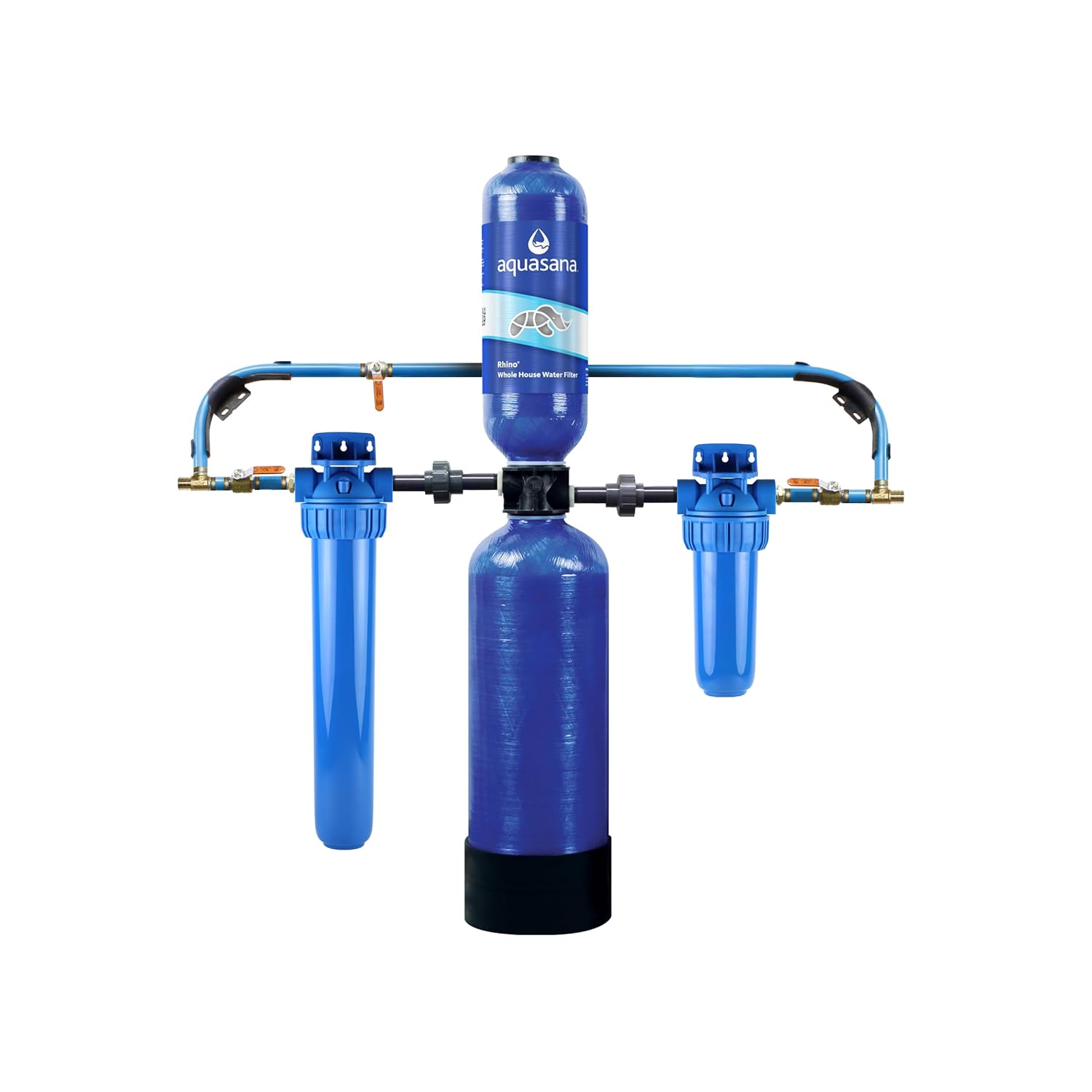
1. Aquasana Whole House Well Water Filter, 500K Gallons (UV+Carbon+KDF) — Best Overall
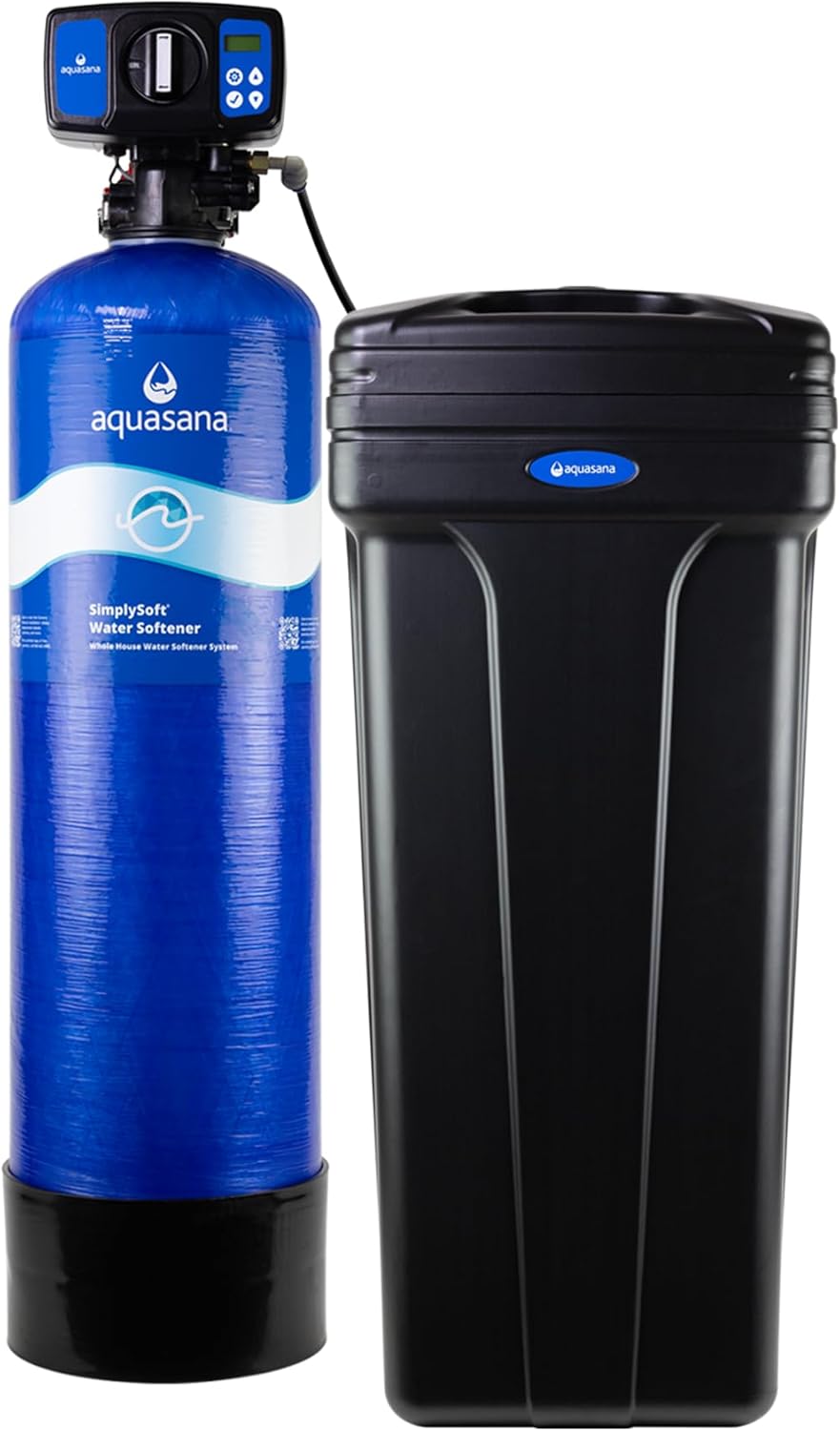
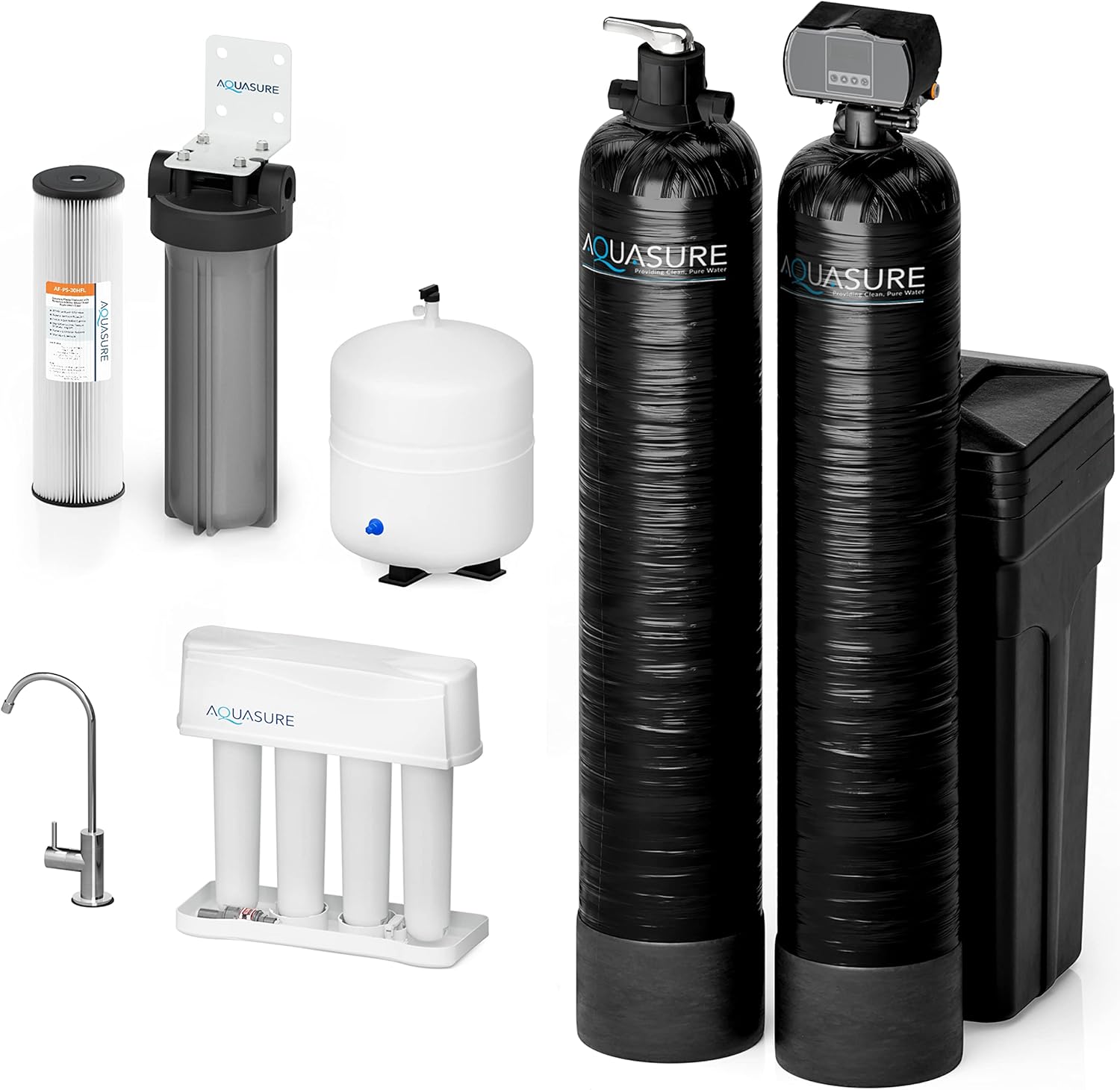
For serious fishrooms drawing from a well, this is the gold standard. The UV chamber sterilizes pathogens that would otherwise enter your sumps, the catalytic carbon block annihilates chloramine if you are on a mixed source, and the KDF-55 media tackles heavy metals like copper and lead — both of which are acutely toxic to Lake Tanganyika species at trace levels. Critically, nothing in this stack exchanges sodium for calcium, so your 8.4 pH and 10 dGH are preserved straight to the bucket. A 500,000-gallon rated life means most hobbyists get five to ten years before a full media swap. Pair it with a TAC conditioner downstream if you have visible scaling. Check the Aquasana 500K well system on Amazon.
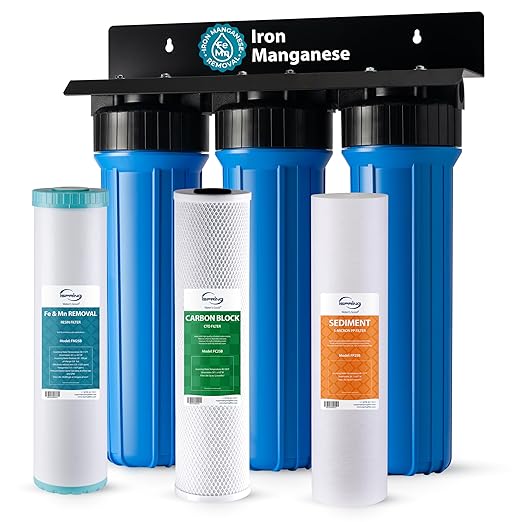
2. iSpring Iron & Manganese Whole House Filtration System — Best for Well Water with Iron
Iron is the silent killer of well-fed cichlid tanks. Even concentrations below the EPA secondary limit of 0.3 ppm will oxidize on contact with your tank's surface agitation, leaving orange biofilm on driftwood and rockwork, plugging sponge filters, and depleting dissolved oxygen during the oxidation reaction. The iSpring unit uses an air-injection oxidation chamber followed by a catalytic manganese-dioxide bed to drop iron concentrations dramatically without resin regeneration or salt. Because it works through oxidation rather than ion exchange, your hardness profile is untouched — a perfect fit for Mbuna keepers who need that 7.8+ pH stability. View the iSpring Iron & Manganese system on Amazon.
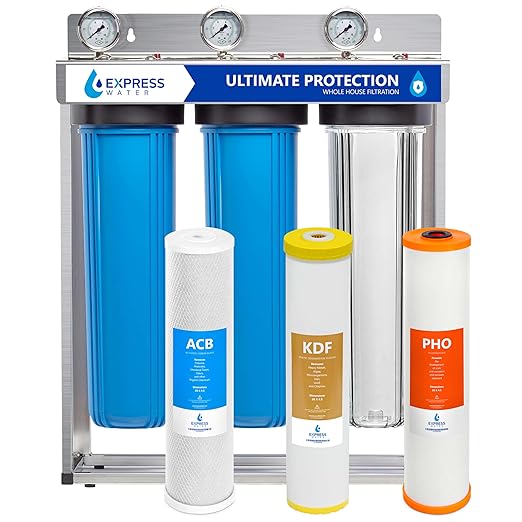
3. Express Water 3-Stage Whole House Water Filter System — Best for Municipal Chloramine
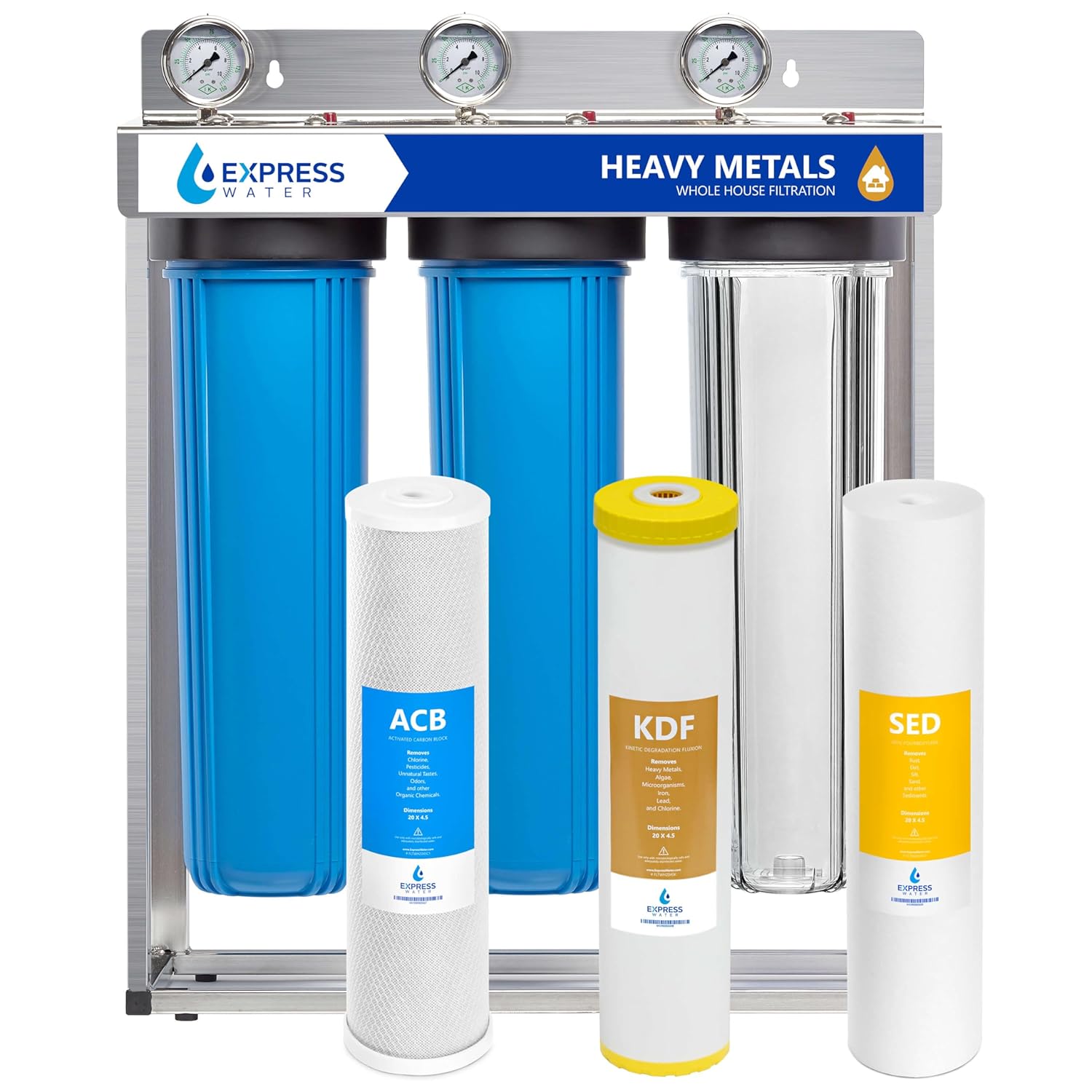
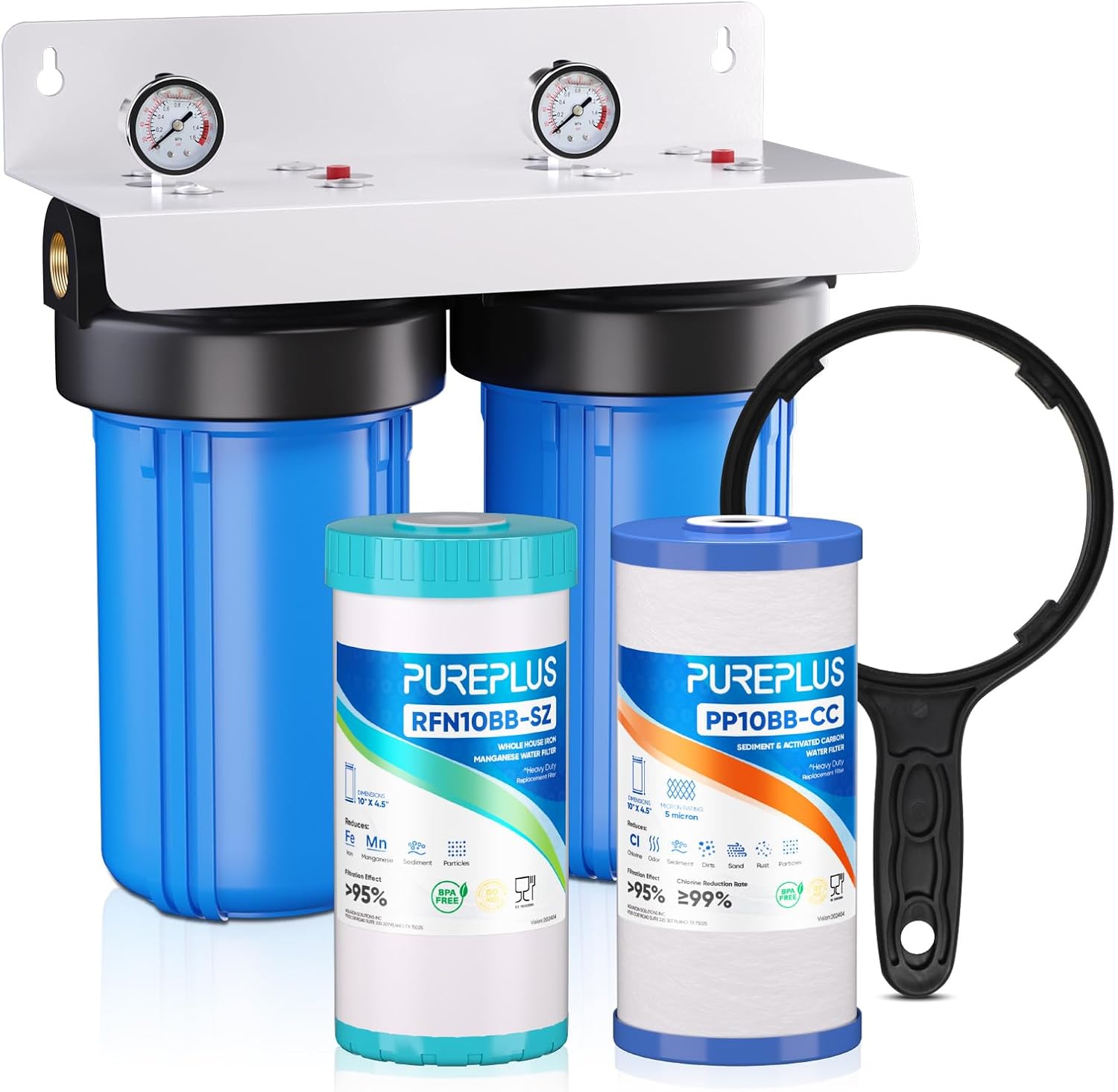
If you are on city water, chloramine is your enemy. Standard dechlorinator dosing in a 240-gallon system gets expensive fast, and most homeowners forget that chloramine also enters through showers and laundry, contributing to ambient ammonia loads in a fishroom. The Express Water three-stage uses a 5-micron sediment pre-filter, a catalytic carbon block tuned for chloramine, and a KDF-redox stage for residual metals. Flow rates sustain around 15 GPM, more than enough for back-to-back 50% water changes on a multi-tank rack. Cichlid tap parameters come through clean and mineral-rich. See the Express Water 3-stage system on Amazon.
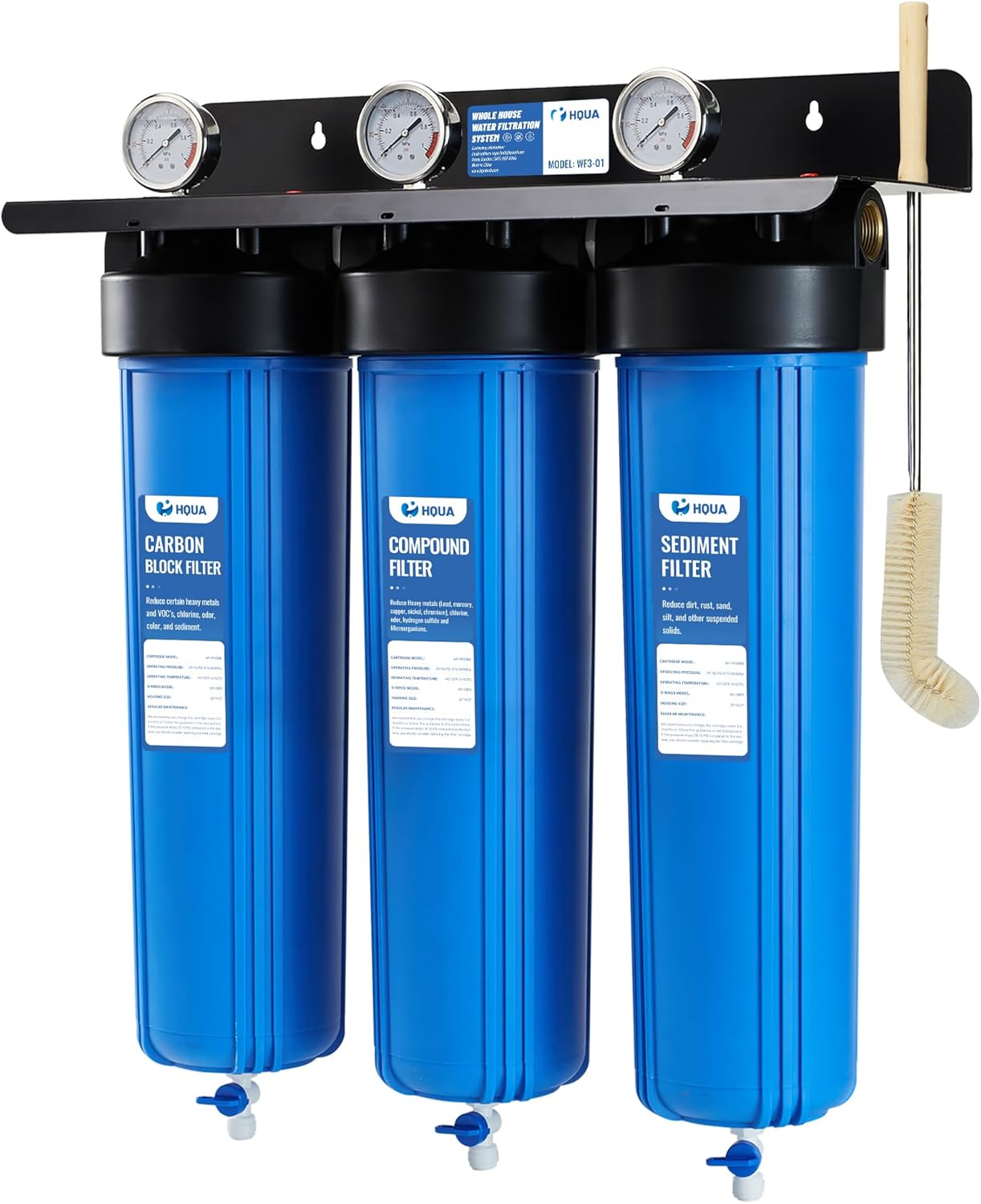
4. HQUA WF3-01 3-Stage Whole House Water Filtration System — Best Budget Build
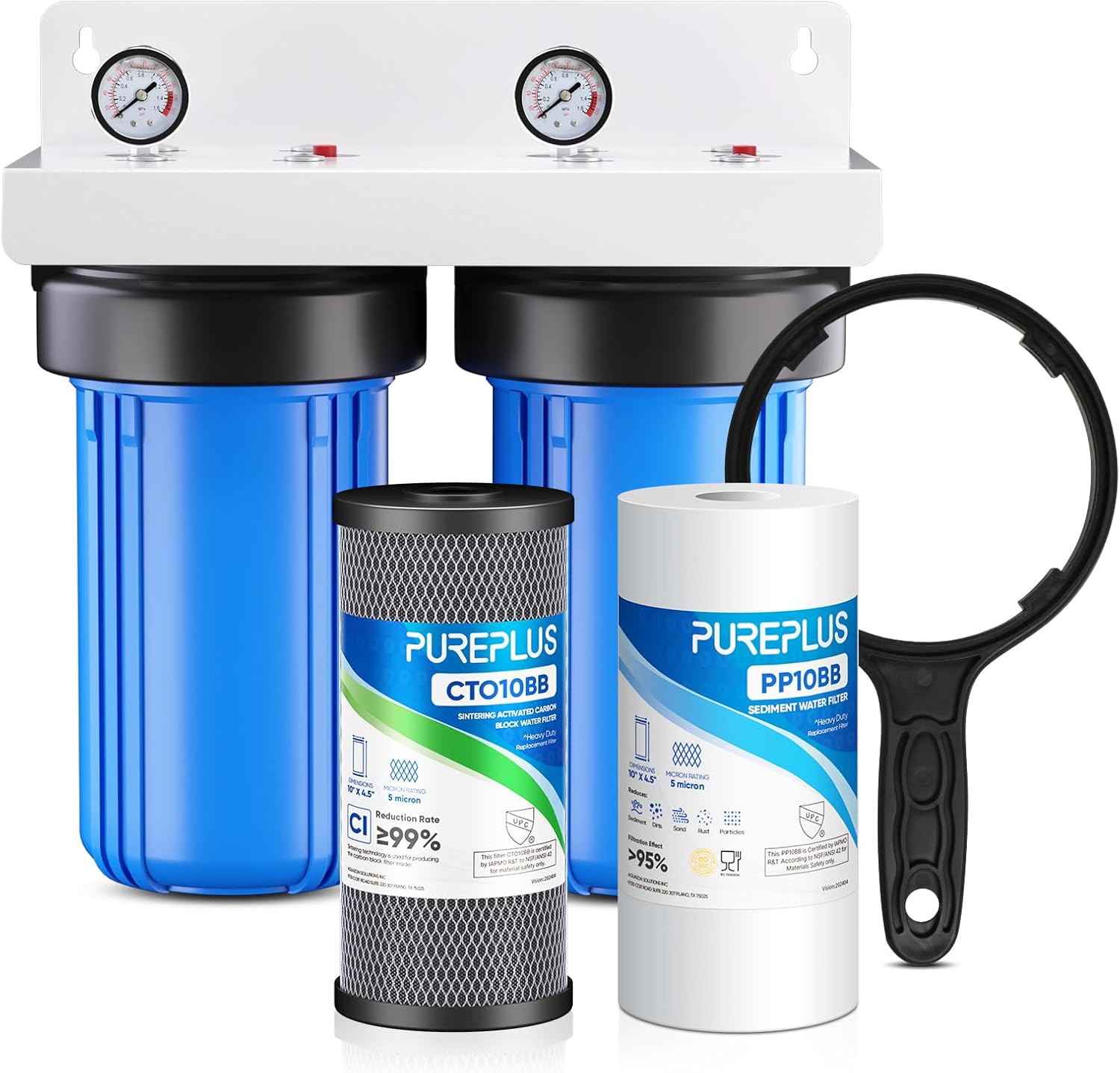
Not every cichlid hobbyist runs a basement fishroom; many of us have a single 75-gallon display and modest filtration needs. The HQUA WF3-01 delivers the same sediment / GAC / CTO topology as systems three times the price, with replacement cartridges that are widely cross-compatible. It will not handle severe iron or chloramine as elegantly as the Express Water or Aquasana units, but for clean municipal water it is more than capable of keeping your tank mineral-balanced and chlorine-free. A good gateway into whole-house filtration for the hobbyist scaling from a Python-and-Prime routine. Compare the HQUA WF3-01 on Amazon.
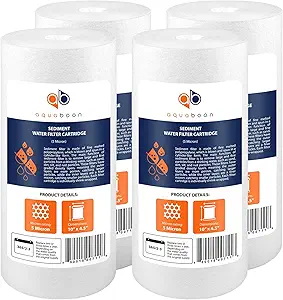
5. Aquaboon 5 Micron 10x4.5 Well Water Sediment Filter (4-Pack) — Best Pre-Filter Upgrade
Whichever main system you choose, the pre-filter is what protects it. Aquasana, Express Water, and HQUA all use the standard 10x4.5 big-blue housing format, and the Aquaboon four-pack of 5-micron pleated cartridges is the cheapest insurance you can buy for a cichlid fishroom. Pleated polyester construction means they can be hosed off and reused once before disposal — a meaningful saving when iron-loaded well water clogs a cartridge in 30 days. Keep two spares on the shelf at all times; nothing kills a Saturday water-change ritual faster than discovering a cake of red sludge in your housing. Grab the Aquaboon 5-micron 4-pack on Amazon.
How to Plumb a Salt-Free Cichlid Filtration Stack
The ideal 2026 layout for a serious African cichlid hobbyist looks like this:
- Stage 1: Aquaboon 5-micron pleated sediment (catches well silt and rust).
- Stage 2: iSpring iron/manganese oxidation unit (only if you have well water testing above 0.2 ppm Fe).
- Stage 3: Aquasana or Express Water carbon + KDF block (chloramine, lead, copper).
- Stage 4: Optional TAC scale conditioner (protects appliances without removing minerals).
- Stage 5: Dedicated fishroom spigot before any softener loop, if you must have a softener for the rest of the house.
That last point is critical: if your spouse insists on a traditional softener for the showers and dishwashers, install a hard-water bypass spigot upstream of the softener inlet. That spigot becomes your dedicated fish-only tap, giving you mineral-rich water for the cichlids and soft water for the laundry — everyone wins.
Testing After Installation
Once your system is online, retest within 48 hours. You want to confirm:
- Chlorine/chloramine at 0 ppm
- Iron below 0.05 ppm
- GH unchanged from raw source (should be 6–12 dGH for most municipal water)
- KH unchanged (you'll buffer up with aragonite in-tank)
- pH within 0.2 of raw source
If GH or KH dropped after installation, something in your stack is doing ion exchange — track it down and remove it. For further reading on water chemistry, see our guides on whole-house filters that retain minerals and TAC conditioners versus salt softeners.
Frequently Asked Questions
Do salt-free softeners remove the minerals African cichlids need?
No. True salt-free conditioners use template-assisted crystallization (TAC) to convert hardness minerals into microscopic seed crystals that resist scaling but remain dissolved as bioavailable calcium and magnesium. Your GH and KH stay essentially unchanged, which is exactly what Mbuna, Peacocks, and Tanganyikan species require. Avoid anything labeled as a "water softener" that uses resin beads and a brine tank — those will strip the minerals your fish depend on.
Can I use Aquasana whole house water for my Lake Malawi tank without remineralization?
If your raw municipal source already runs 8–12 dGH, yes — the Aquasana 500K system leaves that hardness intact. You may still want to buffer with aragonite sand or crushed coral substrate to lock in a stable 8.0–8.4 pH, but you should not need to dose Rift Lake salts. On softer source water (below 4 dGH) you will still need to remineralize regardless of the filter you choose.
Will iron-stained well water harm my African cichlids long term?
Yes. Chronic exposure to dissolved iron above 0.3 ppm causes gill irritation, suppressed immune response, and increased susceptibility to Malawi bloat and ich outbreaks. Iron also catalyzes oxidation of vitamin C in fish food, reducing nutritional value. A dedicated oxidation filter like the iSpring iron and manganese unit is the cleanest fix and avoids the ion-exchange resin that would otherwise soften your water.
Is RO water better than a salt-free softener for African cichlids?
For most hobbyists, no. RO strips everything, including the minerals cichlids need, forcing you to remineralize every batch with expensive Rift Lake salt mixes. A salt-free whole-house filter preserves your source water's natural calcium and magnesium while removing the chlorine, chloramine, iron, and sediment that actually harm fish. RO makes sense only when your source water has nitrates above 40 ppm or other contaminants a carbon stack cannot remove.
How often do I change cartridges in a whole-house system feeding a cichlid fishroom?
Sediment pre-filters typically last 2–4 months on municipal water and as little as 30 days on iron-heavy well water — the Aquaboon 4-pack covers a year of average use. Carbon and KDF blocks in the Express Water and Aquasana systems are rated by gallons; track your usage with a simple inline flow meter. Fishroom water-change volumes add up fast, so most cichlid keepers replace carbon stages annually rather than waiting for the rated capacity.
Can I install one of these systems myself or do I need a plumber?
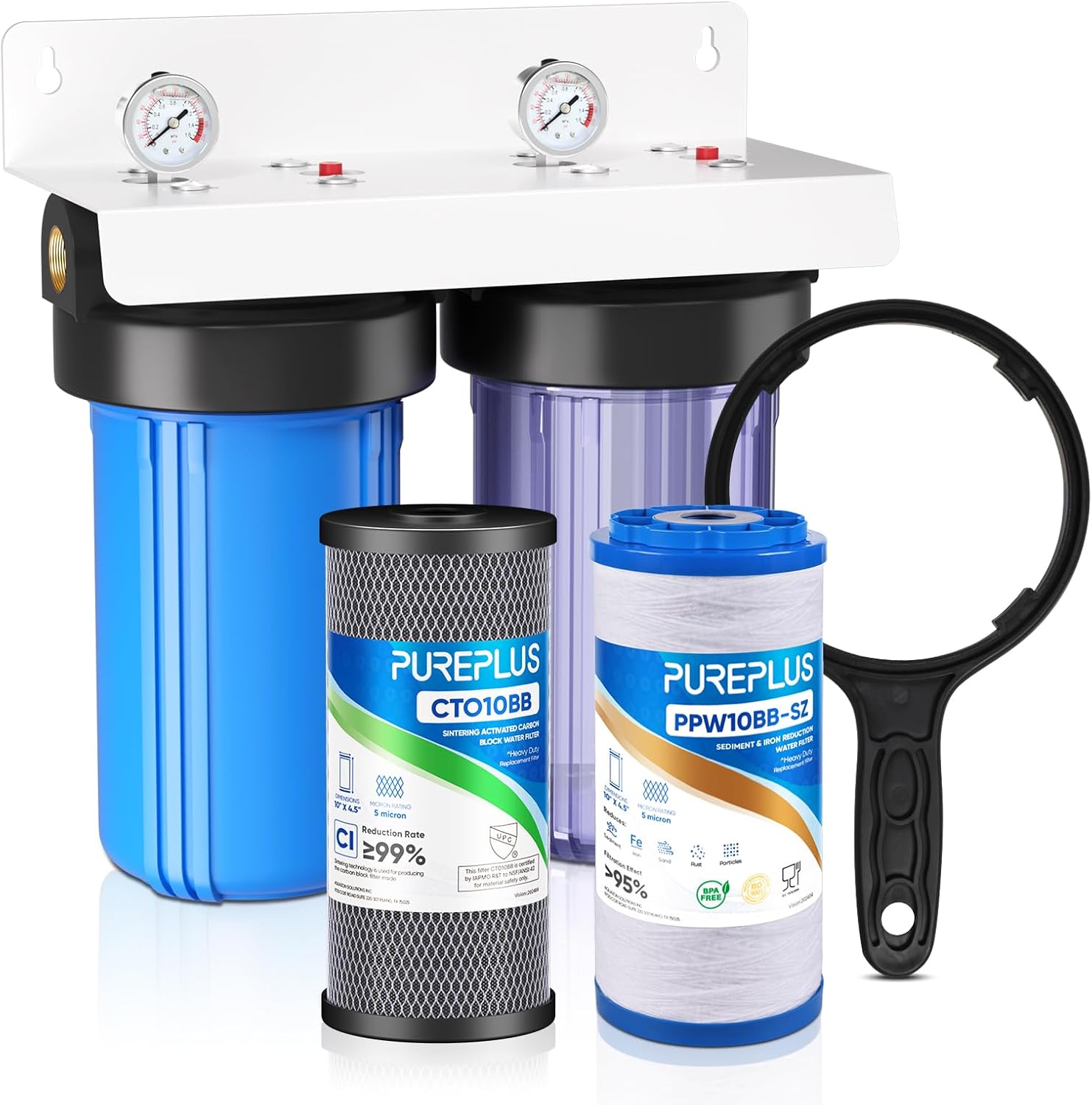
Anyone comfortable with PEX or threaded brass fittings can install the HQUA WF3-01 or Express Water 3-stage in an afternoon — both come pre-assembled on mounting brackets. The iSpring iron/manganese system and Aquasana 500K require more space and benefit from professional install, especially if you are tying into a pressure tank. Always include shutoff valves on both sides and a bypass loop for cartridge changes that won't interrupt water to the fishroom.
What is the best salt free softener african cichlid aquarium combo for a beginner?
Start with the Express Water 3-stage paired with an Aquaboon 5-micron pre-filter upgrade. That combination handles municipal chloramine, knocks down trace metals, and leaves your hardness profile cichlid-ready, all under a single weekend install. Add the iSpring iron/manganese unit only if a well-water test confirms you need it. For more on building a complete fishroom water plan, see our cichlid fishroom water setup guide.
Final Verdict
The best salt free softener african cichlid aquarium setup in 2026 is the Aquasana 500K for well-water hobbyists and the Express Water 3-stage for municipal users, each backed by an Aquaboon sediment pre-filter and, when needed, an iSpring iron and manganese stage. None of these systems use sodium ion exchange, so your Mbuna, Frontosa, and shell-dwellers get the hard, mineral-rich, contaminant-free water they evolved to thrive in — and your pipes stay scale-free thanks to TAC conditioning downstream.
Key Takeaways
- Choosing the right best salt free softener african cichlid aquarium means matching capacity and output ports to your actual devices
- Always check actual watt-hours (Wh), not just watts — runtime depends on Wh, not peak output
- Also covers: salt free softener safe for cichlid tank water
- Also covers: template assisted crystallization aquarium safe
- Also covers: whole house conditioner cichlid hard water hobby
- Compare price-per-Wh across models to find the best value for your budget