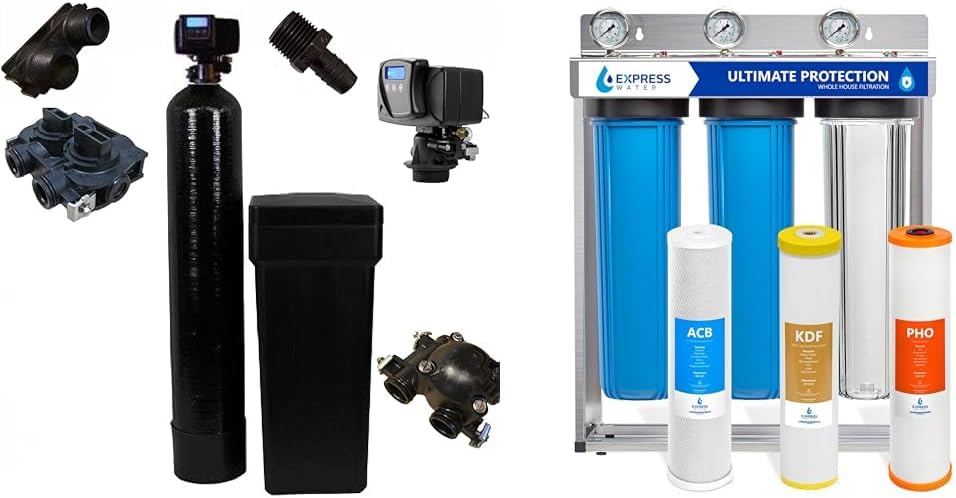
If your well tests above 5 ppm iron, the default factory program on the Fleck 5600SXT will foul your resin within months. Dialing in the right fleck 5600sxt settings for high iron well water means shorter regeneration intervals, a heavier salt dose, a longer brine draw, and almost always a dedicated iron pre-filter ahead of the softener. Below are the exact valve programming values we use on 48,000-grain cabinet units treating 5–10 ppm iron in 2026, plus the pre-filter pairings that keep the resin bed alive past year five.
Quick-Answer Settings (48k Grain Tank, 5–8 ppm Iron, 25 gpg Hardness)
- H (Hardness): 40 gpg (true hardness 25 + 15 gpg iron compensation: add 5 gpg per 1 ppm iron)
- DO (Day Override): 3 days
- RT (Regen Time): 02:00
- C (Capacity): 32,000 grains (de-rate from 48k to protect against iron fouling)
- SF (Safety Factor): 20%
- RC (Reserve Capacity): Auto
- BW (Backwash): 10 minutes
- BD (Brine Draw / Slow Rinse): 60 minutes
- RR (Rapid Rinse): 10 minutes
- BF (Brine Fill): 12 minutes (≈15 lbs salt per regen on a 0.5 gpm BLFC)
- DF (Day Format): Gal (gallons mode, not days-only)
These fleck 5600sxt settings for high iron well water lean on a 15 lb salt dose and a 3-day forced regeneration to keep ferrous iron from oxidizing inside the resin bed between cycles. Below we break down why each number matters and which pre-filters make the program actually hold.
Why the Factory Program Fails Above 5 ppm Iron
Out of the box, the Fleck 5600SXT ships with a hardness of 20 gpg, a 7-day override, and a 6-lb salt dose. That program assumes municipal water with negligible iron. When raw well water carries 5+ ppm dissolved (ferrous) iron, three things go wrong fast:
- Iron compensation is missing. Every 1 ppm of iron consumes the same exchange capacity as roughly 5 gpg of hardness. At 6 ppm iron, you have already added 30 gpg of "hidden" hardness to the load.
- Salt dose is too low. A 6-lb dose regenerates at about 3,000 grains per pound efficiency, which simply will not strip iron-fouled sites. 15 lb per cubic foot is the minimum for iron-bearing water.
- Regen interval is too long. Ferrous iron oxidizes inside the resin bed if it sits more than ~96 hours between regenerations, locking onto exchange sites as insoluble ferric hydroxide. A 3-day forced override beats this clock.
Step-by-Step Fleck 5600SXT Programming Walkthrough
1. Enter Master Programming Mode
Hold the Up and Down arrows for five seconds. The display shifts to DF (Day Format). Use Set Clock or Up/Down to scroll between values.
2. Set Capacity (C) and Hardness (H) with Iron Compensation
On a 1.5 cu ft (48,000-grain) tank treating 6 ppm iron and 25 gpg hardness:
- Compensated hardness = 25 gpg + (6 ppm × 5) = 55 gpg total load
- De-rated capacity at 15 lb salt = 32,000 grains
- Days between regen at 4 people × 75 gal × 55 gpg = ≈16,500 grains/day regen every 2 days by volume
If your iron is closer to 8–10 ppm, lower capacity to 28,000 grains and force regeneration every 2 days using the DO override.
3. Brine Fill (BF) and Salt Dose
The 5600SXT controls salt dose by timed brine refill. With the stock 0.5 gpm Brine Line Flow Control (BLFC):
- 8 minutes ≈ 6 lb salt (factory default — too light)
- 12 minutes ≈ 15 lb salt (recommended for iron water)
- 16 minutes ≈ 20 lb salt (high-iron, 10+ ppm)
Confirm your BLFC size by reading the small disc behind the brine elbow. If it is a 0.25 gpm BLFC, double the times above.
4. Brine Draw / Slow Rinse (BD)
Extend BD to 60 minutes. The longer slow rinse pulls iron off resin beads at low flow, where the brine actually has contact time to do ion exchange. Default 60 is too short to scour iron fouling.
5. Backwash (BW) and Rapid Rinse (RR)
Increase backwash to 10 minutes to lift any precipitated iron sludge out of the bed before brining. Rapid rinse at 10 minutes settles the bed and clears residual brine.
6. Day Override (DO)
Set DO to 3 days maximum. Even if you barely use water, the valve will fire a regen every third night at 2 a.m. and prevent ferrous-to-ferric conversion inside the resin.
Pre-Filtration Is Non-Negotiable Above 5 ppm
A softener alone is rated for clear-water (ferrous) iron up to about 3 ppm. Past 5 ppm, the resin will foul no matter how aggressive your fleck 5600sxt settings for high iron well water look on paper. You need either a dedicated iron filter ahead of the softener or, at minimum, a high-capacity sediment + oxidation pre-stage. See our deeper write-up on choosing an iron pre-filter for well water for sizing guidance.
Recommended Pre-Filters and Whole-House Pairings (2026)
The five systems below all pair well with a Fleck 5600SXT-controlled softener. Pick based on whether your iron is dissolved (clear when first drawn) or oxidized (rusty out of the tap).
| System | Best For | Iron Rating | Stages | Service Flow |
|---|---|---|---|---|
| iSpring WGB32BM | Dissolved iron + manganese | Up to 3 ppm Fe / 1 ppm Mn | 3 (sediment + carbon + iron/Mn) | 15 gpm |
| Aquasana 500K UV | Bacteria + low iron polish | ≤0.3 ppm Fe | UV + carbon + KDF | 7 gpm |
| Express Water 3-Stage | Sediment + taste pre-stage | ≤1 ppm Fe | Sediment + KDF + carbon | 15 gpm |
| HQUA WF3-01 | Budget 3-stage pre-softener | ≤1 ppm Fe | Sediment + GAC + CTO | 15 gpm |
| Aquaboon 5 Micron (4-pk) | Cartridge change-outs | Oxidized iron sediment | Single 10x4.5 cartridge | 10 gpm |
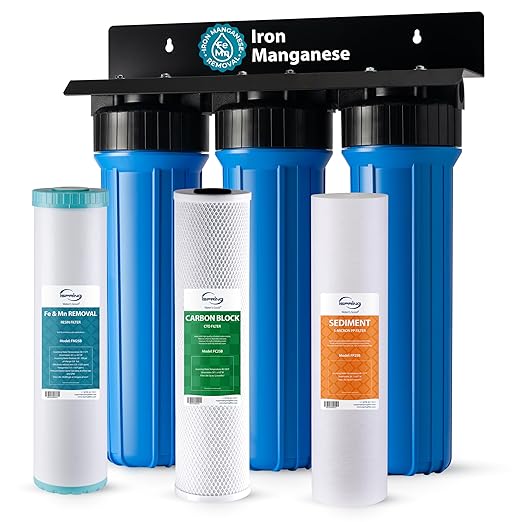
iSpring Iron & Manganese Whole House Water Filtration System
This is the system I recommend most often to readers running 5–8 ppm well-water iron with a 5600SXT softener downstream. The iSpring WGB32BM uses a dedicated iron/manganese reduction media tank that oxidizes ferrous iron before it ever reaches the resin bed, which is exactly the pre-treatment the softener needs to survive the program above. Install it ahead of the softener, plumb a bypass loop, and you can run a 32,000-grain de-rated capacity for years instead of months. Check current pricing: iSpring Iron & Manganese Whole House Filter on Amazon.
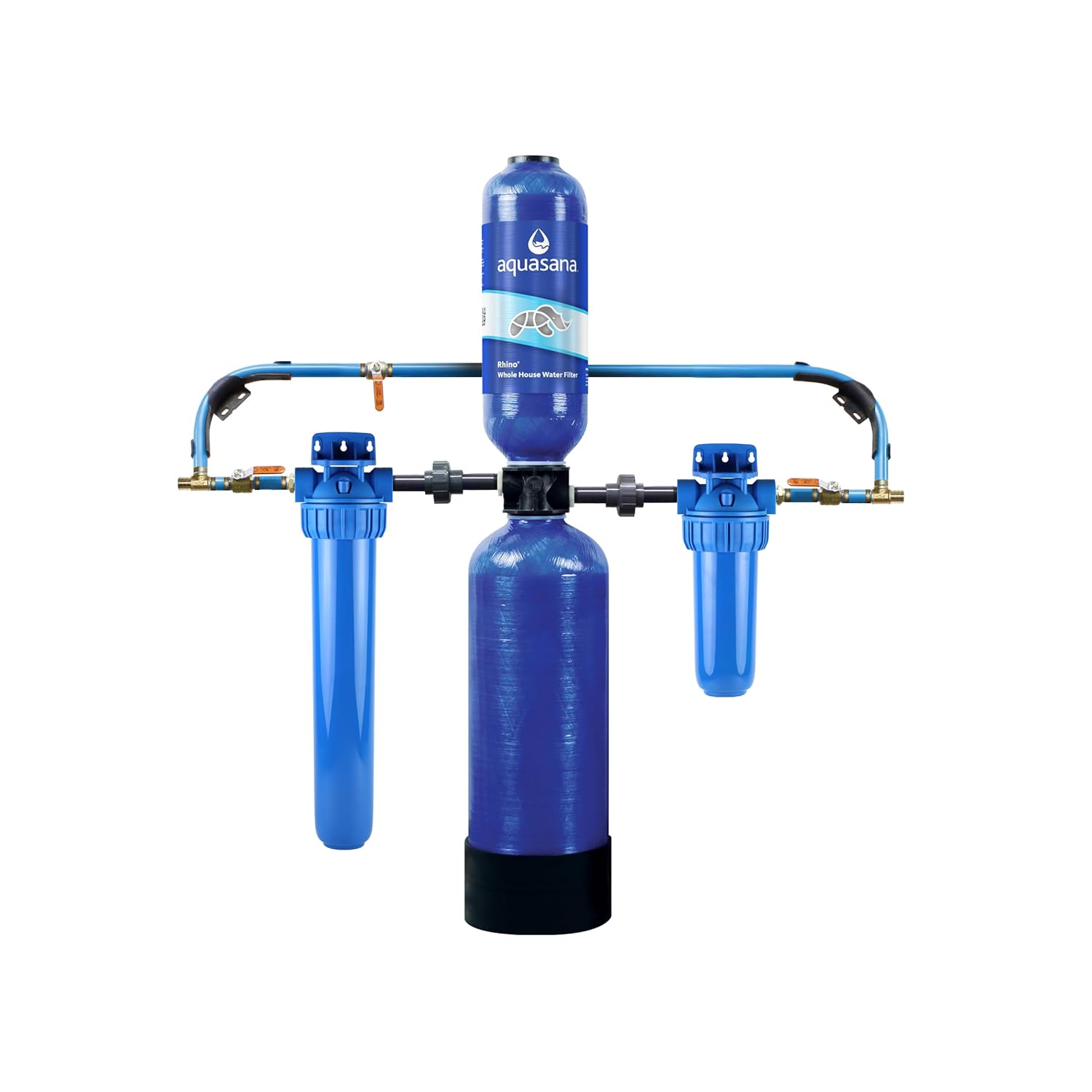
Aquasana Whole House Well Water Filter (500K Gallons, UV + Carbon + KDF)
If your well also tests positive for coliform or you want a polish stage after the softener for taste and odor, the Aquasana 500K with the UV add-on is the most complete drop-in. It is not an iron removal system on its own — keep iron below 0.3 ppm at its inlet — so it lives after the iron filter and softener, not before. Five-year media life on a typical four-person household. View it here: Aquasana 500K UV+Carbon+KDF on Amazon.
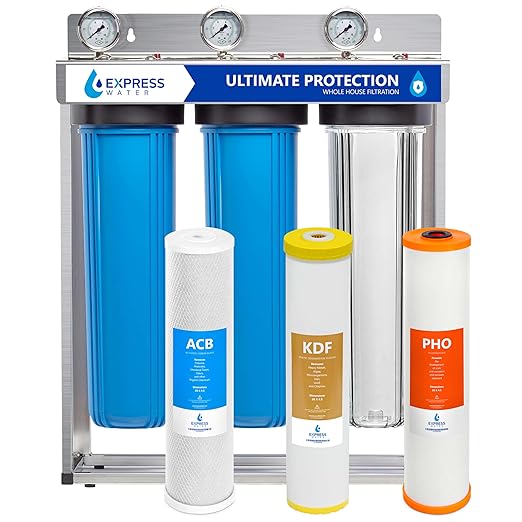
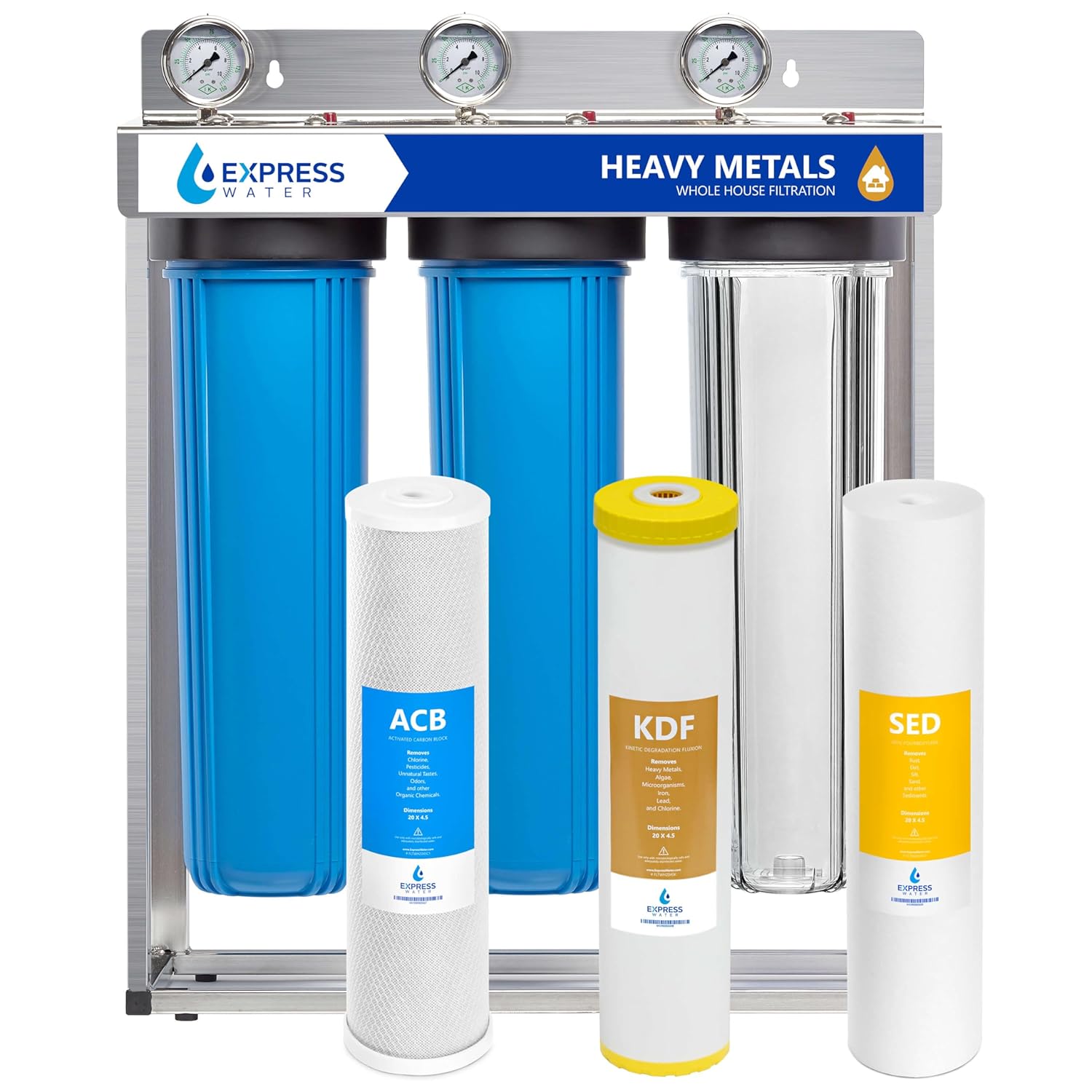
Express Water 3-Stage Whole House Water Filter System
The Express Water 3-Stage is my pick for households that have already installed a proper iron filter and just need a polishing pre-stage in front of the Fleck 5600SXT to catch oxidized iron particulate and chlorine from shock-chlorination cycles. The 4.5" x 20" housings let you run a 5-micron sediment, a KDF/iron-reduction cartridge, and a carbon block at a true 15 gpm without pressure loss. Express Water 3-Stage on Amazon.
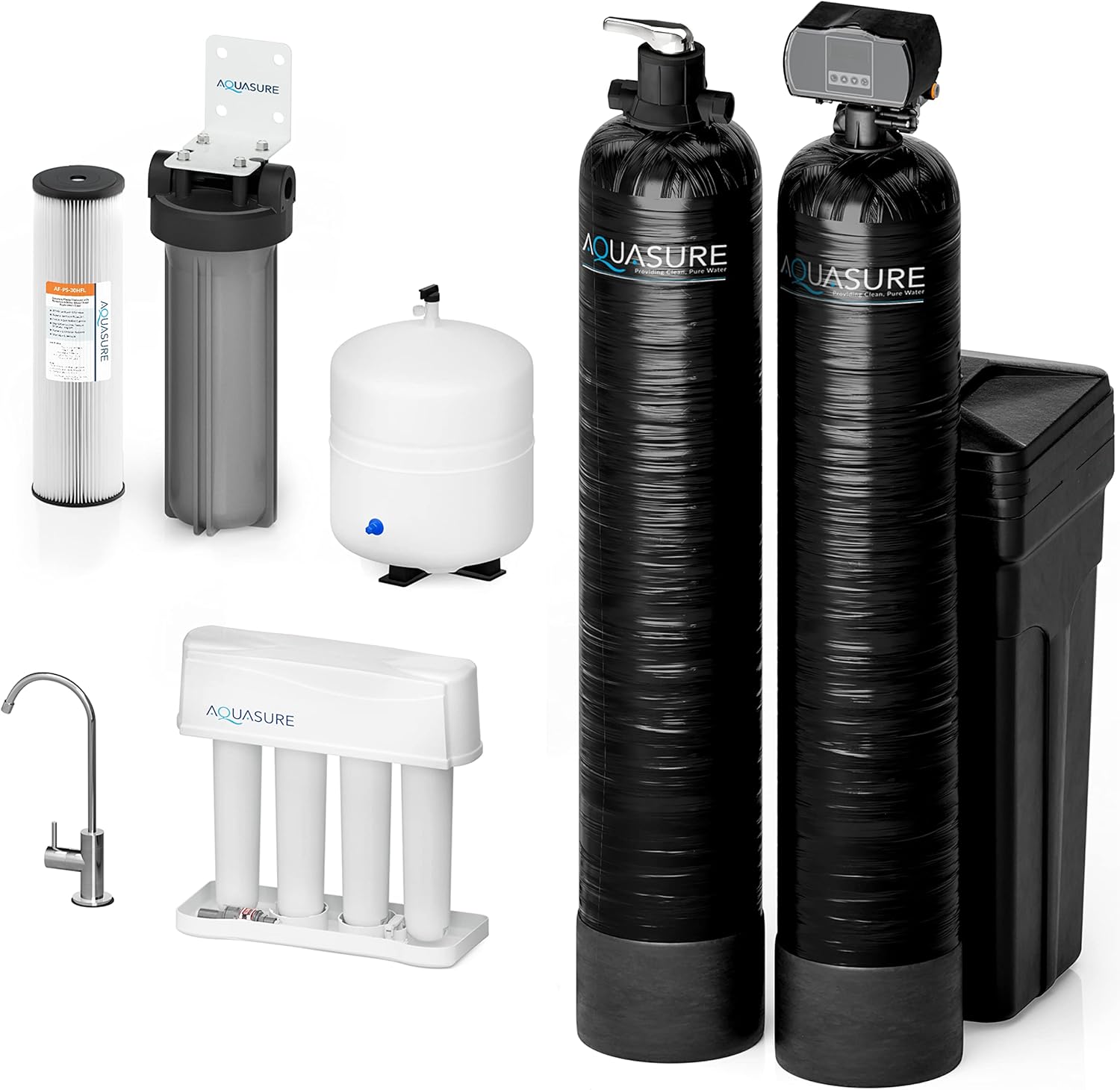
HQUA WF3-01 3-Stage Whole House Water Filtration System
The HQUA WF3-01 covers the same role as the Express Water unit at a lower price point and is the system I send budget-conscious readers to when they have moderate iron (under 3 ppm at the softener inlet) and need sediment + carbon protection. Cartridge sizes are standard 10" x 4.5" so consumables are easy to source. HQUA WF3-01 on Amazon.
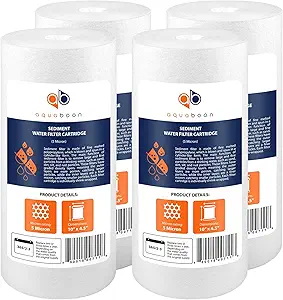
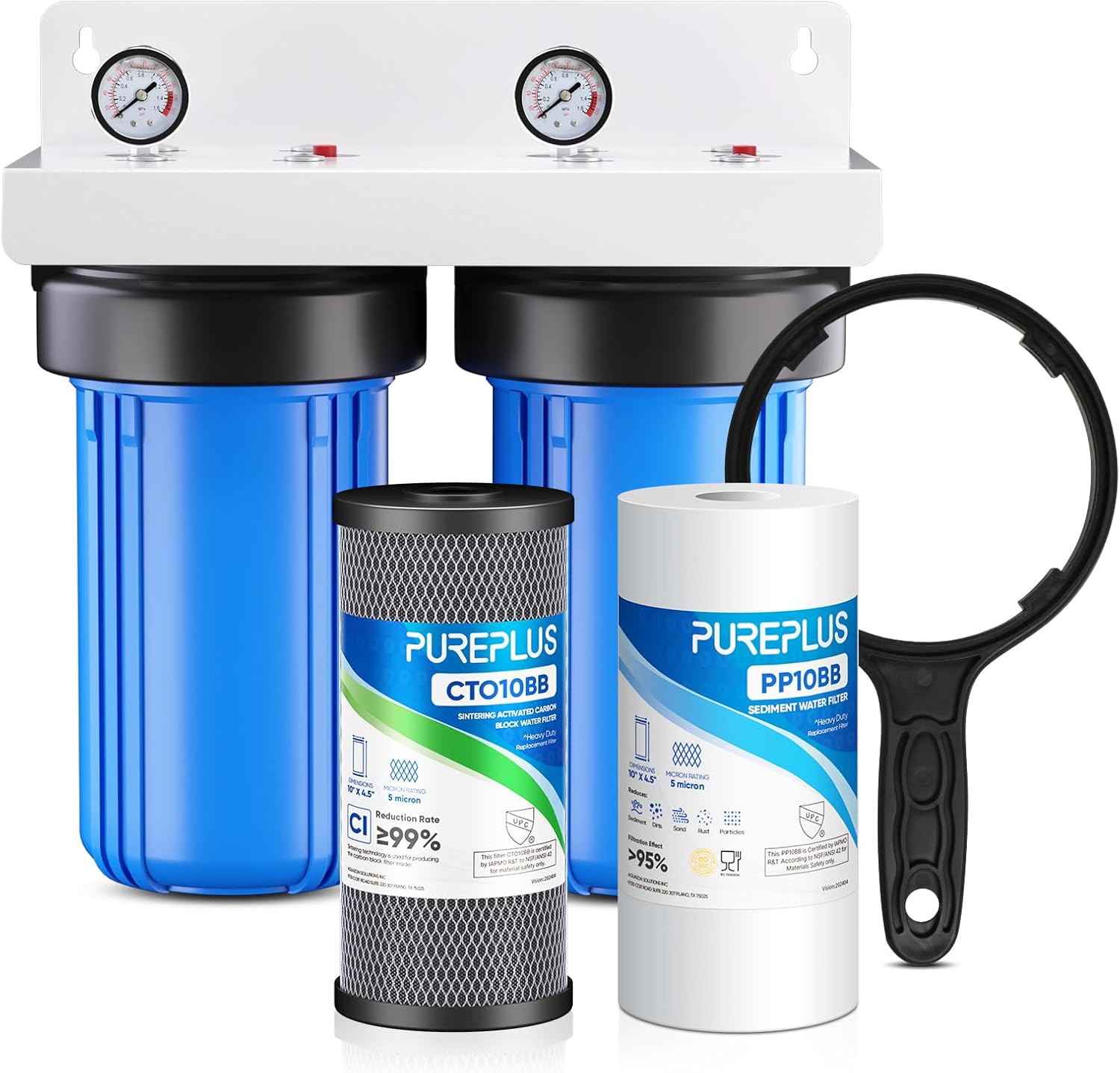
Aquaboon 5 Micron 10x4.5 Well Water Sediment Filter (4-Pack)
Whichever housing you use, you will burn through sediment cartridges fast on high-iron water. The Aquaboon 4-pack of 5-micron 10x4.5 spun polypropylene is what I keep on the shelf for the iSpring or HQUA sediment stage. One cartridge typically lasts 2–3 months at 6 ppm iron with a properly tuned 5600SXT regenerating every 3 days. Aquaboon 5 Micron 4-Pack on Amazon.
Resin and Hardware Notes for Iron-Heavy Wells
Standard 8% crosslink resin will fail prematurely on 5+ ppm iron even with perfect programming. Switch to 10% crosslink resin when you rebuild or order the tank — it tolerates oxidation and chlorine far better. Also confirm your BLFC and DLFC are sized for your tank diameter (10x54 tanks use a 2.0 gpm DLFC; 12x52 use 2.4 gpm). Mismatched flow controls are the silent killer of iron-water softener programs. Our softener resin guide for iron removal goes deeper into chemistry and brand picks.
Salt and Maintenance Cadence
Run solar salt or evaporated pellets only — rock salt has too many insolubles for an iron-fouled bed. Add a half cup of Iron Out or Pro Res Care directly into the brine tank once per month; the 5600SXT will pull it into the resin during the next brine draw and dissolve iron deposits between deep regenerations. Skip resin cleaner and your capacity will halve within a year.
Frequently Asked Questions
How often should a Fleck 5600SXT regenerate on 6 ppm iron well water?
Every 2–3 days at minimum, regardless of measured volume usage. Set DO (day override) to 3 and let the metered regeneration fire earlier if water use is high. Stretching to 7-day intervals — the factory default — is the single most common reason resin beds foul out within 18 months on iron water.
What salt dose should I program into the Fleck 5600SXT for high iron?
Target 15 pounds of salt per cubic foot of resin per regeneration. On a 1.5 cu ft (48k grain) tank with a 0.5 gpm BLFC, that is a 12-minute brine fill. Going below 12 lb per cu ft leaves iron-fouled exchange sites unregenerated.
Do I need an iron filter before the softener if iron is above 5 ppm?
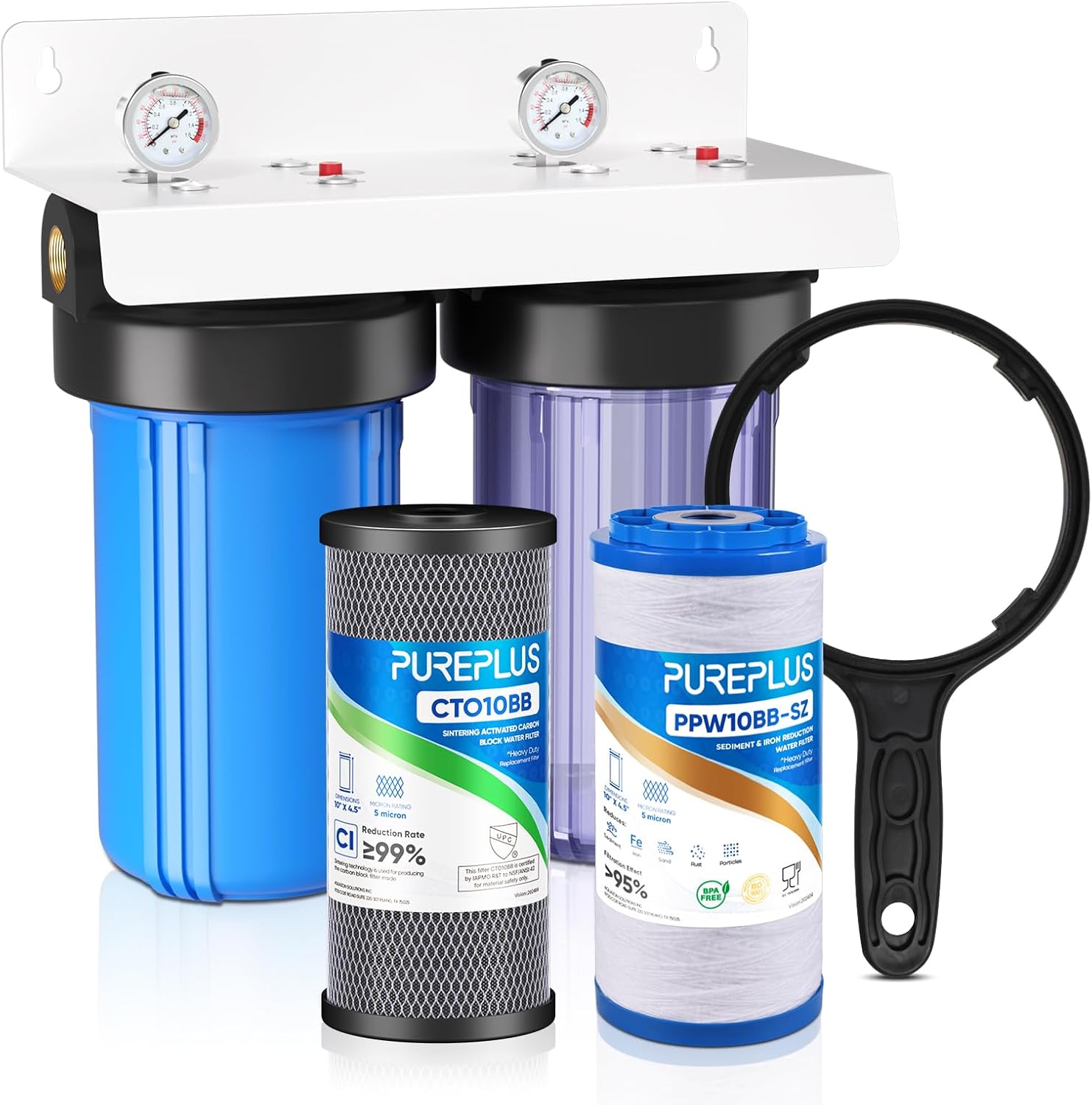
Yes. A softener is rated for up to roughly 3 ppm clear-water (ferrous) iron. Above 5 ppm you need a dedicated oxidation/filtration stage — air-injection, greensand, or a media tank like the iSpring WGB32BM — installed before the softener. Compare options in our iron pre-filter guide.
What hardness number do I enter when my well has iron?
Take your measured hardness in gpg and add 5 gpg for every 1 ppm of total iron. At 25 gpg hardness and 6 ppm iron, enter 55 into the H setting. This forces the controller to size each regeneration as if the bed is carrying the extra ion-exchange load that iron actually represents.
How long should brine draw (BD) be on a Fleck 5600SXT for iron water?
Sixty minutes. The default 60-minute slow rinse is on the edge for iron-fouled resin; if you start seeing iron breakthrough between regenerations, push it to 70 minutes rather than increasing salt further. Slow contact time strips iron more effectively than higher brine concentration.
Will the Fleck 5600SXT work with a Fleck 9100SXT twin-tank setup?
No, the 5600SXT is a single-tank meter-immediate or meter-delayed valve. For continuous soft water on heavy iron loads, see our 5600SXT vs 9100SXT comparison — the twin-tank 9100SXT is often the better long-term answer on wells above 8 ppm iron.
Can I program the Fleck 5600SXT myself or do I need a tech?
You can absolutely do it yourself in about 15 minutes. Walk through the master program once with the values above, then exit, run a manual regeneration, and observe each cycle on the display. Our full 5600SXT programming walkthrough includes the button sequence for every screen.
How do I know my fleck 5600sxt settings for high iron well water are actually working?
Test treated water for iron and hardness 24 hours after a regeneration, then again at day 3 just before the next regen. If both readings show 0 gpg hardness and below 0.3 ppm iron, the program is dialed in. Rising iron at day 3 means you need a heavier salt dose, more frequent regeneration, or — most often — better pre-filtration upstream of the softener.
Key Takeaways
- Choosing the right fleck 5600sxt settings for high iron well water means matching capacity and output ports to your actual devices
- Always check actual watt-hours (Wh), not just watts — runtime depends on Wh, not peak output
- Also covers: fleck 5600sxt iron well water programming
- Also covers: fleck 5600sxt high iron setup
- Also covers: fleck 5600sxt regeneration settings iron
- Compare price-per-Wh across models to find the best value for your budget