Off-grid cabins with solar-powered well pumps face a unique challenge: water from the ground is rarely clean enough to drink, but every watt spent on treatment is a watt stolen from your battery bank. A well-designed combo water system off grid solar cabin owners can rely on must balance sediment removal, iron and manganese control, carbon filtration, and pathogen disinfection — all without overwhelming a modest array or pulling pressure too low for showers and dishwashing. In 2026, the smartest builds pair passive 3-stage cartridge filters with a low-draw UV polisher, and only add a softener when actual hardness numbers demand it.
Why a Combo System Beats a Single Filter on a Solar Well
Solar-pumped wells behave differently than grid-tied pressurized systems. A typical DC submersible pump pushes 4–8 gallons per minute at 30–45 psi when the sun is strong, and far less in the morning, evening, or under cloud cover. That variable flow is hard on point-of-use filters that depend on steady pressure, and it's even harder on a single oversize cartridge trying to do every job at once. Raw well water can carry sand and silt, dissolved iron and manganese, hydrogen sulfide, tannins from nearby roots, and live bacteria from surface infiltration after spring melt.
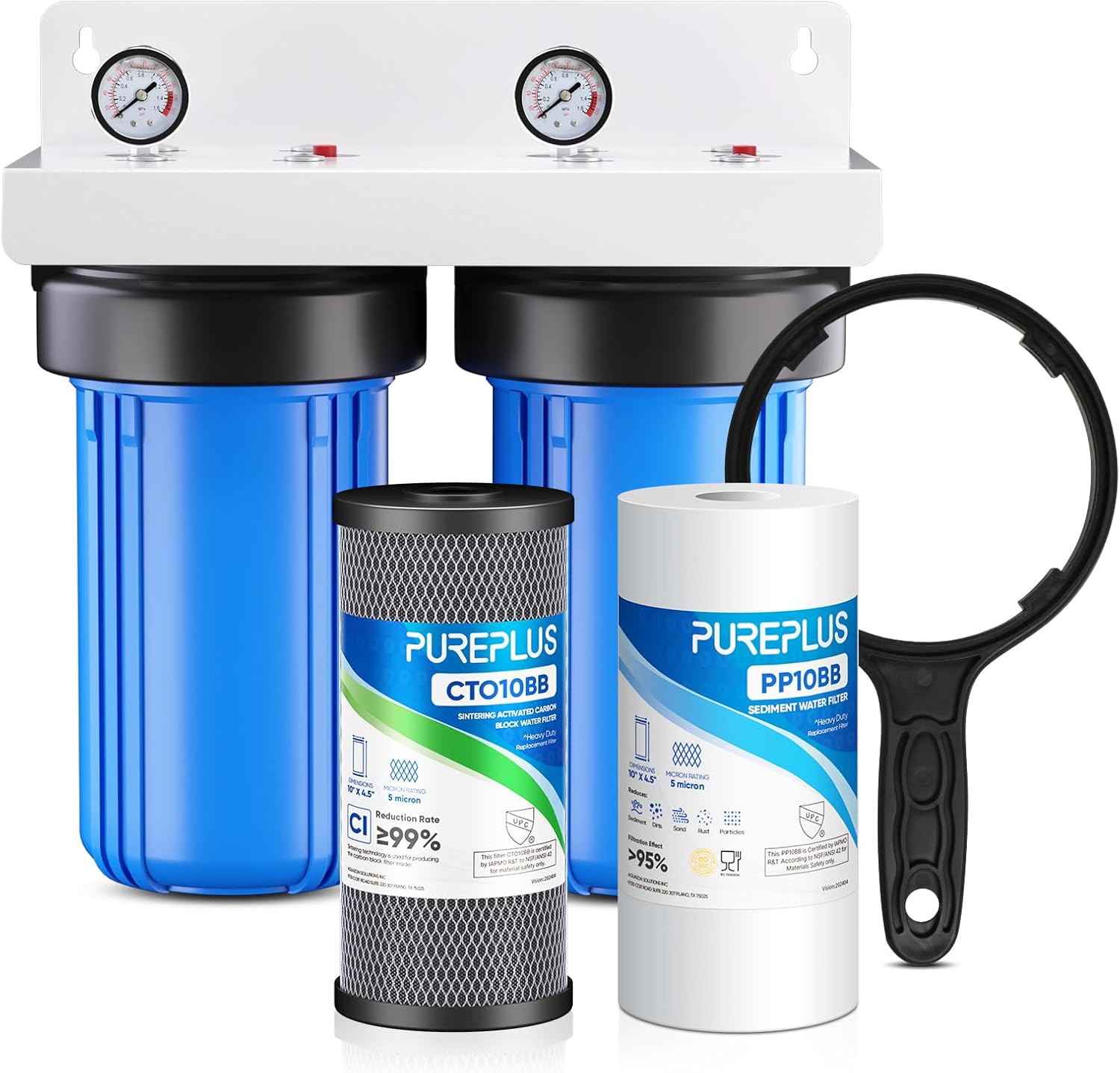
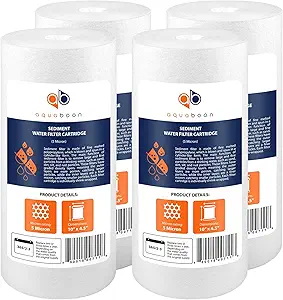
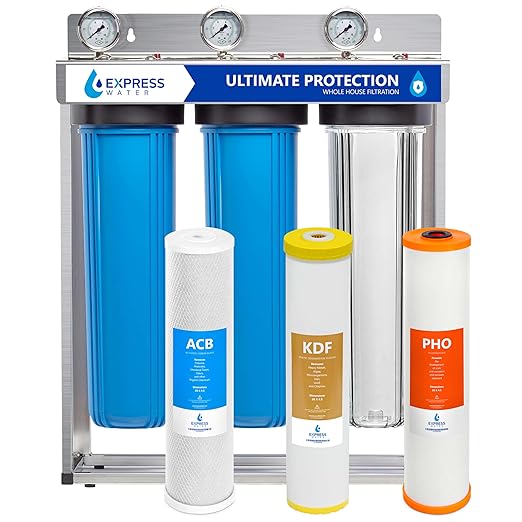
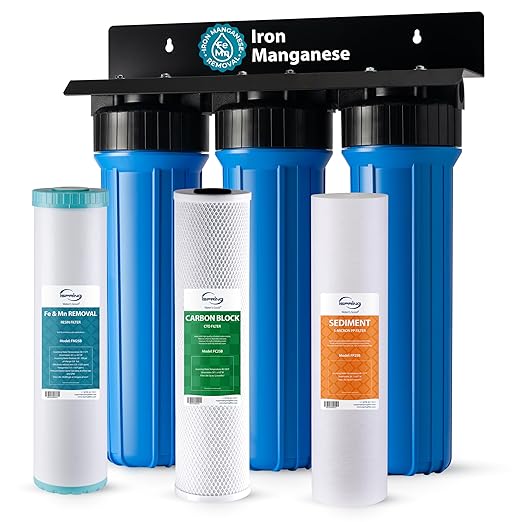
A staged combo approach lets each cartridge specialize. Sediment goes first to protect everything downstream, carbon and KDF media remove chlorine taste, chemicals, and metals next, and a UV chamber finishes by neutralizing pathogens at the end. Because each stage handles one job, you can pick smaller, lower-pressure-drop housings instead of a single high-resistance tank that would stall your solar pump every time the batteries were below 80 percent.
What to Look for in an Off-Grid Combo
Four specs matter more for cabins than for suburban homes:
- Pressure drop. Look for 10×4.5-inch “Big Blue” housings rather than 10×2.5 slimline cartridges. The larger media surface area cuts pressure loss roughly in half, which keeps your shower usable when your pump is throttled.
- Standard cartridges. Avoid proprietary sizes. Standard 10×4.5 wells let you stockpile spares from any supplier — vital when the nearest hardware store is 90 minutes away.
- Low-watt UV. A 40W UV bulb running 24/7 draws around 1 kWh per day, which a 400W solar panel can replace easily. Avoid 80W or larger UV units unless your array is sized for it.
- Iron staging. If your well test shows iron above 0.3 ppm or manganese above 0.05 ppm, you'll need a dedicated oxidation/filtration stage before carbon, or your carbon block will foul in weeks.
Comparison: 2026's Best Combo-Ready Filters for Solar Cabins
| System | Stages | Best Role in Combo | Pressure Drop | Service Interval |
|---|---|---|---|---|
| Aquasana 500K Well | UV + Carbon + KDF + Sediment | Full primary treatment | Moderate | ~500,000 gal / 5 yrs |
| Express Water 3-Stage | Sediment + KDF + Carbon | Pre-UV polishing | Low | 6–12 months |
| HQUA WF3-01 3-Stage | Sediment + GAC + CTO | Budget primary | Low | 6–12 months |
| iSpring Iron & Manganese | Oxidation + Media | Pre-treatment for iron wells | Moderate | Backwash + media replace 5–10 yrs |
| Aquaboon 5 Micron 4-Pack | Sediment cartridge | Replacement consumable | Very Low | 2–3 months each |
Top Combo Picks for 2026
Aquasana Whole House Well Water Filter, 500K Gallons (UV + Carbon + KDF)
If you want one anchor product for your combo water system off grid solar cabin build, this is it. The Aquasana 500K well unit bundles sediment pre-filtration, a salt-free conditioner-ready loop, a high-capacity carbon and KDF tank, and a UV chamber that handles bacterial sterilization for clear well water. The UV draws roughly 40 watts, which a single 100W panel offsets comfortably on most days, and the system holds rated flow down to about 30 psi — right in the sweet spot for DC solar pumps. Service is a tank media swap once per 500,000 gallons, which for most cabins means five years between major touches. Check the Aquasana 500K well system on Amazon.
Express Water 3-Stage Whole House Water Filter System
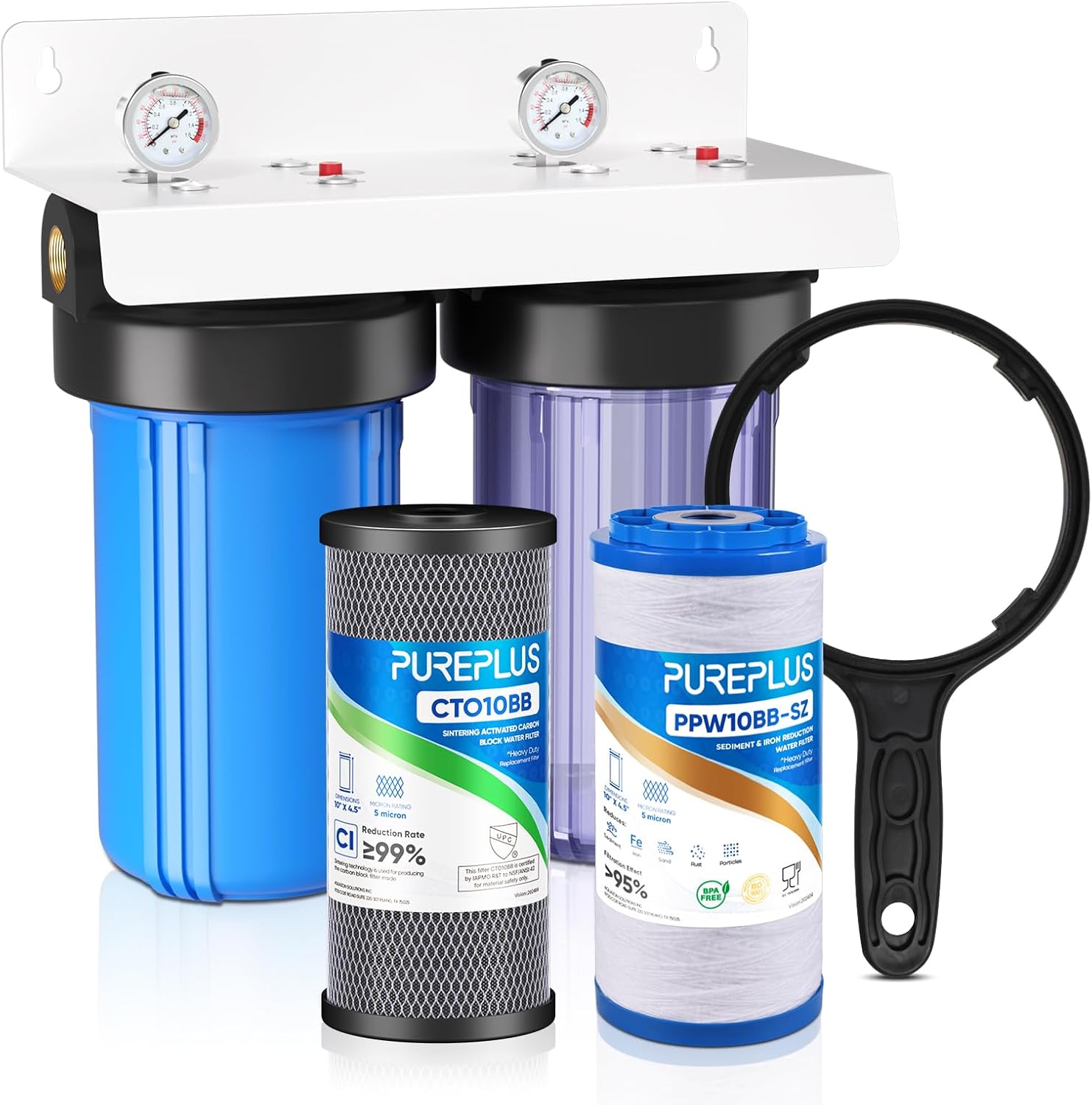
For cabins where the well is already clear and bacteriologically clean, the Express Water 3-Stage is a low-pressure-drop workhorse that strips sediment, adds KDF for heavy metals, and finishes with a carbon block for taste and chlorine-free polishing. The large 10×4.5 housings are translucent so you can eyeball cartridge fouling without opening the system — useful when you're trying to decide whether to bring spares up to the cabin next weekend. It pairs well as a pre-stage in front of a UV chamber or as a complete standalone for shallow, tested wells. View the Express Water 3-Stage on Amazon.
HQUA WF3-01 3-Stage Whole House Water Filtration System
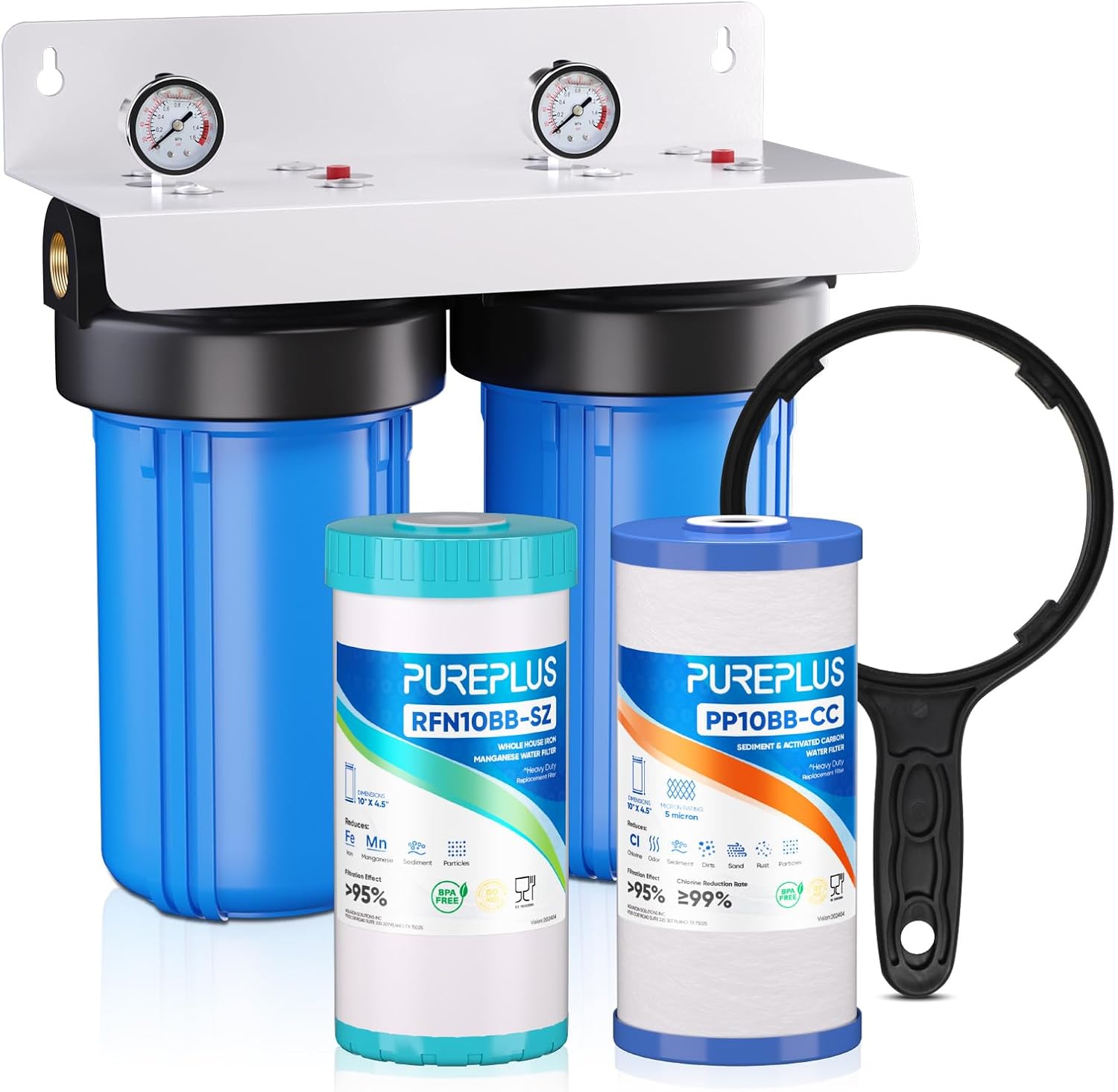
The HQUA WF3-01 is the budget pick that punches above its weight for solar cabins. It uses the same standard 10×4.5 cartridge format as the Express Water and Aquasana housings, which means consumables are interchangeable across your kit. The included pressure gauges on inlet and outlet are genuinely useful off-grid because they let you spot a clogging cartridge before pressure drops far enough to confuse your pump controller. Mount it horizontally on a cabin wall and you have a clean three-stage pre-filter that won't crater your panel budget. See the HQUA WF3-01 on Amazon.
iSpring Iron & Manganese Whole House Water Filtration System
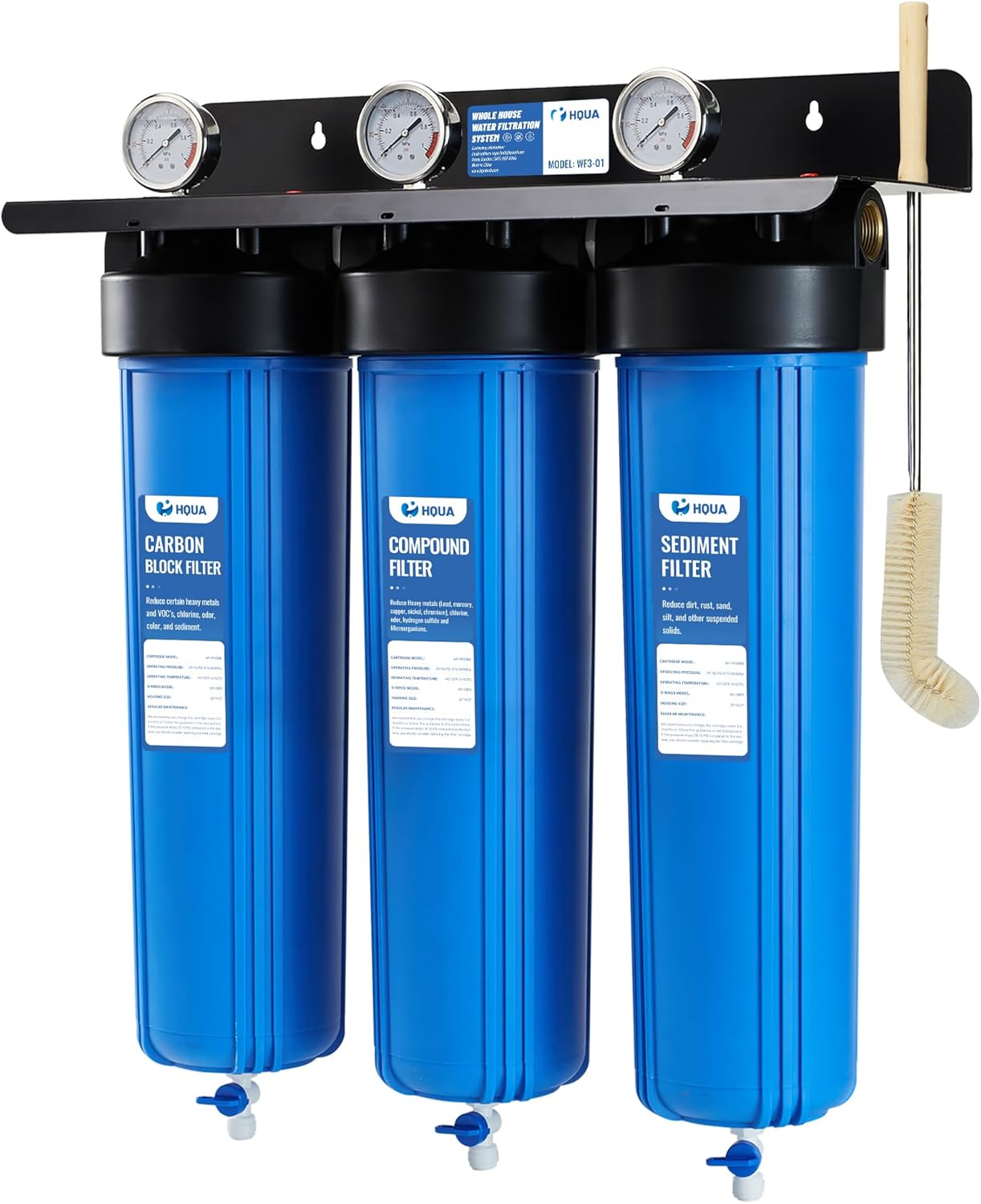
Many off-grid wells in granite or sandstone country deliver water with enough iron to stain fixtures rust-orange and ruin a downstream carbon block in weeks. The iSpring iron and manganese system oxidizes and traps both metals before they reach the rest of your combo, and it backwashes on a programmable timer that you can sync with peak solar hours so the backwash cycle never runs off battery. If your well test report shows iron above 0.3 ppm, install this upstream of any carbon stage. For more on staging, see our guide to whole-house sediment filters for iron-rich well water. Check the iSpring Iron & Manganese system on Amazon.
Aquaboon 5 Micron 10x4.5 Well Water Sediment Filter (4-Pack)
Whichever combo you build, you'll need a steady supply of sediment cartridges, and the Aquaboon 5-micron 4-pack is the consumable that keeps everything else honest. They drop directly into the Express Water, HQUA, and Aquasana pre-stages, last roughly 2–3 months on a moderately silty well, and ship in a pack of four so a year of cartridges is a single click. Keep one pack in the cabin and one in the truck. View the Aquaboon 4-pack on Amazon.
How to Wire and Size Your Combo Water System Off Grid Solar Cabin Setup
Start with a real well test. A 25-dollar lab kit will tell you iron, manganese, hardness, pH, coliform, and total dissolved solids, and that determines every downstream choice. From there, build outward from the pump:
- Pump → pressure tank. A bladder tank smooths the variable solar output and lets your filters see steady pressure. A 20-gallon tank is the sweet spot for one or two occupants.
- Pressure tank → sediment pre-filter. Use the Aquaboon 5-micron in a Big Blue housing to catch sand and silt.
- Pre-filter → iron stage (if needed). Skip this stage unless your test demands it.
- Iron stage → carbon and KDF. The Express Water or HQUA modules slot in here.
- Carbon → UV polisher. The Aquasana 500K or a standalone 40W UV chamber sterilizes everything that made it through.
- UV → cabin manifold. Run PEX with isolation valves so you can service any stage without draining the system.
Total parasitic load for a sediment-carbon-UV combo is about 40–55 watts continuous, which a 400W array with 4–6 hours of usable sun supports easily, even in shoulder seasons. For pump sizing math, our solar well pump sizing guide walks through panel-to-pump matching.
When to Add a Softener — and When to Skip It
Softeners are the most-overbought component in off-grid water builds. A traditional ion-exchange softener regenerates with salt brine and dumps several gallons of waste water per cycle — both of which are headaches at a remote cabin. Only add one if your hardness exceeds 7 grains per gallon (120 ppm) and you're seeing scale on fixtures or in your kettle. Below that level, a salt-free conditioner or the KDF media inside your combo is enough to prevent visible scaling without the brine waste or backwash load. Our piece on low-pressure water softeners for off-grid homes covers the salt-free options that pair best with solar pumps.
Maintenance Rhythm on Battery Power
Off-grid maintenance is about getting ahead of seasons. In spring, replace sediment cartridges before snowmelt drives turbidity higher. In summer, check UV bulb hours — most need annual replacement regardless of how clean they look. In fall, run a sanitization cycle through the carbon stage before winter use drops off. And in winter, drain or heat-trace any exposed plumbing because a frozen Big Blue housing is a 60-dollar mistake. Keep a logbook in the cabin: date, gallons used, cartridge changes. Two minutes per visit saves a wasted trip with the wrong spare.
Frequently Asked Questions
Can I run a UV water sterilizer off-grid on solar alone?
Yes. A standard 40-watt UV chamber draws about 1 kWh per day if left on continuously. A single 100–200W solar panel with a small battery buffer can power it year-round in most North American latitudes. Pair it with an inverter that has a true sine wave output, because UV ballasts dislike modified sine inverters and will fail prematurely.
How do I size a combo water filter for a low-pressure solar well pump?
Match cartridge size to expected flow. A solar pump delivering 6 gpm wants 10×4.5 Big Blue housings rather than slimline 10×2.5 units, because the larger format roughly halves pressure drop. Plan for 5–7 psi loss across the full combo at peak flow. If your pump only musters 30 psi, that leaves 23–25 psi at the tap — usable but tight, so don't oversize the filter stack.
Do I need a water softener for a cabin if I already have a 3-stage filter?
Only if your hardness test exceeds about 7 grains per gallon. Below that, the KDF media in most 3-stage combos handles scale prevention without the brine waste of a traditional softener. Above 10 grains per gallon you'll likely want a salt-free conditioner or a compact ion-exchange unit sized for cabin flow.
What's the best whole-house filter for iron-heavy well water at a remote cabin?
For iron above 0.3 ppm, a dedicated oxidation-and-media tank like the iSpring Iron & Manganese system is the right primary stage, installed before any carbon or UV. Without iron pre-removal, carbon blocks foul within weeks and UV transmittance plummets because the iron stains the quartz sleeve.
How often do I change sediment filters on a solar-pumped well system?
Every 2–3 months for a typical well, or sooner if you notice a 5–7 psi drop across the housing. A 4-pack of 5-micron 10×4.5 cartridges covers most cabins for a full year. Spring melt and heavy rain events are the most common triggers for early changeouts.
Can I install a whole-house combo system inside an unheated cabin?
Only if you can guarantee the space stays above freezing or you fully drain the system between visits. Cartridges and UV chambers split when frozen, and replacement housings are expensive to ship to remote addresses. Many off-grid owners install the combo inside an insulated mechanical closet with a small thermostatically controlled heater that runs only when temps approach 35°F.
Will a combo water system off grid solar cabin build work with a hand pump backup?
Yes, with one caveat: hand pumps deliver well below the 20 psi minimum that most carbon and UV stages need to function correctly. Plumb a bypass loop with isolation valves so hand-pumped water can fill a clean storage container directly, then run that water through a gravity-fed countertop filter for drinking. Keep the main combo offline until the solar pump is back online and pressure is restored.
Key Takeaways
- Choosing the right combo water system off grid solar cabin means matching capacity and output ports to your actual devices
- Always check actual watt-hours (Wh), not just watts — runtime depends on Wh, not peak output
- Also covers: off grid whole house filter softener
- Also covers: solar well pump compatible softener
- Also covers: low power combo system cabin
- Compare price-per-Wh across models to find the best value for your budget