If you are hunting for the best budget water softener first time homeowners can actually afford in 2026, the short answer is this: most buyers under 30 are better off starting with a single-tank, metered ion-exchange softener in the $400 to $750 range, then pairing it with an inexpensive whole-house sediment or carbon filter to protect the resin bed. A dedicated softener removes the calcium and magnesium that cause scale, while a pre-filter handles the dirt, iron, and chlorine that would otherwise shorten its life. For a young first-time homeowner with a tight closing-cost budget, this two-stage approach delivers nearly the same results as a $2,500 premium combo unit, at roughly a third of the price.
Below we break down what to look for, how to size a system for a small starter home, and which budget-friendly whole-house filtration units pair well with an entry-level softener. We also cover financing-friendly options, DIY installation tips, and the common mistakes new homeowners make when shopping their first system.

Why First-Time Homeowners Under 30 Need a Different Buying Strategy
Most water-softener guides are written for established homeowners with 3,000+ square foot houses and disposable income. If you are 24 to 29, just closed on a starter home or townhouse, and watching every dollar after the down payment, the best budget water softener first time homeowners in your situation can buy is rarely the biggest or fanciest one on the shelf. It is the one that:
- Costs under $800 installed
- Fits a 1 to 3 bathroom home with 1 to 4 occupants
- Uses a metered (demand-initiated) valve so it does not waste salt
- Has parts you can replace yourself in a Saturday afternoon
- Can be paired with a low-cost sediment or iron pre-filter
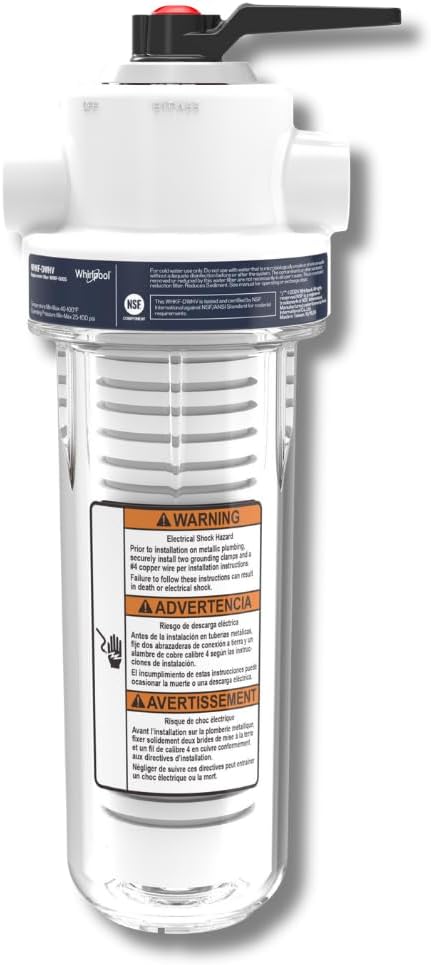
That last point matters more than salespeople admit. Resin beads inside a softener are destroyed by chlorine, iron, and sediment. If your water has any of those, a $40 to $200 pre-filter will extend the life of your softener by years. That is why our top picks below are pre-filtration units rather than the softener tanks themselves — for most first-time buyers, the softener is the easy purchase, but the right pre-filter is what makes the budget math actually work.
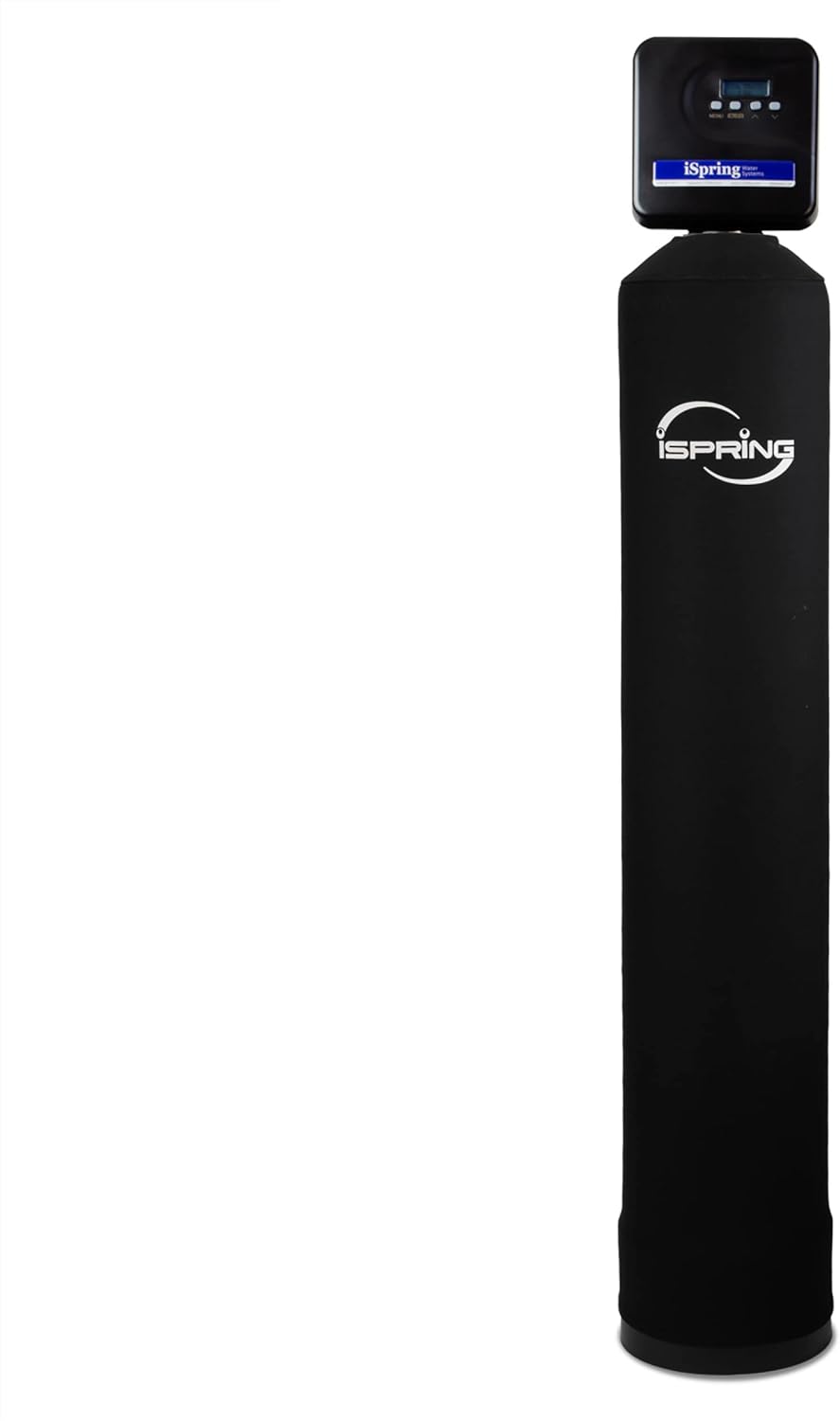
Quick Comparison: Budget-Friendly Whole-House Filters to Pair With Your First Softener
| System | Best For | Capacity | Approx. Price Tier | DIY Friendly? |
|---|---|---|---|---|
| Express Water 3-Stage Whole House | City water, chlorine + sediment | 100,000 gal | $ | Yes |
| Aquasana 500K Well Water + UV | Well water with bacteria risk | 500,000 gal | $$$ | Moderate |
| Aquaboon 5-Micron Sediment (4-Pack) | Replacement cartridges for any 10x4.5 housing | Per cartridge | $ | Yes |
| iSpring Iron & Manganese System | Well water with iron staining | 50,000 gal | $$ | Moderate |
| HQUA WF3-01 3-Stage | Mixed sediment + taste/odor | 100,000 gal | $ | Yes |
Top Budget Picks to Pair With Your First Softener in 2026
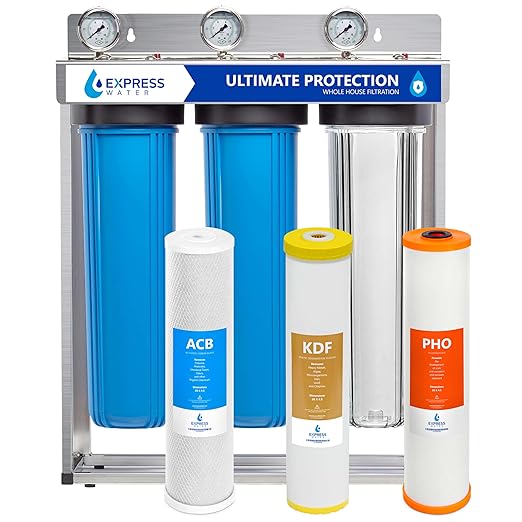
1. Express Water 3-Stage Whole House Water Filter System
For first-time homeowners on city water, the Express Water 3-Stage is the single most cost-effective pre-filter you can put in front of a budget softener. It catches sediment, removes chlorine and chloramines with KDF and carbon, and protects your softener resin from premature breakdown. The clear first-stage housing is a feature most under-30 buyers underrate — you can literally see when the filter is dirty, which means no guesswork and no surprise pressure drops. At roughly $200 to $250, it pairs neatly with a $500 to $600 entry-level softener to keep your total spend under $800. Installation takes 2 to 3 hours with basic plumbing tools, and replacement cartridges run about $60 per year. Check the current price here: Express Water 3-Stage Whole House Water Filter System,
2. HQUA WF3-01 3-Stage Whole House Water Filtration System
If the Express Water unit is out of stock or you want an even cheaper alternative, the HQUA WF3-01 covers the same three-stage sediment-plus-carbon job at a slightly lower price point. For first-time homeowners who only need basic chlorine and sediment removal ahead of their softener, this is often the smartest entry-level buy. Flow rate is rated for homes up to about 3 bathrooms, which fits the typical starter-home profile under-30 buyers are working with. The brass fittings and included mounting bracket make installation roughly the same as the Express Water unit. View it here: WF3-01 3-Stage Whole House Water Filtration System, Red
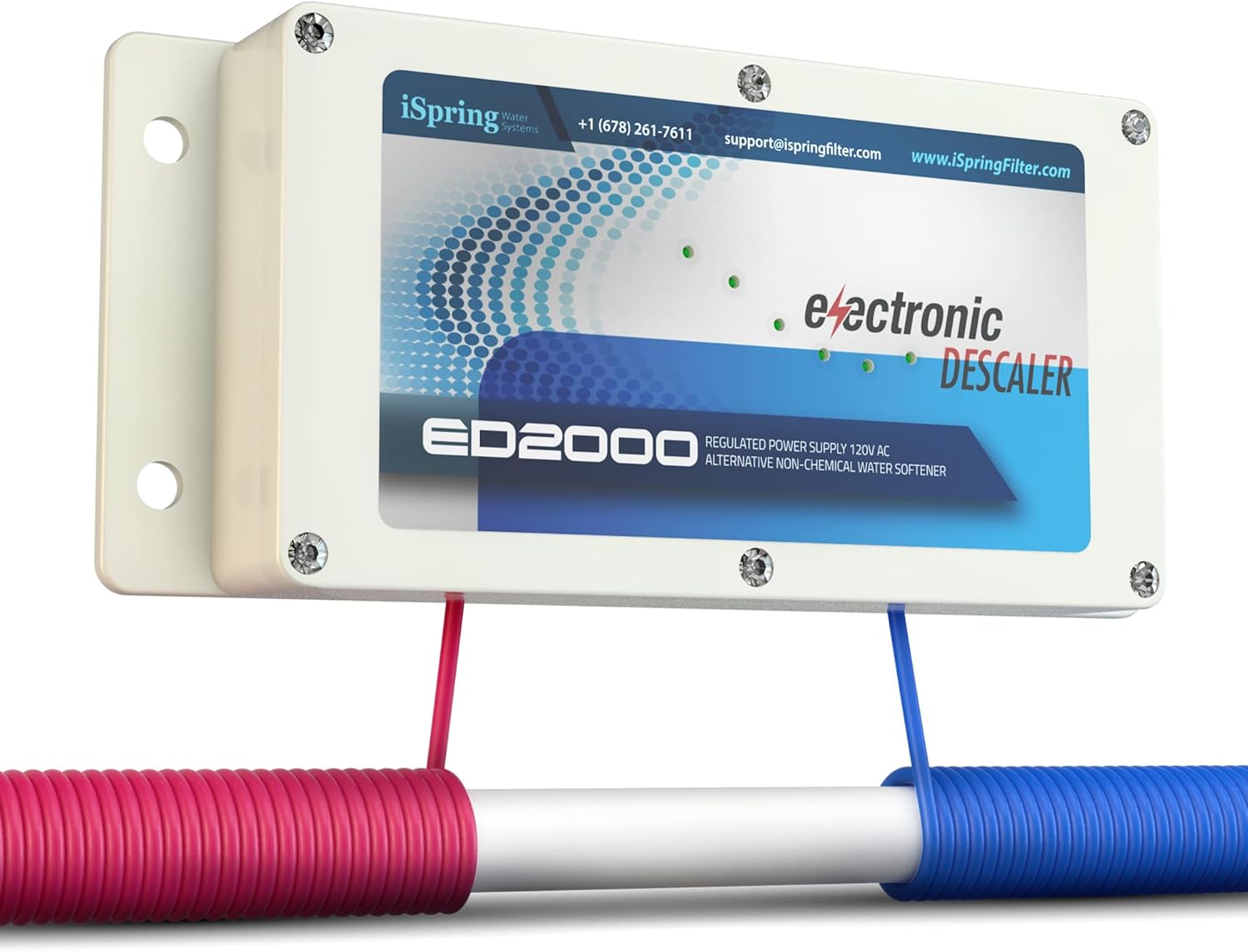
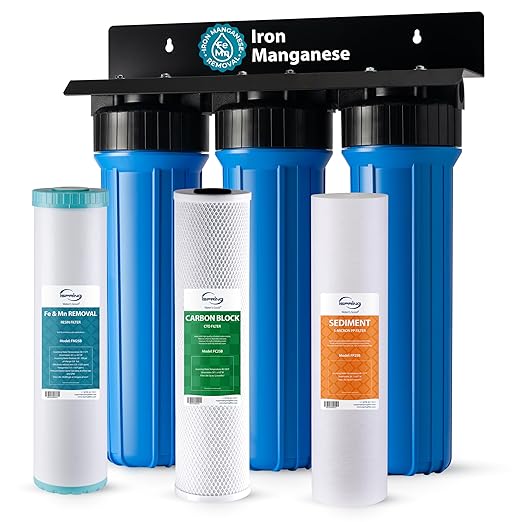
3. iSpring Iron & Manganese Whole House Water Filtration System
About 15 percent of first-time homeowners under 30 end up buying a property on private well water — often because well-served rural and exurban homes are dramatically cheaper than equivalent city-water homes. If that is you, iron and manganese will destroy a softener resin bed faster than almost anything else. The iSpring system uses a manganese greensand-style media to oxidize and trap iron before it ever reaches your softener tank. Pair it with an entry-level well-water softener and you have a complete, budget-friendly setup for a rural starter home. It is a more demanding install than a simple cartridge filter, but the resin protection it provides easily pays for itself within 2 to 3 years. Take a look: iSpring Whole House Water Filter System, Reduces Iron,
4. Aquasana Whole House Well Water Filter, 500K Gallons, UV+Carbon+KDF
This one is a stretch on a pure budget build, but it is worth flagging for under-30 buyers who got a well-water home and discovered coliform bacteria in their test report. The Aquasana 500K combines UV disinfection with carbon and KDF media, addressing biological contamination that a softener cannot touch. If you are choosing between this and an expensive name-brand premium softener, prioritize this filter first — bacterial contamination is a safety issue, hardness is a comfort issue. Check the listing: Aquasana Whole House Well Water Filter | 500K Gallons |
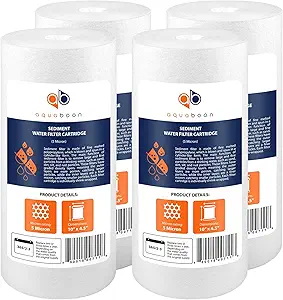
5. Aquaboon 5 Micron 10x4.5 Well Water Sediment Filter (4-Pack)
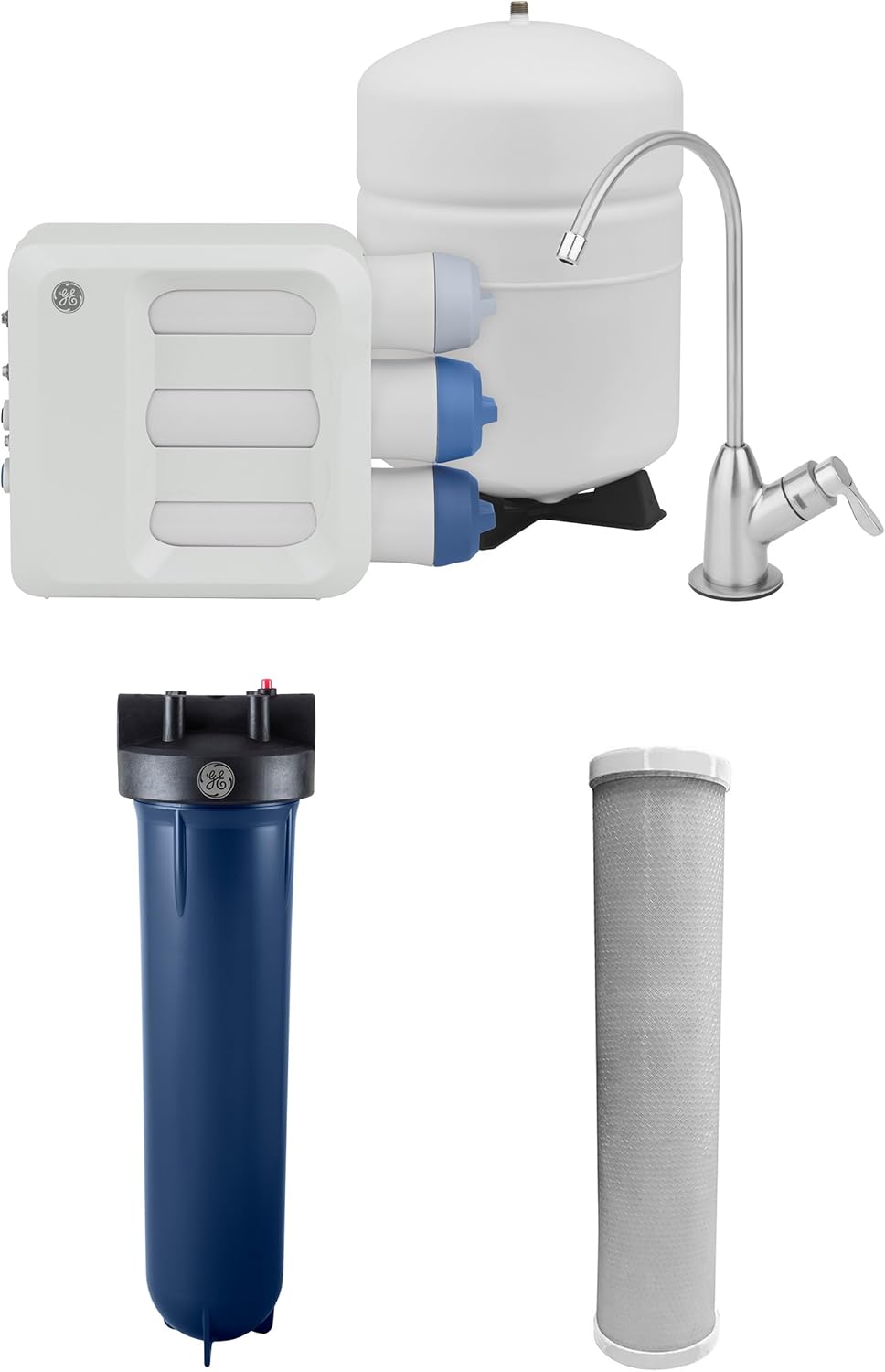
Once you have your softener and a pre-filter housing installed, replacement cartridges become an ongoing cost. The Aquaboon 4-pack is one of the cheapest ways to stay stocked for a year or more, and it fits the standard 10x4.5 inch "Big Blue" housings used by Express Water, HQUA, and most other budget systems. Buying in bulk knocks the per-cartridge cost down significantly, which matters when you are also paying for salt every couple of months. Available here: Aquaboon 5 Micron 10 x 4.5 Well Water Sediment Filter R
How to Size a Budget Softener for a Starter Home
The standard sizing formula is: people in household x 75 gallons per day x water hardness in grains per gallon = daily grains of hardness to remove. For a young couple in a 2-bedroom starter home with 15 grain-per-gallon hardness, that works out to about 2,250 grains per day. A 24,000-grain softener regenerated weekly is plenty, and these units routinely sell in the $450 to $650 range — well within first-time-homeowner budget.
Do not oversize. A 48,000-grain unit costs more, uses more salt per regeneration, and is overkill for a small starter home. Save the upgrade money for the pre-filter that actually protects your softener.
For more help understanding what your test report means, see our guide on how to test your water hardness at home and our breakdown of well water versus city water treatment.
Installation: Can a First-Time Homeowner DIY This?
If you can sweat copper or use SharkBite fittings, yes. Most budget softeners and the cartridge filters listed above install in 3 to 6 hours of work. You will need:
- A bypass valve or shutoff at the water main
- Drain access within 20 feet (for softener brine line)
- A 110V outlet within 6 feet of the softener head
- Basic plumbing tools and Teflon tape
If you rent, want zero risk to your closing-warranty plumbing, or simply have no interest in learning, professional installation runs $300 to $600 in most markets. That still keeps a complete softener-plus-filter setup under $1,400 total. For step-by-step help, check our DIY water softener installation walkthrough.
Common Mistakes First-Time Buyers Make
The number one mistake under-30 buyers make is buying the softener first and the pre-filter never. Within 2 to 4 years, chlorinated city water or iron-laden well water destroys the resin, the homeowner blames the softener brand, and they spend another $600 replacing it. A $200 pre-filter at the start would have prevented that entire cycle.
The second mistake is buying a no-name timer-based softener instead of a metered one. Timer units regenerate on a fixed schedule whether you used water or not, wasting roughly 30 percent more salt and water. The price difference at the budget tier is usually only $50 to $100. Always go metered.
The third mistake is forgetting about salt costs. Plan on $5 to $15 per month for solar salt or potassium chloride. Buy in 40-pound bags from your local hardware store rather than online — shipping costs make online salt purchases a poor deal.
Frequently Asked Questions
What is the cheapest water softener that actually works for a first-time homeowner?
For 2026, the cheapest reliable option for a first-time homeowner is a 24,000 to 32,000 grain single-tank metered ion-exchange softener in the $450 to $650 range, paired with a $200 sediment-and-carbon pre-filter like the Express Water or HQUA units above. Avoid "saltless conditioners" at this price tier — they reduce scale but do not technically soften water.
How much should a 25-year-old first-time homeowner budget for a whole-house water treatment setup?
Plan on $700 to $1,200 for the equipment if you do it yourself, or $1,200 to $1,800 with professional installation. That covers a budget softener, a 3-stage pre-filter, fittings, and the first year of salt and replacement cartridges. Anything under $700 usually means you are skipping the pre-filter, which will cost you more long-term.
Do I need both a water softener and a whole-house filter as a new homeowner?
Almost always, yes. A softener handles hardness (calcium and magnesium) but does nothing for chlorine, sediment, iron, or taste and odor problems. A whole-house filter handles those but does not soften. Skipping the filter also dramatically shortens softener life. If you can only afford one upfront, install the pre-filter first and save for the softener.
Can I install a water softener myself in a townhouse or condo?
Usually yes for townhouses, often no for condos. Townhouses typically have an accessible water main in the basement or utility closet where a softener loop can be added. Condos often share plumbing with neighbors, and HOA rules may prohibit modifications. Always check your CC&Rs before buying any equipment.
What is the difference between a water softener and a water conditioner?
A traditional softener uses ion exchange and salt to physically remove calcium and magnesium from the water. A conditioner — often called a "saltless softener" — alters the structure of those minerals so they form less scale, but they remain in the water. For first-time homeowners with truly hard water above 10 grains per gallon, an actual softener is the right call. Conditioners work best at moderate hardness levels.
How long should a budget water softener last for a first-time homeowner?
With a proper pre-filter installed, a $500 to $700 softener typically lasts 10 to 15 years before the resin needs replacement or the control head fails. Without a pre-filter, lifespan drops to 4 to 7 years. Replacement resin costs about $100 and is a Saturday DIY job, so a well-maintained budget unit can realistically serve you through your starter home and into your next house.
Is well water harder to treat than city water on a budget?
Yes, generally. Well water often contains iron, manganese, sulfur, and sometimes bacteria, all of which need targeted treatment before the softener. City water mainly needs chlorine and sediment removal. Budget under $1,500 for a well-water setup versus $800 for city water. The iSpring iron filter and Aquasana UV+carbon system above are the two most important budget tools for well-water homes.
The Bottom Line
The best budget water softener first time homeowners can buy in 2026 is not a single product — it is a sensible two-piece setup: a metered single-tank softener in the $450 to $650 range plus a $150 to $250 whole-house pre-filter that protects it. Match the pre-filter to your water source (city versus well, chlorine versus iron), size the softener to your household rather than your house, and do not skip the protection step. Done right, the whole system lands under $1,000, installs in an afternoon, and quietly does its job for a decade or more — exactly the kind of low-drama infrastructure a first-time homeowner under 30 wants in a starter home.
Key Takeaways
- Choosing the right best budget water softener first time homeowners means matching capacity and output ports to your actual devices
- Always check actual watt-hours (Wh), not just watts — runtime depends on Wh, not peak output
- Also covers: affordable softener millennials
- Also covers: entry level water softener new homeowners
- Also covers: best cheap softener under 500
- Compare price-per-Wh across models to find the best value for your budget