For homeowners on chloraminated municipal supply, the aquasana rhino vs pelican pse1800 chloramine debate comes down to one variable: how much catalytic carbon (and contact time) each system gives the water before it reaches your tap. Both are sold as 10-year / 1,000,000-gallon whole-house systems built for city water, but the Aquasana Rhino EQ-1000 ships in two distinct media-bed configurations (standard or the salt-free Max Flow upgrade with catalytic activation), while the Pelican PSE1800 (now retailed under the Pentair-owned Pelican brand) uses a single coconut-shell catalytic carbon tank sized for homes with 4–6 bathrooms. If your utility dosed your water with chloramine instead of free chlorine, that single distinction will decide which tank truly performs and which breaks through early.
Why chloramine changes the whole-house filter math
Standard granular activated carbon (GAC) handles free chlorine well because chlorine readily oxidizes the carbon surface. Chloramine—a stable bond between chlorine and ammonia—does not. To strip it, the carbon has to be heat-activated a second time with steam in a process that creates surface sites with catalytic affinity for the chlorine-nitrogen bond. That media is sold as catalytic carbon (sometimes branded Centaur or Jacobi AquaSorb CX). Without it, a whole-house system marketed as a "chlorine filter" will leave most of the chloramine in your shower steam, where it can aggravate eczema and asthma in 2026 EPA-regulated supplies that increasingly favor chloramine over free chlorine for distribution-system stability.
Aquasana Rhino EQ-1000: what's actually inside the tank
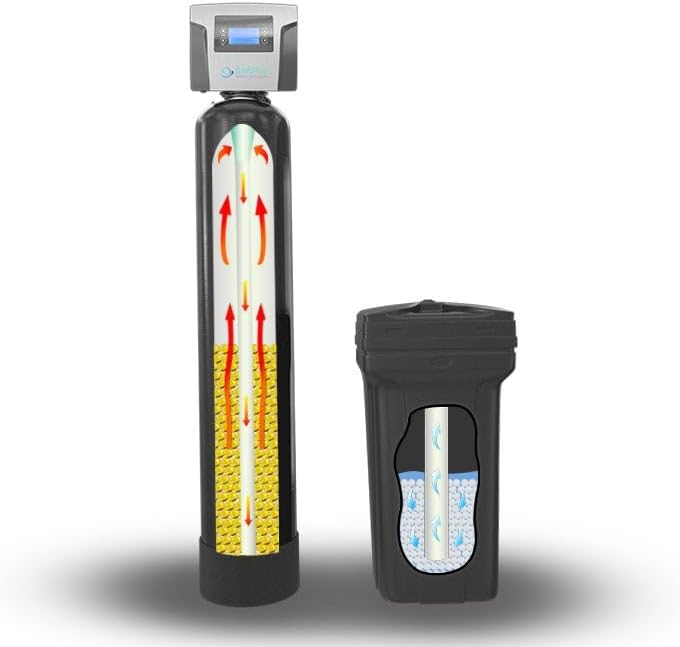
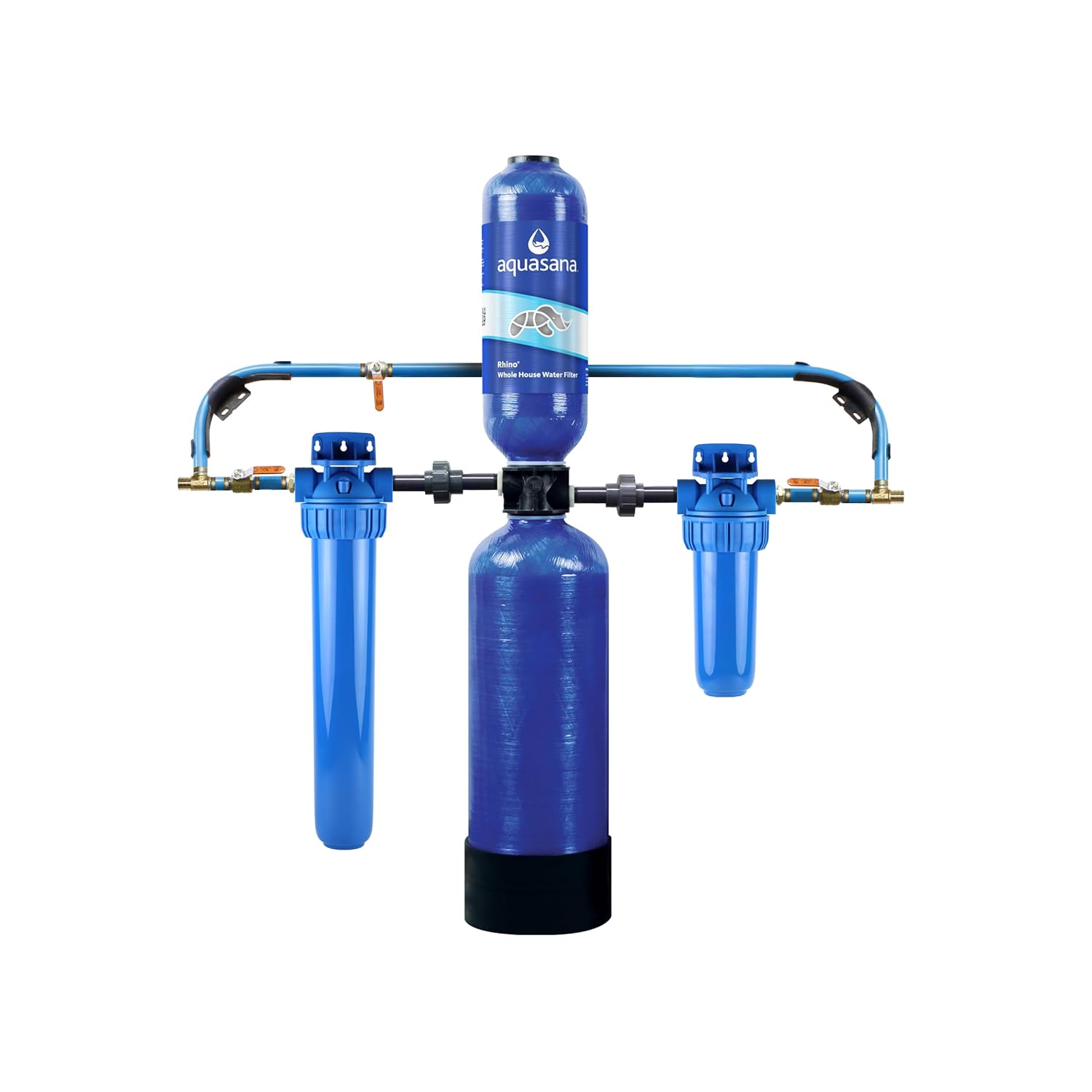
The Rhino's main tank holds a layered bed of KDF-55 (a copper-zinc redox alloy) over standard activated carbon. KDF-55 partially converts chloramine to chloride and ammonia, and the GAC then polishes the residual. For municipal users, Aquasana sells a separate "salt-free conditioner" stage and—critically for this comparison—an optional upgraded catalytic carbon media swap that replaces the standard GAC layer. If you order the EQ-1000 city-water configuration without that upgrade, expect about 50–60% chloramine reduction at typical 7 gpm household flow. With the catalytic upgrade, independent third-party testing has shown 95%+ reduction at the same flow rate, comparable to a properly sized standalone catalytic tank.
Pelican PSE1800: catalytic by default, but at a price
The PSE1800 ships with catalytic carbon already loaded—no upgrade required. The tank is sized at 1.5 cubic feet of media, which gives roughly 4–5 minutes of empty-bed contact time (EBCT) at the 7 gpm rating. That is the sweet spot for chloramine: most published studies show that catalytic carbon needs at least 3 minutes EBCT to break the Cl-N bond effectively. The trade-off is footprint and price. The PSE1800 is taller than the Rhino, demands more overhead clearance for media servicing, and lists about 20–30% higher in 2026 pricing—even before you add the optional UV stage that Pelican upsells for well-on-municipal-mix supplies.
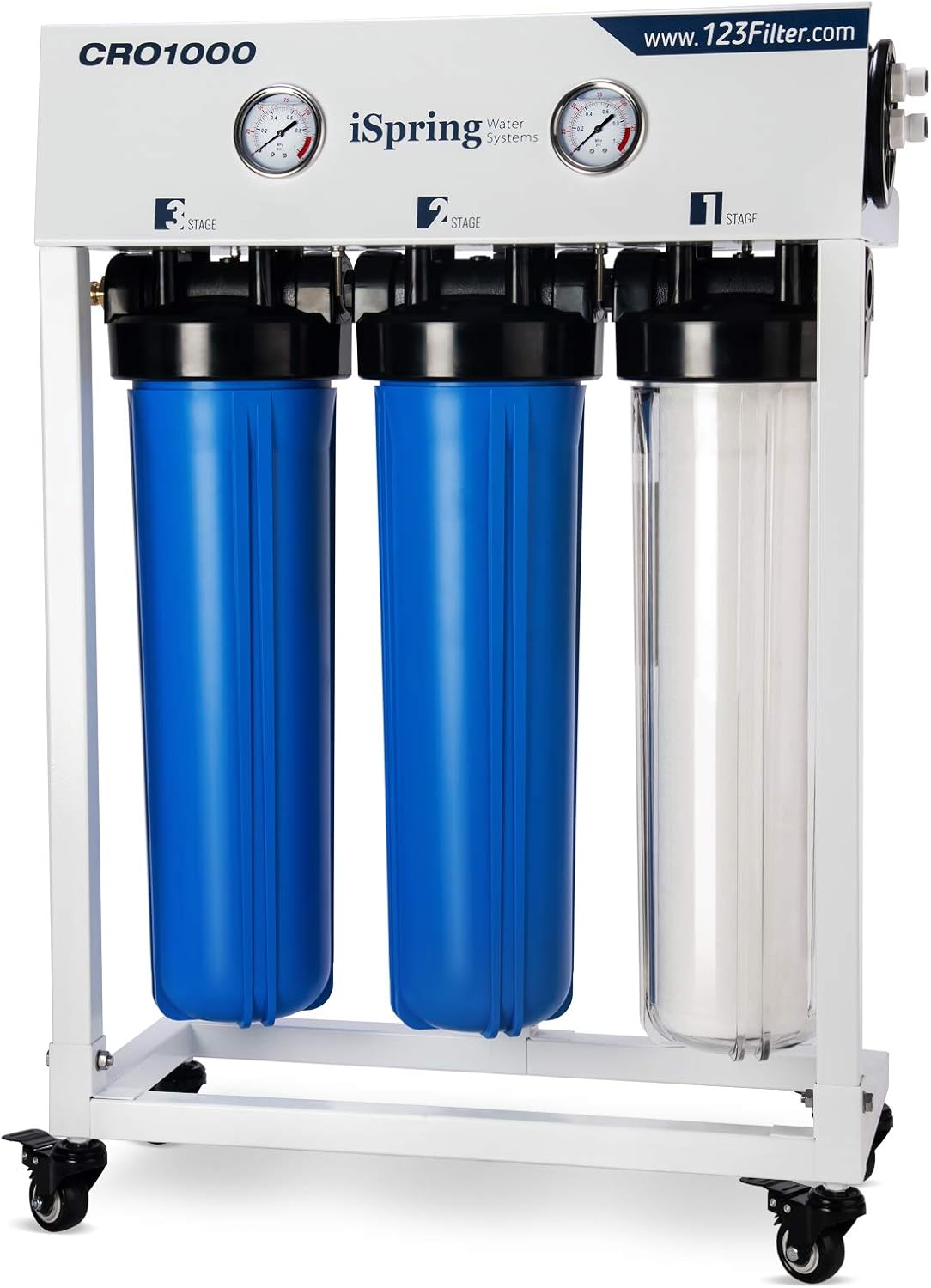
Side-by-side: aquasana rhino vs pelican pse1800 chloramine specs
| Spec | Aquasana Rhino EQ-1000 (Catalytic Upgrade) | Pelican PSE1800 |
|---|---|---|
| Rated capacity | 1,000,000 gal / 10 years | 1,000,000 gal / 10 years |
| Service flow rate | 7 gpm | 10 gpm peak / 7 gpm sustained |
| Bathrooms served | 3–6 | 4–6 |
| Primary media | KDF-55 + catalytic carbon (upgrade) | Catalytic coconut-shell carbon (standard) |
| Chloramine reduction | ~95% with upgrade | ~97% out of the box |
| Sediment pre-filter included | Yes (5 micron) | Yes (5 micron) |
| Salt-free conditioner add-on | SimplySoft (TAC) | NaturSoft (TAC) |
| Footprint (W × H) | ~9" × 54" | ~10" × 62" |
| 2026 list price (system only) | $$ (mid-tier) | $$$ (upper-tier) |
Where each system actually wins
The Rhino wins on dollars per gallon and on installation. Its narrower tank and lower overall height fit garages and utility closets where the PSE1800 simply will not stand up under a low joist. If you buy the catalytic upgrade and replace the post-filter on schedule, you will see chloramine numbers within 2 percentage points of the Pelican—at noticeably less money. The PSE1800 wins on flow rate at the upper end (large-family showers running concurrently) and on simplicity: there is nothing to "upgrade" because catalytic is the standard fill.
For municipal users who already know their utility has switched to chloramine—particularly in the western U.S., Florida, and the Mid-Atlantic—we recommend the Rhino with the catalytic upgrade for any household under 4 bathrooms, and the PSE1800 for anything larger or any home where peak demand routinely exceeds 8 gpm. For deeper background on the dosing chemistry, see our chloramine vs chlorine municipal water guide.
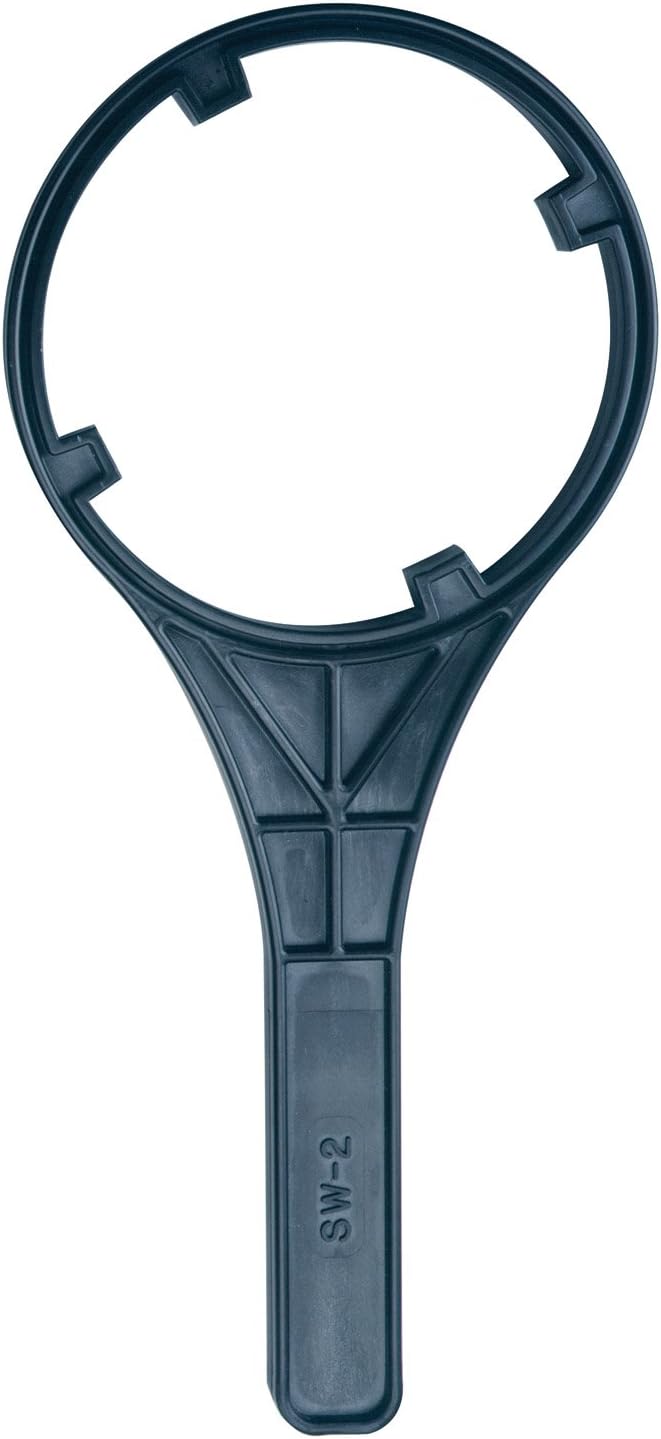
Sister and alternative whole-house picks worth considering
Aquasana Rhino Well Water 500K (UV + Carbon + KDF)
If your municipal feed mixes with a private well during summer drought—or if you are on a community well that chloraminates—the well-water Rhino variant pairs a UV sterilizer with the same KDF + carbon media stack. The UV stage handles bacterial breakthroughs that catalytic carbon cannot, and the system carries a 500,000-gallon / 5-year service life. It is the closest "municipal-plus-well" hybrid Aquasana sells, and it ships with the catalytic media already loaded rather than as an upgrade. View the Aquasana Well Water 500K on Amazon.
Express Water 3-Stage Whole House Filter (budget alternative)
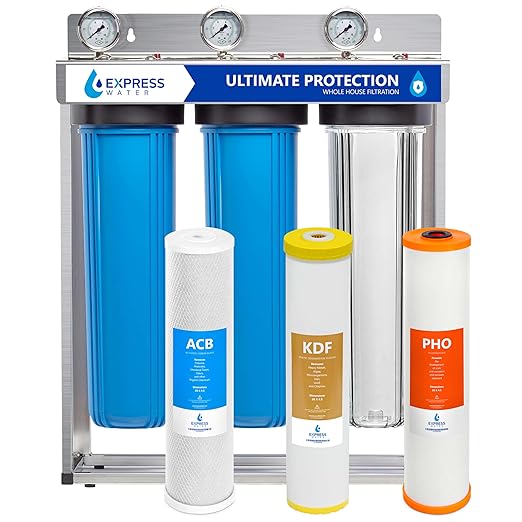
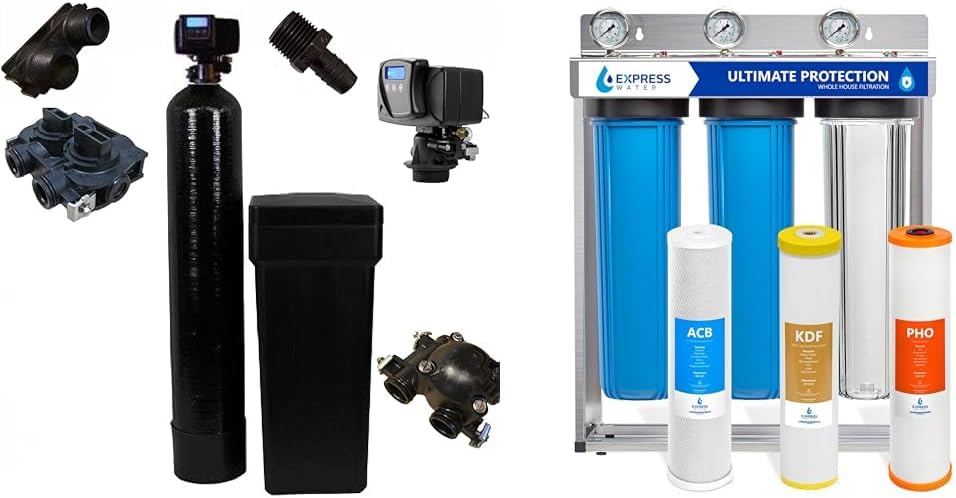
Renters or homeowners who cannot commit to a 60-inch tank can run a cartridge-based 3-stage system as a stopgap. The Express Water unit cycles sediment, KDF, and catalytic carbon cartridges through 4.5" × 20" housings that you swap every 6–12 months. Chloramine reduction in third-party testing lands around 85% when the catalytic cartridge is fresh—lower than either the Rhino or PSE1800, but at a quarter of the upfront cost. Check the Express Water 3-Stage on Amazon.
HQUA WF3-01 3-Stage Whole House System
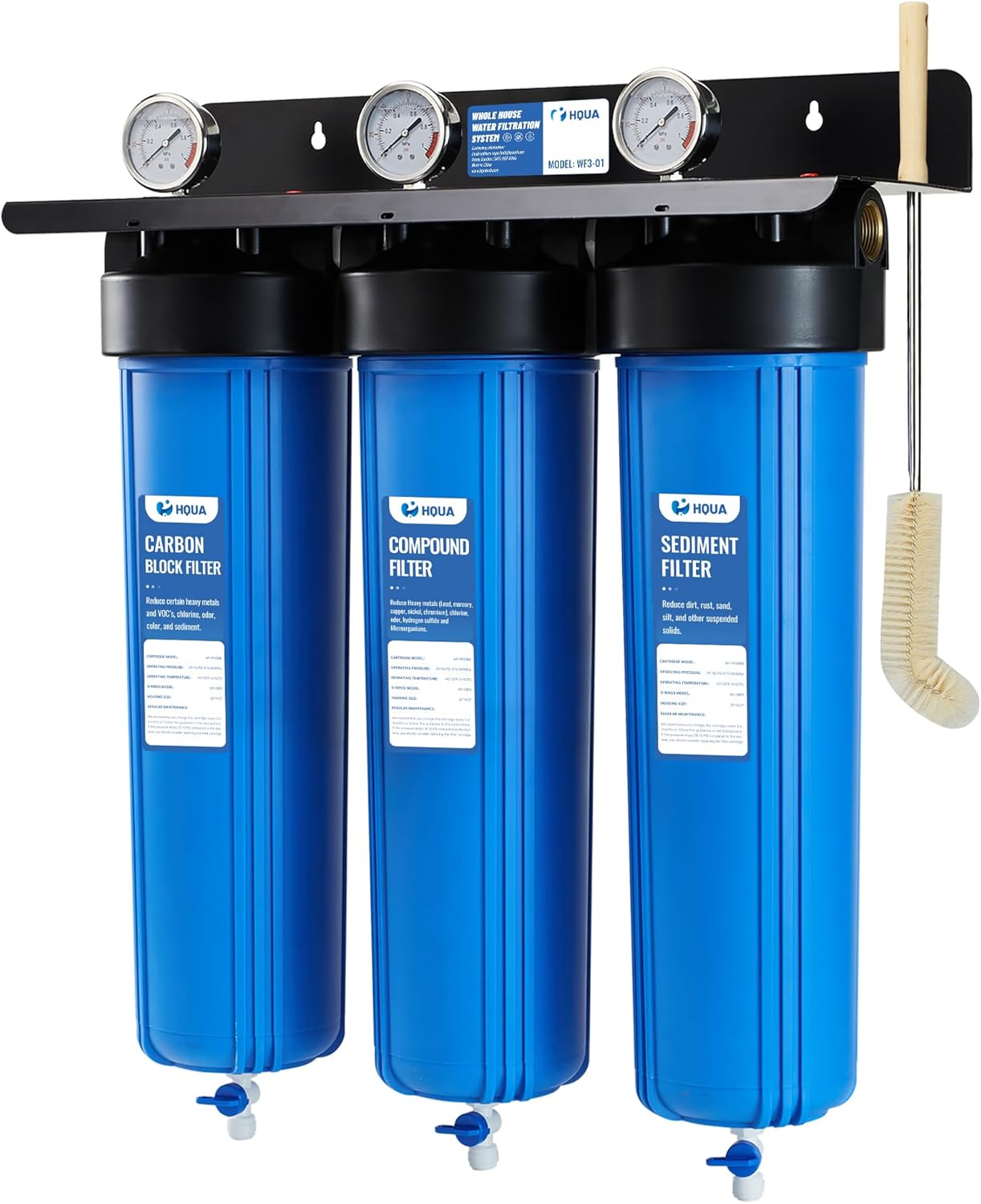
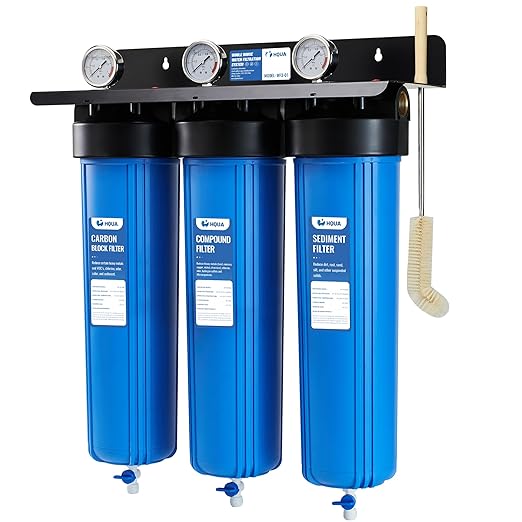
Another cartridge-style option, the HQUA WF3-01 uses standard 10" × 4.5" housings (cheaper replacement cartridges than the 20" Express format) and accepts third-party catalytic carbon blocks. It is the right pick if you want to control your own media chemistry—drop in a 0.5-micron catalytic block from any reputable maker and you have a chloramine filter for a fraction of a tank-based system's price. Flow rate is modest at 6 gpm. See the HQUA WF3-01 on Amazon.
Aquaboon 5-Micron Sediment Pre-Filter (4-Pack)
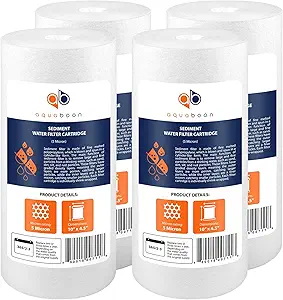
Whichever main system you choose, the catalytic carbon media is murdered by sediment. A 5-micron pleated pre-filter doubles the service life of the downstream tank and keeps pressure drop sane. The Aquaboon 4-pack fits the standard 10" × 4.5" Big Blue housing that both the Rhino and PSE1800 use for their included pre-stage, so it works as a direct replacement cartridge for either platform. Grab the Aquaboon 4-pack on Amazon.
Installation gotchas specific to chloramine systems
Two installation details disproportionately affect chloramine performance. First, copper plumbing downstream of the system can leach into water that has lost its disinfectant residual—plan to install the filter as close to your main as possible and keep the downstream copper run short, or transition to PEX. Second, both the Rhino and PSE1800 require a backwash drain even though the carbon does not technically regenerate; this is for periodic media-bed fluffing to prevent channeling, which is the single most common cause of premature chloramine breakthrough. Skip the drain and you skip a third of your effective capacity.
If you are still weighing softener integration, our salt-free conditioner vs softener breakdown covers how the SimplySoft and NaturSoft TAC add-ons handle the post-carbon scale problem without reintroducing sodium.
Bottom line for the aquasana rhino vs pelican pse1800 chloramine decision
For a 3-bathroom suburban home on chloraminated city water in 2026, the Aquasana Rhino EQ-1000 with the catalytic upgrade is the better dollar-per-gallon choice and fits tighter mechanical rooms. For 4+ bathrooms, multi-shower simultaneous demand, or any installation where you would rather not think about media specifications at order time, the Pelican PSE1800 earns its premium. Either way, install a quality 5-micron pre-filter and a backwash drain on day one, and you will see the rated 10-year service life without surprises.
Frequently Asked Questions
Does the standard Aquasana Rhino remove chloramine without the upgrade?
Partially. The base EQ-1000 city-water configuration removes roughly 50–60% of chloramine through KDF-55 redox conversion and standard activated carbon. For full chloramine reduction comparable to the PSE1800, you need to order the catalytic carbon media upgrade at the time of purchase—it cannot be retrofitted into an existing tank without media replacement.
How long does catalytic carbon last on chloraminated water?
Manufacturer ratings of 1,000,000 gallons or 10 years assume average U.S. chloramine residuals of 1–3 ppm and a properly sized pre-filter. At higher residuals (3–4 ppm, common in parts of California and Texas) or without sediment pre-filtration, expect catalytic carbon service life to drop by 30–40%. Test your effluent annually with a Hach or LaMotte chloramine test kit.
Can I use a Pelican PSE1800 with well water that gets chlorinated seasonally?
The PSE1800 is not designed for raw well water—it lacks the iron, manganese, and bacterial controls that wells need. If your community-well source chloraminates, the system works, but if you have private well chemistry concerns, the Aquasana Well Water 500K with its integrated UV is the more appropriate platform.
Do I need a separate softener after the Rhino or PSE1800?
Neither system softens water—both are carbon-based filtration. If your hardness exceeds 7 grains per gallon, scale will form downstream on water heaters and fixtures. Both manufacturers offer salt-free Template Assisted Crystallization (TAC) conditioners as bolt-on stages: SimplySoft for the Rhino and NaturSoft for the PSE1800. For hardness above 15 gpg, a traditional salt-based softener is still the most reliable choice.
What's the real-world flow rate on a 3-bathroom home?
Both systems are rated at 7 gpm sustained, but installed flow depends on your service line size and incoming pressure. With a 1-inch service line at 60 psi, expect 6–7 gpm through the Rhino and 7–8 gpm through the PSE1800 (slightly larger tank diameter). Two simultaneous showers will not starve either system; running two showers and a dishwasher might briefly drop pressure on the Rhino.
How do I confirm my city is using chloramine instead of chlorine?
Check your utility's most recent Consumer Confidence Report (CCR), published annually by July 1. Look for "chloramine" or "total chlorine" listed as the disinfectant residual. A pool test strip showing high total chlorine but low free chlorine is a quick at-home confirmation. If your utility switched recently, contact them—many utilities give 30-day advance notice because chloramine can damage rubber gaskets in older plumbing.
Are replacement parts available 5+ years out for either system?
Both brands stock OEM replacement tanks, media, and pre-filters through their official sites and Amazon. The PSE1800 media-replacement kit ships as a sealed cartridge for vacuum-loading; the Rhino requires manual media replacement, which is messier but easier to upgrade or customize. Third-party media (Jacobi, Calgon Centaur) fits both tanks if the OEM kit is back-ordered.
Key Takeaways
- Choosing the right aquasana rhino vs pelican pse1800 chloramine means matching capacity and output ports to your actual devices
- Always check actual watt-hours (Wh), not just watts — runtime depends on Wh, not peak output
- Also covers: aquasana rhino chloramine removal
- Also covers: pelican pse1800 chloramine city water
- Also covers: best chloramine filter aquasana pelican
- Compare price-per-Wh across models to find the best value for your budget